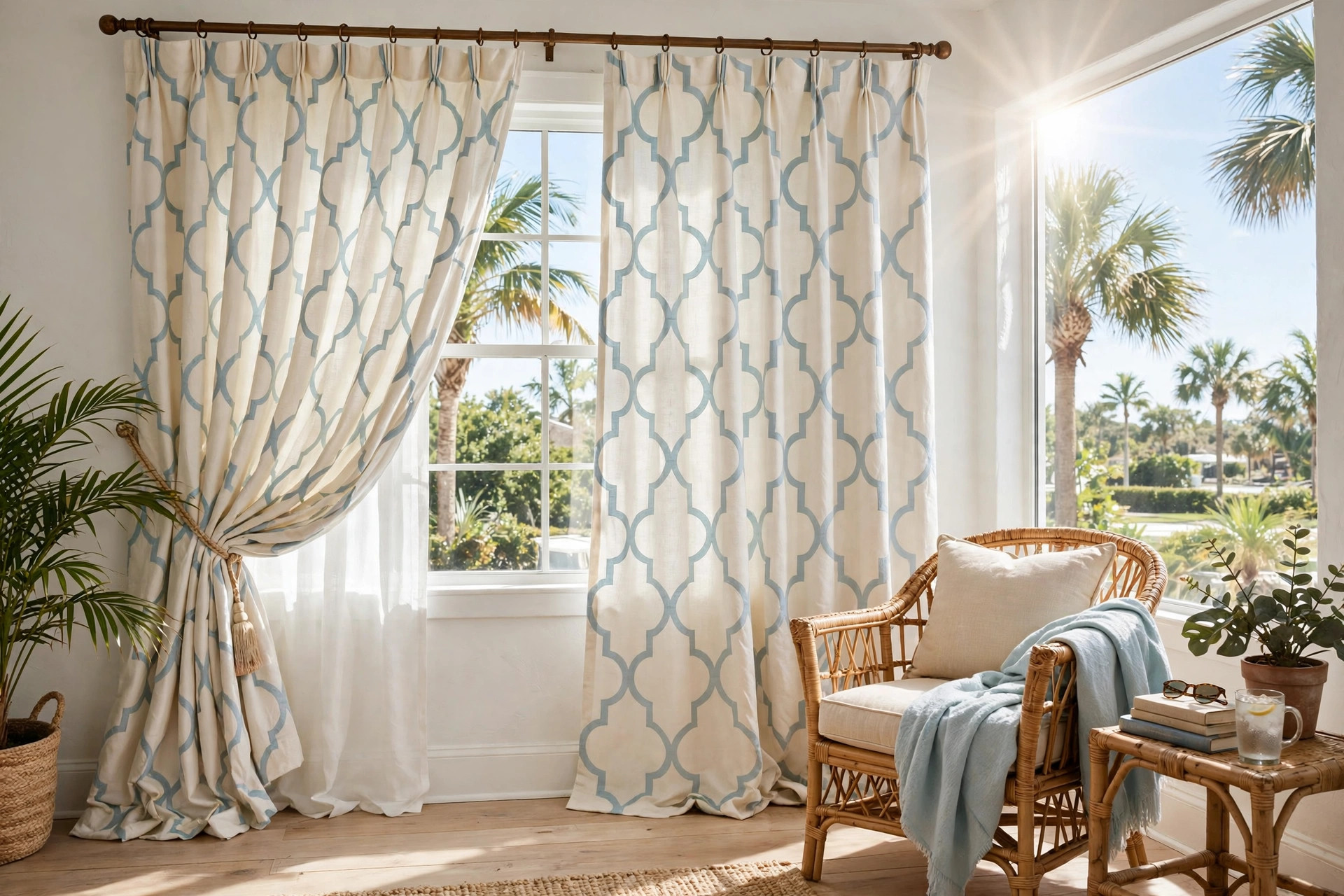

The search for top rated Moroccan pattern curtains for Florida homes begins with a simple desire. A homeowner wants a room that feels warm and personal. The Moroccan pattern delivers that. Its repeating shapes come from old North African tile work. The pattern has traveled far. It now shows up in homes from Tampa to Miami. The design brings order and rhythm to a wall of glass.
Florida rooms are not like other rooms. The sun enters with force. The air carries moisture. A curtain that works in Ohio may fail in Orlando. This guide explains what makes a Moroccan curtain right for Florida. It covers fabric, pattern, size, care, and safety. It also answers common questions from shoppers across the state.
Why It Matters in a Florida Home
Light rules every room in Florida. Sliding glass doors and tall windows are common. They let in views of palms and water. They also let in heat. A bare window can turn a living room into a hot box by midday. Curtains fix this problem. They soften the light and cut the glare.
A Moroccan pattern does more than block sun. It adds a sense of travel and craft. The pattern echoes the carved screens of Marrakech. Many Florida homeowners love this link. Their homes already mix indoor and outdoor living. Their rooms often have tile floors and rattan chairs. The Moroccan look fits this mix well. It feels at home beside coastal furniture.
The right curtain also guards the things inside. Sun eats color from rugs and sofas. It bleaches wood and fades art. Curtains take that hit instead. Over years, a good set saves hundreds of dollars in damage. This is practical value, not just style.
There is one more reason. Privacy matters in dense Florida towns. Homes sit close together. Condos face each other across courtyards. A patterned curtain keeps the world out while letting the owner enjoy the room. The pattern hides the inside of the room from view. Plain glass cannot do this.## What to Look For
Choosing well starts with the fabric. Florida needs fabric that stands up to sun and damp air. Cotton blends work well. Linen blends work well too. Some curtains use a cotton and polyester mix. The polyester adds strength. It slows fading. It also keeps the cloth from wrinkling too fast. You can find guidance on fabric strength from testing groups like Consumer Reports, which studies how home textiles hold up over time.
Look at the weave. A tight weave blocks more light. It also gives the curtain a clean hang. A loose weave feels airy. It lets more sun through. Neither is wrong. The choice depends on the room. Bedrooms need darker cloth. Living rooms can take a lighter hand.
Check the back of the fabric. Many top rated curtains have a light lining. The lining does hard work. It faces the sun and takes the damage. It keeps the front pattern bright. Unlined curtains fade faster. In Florida, lining is close to a must.
The pattern itself deserves study. Moroccan patterns come in several types. The trellis is the most common. It shows a grid of curves that form an eight-point star. The quatrefoil is a four-leaf shape. It reads softer. Some prints copy old tile mosaics in full color. Others use a single tone on white. The room should guide the pick.
Color matters under Florida sun. Dark navy and charcoal absorb heat. They also show dust. Lighter ground colors stay cooler. Ivory, sand, and pale gray reflect light. They keep the room feeling fresh. If the room gets full afternoon sun, choose a lighter ground.
Size is the part most people get wrong. Measure the window first. Then add width. A curtain should be one and a half to two times the width of the window. This gives full folds. Flat, stretched cloth looks cheap. For length, decide the look. Sill length ends at the window frame. Apron length falls a few inches below. Floor length puddles or just kisses the floor. In Florida, floor length suits most living rooms. Shorter lengths work in kitchens.
Hardware matters too. A strong rod holds heavy lined curtains. Many Florida homes have wide sliding doors. These need a long rod and a center support. Check that the brackets can bear the weight. Cheap rods bend in the middle. The curtain then drags and looks sad.
Types and Options: Top Rated Moroccan Pattern Curtains for Florida Homes
Shoppers will meet several styles. Each has a use.
Grommet top curtains have metal rings at the top. The rings slide along the rod. They make neat, even folds. They are easy to open and close. This style suits wide windows. It is a good pick for a room opened and closed each day.
Rod pocket curtains have a sewn channel at the top. The rod slides through it. They hang flat and still. They are harder to move. They work best as side panels that stay in place. Many stores carry them, and you can browse styles and prices at Wayfair or IKEA.
Tab top curtains use loops of fabric. The loops catch the rod. They give a relaxed, casual look. The fabric moves with some effort. They suit guest rooms and casual spaces.
Back tab curtains hide the tabs behind the header. The rod sits out of sight. The top edge looks like a clean pleat. This style reads a bit more formal.
Sheer Moroccan panels are light and thin. The pattern prints on a gauzy cloth. They filter light rather than block it. They work well layered under a heavier curtain. Used alone, they give privacy by day. At night, with lamps on, they give less.
Blackout Moroccan curtains have a dark backing. They block most light. They also cut some heat and noise. They are the right choice for bedrooms. If you want a deeper look at darkening options, see this guide on top rated blackout curtains for bedrooms for sale.
Linen-look curtains deserve a note. True linen wrinkles and costs more. Many curtains use a linen-look weave in cotton or a blend. They give the texture without the fuss. A useful comparison is this guide to top rated sheer linen curtains for usa homes, which explains the look in more depth.
Cost and Price
Prices run wide. A ready-made pair of Moroccan pattern curtains costs from about twenty dollars to over two hundred. The gap comes from fabric, size, and brand.
At the low end, twenty to forty dollars buys a pair of polyester panels. The pattern is printed. The cloth is thin. These work for a quick update. They will not last as long under strong sun.
The middle range, forty to ninety dollars, is where most buyers land. Here you find cotton blends with lining. The print is sharper. The hang is better. For most Florida rooms, this range gives the best value.
Above one hundred dollars, you find lined cotton, wider panels, and better stitching. Some have thermal backing. These curtains hang well and age well. They suit large windows and main rooms.
Custom curtains cost more still. A workroom can cut any size and add any lining. Expect two hundred dollars and up per window. Custom makes sense for odd windows or a perfect match to other fabrics.
Do not forget the extras. A good rod costs fifteen to fifty dollars. Rings, finials, and holdbacks add more. Budget these in.
Where to shop? Big home stores carry many options in stock. You can compare widths and read labels at Home Depot and Lowe’s. Design sites offer more unusual prints. For honest reviews of window products, The Spruce publishes buying guides that compare brands side by side.
Care and Upkeep
Florida air is damp. Curtains can hold that dampness. This invites mildew. The fix is simple. Keep air moving. Open windows when the weather allows. Run the air conditioner in the hot months. Do not let curtains sit bunched and wet.
Washing depends on the fabric. Most printed cotton blends are machine washable. Use cold water and a gentle cycle. Use mild soap. Skip bleach. It eats the print. Dry on low or on a line in the shade. Strong sun on wet cloth can set stains and fade color.
Linen blends need more care. Wash them gently. Pull them from the dryer while still damp. Smooth them by hand. Hang them at once. This cuts wrinkles.
Dust the curtains each month. A vacuum with a brush head works. Start at the top. Work down. This keeps dust from settling into the weave. It also helps people with allergies.
Steam out wrinkles with care. Hold the steamer a few inches away. Test a hidden spot first. Some prints can water-spot. If in doubt, use a dry iron on low with a press cloth.
Sun damage shows first at the back of the curtain. Check the lining each year. If it has gone brittle, replace the lining or the curtain. A tired lining no longer guards the room.
Storage matters for seasonal homes. Many Floridians close a house for part of the year. Take curtains down if you can. Wash them. Dry them fully. Store them in cotton bags, not plastic. Plastic traps moisture. That invites mildew during the empty months.
Safety
Window cords are a real danger. Small children can strangle in looped cords. The federal safety agency has warned about this for years. Cordless curtains are the safest choice. If the curtain has cords, keep them high and out of reach. Use cord cleats to wrap them tight. You can read the official guidance at CPSC.
Fire safety counts too. Keep curtains away from candles and lamps. Hot bulbs near cloth are a risk. Choose LED bulbs. They run cooler.
Heavy curtains need strong mounts. A falling rod can hurt a child or a pet. Mount brackets into studs or use good wall anchors. Test the hold before you hang the full weight.
Mildew is a health issue as well. If curtains smell musty after washing, the mildew has set in. Wash again with a cup of white vinegar in the rinse. Dry fully. If the smell stays, replace the curtains. Do not ignore it.
Frequently Asked Questions
Do Moroccan pattern curtains block enough light for a Florida bedroom? It depends on the backing. A printed panel alone blocks little. It softens light but the room stays bright. For a bedroom, choose a Moroccan curtain with a blackout lining. The pattern stays on the front. The dark back does the work. This combo gives both style and sleep.
Will the pattern fade in strong sun? All printed cloth fades with time. The rate depends on the dye and the exposure. A south-facing window in July is the harshest test. Lined curtains fade much slower. The lining takes the direct hit. Expect several good years from a lined curtain. An unlined one may show fading in a single summer.
What size should I buy for a sliding glass door? Measure the door frame width. Multiply by one and a half to two. A standard six-foot door needs panels totaling nine to twelve feet of width. Buy two wide panels rather than four narrow ones. Fewer seams look better. Mount the rod six to twelve inches wider than the frame on each side. This lets the curtains stack clear of the glass by day.
Are these curtains good for humid climates? Yes, if the fabric breathes. Cotton and linen blends handle humidity well. They dry faster than heavy velvet. Avoid thick non-breathable backings in damp rooms. They can trap moisture. For rooms near the coast, where salt air adds to the load, consider washable blends you can launder often. This guide to best pinch pleat drapes for humid climates covers fabrics that cope with damp air.
Can I hang them in a rental? Yes. Use a tension rod inside the frame for light panels. For heavier curtains, use damage-free hooks rated for the weight. Keep the original blinds if the lease requires them. Hang the curtains over or beside the blinds. Save all hardware to restore the unit when you leave.
Do they work with coastal or tropical decor? They do. The Moroccan pattern shares roots with the tile work seen in old Florida homes. It sits well beside rattan, wicker, and light wood. Keep the rest of the room simple. Let the curtain be the star. Too many patterns in one room will fight each other. For styling ideas, browse room photos at HGTV.
A Final Word
Top rated Moroccan pattern curtains for Florida homes earn their place. They tame the strong sun. They guard furniture from fading. They bring pattern and warmth to plain rooms. They suit the indoor-outdoor life that Florida invites.
Choose with care. Pick a breathable fabric. Insist on a lining. Measure twice. Hang the rod high and wide. Keep cords safe. Wash the cloth before mildew takes hold. These small steps decide whether the curtains last two years or ten.A window is the largest frame in a room. What hangs on it shapes how the whole space feels. A Moroccan pattern fills that frame with order and craft. In a Florida home, where light is strong and life runs bright, that is a fine thing to have.
References
Consumer Reports. (n.d.). Product reviews and ratings. https://www.consumerreports.org HGTV. (n.d.). Home and garden ideas. https://www.hgtv.com IKEA. (n.d.). Home furnishings. https://www.ikea.com Lowe’s. (n.d.). Home improvement products. https://www.lowes.com The Home Depot. (n.d.). Home improvement products. https://www.homedepot.com The Spruce. (n.d.). Home and garden advice. https://www.thespruce.com U.S. Consumer Product Safety Commission. (n.d.). Product safety information. https://www.cpsc.gov Wayfair. (n.d.). Furniture and home goods. https://www.wayfair.com
Was this guide helpful?

About Michael Thompson
The My Garden US editorial team writes practical, in-depth home and garden guides for American homeowners — tested advice, no fluff.
You May Also Like
Light Filtering Roller Shades Price Comparison USA: A Full Guide to Costs, Types, and Smart Buying
July 9, 2026 0 views
Thermal Vertical Blinds for Sliding Doors for Sale
July 26, 2026 0 views
Window Film Privacy Tint Reviews and Buying Guide
January 26, 2026 0 views