
Power outages strike without warning. Ice storms, hurricanes, and grid failures leave millions of American homes dark each year. A portable generator can keep the lights on, the refrigerator cold, and the furnace running. But plugging a generator into a house takes care. The focus keyword of this guide is the generator interlock kit installation cost usa. This phrase describes what American homeowners pay to have an interlock kit fitted to their breaker panel by a licensed electrician. Most jobs land between $400 and $1,200 in total. The kit itself is only part of the price. Labor, the inlet box, the wiring run, and the local permit shape the final bill. This article walks through each cost, explains what an interlock kit does, and shows how to choose a safe setup for your home.
Why an Interlock Kit Matters
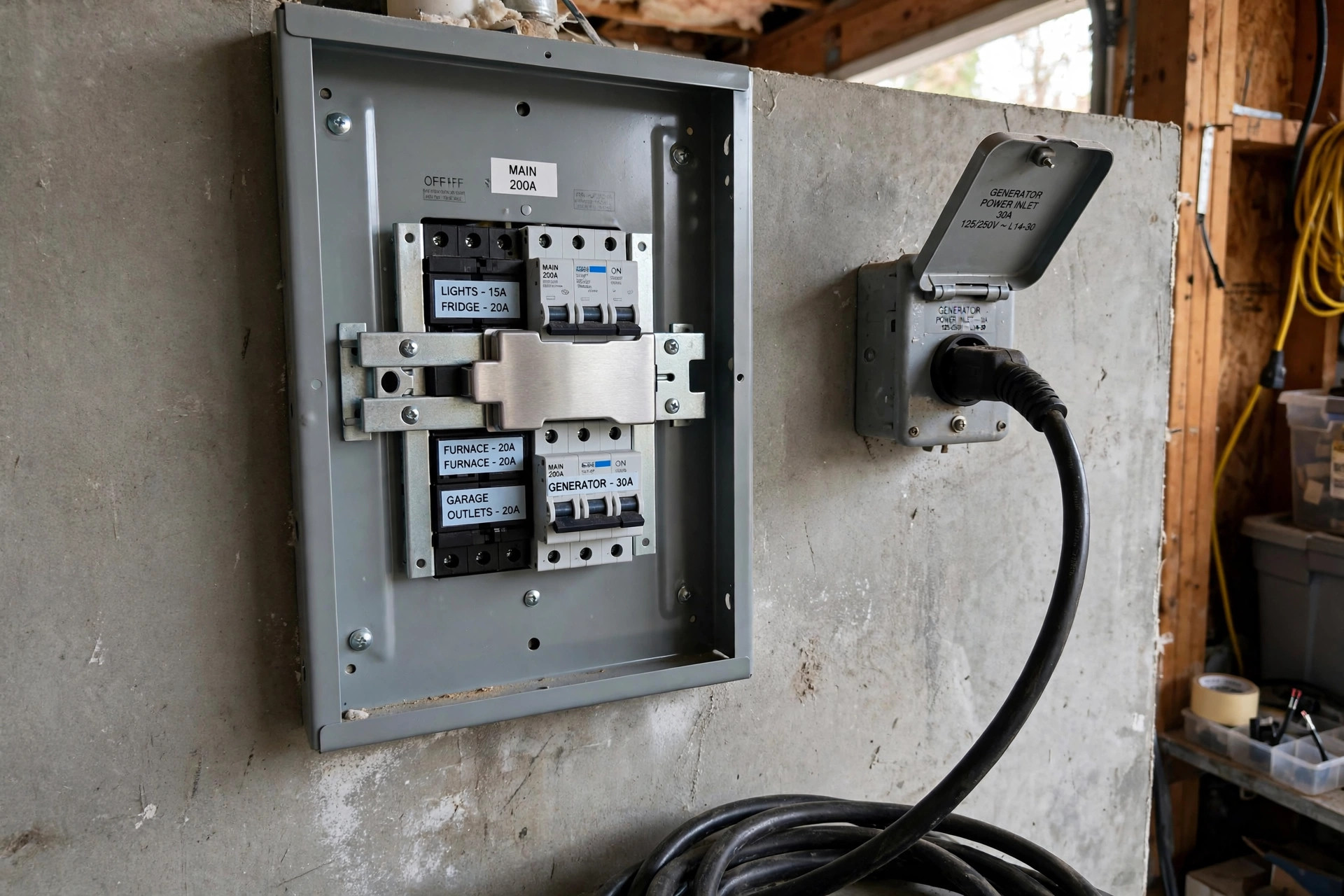
A generator interlock kit is a small metal plate or sliding bracket. It fits on the front of your breaker panel. It allows only one of two breakers to be on at a time: the main breaker or the generator breaker. This simple rule protects the home. It also protects the linemen who repair the grid.
Without an interlock, a running generator can send power back out through the lines. This is called backfeed. Backfeed can kill a utility worker who believes the line is dead. It can also damage the generator when grid power returns. The Consumer Product Safety Commission warns homeowners to connect generators to a house only through a proper transfer device. An interlock kit counts as such a device in most local codes.
The kit is popular because it is simple. It does not need a second panel. It uses the breakers you already own. It costs far less than a full transfer switch for portable generator setups. For many families, it is the most practical way to run a portable unit during a storm.
An interlock also guards the whole home security picture. When the power fails, alarms, cameras, and smart locks lose their normal supply. A safe generator hookup keeps those systems alive. Guides at ADT and SimpliSafe explain how backup power keeps security gear online during outages. The Ring blog makes the same point for doorbell cameras and motion lights. A sound interlock setup supports all of it.
How an Interlock Kit Works: Generator Interlock Kit Installation Cost Usa
The device is mechanical. It is not electronic. A metal slide covers one breaker while the other stays open. The steps run like this.
First, you turn off the main breaker. The slide then moves. It opens access to the generator breaker. You flip that breaker on. The panel now draws power from the generator inlet. The main breaker stays locked off. Grid power cannot flow in from the street.
To return to normal, you reverse the steps. You turn off the generator breaker. The slide moves back. You turn the main breaker on. Both sources can never join. That is the whole point of the design.
The kit bolts to the panel cover. It needs no new breakers in most cases. You add one double-pole breaker for the generator feed. An electrician wires that breaker to an inlet box on the outside wall. You plug a heavy cord from the generator into the inlet. Inside, you choose which circuits to power. Most people run the furnace, the refrigerator, some lights, and the sump pump.
What to Look for When You Choose
Not every kit fits every panel. Buy the wrong one and the electrician cannot use it. These points help you choose well.
Match the panel brand and model
Interlock kits are brand specific. A kit made for Square D will not fit a Siemens panel. Check the label inside the panel door. Write down the brand, the series, and the number of spaces. Many makers list approved kit models on their sites. The Family Handyman site carries step-by-step electrical guides that show how to read a panel label.
Check local code approval
Some towns require a kit listed by Underwriters Laboratories. Others want the panel maker to approve it. A few areas do not allow interlocks at all. Call the local building office before you buy. Ask what they accept. This one call saves wasted money.
Size the breaker to the generator
Most portable units use a 30-amp double-pole feed. Large portables may use 50 amps. The breaker, the inlet box, the cord, and the wire must all match. A 30-amp inlet cannot take a 50-amp cord. The electrician will size the parts. Still, know your generator output before the visit. Check our guide to a portable generator for home backup if you are still shopping for the unit itself.
Choose the inlet box location
The inlet box sits on an outside wall. It should be close to the panel to keep the wire run short. It should also be easy to reach with the generator placed at a safe distance. Generators must run at least 20 feet from the house. Carbon monoxide is deadly. Never run a generator in a garage or near a window. Reviewers at Consumer Reports stress this point in every generator test.
Types and Options
Three common setups exist. Each has a cost and a trade-off.
Interlock kit on the main panel
This is the standard choice. The kit costs $50 to $150. A 30-amp inlet box costs $60 to $120. A 25-foot cord costs $80 to $150. Total parts run $200 to $450. Labor adds $300 to $800. This is the lowest-cost legal way to tie a generator to a house. Most electricians finish in two to four hours.
Interlock with a subpanel
Some homes add a small subpanel for the backed-up circuits. The interlock sits on the subpanel. This setup costs more. It adds $300 to $600 in parts and labor. It helps when the main panel has no room for the kit. It also keeps backed-up circuits tidy in one place.
Manual transfer switch instead
A transfer switch is a separate device with its own breakers. It costs $300 to $900 for the switch alone. Installed, a manual transfer switch job often runs $800 to $1,800. It suits homes where the local code rejects interlocks. Read the comparison with a transfer switch for portable generator to weigh both options. For a full permanent unit, see our look at the whole house generator cost installed.
Cost and Price Breakdown
The generator interlock kit installation cost usa ranges from $400 to $1,200 for a typical home. Most quotes fall near $600 to $800. Here is how the parts add up.
The kit itself: $50 to $150. Brand-name kits from the panel maker cost more. Third-party kits cost less. Both can work if the local code accepts them.
The generator breaker: $15 to $40. This is a standard double-pole breaker. It must match the panel brand.
The power inlet box: $60 to $150. Outdoor boxes carry a weather cover. Flush-mount boxes look cleaner on a finished wall.
The wire: $50 to $200. Cost depends on the length of the run and the wire size. Short runs through an unfinished basement cost little. Long runs through finished walls cost more.
The generator cord: $80 to $200. A 25-foot, 30-amp cord is standard. Longer or 50-amp cords cost more.
The permit: $50 to $200. Many towns require an electrical permit for this work. Some add an inspection fee. The electrician often pulls the permit for you.
Labor: $300 to $800. Electricians charge $75 to $150 per hour in most states. A simple job takes two to four hours. A hard job with a long wire run can take a full day.
What raises the price? An old panel with no room for a new breaker. A panel far from an outside wall. Finished walls that need cutting and patching. A main breaker panel that needs replacing first. A 50-amp setup instead of 30-amp. Any of these can push the job past $1,200.
What lowers the price? A panel with free spaces. A panel on an exterior wall. An unfinished basement or crawl space for the wire run. Buying the kit yourself at a store like The Home Depot and hiring labor only. Getting three quotes. Prices move with the local market, so compare.
DIY is not advised. This work touches the main panel. A mistake can cause a fire or a shock. Many states require a licensed electrician for panel work. Home insurance may refuse a claim after unpermitted electrical work. Pay for the license. It is worth it.
Care and Upkeep
An interlock kit needs little care. Still, a few habits keep it safe.
Test the setup twice a year. Pick a calm weekend in spring and fall. Start the generator outdoors. Plug in the cord. Run through the steps. Power a few circuits. Look for heat or smell at the panel. Then switch back to grid power. A short test keeps every part working.
Keep the kit clean. Dust gathers on panels. Wipe the slide and the breakers with a dry cloth once a year. Never spray cleaner into the panel. Check that the slide moves freely. If it sticks, call an electrician.
Inspect the cord and inlet. Cords wear with use. Look for cracks, melted spots, or loose prongs. Replace a damaged cord at once. Check the inlet cover. It should close tight against rain. A weather boot costs little and adds protection.
Service the generator too. Change the oil on schedule. Run it under load each month for ten minutes. Keep fresh fuel with stabilizer. A dead generator makes the finest interlock useless. CNET and PCMag both publish seasonal checklists for smart home and backup gear. Tech coverage at The Verge also tracks new generator monitoring tools that pair with a phone.
Store the cord indoors. Sun and rain break down the jacket. Coil it loose. Hang it on a hook in the garage. It will last for years.
Safety Rules You Must Follow
Generator safety is life and death. These rules are not optional.
Never backfeed through a wall outlet. A double-male “suicide cord” can kill. It can also start a fire. The interlock exists to make this trick unnecessary.
Never run a generator indoors. Not in the garage. Not in the basement. Not on a porch. Carbon monoxide has no smell and no color. Place the unit at least 20 feet from the house. Point the exhaust away from windows and doors.
Turn off the main breaker first. The interlock forces this order. Do not defeat the slide. Do not remove the plate. The device only works if you use it as designed.
Let the generator cool before refueling. Gasoline on a hot engine can ignite. Fill the tank outdoors. Wipe spills. Keep fuel in approved cans, stored away from the house.
Use only the circuits you need. Add up the watts. A 7,500-watt generator cannot run the whole house. Start big motors one at a time. The furnace blower and the well pump draw heavy start-up power. Give each a few seconds to settle.
Install carbon monoxide alarms. Put one on each floor. Test them monthly. Change batteries each fall. The alarms are your last line of defense if wind shifts the exhaust toward the house.
Check the ground. Portable generators should sit on dry ground. Use a rubber mat in wet weather. Keep cords out of puddles. Do not touch the unit with wet hands.
FAQ
How much does it cost to install a generator interlock kit in the USA?
Most homeowners pay $400 to $1,200. The average lands near $600 to $800. The kit and inlet parts cost $200 to $450. Labor adds $300 to $800. Permits add $50 to $200. Long wire runs, old panels, and 50-amp setups push the price higher.
Is an interlock kit better than a transfer switch?
For most homes with a portable generator, yes on price. An interlock costs far less to buy and install. It uses the breakers you already have. A transfer switch costs more but gives a dedicated panel for backed-up circuits. Some local codes require a transfer switch. Check your town rules before you decide.
Can I install an interlock kit myself?
Most homeowners should not. The work involves the main breaker panel. Live parts sit inches from your hands. Many states require a licensed electrician. A permit and an inspection are common. The risk of fire or shock is real. Hire a professional.
How long does installation take?
Two to four hours for a simple job. The electrician mounts the kit, adds the breaker, runs wire to the inlet box, and tests the system. Complex jobs with long wire runs or finished walls can take a full day.
Will an interlock kit work with any breaker panel?
No. Kits are brand and model specific. You must match the kit to your panel. Some older panels have no approved kit. In that case a transfer switch or a panel upgrade is the answer. Bring the panel model number when you shop or call an electrician.
Does an interlock kit need a permit?
In most towns, yes. Electrical work on the main panel usually needs a permit and an inspection. Fees run $50 to $200. The electrician often handles the paperwork. Skipping the permit can void your home insurance.
A Final Word
The generator interlock kit installation cost usa is modest next to the price of a spoiled freezer or a flooded basement. A typical job costs $600 to $800 all in. The hardware is simple. The safety gain is large. Match the kit to your panel. Check the local code. Hire a licensed electrician. Test the system twice a year. With those steps done, the next outage becomes an inconvenience, not a crisis. The lights stay on. The food stays cold. The family stays safe.
References
ADT. (n.d.). Home security and automation. https://www.adt.com CNET. (n.d.). Technology news and reviews. https://www.cnet.com Consumer Reports. (n.d.). Product reviews and ratings. https://www.consumerreports.org Family Handyman. (n.d.). DIY home repair and maintenance. https://www.familyhandyman.com PCMag. (n.d.). Technology product reviews. https://www.pcmag.com Ring. (n.d.). Smart home security devices. https://www.ring.com SimpliSafe. (n.d.). Home security systems. https://www.simplisafe.com The Home Depot. (n.d.). Home improvement products. https://www.homedepot.com The Verge. (n.d.). Technology news and reviews. https://www.theverge.com U.S. Consumer Product Safety Commission. (n.d.). Product safety information. https://www.cpsc.gov
Was this guide helpful?

About Sarah Mitchell
The My Garden US editorial team writes practical, in-depth home and garden guides for American homeowners — tested advice, no fluff.
You May Also Like

Smart Curtain Rod Reviews for Sliding Doors: A Practical Buying Guide
August 29, 2026 0 views
Best NVR Security System for Home USA: A Complete Guide
August 31, 2026 0 views
Best Security Light with Camera 2026 USA: A Simple Buyer’s Guide
May 9, 2026 0 views