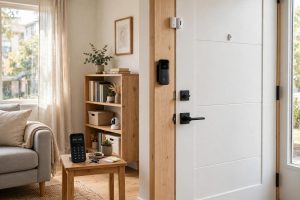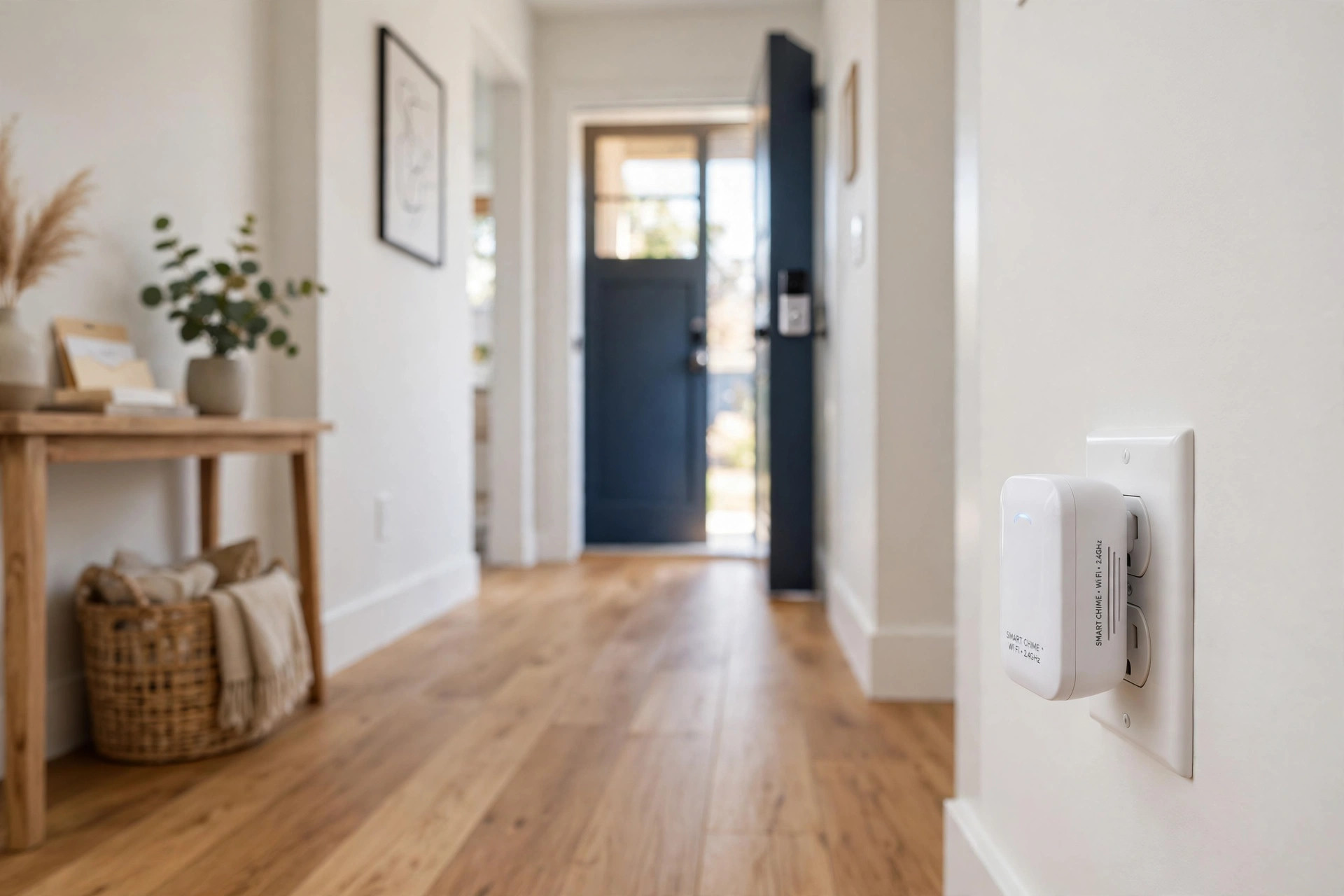

A smart doorbell does little good if you cannot hear it. Many American homes have this problem. The doorbell rings at the front door, but the chime stays silent in the back of the house. A chime extender solves it. It carries the ring to other rooms. Smart doorbell chime extender reviews USA show that buyers judge these devices on three things: loudness, range, and ease of set-up. This guide walks through what the reviews say, what to look for, and which types fit which homes.
Why It Matters
A video doorbell guards your front porch. It records visitors. It lets you speak to a delivery driver from your phone. But the phone does not help when you are home with it on silent. That is when the chime matters. The chime is the small bell or speaker that sounds when someone presses the button.
Most doorbell kits ship with one chime. One chime works in a small apartment. It falls short in a two-story house. It falls short in a ranch home with a long hallway. It also falls short when the kitchen runs loud, or the laundry room hums, or the garage sits far from the front door. Reviews mention this again and again. Buyers love their doorbell camera. They hate missing the ring.
A chime extender adds sound where you need it. Place one in the bedroom. Place one in the kitchen. Now the ring reaches you. For families with a baby, a sleeping shift worker, or an elderly parent who sits in the back room, this small device changes daily life.
There is a security angle too. Reviewers note that a loud, clear chime tells the household at once that someone is at the door. In a break-in attempt, seconds count. A chime that reaches every corner means nobody sits unaware. For households that pair doorbells with a broader security system, the extender is one more layer. Guides at SimpliSafe explain how layered alerts, from doorbells to motion sensors, give families more time to react.
What to Look for When You Choose: Smart Doorbell Chime Extender Reviews Usa
Reviews in the United States point to the same checklist. Work through it before you buy.
Compatibility comes first. An extender must work with your doorbell. Brand chimes usually work best with their own brand’s doorbell. A Ring chime pairs with Ring doorbells. A Google Nest chime pairs with Nest doorbells. Check the maker page before you order. The Ring store lists which chimes pair with which doorbell models. The Google Store does the same for Nest hardware. If you own a doorbell from one brand, do not assume another brand’s chime will pair. Most will not.
Volume matters. Reviewers measure loudness in plain words: can you hear it from the far bedroom with the door closed? Look for adjustable volume. The best units offer several levels, from a soft tone to a loud ring. Some reach 90 decibels or more. If your home is large or noisy, pick the loudest setting you can find.
Range matters too. Wireless extenders talk to the doorbell by radio. Walls and metal cut the signal. Reviews for brick homes and homes with metal doors report weaker links. Look for a stated range of at least 100 feet through walls. For very large homes, some buyers run two extenders. One sits near the doorbell. One sits deep in the house. This relay trick shows up in many reviews.
Tone choice counts. A chime extender should offer many tones. Most offer 30 to 50 melodies. A soft Westminster chime fits a quiet house. A bold ding-dong fits a busy one. Some models let each doorbell button play its own tone. That helps when you have a front door and a back door.
Power type shapes the set-up. Plug-in models are the most common. You push one into a wall outlet. You pair it. Done. Battery models exist for places with no outlet. Rechargeable models sit in between. Reviews favor plug-in models for daily use. They never need a charge. Battery models win in garages and sheds.
Smart features add value. Some extenders connect to home networks. They join routines. A ring can flash the lights. It can play through a smart speaker. It can send a push note to every phone in the house. If you already run smart speakers, look for this feature. Reviewers on tech sites like CNET and PCMag often test how well these features work in real homes.
App control helps. Most smart chimes set up through the doorbell maker’s app. Check that the app is stable. Read recent app store reviews. A chime that needs a fresh pair each week will annoy you.
Types and Options
Smart doorbell chime extender reviews USA describe three main types. Each fits a different home.
Plug-In Wireless Chime Extenders
These are the most popular. They plug into a standard wall outlet. They pair with the doorbell by radio or by home network. They are small, often the size of a night-light.
Buyers praise them for ease. No wires. No tools. You plug one in where you need sound. Many homes use two or three. A two-story colonial might place one on each floor. A ranch home might place one at each end.
The weak point is range. In a large home, a single unit near the doorbell may lose the signal. Reviews of homes over 3,000 square feet often mention adding a second unit as a relay. The Verge has covered smart home gear in real houses, and its coverage of range limits matches what buyers report.
Wired Chime Extenders
Some homes still use the old mechanical doorbell chime. It hangs on the wall and rings with two metal bars. If your smart doorbell works with that old chime, you can add a wired extender to the same circuit. These units wire into the doorbell transformer line.
This type suits older homes. The wiring is already there. The sound is the classic ding-dong many buyers love. The trade-off is labor. You need basic wiring skill. You also need the right doorbell transformer to power the circuit. Reviews warn buyers to check voltage before they start. Most smart doorbells need 16 to 24 volts. The transformer guide linked above explains how to pick one.
Smart Speaker Chimes
A third path needs no new hardware. Many buyers route the doorbell ring through a smart speaker they already own. A chime rings on the speaker when the doorbell button is pressed. The speaker can sit in any room.
Reviews of this method are mixed. The cost is zero, which buyers love. But the ring can lag. It can also fail when the network hiccups. And a speaker that plays music all day may mute the chime by accident. Most reviewers treat this as a backup, not a main chime. If you compare the main doorbell brands, note how each handles speaker announcements. The depth of integration varies by brand.
Cost and Price
Chime extenders are cheap by smart home standards. Most sell for 25 to 60 dollars. Brand-name plug-in chimes sit in this band. Basic wireless models from third parties can cost under 25 dollars. High-end models with more tones and longer range can reach 80 dollars.
The real cost question is how many you need. One chime covers a small home. A two-story home often needs two. A large home with a finished basement may need three. At 35 dollars each, three units cost about 105 dollars.
Watch for bundle deals. Doorbell kits sometimes include a free chime. Holiday sales cut prices further. Reviews from Consumer Reports remind buyers that price alone does not signal quality. Its independent tests often find mid-price models that beat costlier ones on sound clarity.
Do not forget hidden costs. Battery models need new batteries. Rechargeable models draw a small amount of power. Wired models may need an electrician if you are not handy. None of these costs are large. But reviews say buyers should count them before they compare prices.
Care and Upkeep
A chime extender needs little care. Still, a few habits keep it working well.
Keep plug-in units clear of dust. A chime behind a couch or inside a cabinet sounds muffled. Reviews often blame the device when the placement is the fault. Put the unit at ear height or above. Keep it away from thick furniture.
Check the pair once a month. Press the doorbell. Walk to each chime. Confirm the sound. If a unit drops its pair, re-pair it through the app. This takes a minute. Most drops happen after a power cut or a router change. If you changed your home network, re-pair every smart device, not just the chime.
Update the firmware. Makers push updates that fix bugs and add tones. The doorbell app usually handles this on its own. Check the app now and then to confirm the chime runs the latest version. Reviewers who skipped updates sometimes report odd rings or missed alerts.
For battery models, set a reminder to charge them. Some models beep when the battery runs low. Do not ignore that beep. For wired models, look at the chime once a year. Dust the bars. Check that the wires sit tight. Loose wires cause weak rings.
Renters have an easy path. Plug-in models leave no marks. Take them with you when you move. This is one reason video doorbells that need no wiring pair so well with plug-in chimes. Both suit apartment life. Neither needs a landlord’s approval.
Safety
Chime extenders are low-risk devices. Still, reviews and safety pages raise a few points.
Buy from known makers or known stores. Cheap no-name units sometimes lack proper safety marks. Look for a UL or ETL listing on the box. The U.S. Consumer Product Safety Commission tracks product recalls. Check its site if you buy a little-known brand. A recall search takes two minutes.
Do not overload outlets. A plug-in chime draws little power. But buyers often plug it into a crowded power strip. Give it a clear outlet. Keep it away from water. Do not place it in a bathroom or near a sink.
For wired models, turn off the breaker before you touch any wires. This rule is simple and firm. Low-voltage doorbell wires are not harmless when crossed with house current. If you are unsure, hire an electrician. The cost of an hour of labor beats the cost of a shock.
There is also a privacy note. Smart chimes log events. They know when your doorbell rang. Some share data with the maker. Read the privacy policy in the app. If that bothers you, pick a chime that works over a local radio link with no account needed. Reviews on privacy-minded sites note this trade-off often.
If you pair the doorbell with professional monitoring, treat the chime as part of the system. Companies like ADT build their plans around fast alerts. A chime that reaches every room supports that goal. Test it as part of your monthly system check.
Frequently Asked Questions
Do chime extenders work with any video doorbell? No. Most pair only with their own brand. A Ring chime works with Ring doorbells. A Nest chime works with Nest doorbells. Some third-party wireless chimes work with many doorbells through a radio link, but smart features stay brand-locked. Check the maker’s list before you buy.
How many chime extenders do I need? It depends on the size of your home. One covers a small apartment or a one-story home under 1,200 square feet. A two-story home usually needs two, one per floor. Large homes may need three. Reviews suggest starting with two and adding more if you find dead spots.
Can I hear the chime outside in the yard? Most plug-in models are built for indoor use. Their sound fades fast outdoors. Some buyers place a unit near a window that faces the yard. A few weather-rated models exist, but they are rare. If yard coverage matters, check the specs for outdoor use before you order.
Why does my chime miss rings sometimes? The common causes are weak range, a lost pair, or a network hiccup. Move the unit closer to the doorbell or to a more central outlet. Re-pair it through the app. Check that the firmware is current. If the problem persists, a second unit placed between the doorbell and the far chime often fixes it.
Do chime extenders need a subscription? No. The chime function needs no monthly fee. Some doorbell makers charge for cloud video storage, but the ring sound is free. Do not pay for a plan just to hear your chime.
Are wireless chimes safe for homes with medical devices? They use the same radio bands as many home devices. Reviews rarely report problems. If someone in the home uses a sensitive medical device, ask the device maker about radio interference. Keep the chime a few feet from the medical device as a simple precaution.
A Short Final Word
Smart doorbell chime extender reviews USA tell a plain story. The doorbell camera gets the praise. The chime extender does the quiet work. It makes sure the ring reaches the kitchen, the bedroom, and the basement. Pick one that fits your brand. Pick one loud enough for your home. Place it well. Test it now and then. A small device, set up right, keeps your home alert from door to door.
References
ADT. (n.d.). Home security and automation. https://www.adt.com CNET. (n.d.). Technology news and reviews. https://www.cnet.com Consumer Reports. (n.d.). Product reviews and ratings. https://www.consumerreports.org Google Store. (n.d.). Smart home devices. https://store.google.com PCMag. (n.d.). Technology product reviews. https://www.pcmag.com Ring. (n.d.). Smart home security devices. https://www.ring.com SimpliSafe. (n.d.). Home security systems. https://www.simplisafe.com The Verge. (n.d.). Technology news and reviews. https://www.theverge.com U.S. Consumer Product Safety Commission. (n.d.). Product safety information. https://www.cpsc.gov
Was this guide helpful?

About Emily Rodriguez
The My Garden US editorial team writes practical, in-depth home and garden guides for American homeowners — tested advice, no fluff.
You May Also Like
Motion Sensor Flood Light Reviews 2026 USA: What Really Works
May 15, 2026 0 views
Smart Porch Light With Camera Reviews USA
January 14, 2026 0 views
Lorex vs Swann Security System Comparison USA: Which Brand Protects Your Home Best
April 1, 2026 0 views