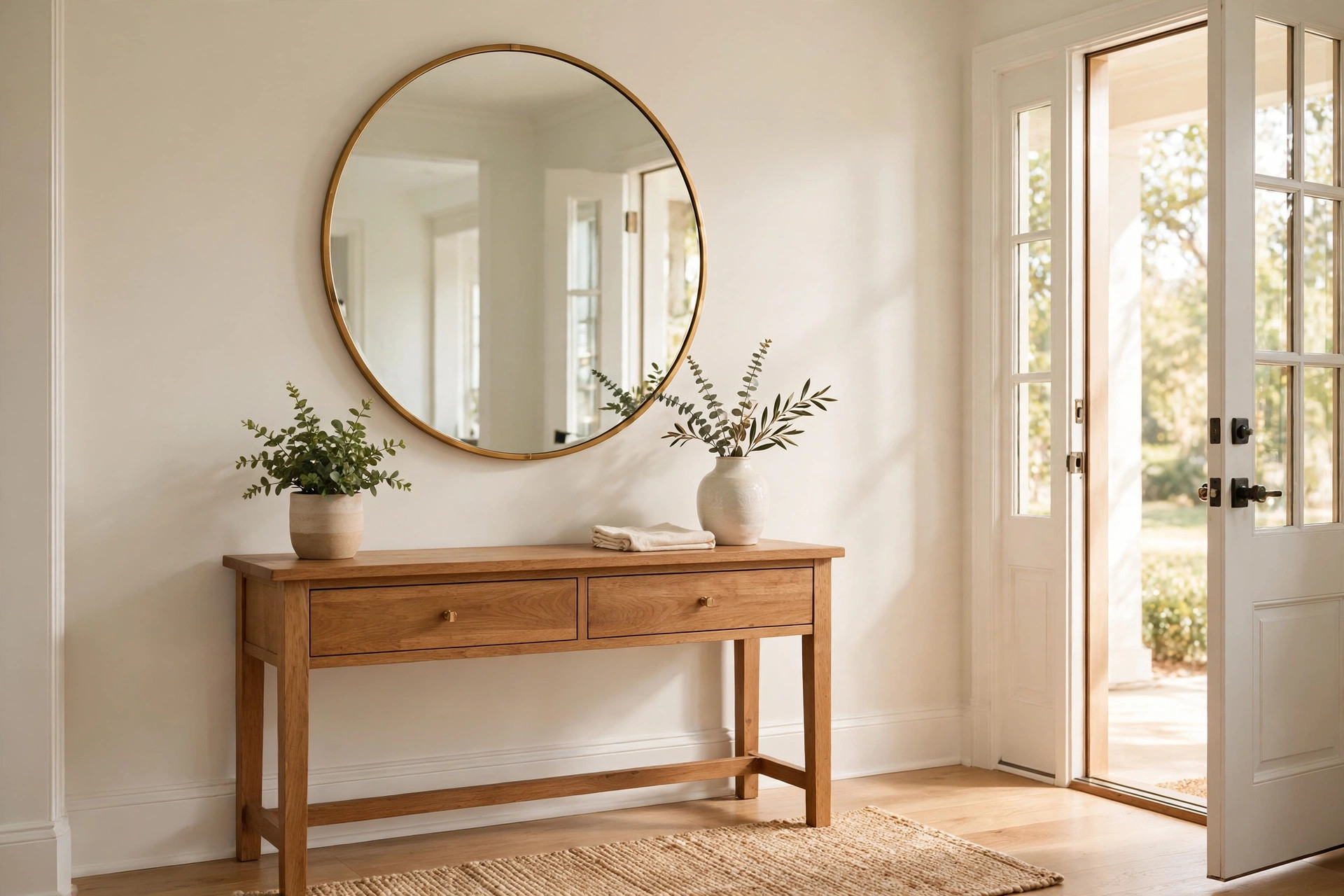

This entryway decorative mirrors american homes guide begins at the front door. The entry is the first room guests see. It is also the last room you see before you leave for the day. A mirror on the wall of an entry does more than show your face. It brings light into a dark hall. It makes a small space feel wide. It gives a plain wall a finished look.
Many American homes have an entry that is narrow, dim, or both. A mirror can solve these problems for little money and little work. This guide will walk you through each step. You will learn why entry mirrors matter, what to look for when you shop, the types you can buy, what they cost, how to care for them, and how to hang them with safety in mind.
Why It Matters
The entry sets the tone for the whole home. When a guest walks in, the first few seconds shape their view of the place. A mirror can make a bare wall feel bright and planned.
Light is the chief reason. Most entries get little sun. A mirror placed across from a door or a window catches the light and sends it back into the room. The hall feels less like a tunnel and more like a room. This trick has been used by home decorators for decades. It still works today.
Space is the second reason. A mirror gives the eye a sense of depth. A short hall looks longer. A tight corner looks less crowded. For small homes and city flats, this sense of depth is worth much. You do not need to knock down walls to make a hall feel open. A well placed mirror can do the job.
Use is the third reason. Everyone checks their look before they step out. A mirror by the door lets you fix your hair or check your coat. Parents use it to check their children. It is a small comfort that gets used every day.
Style is the fourth reason. A mirror is also a piece of art. The frame can match your taste. A wood frame suits a country home. A black metal frame suits a modern flat. The mirror thus serves both a plain need and a fine look.
Retailers that sell home decor, such as IKEA and Wayfair, carry hundreds of entry mirror styles. Browsing their ranges can give you a sense of what is out there before you spend a dollar.
What to Look For When You Choose: Entryway Decorative Mirrors American Homes Guide
Size comes first. A mirror that is too small looks lost on a large wall. A mirror that is too large can crowd a small hall. As a rule, the mirror should fill about two thirds to three quarters of the width of the piece under it. If it hangs over a console table that is four feet wide, look for a mirror close to three feet wide.
Shape comes next. Round mirrors soften a hall full of straight lines. Rectangles suit long walls. Arches draw the eye up, which helps low rooms. Ovals are calm and work well in formal homes. Pick a mirror that adds interest without clash.
Frame style matters as much as the glass. The frame should speak the same language as the rest of your home. In a farmhouse home, a wood frame feels right. In a modern home, a thin metal frame feels right. A plain frame lets the mirror itself be the star.
Glass quality is worth a look. Cheap mirrors can bend the image at the edges. Stand to the side of the mirror in the shop and check that your image stays true.
Weight is a point many buyers miss. A large wood framed mirror can weigh more than fifty pounds. Know the weight before you buy. It will set what kind of hook and anchor you need at home.
Finish and color round out the list. Gold and brass frames add warmth. Silver and chrome add a cool tone. Black adds punch. Wood adds calm. Match the frame to the metals and woods you already have in the hall so the whole entry feels like one plan.
Design sources such as Houzz and The Spruce offer photo galleries where you can see how each frame style looks in a real entry. A few minutes there can save you from a poor pick.
Types and Options for the Entry
Round mirrors are the most loved pick for entries. They soften corners and look well over a round or square table.
Rectangular and square mirrors give a clean, orderly look. They suit long walls and look fine hung alone or in a pair.
Arch mirrors have a rounded top and a flat base. They give a soft, classic feel and make low rooms seem taller.
Oval mirrors sit between round and rectangle. They are less common, so they add a note of difference. An oval mirror over a narrow table can make a slim hall feel less plain.
Mirror sets and gallery walls use several small mirrors in a group. This works well on a long blank wall where one mirror would look lost. Keep the frames alike or the shapes alike so the group reads as one plan.
Beveled mirrors have an angled edge that catches light and throws small sparks of color. It is a fine pick when you want plain glass to look rich.
Modern furniture makers such as Article, West Elm, and CB2 each carry their own take on these shapes. A side by side look at their lines can show you which shape fits your home.
Cost and Price
Entry mirrors span a wide price range. Small frameless mirrors can cost less than thirty dollars at a discount store. Mid range framed mirrors in wood or metal often run from eighty to two hundred and fifty dollars. Large designer mirrors with fine frames can pass five hundred dollars and reach into the thousands.
The frame sets much of the price. Solid wood and hand gilt frames cost more than plastic or thin metal. Beveled glass adds to the cost. Size also drives price.
Watch for sales. Home goods stores run deep cuts in January and in late summer. Online sellers cut prices around big sale days. Compare the price of the same piece across stores, since markups differ a good deal.
Set a budget before you shop. Fifty to one hundred and fifty dollars buys a sound, good looking entry mirror in most stores. Two hundred to four hundred buys a larger piece or a finer frame. Above that, you pay for design name and craft. All three tiers can look fine in an entry. The right pick is the one that fits your wall and your wallet.
Budget minded shoppers can read buying guides on Apartment Therapy and HGTV, which often list fair price points for common sizes. Pair the mirror with a simple table, such as the kind covered in our guide to rustic console tables, and the whole entry can come together for a modest sum.
Care and Upkeep
A mirror needs little care, but it needs it often. Dust settles on glass fast, and a dusty mirror looks dull. Wipe the glass once a week with a soft, dry cloth. A microfiber cloth works best. It lifts dust without scratching.
For spots and streaks, use a spray of plain water or a mix of water and a drop of dish soap. Spray the cloth, not the glass. Wipe in a wide S shape from top to bottom. Dry at once with a second clean cloth so no streaks stay.
Do not use harsh cleaners. Ammonia based sprays can eat at the silver backing over time. The damage shows as dark spots at the edges that cannot be fixed. If in doubt, use water alone.
Clean the frame to match its stock. Wipe wood frames with a dry cloth. Wipe metal frames with a damp cloth and dry them well. Keep all frames out of direct spray.
Check the hanging once a year. Hooks can work loose. Wire can stretch. Anchors can pull out of weak plaster. If the wire is worn or the hook is bent, fix it before the mirror falls. This small check takes five minutes and can save a broken mirror and a hurt foot.
Entry mirrors sit near doors, so they face more dust and knocks than mirrors in quiet rooms. A quick wipe each week and a yearly check of the mount will keep the glass bright and the wall safe for years.
Safety
A mirror is glass, and glass breaks. The chief risk is a poor mount. A heavy mirror must hang from a stud or from a wall anchor rated for its weight. Know the weight of your mirror and buy hardware to match.
Hang the mirror at a safe height. The center of the glass should sit near eye level, about fifty seven to sixty inches from the floor. This keeps it out of reach of small children and pets, and it keeps the glass from being hit by bags and coats in a busy hall.
In homes with small children, think twice before you hang a low mirror. Either hang the mirror high or fix it with two points of contact so it cannot tilt and slip.
Leaning mirrors need care too. A tall mirror leaned on a wall must be fixed at the top with a strap or bracket. A bump from a dog, a child, or a vacuum can send a loose leaner crashing down. The fix takes ten minutes and removes the risk.
Keep the mirror clear of the door swing. A front door that opens into the mirror will chip the frame or crack the glass. Stand in the hall and swing the door wide before you pick the spot. Leave at least a few inches of room.
If the glass ever cracks, replace the mirror at once. A cracked mirror can shed sharp shards. Wear gloves and eye cover when you take it down. Wrap the broken glass in thick paper and mark it so no one is cut at the curb.
Frequently Asked Questions
What size mirror is best for an entryway? For most entries, a mirror between twenty four and thirty six inches wide works well. It should span about two thirds of the width of the table or bench under it. In a very narrow hall, a tall thin mirror may fit better than a wide one. In a grand entry, you can go larger, but keep the scale in line with the wall.
Where should I hang a mirror in the entry? Hang it where it catches light. Across from a door with glass panes or across from a window is ideal. Over a console table is the classic spot. Keep it clear of the door swing and out of the path of bags and coats.
Can a mirror make a small entry look bigger? Yes. This is one of the best uses of an entry mirror. The glass adds a sense of depth that the wall lacks. A small dark hall can feel twice as wide with a good mirror. Round mirrors and tall rectangles both do this well. For more on opening up small spaces with soft goods, see our guide to luxury area rugs.
Should the mirror match the other frames in my home? It does not need to match exactly, but it should get along. If your home runs to black metal, a black framed mirror fits. If your home runs to warm wood, pick wood. A mirror can also be the one piece that stands apart, if the rest of the entry is plain. Just make sure the frame shares at least one tone with the room.
How do I hang a heavy mirror safely? Find a wall stud with a stud finder and drive a long screw into it, or use a toggle bolt anchor rated well above the mirror weight. Use two hang points when you can. Have a second person help lift and set the mirror. Check the mount once a year for wear.
Can I put a mirror in an entry with no windows? Yes, and you should. A windowless entry gains the most from a mirror. Hang it across from the brightest source of light, even if that is just the open front door or a lamp. The glass will spread what light there is.
A Final Word
A mirror is one of the simplest upgrades an entry can get. It asks little money and little skill. It pays back every day in light, space, and ease. Pick a size that fits your wall. Pick a frame that fits your home. Hang it with care, keep the glass clean, and check the mount each year.
The entry is where your home says hello. A good mirror helps it say hello well. Take your time in the shop, measure twice, and hang once.
For the soft finish that makes an entry feel complete, soft pillows on a bench can help, as shown in our couch throw pillows guide. And for brand and style ideas, Crate and Barrel publishes seasonal entry looks that pair mirrors with tables, lamps, and rugs in one plan.
References
Apartment Therapy. (n.d.). Home design ideas and inspiration. https://www.apartmenttherapy.com Article. (n.d.). Modern furniture. https://www.article.com CB2. (n.d.). Modern furniture and decor. https://www.cb2.com Crate and Barrel. (n.d.). Furniture and home decor. https://www.crateandbarrel.com HGTV. (n.d.). Home and garden ideas. https://www.hgtv.com Houzz. (n.d.). Home design and remodeling. https://www.houzz.com IKEA. (n.d.). Home furnishings. https://www.ikea.com The Spruce. (n.d.). Home and garden advice. https://www.thespruce.com Wayfair. (n.d.). Furniture and home goods. https://www.wayfair.com West Elm. (n.d.). Modern furniture and home decor. https://www.westelm.com
Was this guide helpful?

About Robert Taylor
The My Garden US editorial team writes practical, in-depth home and garden guides for American homeowners — tested advice, no fluff.
You May Also Like
Bedroom Dressers Mirror Florida Homes USA: A Practical Buying Guide
March 12, 2026 0 views
Entryway Decorative Mirrors for Florida Homes: A Complete Guide
September 18, 2026 0 views
Window Curtain Panels: An American Homes Guide
July 26, 2026 0 views