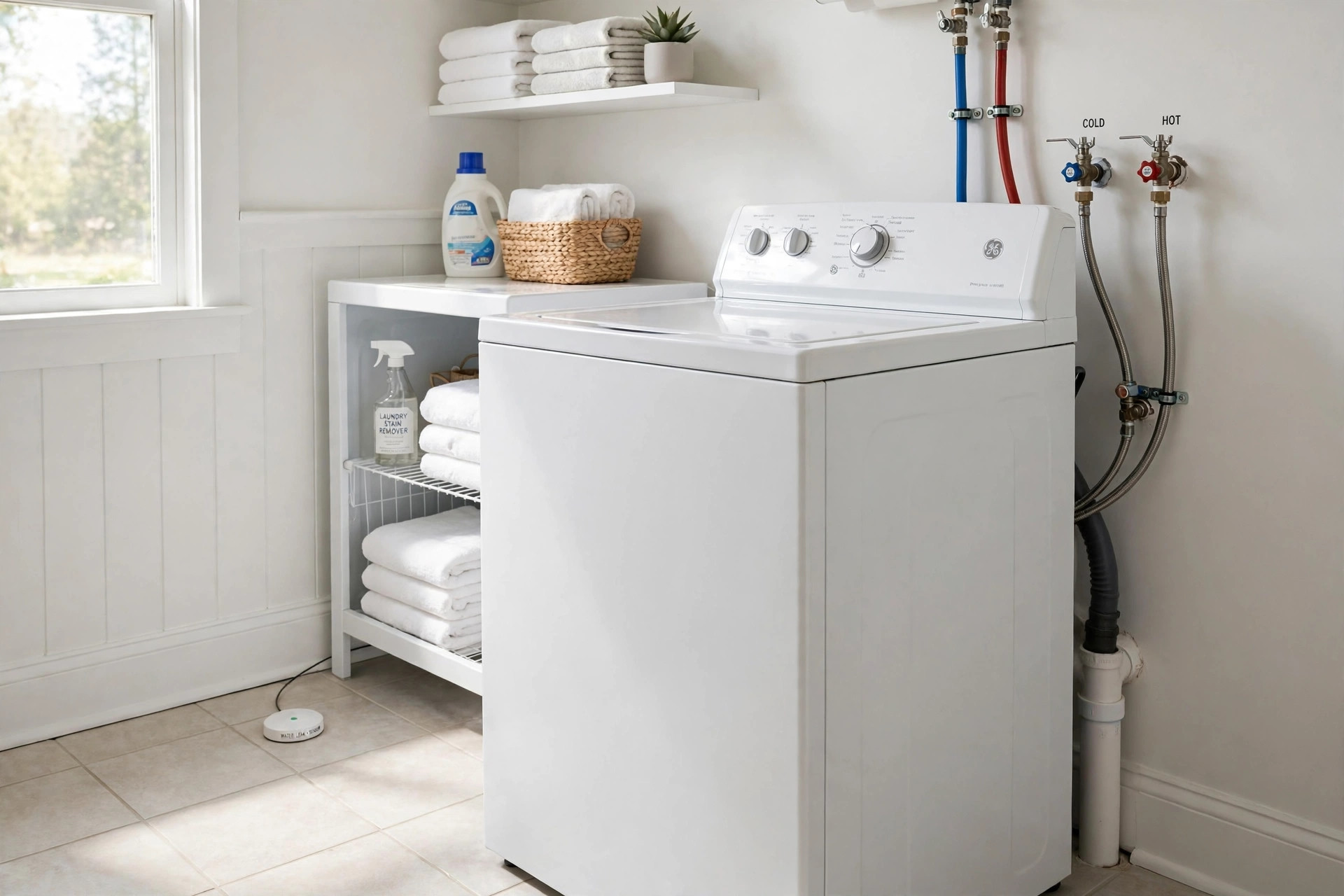

A washing machine can turn a quiet laundry room into a lake in a matter of minutes. A supply hose can burst. A drain line can back up. The pump can fail during a spin cycle. When it happens, water spreads across the floor and into walls, and the damage can cost thousands of dollars. The best leak detector for washing machine USA buyers is a small device that sits on the floor and sounds an alert the moment it touches water. It is cheap. It is simple. And it can save a home from one of the most common and most costly accidents a family can face.
Why a Leak Detector Matters
Water damage from washing machines is one of the leading causes of home insurance claims in the United States. According to industry data, a single failed supply hose can release hundreds of gallons of water per hour. Most homeowners do not learn this until they come home from work to find soaked carpet, warped floors, and water running down the stairs.
The risk is worse for machines on upper floors. A second-floor laundry room gives water a clear path into the rooms below. Ceilings stain and sag. Drywall must be cut out and replaced. Mold can start growing within a day or two in a damp wall cavity. A leak detector does not stop a burst hose by itself, but it gives an early warning that can cut the loss from hours of flooding down to minutes.
Older rubber hoses are the main danger. They dry out and crack over time. Experts in home safety often suggest that hoses be checked once a year and replaced every five years, and many now favor braided steel hoses over plain rubber. Even with good hoses, a leak detector adds a layer of protection that costs very little. It is like a smoke alarm for water: you hope it never sounds, but you want it there.
How to Choose the Right One: Best Leak Detector for Washing Machine Usa
Not all leak detectors work the same way. A few features matter more than others when the unit will sit beside a washing machine.
Sensor Style
Most detectors are small discs or pucks that rest on the floor. Water touches two metal contacts on the bottom, and the alarm sounds. Some models add a remote sensor cable that you can tuck under the machine. The cable stretches the sensing zone along the front and sides, which helps because the gap under a washer is tight. For a laundry room, a detector with an extended cable or a slim profile that slides under the machine is often the best fit.
How It Alerts You
A loud local siren is the simplest alert. It works even when the power is out or the phone is in another room. Smart models also send a message to your phone through a home Wi-Fi connection. This matters because most leaks happen when no one is home or when the family is asleep. Some detectors connect to a smart home hub and can trigger other actions, such as flashing lights or sending alerts to more than one person. Readers comparing connected options may also find our guide on smart water leak detectors for 2026 useful for a wider look at the field.
Power Source
Many detectors run on small batteries that last one to three years. Some are plug-in units with a battery backup. Battery models are easier to place anywhere, but you must remember to change the battery. Plug-in models need an outlet near the machine, which many laundry rooms have. Units that send low-battery warnings to your phone are worth the extra money, because a dead detector is the same as no detector.
Extra Features Worth Considering
A few add-ons can be helpful. Temperature sensing warns you if the laundry room drops near freezing, which can crack pipes. Some detectors can be paired with an automatic shutoff valve that closes the water supply when a leak is found. Others measure humidity over time. These features raise the price, but for a washer, the shutoff valve is the single most valuable extra. It turns an early warning into an automatic response.
Types of Leak Detectors
There are four common types. Each fits a different budget and level of protection.
Basic puck alarms. These are simple discs with two metal probes. When water bridges the probes, a loud buzzer sounds. They cost the least and need no Wi-Fi, no apps, and no setup. They are best for people who are home often and want a plain backup. Reviews of basic alarms on sites like CNET and PCMag note that their only real weakness is that no one hears them if the house is empty.
Smart Wi-Fi sensors. These add phone alerts and often a history log of events. Many work with common smart home platforms. Brands sold through large retailers such as Ring and SimpliSafe have made this category easy to shop for, and product roundups on The Verge often cover how well the apps perform. A smart sensor is the right choice for a busy household or a second home.
Cable sensors. Instead of a single point, these use a sensing rope laid along the floor. Water touching any point on the rope triggers the alarm. The rope covers a longer line, which suits wide laundry areas or a row of machines and water heaters.
Automatic shutoff systems. These pair one or more sensors with a motorized valve on the water line. When the sensor finds water, the valve closes by itself. Some models also shut the water off on a schedule when the washer is not in use. These systems cost the most but give the strongest protection. Information on water safety and product recalls from the U.S. Consumer Product Safety Commission is a good place to check before buying any safety device for the home.
Cost and Price
Prices fall into clear bands. A basic battery puck alarm usually costs between 20 and 35 dollars. It will last several years on one set of batteries. Smart Wi-Fi sensors generally run from 35 to 70 dollars each, with three-packs often selling for 80 to 150 dollars. Multi-packs make sense if you also want sensors near the water heater, under the kitchen sink, and behind the refrigerator.
Automatic shutoff valve kits start around 400 dollars and can reach 800 dollars or more for larger or professionally installed systems. A plumber may charge 150 to 300 dollars to fit a valve if you do not wish to do it yourself. Against the cost of a flooded home, which can easily reach several thousand dollars in repairs, even the top systems pay for themselves the first time they catch a leak.
For most buyers, a smart sensor in the 40 to 60 dollar range hits the sweet spot. It gives phone alerts, a loud local alarm, and a battery that lasts for years. Testing summaries from Consumer Reports and Google Store product pages can help confirm which models hold up well in daily use.
Care and Upkeep
A leak detector needs little care, but it needs some. Test it once a month by touching a wet cloth to the sensor contacts. You should hear the alarm within seconds and see the phone alert if the model is smart. Mark the test on a calendar or set a phone reminder so it is not forgotten.
Wipe the metal contacts with a dry cloth every few months. Dust and lint from the laundry room can build up on the sensor and slow its response. Make sure the detector has not been kicked out of place behind the machine. The gap under a washer collects lint, and the unit can shift when the machine shakes during a spin cycle.
Change batteries on the schedule the maker suggests, and treat low-battery warnings as urgent. Many people also choose to replace washer hoses every five years and to turn off the water supply valves when the washer will sit unused for a week or more. These simple habits, paired with a detector, lower the risk of a flood to a very low level.
Safety Notes
Keep the detector and its batteries away from standing water in a way that lets the sensor touch the floor while the electronics stay protected. Most units are designed for this, but do not drop one into a flooded area or open the case while it is wet.
A detector is a warning tool, not a guarantee. Do not place it and then ignore the washer. Check hoses, drain lines, and the drain pan from time to time. If your washer shakes hard or walks across the floor during spin cycles, have it leveled and balanced, because vibration wears out hoses and connections faster.
Buy from known brands and check that the product meets basic safety listings for electronics. Security-focused buyers often compare whole-home protection as well; our article on smart carbon monoxide detectors with app alerts covers another layer of home safety, and those interested in cameras can read our review of the best PoE security camera systems. Larger safety companies such as ADT also sell water sensors as part of monitored home systems for people who want a professional watching the alerts.
Frequently Asked Questions
Where should I place the detector near my washing machine? Set it on the floor directly behind or beside the machine, close to the water supply hoses and the drain. If the model has a remote cable, run the cable along the front edge where the machine meets the floor. Water flows downhill, so place the sensor at the lowest spot in the area.
Will a leak detector stop the water by itself? A detector alone only warns you. To stop the water by itself, you need a model paired with an automatic shutoff valve. Without a valve, the alert lets you run to the laundry room and close the supply valves by hand.
Do I need Wi-Fi for a leak detector to work? No. Basic models work with a loud buzzer and need no connection at all. Wi-Fi models need a connection only for phone alerts. The local alarm on most smart models still sounds even if the network is down.
How often should the batteries be changed? Follow the maker’s guide, but most battery sensors last one to three years. Change the batteries at the first low-battery warning. It is wise to test the unit at the same time you test smoke alarms, which many families already do twice a year.
Can one detector cover the washer and the water heater too? Only if the two are close together. Water will not travel far before the alarm sounds, so a sensor five feet away may never touch the water. For full coverage, use one detector per appliance, or buy a multi-pack.
Are smart leak detectors hard to set up? Most take less than ten minutes. You place the sensor, put in the batteries, and follow the app’s steps to join your home Wi-Fi. No tools or wiring are needed for battery models.
A Short Final Word
A washing machine works hard for every household, and it asks for little in return. A small leak detector is the cheapest insurance you can buy against a ruined floor and a mold problem. Pick a model with a loud alarm and phone alerts, place it where water will reach it first, and test it once in a while. That simple routine is what the best leak detector for washing machine USA homes is really about: a quiet guard that never sleeps.
References
ADT. (n.d.). Home security and automation. https://www.adt.com CNET. (n.d.). Technology news and reviews. https://www.cnet.com Consumer Reports. (n.d.). Product reviews and ratings. https://www.consumerreports.org Google Store. (n.d.). Smart home devices. https://store.google.com PCMag. (n.d.). Technology product reviews. https://www.pcmag.com Ring. (n.d.). Smart home security devices. https://www.ring.com SimpliSafe. (n.d.). Home security systems. https://www.simplisafe.com The Verge. (n.d.). Technology news and reviews. https://www.theverge.com U.S. Consumer Product Safety Commission. (n.d.). Product safety information. https://www.cpsc.gov
Was this guide helpful?

About Michael Thompson
The My Garden US editorial team writes practical, in-depth home and garden guides for American homeowners — tested advice, no fluff.
You May Also Like
Fireproof Safe for Home Reviews 2026 USA: What Buyers Should Know
September 16, 2026 0 views
Smart Circuit Breaker Panel Reviews 2026 USA
January 11, 2026 0 views
Window Security Film Installation Cost USA: A Plain Guide
February 12, 2026 0 views