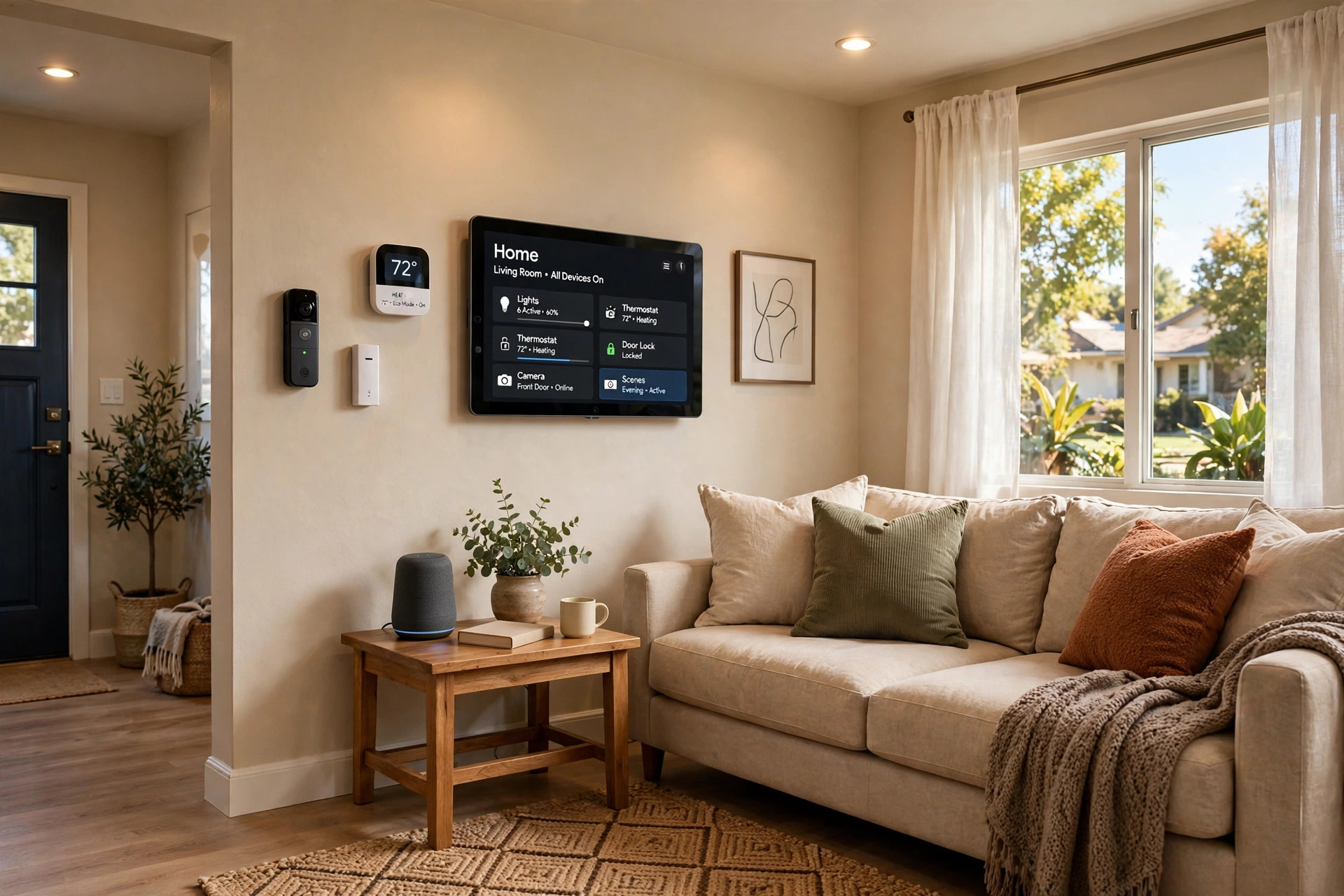

Most homeowners type “home automation installer near me cost” into a search box when they want two things at once: a local professional they can trust, and a fair price. The question is simple, but the answer has many parts. A single smart doorbell may cost little to set up, while a whole house with lights, locks, shades, and sound can run into thousands of dollars. This guide explains what a home automation installer does, why hiring one matters, and what you should expect to pay in the United States in 2026.
Why Hiring a Home Automation Installer Matters
Smart devices are sold as simple boxes you can set up in minutes. Many are. A plug-in speaker or a battery doorbell often works right out of the box. But a full home system is a different task. Dozens of devices must talk to one network, follow one set of rules, and keep working when the power blinks or the Wi-Fi drops. That is where a professional earns his fee.
An experienced installer starts with a plan. He walks through your home and notes the layout, the age of the wiring, and the strength of your wireless signal in each room. He then picks devices that work well together instead of a random mix that may fail to connect.
Safety is another strong reason to hire help. Some jobs touch your electrical panel or run new wires through walls. A licensed installer or electrician does this work to code, which keeps your home safe and keeps your insurance valid. Sloppy wiring behind a smart switch can overheat. A professional avoids that risk.
Finally, there is the question of time. Setting up ten devices yourself can take a whole weekend. A pro usually finishes the same work in a few hours and shows you how to use the system before he leaves.
What a Home Automation Installer Actually Does: Home Automation Installer near Me Cost
Many people picture an installer as someone who screws gadgets to the wall. The real job is broader. A good installer acts as a designer, a technician, and a teacher in one visit.
The visit often begins with a short survey. The installer asks what you want the house to do. Do you want lights that turn off by themselves? A door that locks when you leave? A thermostat that learns your schedule? From your answers, he builds a device list and a simple map of where each item will live.
Next comes the technical work. He mounts cameras and doorbells, swaps old switches for smart ones, and wires thermostats and controllers. He then connects every device to your home network and to one control app or hub. This network step is where most do-it-yourself projects fail, so it is also where the pro adds the most value. He secures the Wi-Fi, sets up a separate network for gadgets if needed, and makes sure the signal reaches far rooms and the garage.
The last step is testing and teaching. The installer checks that each device answers its command, then shows you the basics: how to lock the door from your phone, how to set a bedtime scene, and what to do if a device goes offline.
For larger homes, the same installer may return in stages as rooms are finished. Many homeowners start with security and lighting, then add climate and entertainment later. A clear plan lets the system grow without waste.
Types of Automation Work an Installer Can Handle
Smart Lighting
Lighting is the most popular place to start. An installer can add smart switches, dimmers, and bulbs that respond to voice, schedules, or motion. Outdoor path lights and porch lights can be set to follow sunset. Groups of lights can form scenes, such as a “movie night” setting that dims the room with one command.
Security and Access
This category covers video doorbells, outdoor cameras, smart locks, and garage controllers. An installer places cameras where they see the most without wasting coverage. He wires doorbells that need power and configures alerts so your phone tells you when someone is at the door. For safety guidance on cameras and connected devices around the home, Ring publishes helpful product information, and the U.S. Consumer Product Safety Commission offers general home safety resources.
Climate Control
Smart thermostats, room sensors, and vent controls can cut energy waste. An installer checks that your heating and cooling system can accept a smart thermostat before he starts. Some older furnaces need a common wire that is not present, and the installer adds it. He then sets schedules that match your day and shows you how to adjust them from your phone.
Entertainment and Whole-Home Audio
Installers can wire speakers into ceilings, connect televisions to streaming hubs, and set up one remote that controls it all. Hidden wiring keeps rooms neat. A pro also balances sound between rooms so music follows you at a steady volume.
Motorized Shades and Blinds
Shades that open at sunrise and close at dusk add comfort and privacy. Battery shades are simple, but hardwired shades in large windows often need a professional to measure and mount them correctly.
Voice Assistants and Hubs
At the center of many systems sits a hub or a voice assistant. Devices from the Google Store work with Google Home, while other households prefer systems tied to Samsung SmartThings or similar platforms. The installer links each device to your chosen platform and builds routines that tie them together, such as a “good night” command that locks doors, lowers shades, and arms the alarm.
How to Choose the Right Installer
Price matters, but it is not the only thing to weigh. A cheap quote that leads to broken promises costs more in the end. Use the steps below to pick a solid local pro.
First, check credentials. In most states, anyone who touches house wiring must hold an electrician license or work under one. Ask for the license number and for proof of insurance. Insurance protects you if something is damaged during the work.
Second, ask about experience with your brands. An installer may be expert in one system and new to another. If you already own devices, say so during the first call. Ask how many similar homes he has finished in the past year.
Third, read local reviews and ask for references. Two or three recent customers can tell you if the installer arrived on time, kept the work area clean, and returned calls after the job. Short, honest answers from past clients are worth more than a glossy brochure.
Fourth, get a written quote. It should list each device, the labor charge, and any extra fees for travel or return visits. A vague one-line price is a warning sign. A clear itemized quote lets you compare two installers fairly.
Fifth, ask about support. Devices need updates and the occasional reset. Find out whether the installer offers a warranty period, a service plan, or paid visits after the first year. Many good pros include thirty to ninety days of free support.
Finally, trust clear communication. The installer should explain choices in plain words and respect your budget. If he pushes expensive brands without asking what you need, look elsewhere.
Cost and Price: What the Home Automation Installer Near Me Cost Really Is
Now to the main question. The home automation installer near me cost depends on the size of the job, the devices you pick, and where you live. Labor rates are higher in big cities and lower in small towns. Older homes with weak wiring cost more than new homes that are ready for smart devices.
Typical Price Ranges in 2026
A small single-room job, such as a smart thermostat plus two switches and a doorbell, often costs between $300 and $800 for parts and labor. The devices themselves are modest in price, and the installer may finish in half a day.
A mid-size project covering a living room, kitchen, and entryway — with lighting scenes, a video doorbell, two cameras, and a smart lock — commonly falls between $1,500 and $4,000. This is the range most American families choose for a first whole-home step.
A full whole-home system with lighting in every room, security cameras, climate control, motorized shades, and audio can run from $5,000 to $20,000 or more. Luxury homes with custom programming, hidden wiring, and high-end brands sit at the top of this range. National project data and reviews reported by CNET and PCMag show similar broad ranges, and Consumer Reports regularly compares device reliability across brands.
How Installers Charge
Most installers use one of three pricing styles. Some charge a flat project fee based on a written plan. Others charge by the hour, often $75 to $150 per hour, plus the cost of devices. Ask which style your installer uses before work begins, so there are no surprises.
What Moves the Price Up or Down
Several factors change the final bill. The number of devices is the biggest one. The brand tier matters too: premium brands cost more than budget brands, though they often include longer warranties.
Your home itself plays a role. Thick walls, long distances between rooms, and weak Wi-Fi may call for extra network gear. If your electrical panel is old or full, the installer may need an electrician to add circuits, which adds cost.
Ways to Keep Costs Under Control
Start small and grow. Many homeowners automate the front door and the main living area first, then add bedrooms later. Buy devices in bundles when you can, since starter kits are often cheaper than single items. Ask the installer which tasks you can safely do yourself and let the pro handle the wiring and network. A smart home setup service cost usa 2026 comparison can help you judge whether a quote is fair, and a whole home automation cost calculator usa can give you a rough budget before you call anyone.
Care and Upkeep After Installation
A smart home needs small, regular care to stay reliable. The good news is that most upkeep is simple and takes little time.
Update device software when the app asks you to. These updates fix bugs and close security holes. Most updates run on their own at night, but check the app once a month to make sure nothing is stuck.
Keep your network healthy. Restart your router every few months if devices respond slowly. If you add many new gadgets, ask your installer whether your router can handle the load.
Replace batteries in locks, sensors, and remotes on schedule. The app usually warns you when a battery runs low, but a yearly battery check in the fall is a good habit. Clean camera lenses with a soft cloth so night vision stays clear.
Consider a yearly checkup. Some installers offer an annual visit to test devices, refresh settings, and update firmware. This visit often costs far less than the original install and keeps small problems from growing.
Safety to Keep in Mind
Electrical safety comes first. Never open a switch box or touch bare wires unless you are trained. Let the licensed pro handle all line-voltage work. If a device smells hot or a switch feels warm, turn off the breaker and call for help.
Data safety matters too. Every smart device is a small computer on your network. Use strong, unique passwords for your accounts and turn on two-factor login where the app allows it. Keep your home Wi-Fi password private, and ask the installer to set up a guest network for visitors. These steps are covered in more depth in our guide on how to secure smart home devices usa guide. Tech coverage from The Verge also follows smart home privacy news closely.
Physical safety rounds out the list. Mount cameras and outdoor devices firmly so wind cannot knock them down. Keep cords out of walkways during installation.
Frequently Asked Questions
How much does a home automation installer charge per hour?
Hourly rates in 2026 usually fall between $75 and $150, depending on the city and the installer’s skill level. Simple jobs may be quoted as a flat fee instead. Always ask whether the rate includes travel time and the first service visit.
Can I install smart home devices myself instead of hiring a pro?
Yes, for simple plug-in devices such as smart speakers, bulbs, and battery cameras. Hire a pro for anything wired, for whole-home systems, or when many devices must work as one. The pro also handles network setup, which is where most DIY projects struggle.
How long does a typical installation take?
A single room often takes half a day. A mid-size home with lighting, security, and climate usually takes one to two full days. Large custom projects can take a week or more, especially if new wiring is needed.
Do I need to buy devices from the installer?
Not always. Many installers let you buy your own devices and pay for labor only. Others prefer to supply the brands they know best. Ask about the policy and compare prices before you agree.
Will a smart home system raise my electric bill?
Usually the opposite happens. Smart thermostats and scheduled lights tend to cut energy waste. The devices themselves use very little power.
What happens if my internet goes down?
Most basic functions keep working. Lights still turn on at the wall switch, and many hubs run local schedules without the internet. Remote control from your phone and voice commands may pause until the connection returns. A good installer explains which features need the internet and which do not.
A Short Final Word
The home automation installer near me cost is not one fixed number. It is a range shaped by your home, your devices, and your goals. Small projects start at a few hundred dollars, while full custom systems reach into the thousands. Get two or three written quotes, check licenses and reviews, and start with the rooms that matter most to you. For a broader view of professionally installed options, SimpliSafe and ADT both describe monitored and automated packages on their sites. With a clear plan and the right installer, your home can be smarter, safer, and easier to live in.
References
ADT. (n.d.). Home security and automation. https://www.adt.com CNET. (n.d.). Technology news and reviews. https://www.cnet.com Consumer Reports. (n.d.). Product reviews and ratings. https://www.consumerreports.org Google Store. (n.d.). Smart home devices. https://store.google.com PCMag. (n.d.). Technology product reviews. https://www.pcmag.com Ring. (n.d.). Smart home security devices. https://www.ring.com Samsung. (n.d.). Electronics and smart home. https://www.samsung.com SimpliSafe. (n.d.). Home security systems. https://www.simplisafe.com The Verge. (n.d.). Technology news and reviews. https://www.theverge.com U.S. Consumer Product Safety Commission. (n.d.). Product safety information. https://www.cpsc.gov
Was this guide helpful?

About Emily Rodriguez
The My Garden US editorial team writes practical, in-depth home and garden guides for American homeowners — tested advice, no fluff.
You May Also Like
Best Trail Camera for Home Security USA: A Plain Guide
January 24, 2026 0 views
Smart Air Purifier With App Reviews 2026 USA: A Practical Guide for American Homes
February 20, 2026 0 views
Best Smart Home Hub for Beginners USA: A Plain Guide
March 25, 2026 0 views