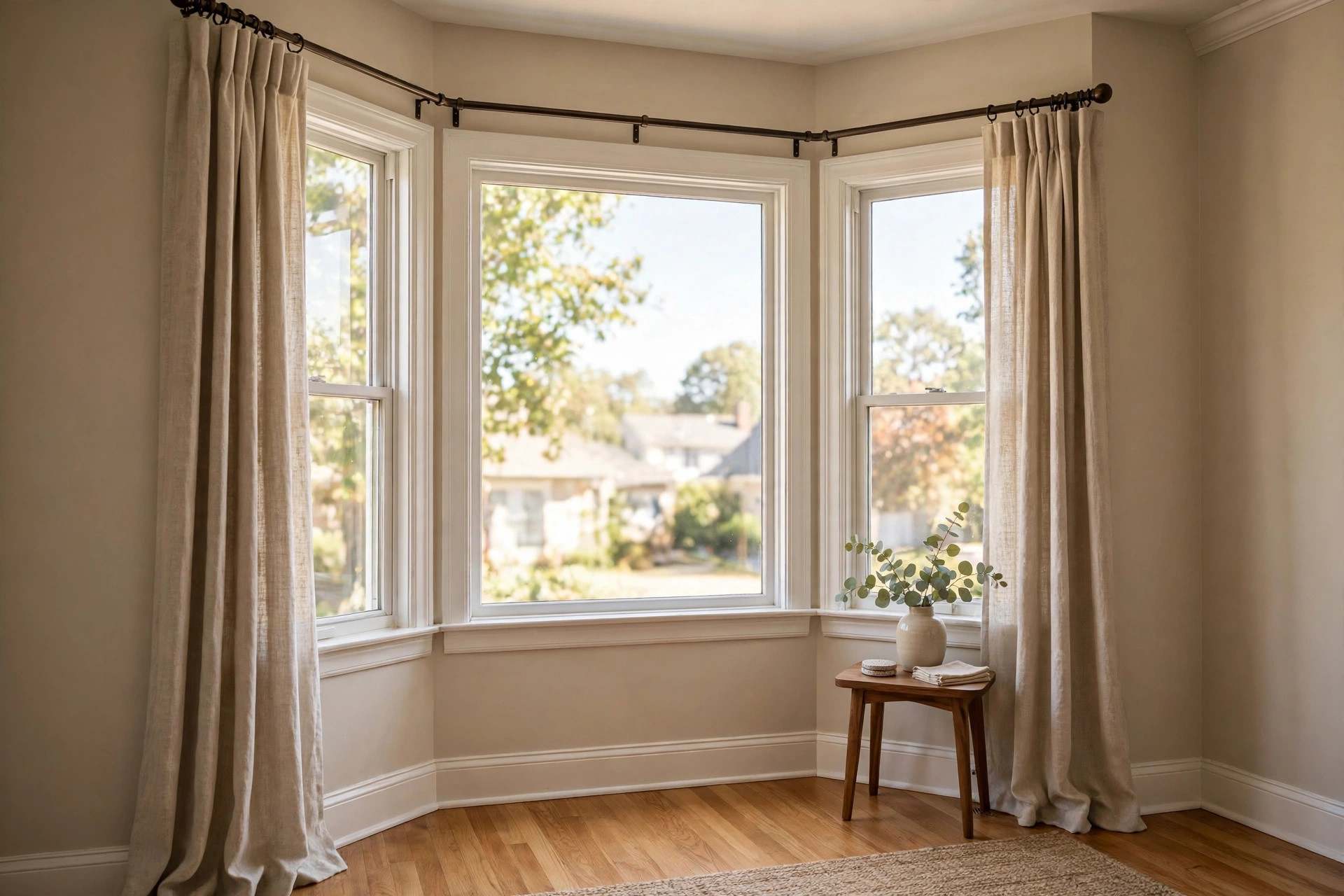

A bay window is one of the nicest parts of a house. It brings in light, it opens up the room, and it gives you a view of the street or the garden. But dressing a bay window is not easy. A straight rod will not fit. The search for the best bay window curtain rods for usa homes takes most people through several tries before they find a rod that bends with the window and holds the curtains well. This guide will help you get it right the first time.
A bay window has three sections: a wide front window and two angled side windows. The angles are usually 135 degrees, but in older American homes they can be sharper or wider. Any rod you buy must follow those angles. If it does not, the curtains will bunch up in the corners and the rod will look wrong. The right rod turns a difficult window into the best-dressed window in the house.
Why Bay Windows Need Special Rods
A normal window takes a normal rod. You screw two brackets into the wall, you lay the rod across, and you hang the curtains. A bay window needs more thought for three reasons.
The Shape Is Not Flat
A bay window juts out from the wall. It is made of three or five panes of glass set at angles. A straight rod can only cover the front pane, which leaves the side panes bare. A rod made for bay windows is built in sections that join at the same angles as your window. Some have adjustable hinges at the joints so you can set the angle yourself.
The Rod Must Carry More Weight
Bay windows take long curtains. Many homeowners hang curtains that run the full width of all three sections. That is a lot of fabric. A weak rod will sag in the middle. The best bay window curtain rods for usa homes are built with thick metal or wood and with a center support bracket for each section.
Light Control Matters
A bay window is a main source of daylight. People want to let the light in by day and shut it out at night. Curtains on a bay rod glide around the corners, so you can draw them fully closed across the whole bay. This is hard to do with three separate rods, which is why a single bent rod is the better answer.
Types of Bay Window Curtain Rods: Best Bay Window Curtain Rods for Usa Homes
There are four main types. Each one fits a different kind of window and a different kind of curtain.
Multi-Section Adjustable Rods
This is the most common type. It comes in two or three straight pieces that join with hinge brackets at the corners. You can change the length of each piece and the angle of each hinge. Most kits cover bays from four to ten feet wide. Metal finishes include bronze, black, nickel, and brass. Wood versions come in oak, cherry, and white. If you want one rod to do the whole job, this is the type most American shoppers end up buying.
Hinged Elbow Rods
A hinged elbow rod is like the multi-section rod but with fixed corner elbows instead of adjustable hinges. The elbows come in set angles, usually 135 degrees. If your bay has standard angles, an elbow rod gives a cleaner, sturdier corner than an adjustable hinge. The corner joints are the weak point of any bay rod, so a fixed elbow is a strong choice for heavy drapes.
Ceiling-Mounted Tracks
A track is not a rod at all. It is a flat channel that screws to the ceiling and holds curtain hooks that slide along it. A track can bend to any angle, so it fits any bay. Tracks are a good choice when the window has very little wall space above it, or when you want a modern look with no visible rod. Many people use them with sheer panels or with blackout curtains for bedrooms when the bay window is in a sleeping room.
Swing-Arm and Cafe Rods
Some homes treat each section of the bay as its own small window. Then you can hang a short swing-arm rod on each section. A swing-arm rod holds a light curtain or a cafe curtain and can swing out from the wall. This works well in kitchens and breakfast nooks where you want some light to stay in the room. It is not the best choice for full-length drapes, but it suits outdoor patio curtains style sheers and light cafe panels.
How to Choose the Right Rod
Picking the best bay window curtain rods for usa homes comes down to five steps. Take them in order and you will avoid the usual mistakes.
Measure the Bay First
Measure the width of each window section, and measure the angle between sections with a simple protractor. Write down all three numbers. Many buyers guess, and then the rod they order is too short or the hinges do not reach the right angle. Measure twice. If your bay has five sides instead of three, make sure the rod kit you pick supports that many sections. A guide from Blinds.com on measuring windows is a helpful starting point before you shop.
Check the Weight Rating
Add up the weight of your curtains. Light sheers weigh very little. Medium drapes weigh a few pounds per panel. Heavy velvet drapes, such as navy blue velvet curtains, can weigh eight pounds or more per panel. A bay rod must hold three panels at once. Check the weight rating on the box. If it is not printed, assume a cheap rod is not made for heavy fabric.
Pick the Material
Metal rods are the strongest and the most common. Wood rods look warm and traditional, which suits older homes. Brass and bronze finishes fit classic rooms. Brushed nickel and matte black fit modern rooms. White rods nearly disappear against white trim. The finish will show in the corners of the bay, so pick one you like to look at. Retailers such as Wayfair and IKEA carry a wide range of finishes, and The Home Depot stocks both metal and wood kits in store.
Count the Brackets
Each section of the rod needs at least two brackets, one near each end. A three-section bay needs six brackets, plus extra center supports for long spans. A bracket every 30 to 36 inches keeps the rod from sagging. Cheap kits sometimes include too few brackets. Count them before you buy, and buy extra if the box is short.
Think About the Curtains You Will Hang
Choose the rod with your curtains in mind. Tab-top and grommet curtains slide best on a smooth metal rod. Rod-pocket curtains gather tightly and need a thinner rod to slide well. Pinch-pleat drapes hang from hooks, so the rod only needs to hold rings. If you plan to use heavy lined drapes for winter, buy a rod rated for that weight from the start. Ideas and room photos from HGTV and The Spruce can help you match rod style to curtain style.
Cost and Price
The best bay window curtain rods for usa homes do not have to cost a fortune, but price does tell you something about quality. A basic three-section metal kit costs between twenty and fifty dollars. These kits work well for light sheers and medium drapes. Mid-range kits run from fifty to one hundred twenty dollars and include stronger brackets, better finishes, and smoother hinges. Premium wood rods and custom-bent metal rods cost one hundred fifty to four hundred dollars or more. Custom rods are bent to the exact angles of your bay by a workshop, and they fit like they were born there.
Remember that the rod is only part of the cost. Full-length curtains for a bay window take more fabric than a normal window. Curtain rings, finials, and extra brackets add up. Plan your full budget before you buy the rod, so the rod and the curtains suit each other. Sale prices and bulk packs at Lowe’s can bring the total down if you watch for seasonal discounts.
A cheap rod that sags or breaks is not a bargain. Replacing a failed rod means patching screw holes in the wall and starting over. Spend enough to get a rod with solid brackets and a real weight rating. Your curtains will hang straight for years.
Care and Upkeep
A curtain rod is a simple thing, and simple care keeps it working. Dust the rod when you dust the room. Wipe metal rods with a damp cloth and dry them well. Oil-finished wood rods can be wiped with a dry cloth; never soak them. Every year or two, check that the bracket screws are still tight. Houses settle, and screws loosen. Tighten them with a screwdriver before the rod starts to lean.
If the curtains do not glide smoothly, take the rings off and wipe the rod with a dry cloth to remove dust and grease. A tiny drop of silicone spray on the rod helps rings slide, but wipe off the extra so it does not mark the curtains. For ceiling tracks, vacuum the channel once a year so dust does not jam the hooks.
Safety
Curtain rods are heavy when loaded with drapes, and they hang above people’s heads. Install every bracket into a wall stud or use proper wall anchors rated for the load. Drywall alone will not hold a loaded bay rod. Keep cords and pulls on curtains out of the reach of small children and pets. The U.S. Consumer Product Safety Commission warns about window covering cords as a strangulation risk, and the same care applies to any pull cords on bay curtains. Choose cordless options when children are in the home.
Frequently Asked Questions
Can I use three straight rods instead of one bay rod?
You can, but the result is rarely as good. Three straight rods leave gaps in the corners where light leaks in and where the curtains cannot cross. A single bay rod lets curtains glide around the corner and close fully. It also looks neater. Use three rods only if your bay sections are very far apart or if you want each window dressed differently.
What angle do most bay windows have?
Most American bay windows join at 135 degrees, but many homes differ. Victorian and craftsman houses often have 120-degree or 150-degree bays. Always measure your own angles. Do not trust the standard number. An adjustable hinge rod forgives a few degrees of error, which is another reason it is the most popular type.
How far should the rod extend past the bay?
Each end of the rod should extend four to six inches past the outer edge of the side windows. This gives the curtains room to stack when open, so they do not block the glass. Mount the brackets six to eight inches above the window frame so the curtains fall long and the window looks taller.
Can a bay rod hold blackout curtains?
Yes, if the rod is rated for the weight. Blackout drapes are heavy because of their lining. A sturdy metal multi-section rod with six or more brackets handles them well. Pair them with a ceiling track if you want the tightest light seal, since a track leaves almost no gap at the top.
Should I hire someone to install the rod?
Most handy homeowners can install a bay rod in one to two hours with a drill, a level, and a stud finder. Hire a handyman if the bay is very wide, if the curtains are heavy, or if the wall is plaster or masonry that needs special anchors. A professional install usually costs between seventy-five and one hundred fifty dollars in most American cities.
Wood or metal: which is better for a bay window?
Metal is stronger and suits heavy drapes and wide bays. Wood is warm and suits traditional rooms and lighter curtains. Both work when sized right. The more important choice is the bracket count and the weight rating. A well-built metal rod beats a flimsy wood rod, and a well-built wood rod beats a flimsy metal one.
A Short Final Word
The best bay window curtain rods for usa homes are the ones that fit your angles, carry your curtains, and look like they belong in the room. Measure carefully, buy for the weight of your fabric, and install into solid wood or anchors. Do that, and your bay window will go from a decorating headache to the finest window in the house.
References
Blinds.com. (n.d.). Window blinds, shades, and shutters. https://www.blinds.com HGTV. (n.d.). Home and garden ideas. https://www.hgtv.com IKEA. (n.d.). Home furnishings. https://www.ikea.com Lowe’s. (n.d.). Home improvement products. https://www.lowes.com The Home Depot. (n.d.). Home improvement products. https://www.homedepot.com The Spruce. (n.d.). Home and garden advice. https://www.thespruce.com U.S. Consumer Product Safety Commission. (n.d.). Product safety information. https://www.cpsc.gov Wayfair. (n.d.). Furniture and home goods. https://www.wayfair.com
Was this guide helpful?

About James Carter
The My Garden US editorial team writes practical, in-depth home and garden guides for American homeowners — tested advice, no fluff.
You May Also Like
How to Buy Made to Measure Blinds Online in Colorado
February 2, 2026 0 views
Thermal White Linen Curtain Panels for Sale: A Plain Buying Guide
October 1, 2026 0 views
Affordable Window Film Privacy Tint Buying Guide
April 19, 2026 0 views