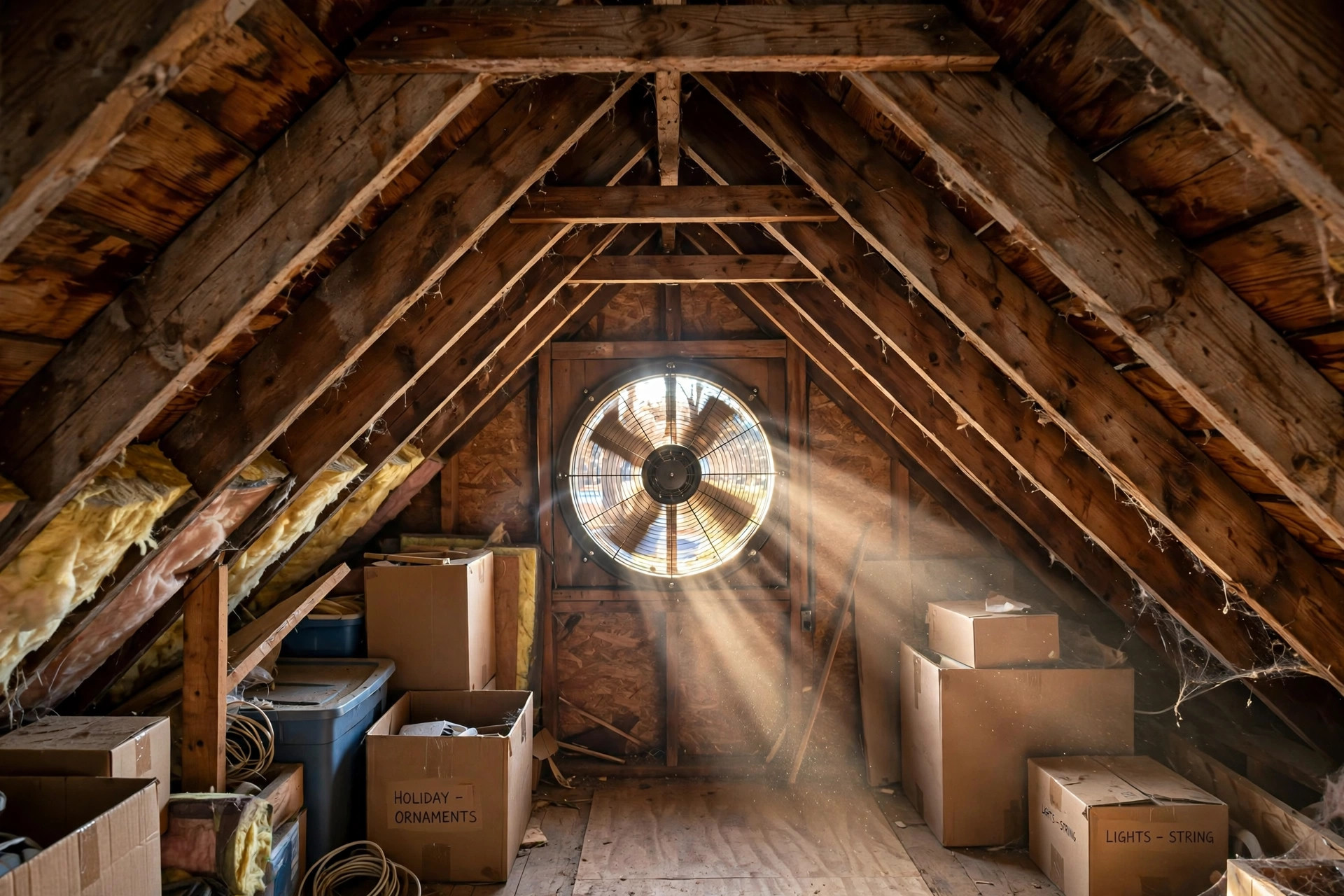

An attic fan pushes hot air out of the attic. It pulls cooler outside air in through vents near the roof edge. This simple change can make the attic much cooler. A cooler attic can mean a cooler house. It can also lower the strain on an air conditioner.
If you search for attic fan installation cost near me, you will see a wide range of prices. Most homes in the United States pay between $300 and $900 for a full install. The average falls near $550. Some jobs cost less. Some cost more. The price depends on the fan type, the size of the attic, the wiring needs, and local labor rates.
This guide walks through every part of the cost. You will learn what to look for, how the work is done, and how to pick a fair quote.
Why Attic Heat Matters
Heat rises. On a sunny day, the air in an attic can reach 130 to 150 degrees. That heat presses down into the living space. It works its way through the ceiling. The air conditioner must run longer to fight it.
A hot attic also hurts the house itself. Roof shingles age faster in high heat. Wood framing can dry out. Moisture can build up and cause mold. Good attic ventilation keeps the air moving and the temperature down.
An attic fan is one tool in the fight. It works with soffit vents and ridge vents. These are passive vents. They let air flow on its own. The fan adds power. It pulls air out at a set pace. Many fans have a thermostat. The fan turns on when the attic hits a set temperature. It turns off when the attic cools.
What to Look for in an Attic Fan: Attic Fan Installation Cost near Me
Not all attic fans are the same. Before you ask for quotes, learn the key traits.
Airflow rating. Fans are rated in CFM. That stands for cubic feet per minute. It tells how much air the fan moves each minute. A common rule says you need about 700 CFM for each 1,000 square feet of attic floor. A 1,500-square-foot attic needs about 1,050 CFM.
Power source. Electric fans run on house power. Solar fans run on a small solar panel. Each has pros and cons. These are covered below.
Thermostat control. A good fan has a built-in thermostat. It turns the fan on and off by itself. Some add a humidistat. That turns the fan on when moisture gets too high.
Noise level. Fans make some sound. Better models run quiet. Check the rating before you buy.
Build quality. Look for a sealed motor. It lasts longer. Galvanized steel parts resist rust. A strong screen keeps birds and bugs out.
Types of Attic Fans
There are three main types. Each has a different price.
Electric Gable Fans
These mount inside the attic on a gable wall. A gable wall is the flat end wall under the peak of the roof. The fan blows hot air out through the existing vent. Electric models are the most common. The fan itself costs $100 to $300. Install adds labor.
Solar Attic Fans
These use a solar panel to run the motor. No house wiring is needed in most cases. That can cut labor cost. The fan and panel cost more. Expect $250 to $600 for the unit. The panel works only in sun. The fan slows or stops on cloudy days.
Roof-Mount Fans
These mount on the roof slope. A vent housing keeps rain out. Roof mounts need a hole cut in the roof. That adds labor and risk. The fan costs $150 to $400. Install runs higher than gable models.
Some homeowners also compare attic fans with whole house fans. A whole house fan moves air through the whole home, not just the attic. The two serve different needs.
Attic Fan Installation Cost: The Full Breakdown
Here is what most installers charge for each part of the job.
The fan. A basic electric gable fan costs $100 to $200. A mid-range model with a thermostat costs $150 to $300. Solar models run $250 to $600. High-end solar units with a backup battery reach $700 or more.
Labor. Electricians charge $50 to $150 per hour in most regions. A simple gable fan install takes one to two hours. A roof-mount fan takes two to four hours. A solar install takes one to three hours.
Wiring. If the attic has power nearby, wiring is quick. The cost stays low. If new wiring must run from the breaker box, add $100 to $300.
Venting. A fan needs intake vents to work. Soffit vents let fresh air in. If the attic lacks them, the installer may add a few. Each vent adds $25 to $75 in labor and parts.
Permit. Some towns require a permit for electrical work. A permit can cost $50 to $150. Your installer should know the local rules.
Put together, here are typical totals:
– Basic electric gable fan: $300 to $550 – Solar attic fan: $400 to $900 – Roof-mount electric fan: $450 to $800 – Fan plus added intake vents: add $100 to $300
What Raises or Lowers the Price
Several factors move the final bill up or down.
Attic size. A large attic may need a bigger fan or two fans. Two fans can double the cost.
Roof height and slope. A steep roof makes the work harder. The installer may need extra safety gear. Labor goes up.
Existing wiring. A home with power already in the attic saves money. Old homes with no attic wiring cost more.
Fan type. Solar fans cost more up front but need less labor. Electric fans cost less to buy but may need wiring.
Local labor rates. Prices differ by region. Large cities often cost more. Rural areas often cost less. When you search for attic fan installation cost near me, look for three quotes to see the local range.
Season. Many installers stay busy in summer. Booking in spring or fall can sometimes save money.
How to Get Fair Quotes Near You
Start with a clear plan. Call at least three local pros. These can be electricians or HVAC firms. Ask each one the same questions.
– What fan models do you install? – Does the quote include the fan and the labor? – Will you add a thermostat? – Do you check the intake vents? – Is a permit needed, and is it in the price? – What is the warranty on the fan and the labor?
Write down each answer. Compare the total price, not just the labor rate. A low hourly rate with many hours can cost more than a flat price.
Check reviews before you book. Sites like Consumer Reports and This Old House offer buying guides. Local review sites show how each firm treats customers.
The U.S. Department of Energy offers guidance on attic ventilation and cooling. Energy Star lists rebates for home energy upgrades. Some utility firms give credits for attic ventilation work.
DIY or Hire a Pro
Some handy homeowners install their own fan. It is possible. It is not always wise.
When DIY works. If you are handy with tools, you can mount a gable fan. You can wire a simple thermostat. You need basic electrical skill. A solar fan is the easiest to do yourself. It often needs no house wiring.
When to hire a pro. Roof-mount fans need a hole in the roof. A bad cut can cause leaks. New wiring from the breaker box needs an electrician in most areas. Local codes may require a licensed pro. When in doubt, hire one.
DIY guides from Family Handyman show the steps in detail. But even a good guide cannot replace skill. A pro finishes the job in a few hours. A mistake can cost far more than the labor you saved.
How the Install Works
Most gable fan installs follow the same steps.
1. The installer shuts off power to the work area. 2. The fan mounts to the gable vent frame. Screws hold it in place. 3. The installer seals gaps with caulk or foam. This stops air leaks. 4. Wiring runs to the nearest power source or a new circuit. 5. A thermostat wires into the line. It sits in the attic air stream. 6. Power comes back on. The fan runs for a test.
The job takes one to three hours for most homes. The installer should leave the area clean. You should get a short demo of the thermostat.
Care and Upkeep
An attic fan needs little care. A few steps keep it running for years.
Clean it once a year. Dust builds up on the blades. Dust cuts airflow. Turn off power. Wipe the blades with a damp cloth. Vacuum the screen.
Check the thermostat. Test it each spring. Turn the dial down until the fan starts. Turn it back to your set point. Most people set it between 100 and 110 degrees.
Oil the motor if needed. Some motors have oil ports. A few drops of oil each year keeps them smooth. Sealed motors need no oil.
Listen for odd sounds. A fan that rattles may have a loose blade. A fan that squeals may have a worn bearing. Fix small issues early. They grow worse with time.
Check the screen. The screen keeps birds and insects out. Holes let pests in. Replace a torn screen.
With basic care, a good fan lasts 10 to 15 years. Solar fans can last longer since they have fewer parts.
Safety Notes
Attic fans are safe when installed right. Keep these points in mind.
Electrical safety. Always shut off power before work. If you are not sure about wiring, call an electrician.
Attic heat. Attics get very hot in summer. Do the work early in the day. Bring water. Take breaks.
Ladder safety. Roof work needs a stable ladder. Have a helper hold it. Wear shoes with grip.
Backdraft risk. A strong fan can pull air down a flue. This affects gas water heaters and furnaces. A pro should check for this. Sealed-combustion units are safe. Open-flue units need care.
Fire risk. Keep the motor clean. Dust and lint can catch fire in rare cases. A yearly cleaning is cheap insurance.
Pairing With Other Attic Upgrades
An attic fan works best as part of a system. Many homes also need better attic ventilation for hot climates. More intake vents give the fan more air to move.
Insulation matters too. A fan cools the attic air. Insulation keeps that heat from reaching the living space. Together they cut cooling bills more than either alone.
Some homeowners look at solar attic fan reviews before choosing between solar and electric power. Reviews help set real expectations for airflow and life span.
Manufacturers like Trane, Carrier, Lennox, and Rheem publish specs on ventilation products. Reading the spec sheet helps you compare CFM ratings fairly.
FAQ
How much does attic fan installation cost near me? Most U.S. homeowners pay $300 to $900 total. The average is about $550. Get three local quotes to learn your area’s range.
Can I install an attic fan myself? Yes, if you have basic electrical skill. A solar fan is the easiest DIY option. Roof-mount fans and new wiring are better left to a pro.
Do attic fans really lower cooling bills? They can. A cooler attic puts less load on the air conditioner. Savings vary by climate, roof color, and insulation. Most homes see a modest drop in summer bills.
How long does installation take? A simple gable fan takes one to two hours. A roof-mount fan takes two to four hours. Wiring from the breaker box adds time.
Are solar attic fans worth the extra cost? They can be. There is no wiring cost and no power bill. They work best on sunny roofs. On cloudy days the airflow drops.
Do I need a permit for an attic fan? It depends on the town. Some areas require a permit for new electrical circuits. Many do not require one for a simple fan swap. Ask your installer.
A Final Word
An attic fan is a small upgrade with a clear job. It pushes hot air out. It pulls cool air in. It eases the load on the cooling system. It protects the roof.
The cost stays within reach for most homes. Expect $300 to $900. Plan the job well. Get three quotes. Pick a fan with the right CFM and a thermostat. Keep up with yearly cleaning. The fan will pay you back in comfort and in lower strain on the air conditioner.
References
Carrier. (n.d.). Heating and cooling systems. https://www.carrier.com Consumer Reports. (n.d.). Product reviews and ratings. https://www.consumerreports.org ENERGY STAR. (n.d.). Energy efficient products. https://www.energystar.gov Family Handyman. (n.d.). DIY home repair and maintenance. https://www.familyhandyman.com Lennox. (n.d.). Heating and cooling systems. https://www.lennox.com Rheem. (n.d.). Heating, cooling, and water heating. https://www.rheem.com This Old House. (n.d.). Home renovation guidance. https://www.thisoldhouse.com Trane. (n.d.). Heating and air conditioning. https://www.trane.com U.S. Department of Energy. (n.d.). Energy efficiency and renewable energy. https://www.energy.gov
Was this guide helpful?

About Michael Thompson
The My Garden US editorial team writes practical, in-depth home and garden guides for American homeowners — tested advice, no fluff.
You May Also Like

Best Ventless Gas Fireplace Reviews USA: How to Pick a Safe, Warm Unit
May 3, 2026 0 views
High Efficiency Furnace Pros Cons USA: What Homeowners Should Know
September 25, 2026 0 views
A Guide to Ceiling Fan Direction for Summer in the USA
March 8, 2026 0 views