
Introduction
Living in an RV full time means your home moves. One week you park near a desert, the next near a lake. The water you hook up to changes with every stop. Some campgrounds have clean, tested water. Others draw from old wells. A few have rusty pipes and low pressure. That is why finding the best water filter for rv full time usa travel matters so much. A good filter gives you one less thing to worry about.
This guide explains the topic in plain words. It covers why clean water matters, what to look for, the main filter types, costs, care, and safety. It ends with answers to common questions. By the close, you will know how to pick a filter that fits your rig and your budget.
Why Clean Water Matters on the Road: Best Water Filter for Rv Full Time Usa
Water from a campground spigot is not like water from your old home tap. A city supply stays steady. RV park water can vary day to day. Old parks may have aging pipes. Rural parks may use well water with iron, sulfur, or grit. Some parks in farm country may have water with high chlorine or mineral content.
Full-time travelers drink this water every day. They also bathe in it and cook with it. Bad water can stain sinks and clothes. It can clog shower heads. It can make tea and coffee taste off. At its worst, water with bacteria or lead can make a person ill.
A filter stands between the spigot and your RV. It catches sediment, rust, and grit. It cuts chlorine taste and odor. Better filters reduce lead, cysts, and other harmful things. Clean water also protects your RV. Your fresh-water tank, pump, water heater, and pipes last longer when grit and scale stay out.
The EPA publishes standards for drinking water across the USA. These rules help, but they cannot watch every campground line. A personal filter gives you control. That control matters when you travel full time.
What to Look for in an RV Water Filter
Filter Type and What It Removes
Start with the job you need done. Every filter handles sediment, which is sand, rust, and grit. Many also cut chlorine taste and smell. Finer filters go further. They can reduce lead, mercury, cysts, and some chemicals. A few handle bacteria and viruses with ultraviolet light.
Think about the water you will meet. If you often visit old parks with rusty pipes, put sediment removal first. If park water smells of chlorine, a carbon filter helps. Reviews of a rv water filtration system reviews 2026 usa guide can help you compare what each type removes.
Flow Rate and Size
Flow rate is the speed water moves through the filter. It is measured in gallons per minute. An RV needs enough flow for a shower and a faucet at once. Most full-time travelers want at least two to three gallons per minute. A filter that is too small will cut your shower to a trickle.
Size also matters for storage. A small trailer has little room. A large fifth wheel can hold a three-canister bank. Measure your basement or utility bay before you buy.
Ease of Setup
You will connect and disconnect this filter at every park. Look for standard garden-hose threads and quick fittings. Clear housings help you see when a cartridge turns brown. A pressure gauge tells you when the filter clogs. Both small features save time over months of travel.
Types of RV Water Filters
Inline Hose Filters
These are the simplest filters. They look like a small blue or white tube. You screw one between the park spigot and your fresh-water hose. Water passes through carbon and sediment media on its way in.
Inline filters cost little and need no tools. They improve taste and catch grit. They do not handle lead or cysts well. They also last only one season of steady use. Many travelers use one as a first step, then add a stronger filter behind it.
Canister Systems
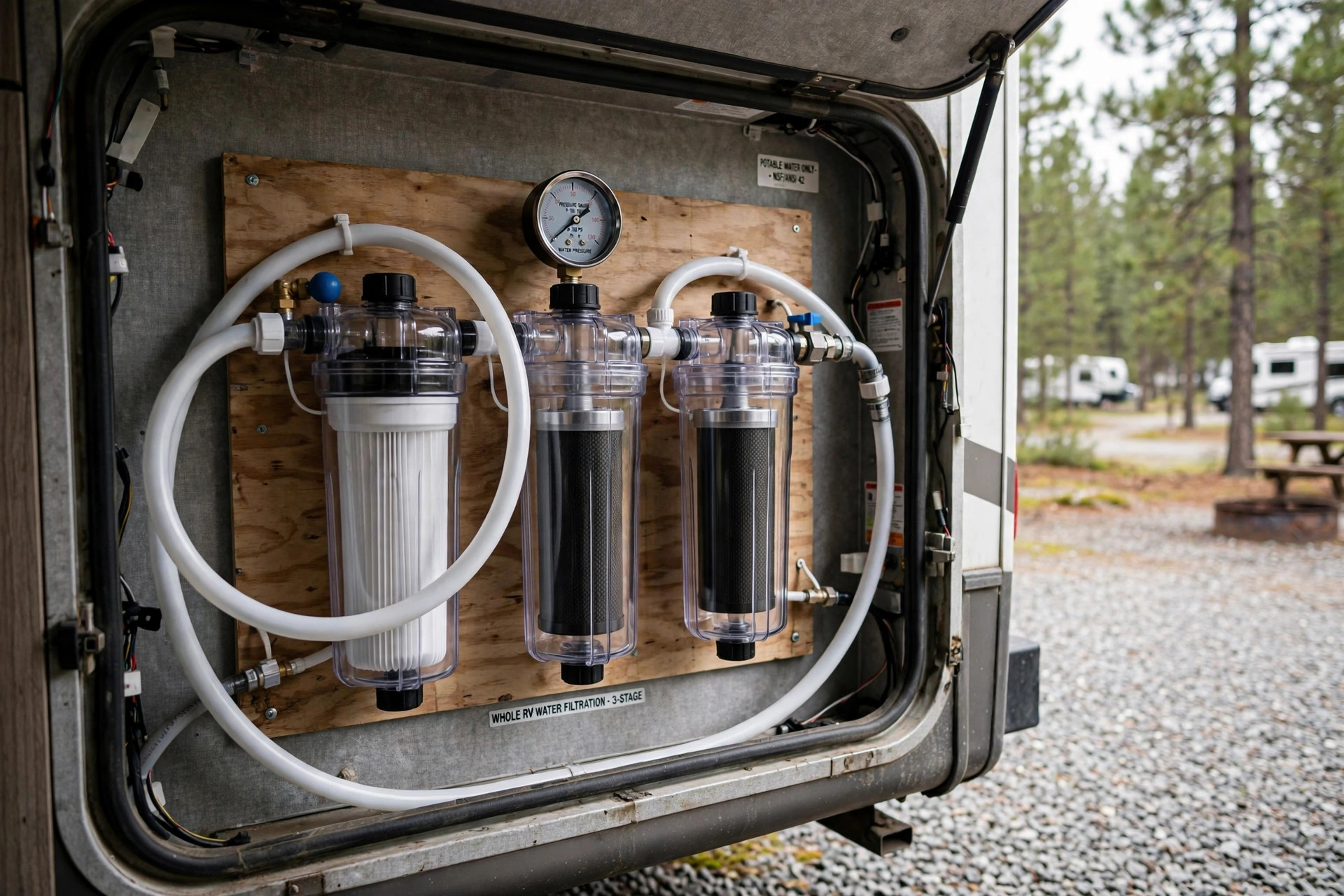
A canister system uses one, two, or three large filter housings in a row. Each housing holds a cartridge. The first cartridge catches sediment. The second holds carbon for taste and chemicals. A third can hold a fine filter for lead or cysts.
Canister systems suit full-time living well. They handle high flow. Cartridges last for months. You can pick each cartridge for your needs. A best sediment filter for well water usa cartridge often sits in the first housing. Many full-timers mount the housings in the basement bay, as shown in the photo above.
Under-Sink Filters
These small units mount under the kitchen sink. They polish water at one tap. Most use a carbon block that cuts chlorine, lead, and cysts. They give you a dedicated drinking-water faucet.
An under-sink filter pairs well with a hose filter outside. The outside filter guards the tank and pipes. The inside filter polishes drinking water. This two-step setup is common among full-time RVers.
Reverse Osmosis Units
Reverse osmosis pushes water through a very fine membrane. It removes most dissolved minerals, lead, fluoride, and many chemicals. The result is nearly pure water.
These units make the cleanest water of all home options. They also waste some water during the process. They need good pressure to work well. They cost more and need more upkeep. Some full-timers carry a portable countertop unit. Others install a small under-sink system for drinking water only.
UV Purifiers
An ultraviolet purifier uses light to kill bacteria and viruses. It does not remove sediment, minerals, or chemicals. It works best after other filters have cleaned the water first.
UV units help in parks with well water or weak disinfection. They need electric power while water flows. The bulb needs yearly replacement. Pair a UV lamp with a sediment and carbon stage for a full setup.
Cost and Price
A basic inline hose filter costs about twenty to forty dollars. It is a fine start. A single-canister setup runs fifty to one hundred fifty dollars. A two or three-canister bank costs one hundred fifty to four hundred dollars. A portable reverse osmosis unit costs two hundred to five hundred dollars. A UV purifier adds one hundred to three hundred dollars.
Cartridge costs matter over time. Inline filters are throwaway units. Canister cartridges cost twenty to eighty dollars each. Most last three to six months of full-time use. Carbon blocks and sediment cartridges are the most common replacements. A full-time couple may spend one hundred to three hundred dollars a year on cartridges.
Water treatment gear is sold widely. Large home stores carry many brands and parts. Both Home Depot and Lowe’s stock inline filters, housings, and cartridges in most stores. Shopping there lets you see sizes in person before a long trip.
Think of a filter as protection for your RV too. A water heater or pump costs far more than a year of cartridges. Good filtration pays for itself by cutting repairs.
Care and Upkeep
A filter only works if you care for it. Change cartridges on schedule. A clogged filter cuts flow and can breed bacteria. Write the install date on each cartridge with a marker. Set a phone reminder for the next change.
Flush the system when you change cartridges. Run water through new cartridges before drinking it. This washes out loose carbon dust. Sanitize your fresh-water tank twice a year. Many travelers use a mild bleach solution, then rinse well. Guidance from Family Handyman and This Old House covers tank cleaning steps in detail.
Winterize the filter before freezing weather. Remove cartridges and store them where they will not freeze. Drain the housings. A frozen housing can crack. In spring, install fresh cartridges and flush the lines.
Clean the filter housings each time you change cartridges. Rinse them with clean water. A small brush removes slime from the threads. Do not use soap inside the housings, as it can leave a taste. Check the O-rings for cracks. A light coat of food-grade silicone grease keeps them sealing well.
Carry spare cartridges on long trips. Rural areas may not have an RV parts store nearby. A spare sediment cartridge and a spare carbon block cover most needs.
Safety
Filtered water is safer, but no filter does everything. Know what yours removes. Read the product label. Look for third-party testing marks. The Water Quality Association certifies many water products. Its seal means an independent lab checked the claims.
Boil water if a park posts a boil notice. Filters do not replace a boil order. If water smells strongly of rotten eggs or fuel, do not use it. Move to another source if you can. Health advice from the CDC notes that travelers should treat unknown water with care.
Keep hoses clean. Use a white drinking-water hose, not a green garden hose. Garden hoses can add lead and taste. Store your hose with the ends capped. Do not let it sit in puddles at the spigot.
Test your water now and then. Cheap test strips show chlorine, hardness, and pH. A yearly lab test of your tank water is a smart step for full-timers. If you worry about lead, pick a filter certified for lead reduction. For more on how carbon handles taste and odor, see notes on a best carbon filter for chlorine removal usa option.
Frequently Asked Questions
How often should I change my RV water filter cartridges?
Change them every three to six months with full-time use. Change sooner if flow drops or water tastes off. Inline hose filters often last only one season. Canister cartridges last longer but still need a schedule. Mark dates on each cartridge so you do not guess.
Do I need a water softener too?
A filter and a softener do different jobs. Filters remove grit, chlorine, and some harmful things. Softeners remove calcium and magnesium that cause scale. If you travel where water is very hard, a portable softener helps your pipes and water heater. Many full-timers use both.
Can I drink water straight from the campground spigot?
Sometimes yes, but a filter makes it safer and better tasting. Spigot water meets local rules in most parks. Still, old pipes between the main line and your hose can add rust or lead. A filter at your connection point removes what the park cannot control.
What size filter do I need for a family of four?
Pick a system with at least three gallons per minute of flow. A two or three-canister bank suits a family well. Add a dedicated drinking-water tap if you want extra polish. Make sure the housings fit your storage bay before you order.
Is reverse osmosis worth it for full-time RV life?
It depends on your water. If you often meet very hard or poor-tasting water, reverse osmosis gives the cleanest drink. It costs more and wastes some water. Many travelers use it for drinking water only, with a simpler filter for the whole RV.
A Short Final Word
The best water filter for rv full time usa travel is the one that fits your rig, your routes, and your budget. Start with a good inline or canister filter. Add stages as you learn what your water needs. Change cartridges on time. Keep hoses clean. Big names in plumbing such as Moen, Kohler, and Delta Faucet also offer filtration products worth a look, and brands like Aquasana focus on water treatment alone.
Clean water is one of the quiet comforts of the road. With the right filter, every new park feels a little more like home.
References
Aquasana. (n.d.). Water filtration systems. https://www.aquasana.com Centers for Disease Control and Prevention. (n.d.). Cleaning and disinfecting your home. https://www.cdc.gov Delta Faucet. (n.d.). Kitchen and bathroom faucets. https://www.deltafaucet.com Family Handyman. (n.d.). DIY home repair and maintenance. https://www.familyhandyman.com Kohler. (n.d.). Bathroom and kitchen fixtures. https://www.kohler.com Lowe’s. (n.d.). Home improvement products. https://www.lowes.com Moen. (n.d.). Faucets and plumbing fixtures. https://www.moen.com The Home Depot. (n.d.). Home improvement products. https://www.homedepot.com This Old House. (n.d.). Home renovation guidance. https://www.thisoldhouse.com U.S. Environmental Protection Agency. (n.d.). Protecting human health and the environment. https://www.epa.gov Water Quality Association. (n.d.). Water treatment product certification. https://www.wqa.org
Was this guide helpful?

About Robert Taylor
The My Garden US editorial team writes practical, in-depth home and garden guides for American homeowners — tested advice, no fluff.
You May Also Like
Best Sump Pump for Basement Reviews USA: A Plain Buyer’s Guide
February 23, 2026 0 views
Best Well Water Filtration System Reviews USA
January 2, 2026 0 views
Best Water Dispenser for Home Office USA: A Practical Buyer’s Guide
August 30, 2026 0 views