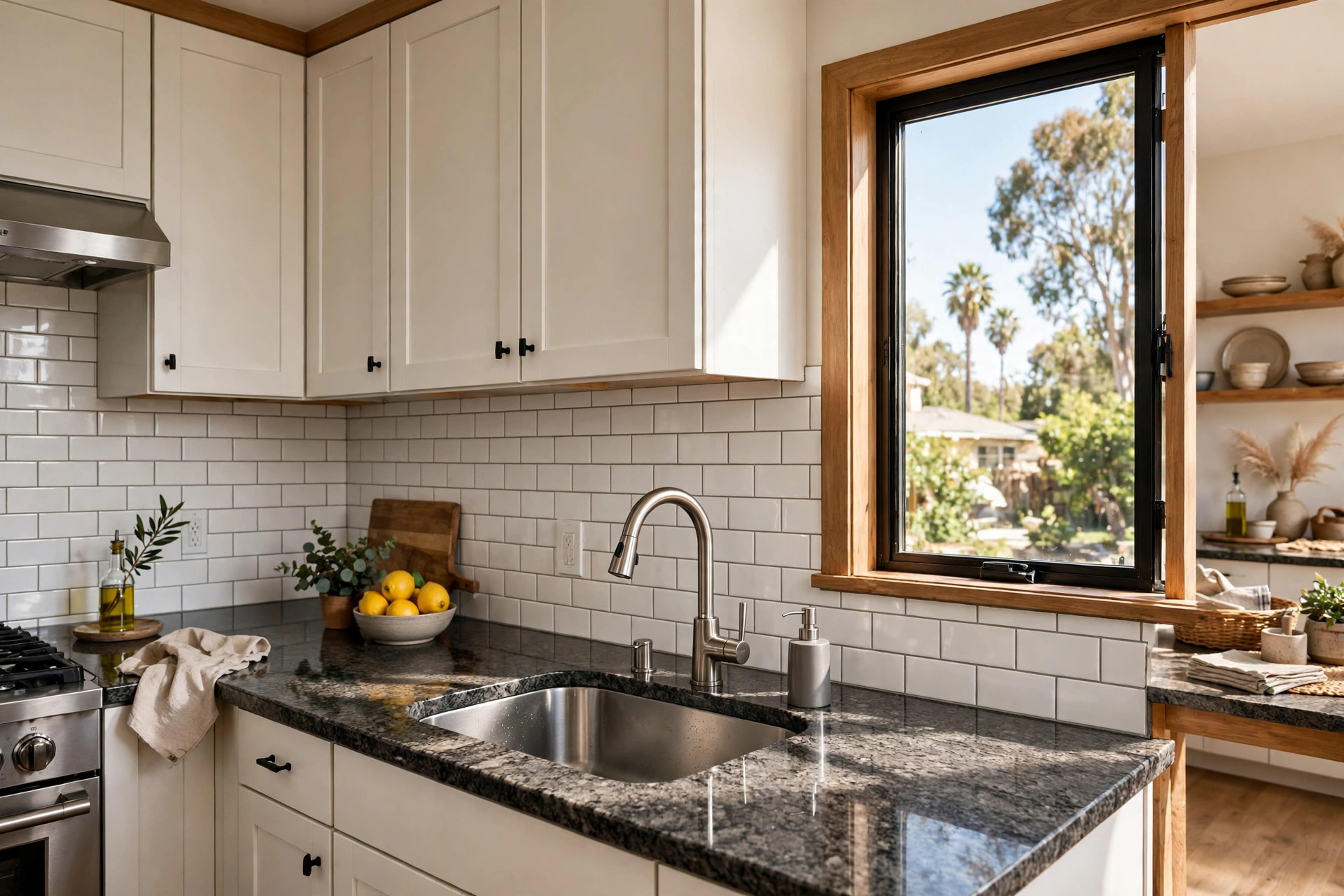

California homeowners spend more time in the kitchen than in almost any other room. When it comes to a kitchen remodel, kitchen backsplash tiles california homes usa is one of the most searched topics, and for good reason. A backsplash is the tile surface that covers the wall between the countertop and the upper cabinets. It guards the wall from splashes, steam, and grease. It also sets the look of the whole room. This guide walks through why a backsplash matters, what to look for, the main types on the market, what they cost, how to care for them, and how to keep the job safe. The aim is simple: plain facts, no sales talk.
Why a Kitchen Backsplash Matters
A backsplash does two jobs. First, it protects. Cooking sends up steam, oil, and water every day. Without tile, paint soaks up grease and drywall soaks up water. Over months and years, that damage builds. A tiled wall wipes clean in seconds and stands up to daily use.
Second, it shapes the style of the kitchen. A kitchen may have fine cabinets and strong counters, yet still look unfinished without a backsplash. The tile fills the gap between the upper and lower parts of the room. It ties the cabinets, counters, and fixtures into one whole. For a California home, where open kitchens often face the living room, that visual link matters even more. Guests see the kitchen from across the room. The backsplash is part of the view.
There is a money side too. Real estate agents often say that a clean, modern kitchen helps a sale. A fresh backsplash is one of the least costly ways to lift a kitchen. It does not change the floor plan or move pipes. It simply dresses the wall that faces the cook. Many buyers in the United States list an updated kitchen high on their wish list, and tile reads as care and quality.
For owners who cook daily, the practical value is just as strong. Hot soup splashes. A pasta pot boils over. A tomato sauce pops. Tile takes all of it. A wipe with a damp cloth does what would take scrubbing on bare paint. In homes with children, that easy cleanup is a daily comfort.
What to Look For When Choosing Tiles: Kitchen Backsplash Tiles California Homes Usa
Choosing tiles is simpler when you know what counts. Four points matter most: the material, the size and shape, the color and finish, and the grout.
Start with the material. Ceramic and porcelain are the common picks. Glass tile is another. Natural stone, like marble or travertine, is a higher-end pick. Each one has a trade-off. Ceramic is cheap and light. Porcelain is harder and less porous. Glass gives a clean shine but shows dirt fast. Stone looks rich but needs sealing. The right pick depends on the home, the budget, and the amount of cooking that goes on.
Size and shape change the look more than most people expect. Small tiles, such as one-inch mosaics, give a busy, textured wall. Classic subway tiles, three inches by six inches, give a calm, even look. Large tiles, twelve by twenty-four inches or more, give a bold, modern wall with fewer grout lines. Patterns come from how tiles are laid: straight, offset, herringbone, or vertical stack. The same tile in three patterns can look like three different kitchens.
Color and finish set the mood. Light tiles bounce light and make a small kitchen feel larger. Dark tiles give depth and a strong frame to the counter. A glossy finish reflects light and wipes clean with ease. A matte finish hides fingerprints and water spots but can stain more readily. Many California homes favor light, bright tiles because they match the strong natural light that pours through big windows.
Grout is the part people forget. Grout is the filler between tiles. It stains if it is left raw. Sanded grout suits wider joints. Unsanded grout suits thin joints. Epoxy grout resists stains and water better than cement grout, and it is a smart pick behind a stove. The color of grout changes the look: white grout with white tile gives a seamless wall, while dark grout with light tile gives a grid pattern. Sealers help cement grout last longer.
Measure first, choose later. Measure the full wall area before you shop. Note where the outlets, windows, and hood sit. Bring the cabinet color and counter sample with you to the store. What looks good alone may clash with the counter you already have.
Types of Backsplash Tiles on the Market
Shoppers in the United States face a wide shelf of options. Here are the main types, each with its strengths.
Ceramic tile. The most common backsplash tile in the country. It is made from clay fired at high heat, then glazed. It comes in every color and shape. It is light, easy to cut, and kind to a budget. The glaze keeps water out. For a rental or a first home, ceramic is often the sensible pick.
Porcelain tile. Fired hotter and pressed harder than ceramic. The body is dense and takes in almost no water. It stands up to heat and hard knocks. It costs more than ceramic, but it wears longer. Behind a gas range, where heat is high, porcelain is a sound choice.
Glass tile. Small sheets of colored glass, often in mosaics. The look is clean and modern. Light moves through the glass and adds depth. It costs more and takes more care to install. It shows water spots and grease, so it needs regular wiping. In a kitchen with strong light, it can look bright and airy.
Natural stone. Marble, travertine, slate, and limestone. Each tile has its own veining and tone, so no two walls are alike. The price is high, and the upkeep is real: stone must be sealed on install and resealed every year or two. It fits classic and high-end kitchens. Some owners love the natural variation; others find it too busy.
Peel and stick tile. Thin, light tiles with an adhesive back. No mortar, no grout, no wet saw. They suit renters and quick updates. They look best from a distance and may not last as long as real tile. They can peel in heat, so they are not ideal right behind a hot stove.
Large-format slabs. Full porcelain or stone slabs cut to size. The wall has almost no seams. The look is modern and bold. The panels are heavy and need skilled hands to install. The cost is high, but the finish is striking.
Each type can work in a California home. The right one fits the budget, the kitchen style, and how much cooking happens each week.
Cost and Price Guide
Prices for a backsplash run wide. The two big cost parts are the tile itself and the labor to set it.
Ceramic tile runs from about three to ten dollars per square foot. Porcelain runs from about five to fifteen dollars per square foot. Glass tile runs from about seven to thirty dollars per square foot. Natural stone runs from about ten to forty dollars per square foot or more. Peel and stick panels run from about five to twelve dollars per square foot. Large-format slabs run from about twenty to sixty dollars per square foot or more.
Labor adds to that. A professional installer in California may charge ten to twenty-five dollars per square foot, depending on the area and the difficulty. A small wall behind a sink is a half-day job. A full wall with a tricky layout, many outlets, or a herringbone pattern can take two days. Ask for a written quote before work starts. Make sure it lists the tile, the grout, the thin-set, the edge trim, and the cleanup.
The size of the job is easy to figure. Measure the height from the counter to the bottom of the upper cabinets, usually eighteen inches. Multiply by the length of the wall. Add ten percent extra for cuts and waste. A typical kitchen backsplash covers twenty to forty square feet. At ten dollars a foot for tile and fifteen for labor, a thirty-square-foot job lands near seven hundred and fifty dollars. High-end stone on the same wall can pass two thousand dollars.
Hidden costs can surprise a buyer. Old tile may need to come off, which adds labor. A wall with damage needs patching first. Special edge pieces, called bullnose or trim tile, cost extra. Outlet covers may need to move up to sit flush with the thicker wall. Ask the installer to walk the wall before the quote. What looks flat may hide a wave.
Care and Upkeep
A tiled backsplash asks little, but it asks something. The routine is simple: wipe, check, seal.
Wipe the wall weekly with a soft cloth and warm water. A drop of dish soap handles grease. Stay away from harsh acids and bleach on stone and colored grout. They can etch the surface or bleach the color. Glass tile likes a glass-safe cleaner, but plain soapy water works too.
Check the grout lines once a year. Look for cracks, gaps, and dark stains. Cracked grout lets water reach the wall behind it. Small cracks can be patched with a grout repair pen or a thin mix of fresh grout. Large failed areas should be raked out and regrouted by a professional.
Seal what needs sealing. Cement grout and natural stone should be sealed after install and resealed on a schedule. A simple test: drop a little water on the surface. If it beads up, the seal is good. If it soaks in, it is time to reseal. Most sealers are brushed on like thin paint and wipe off after ten minutes.
Keep an eye on caulk. Where the tile meets the counter, there should be a line of caulk, not grout. Caulk flexes when the counter shifts. Grout does not, so it cracks. Recaulk that line every few years with a kitchen-grade silicone caulk.
For peel and stick tiles, upkeep is different. Wipe them gently. Do not use heat near them. If an edge lifts, press it back with a small roller. If a panel warps, it is cheap to replace just that panel.
Good upkeep keeps the wall looking new for decades. Most tile failures come from neglect, not from the tile itself.
Safety on the Job
Tile work looks simple, but it has real risks. Take them seriously, whether you do the job yourself or hire it out.
Cutting tile makes dust. Ceramic, porcelain, and stone all throw fine silica dust when cut or ground. Silica dust can harm the lungs over time. Always cut with a wet saw, which keeps the dust down with water. Wear a dust mask and safety glasses when cutting, even outside. Keep children and pets away from the work area.
Thin-set mortar and grout are alkaline. They can burn skin and eyes. Wear gloves and glasses when mixing and spreading them. Wash skin right away if the mix touches it. Mix in a ventilated space and follow the ratios on the bag. Do not guess.
Electrical work needs care. The backsplash wall holds outlets and switches. Turn off the breaker for that wall before you remove outlet covers or move boxes. If an outlet sits too deep after tile goes on, use box extenders so the device sits flush. If wiring needs to move, call a licensed electrician. California code has strict rules, and a wrong guess can start a fire.
Heat near the stove needs thought. Tile itself stands up to heat, but adhesive and some finishes do not. Peel and stick tiles and some glass tiles should not go directly behind a high-heat burner. Keep the manufacturer clearances in mind. If the range has no hood, talk to the installer about heat ratings before the tile goes up.
Heavy slabs are a two-person job. A large porcelain panel can weigh forty pounds or more. It needs suction cups, a level, and steady hands. A dropped panel can break a foot or crack a counter. If the plan calls for large slabs, hire an installer who has set them before.
A final word on DIY. A simple ceramic backsplash is a fair weekend project for a careful beginner. Watch a full lesson, borrow or rent a wet saw, and practice cuts on spare tiles first. A stone or slab job, or any job that moves wiring, belongs to a pro.
Kitchen Backsplash Tiles and California Style
California kitchens have their own flavor. Many homes are open, bright, and built around the kitchen as a living space. Tile choices often follow that light.
Subway tile in white or soft cream remains the most common pick. It is clean, cheap, and matches almost any cabinet. Handmade-look tiles, with slight ripples and color shifts, are popular in newer builds. They catch light in a way that flat tile does not. Spanish-style patterned tiles show up in older homes and desert towns, where they tie the kitchen to the region.
Earthquake country adds a practical note. California homes move in a quake. A rigid, unsealed grout line can crack. Using a flexible sealant at corners and where tile meets the counter helps the wall survive small shifts. Anchoring shelves and racks to studs, not just tile, keeps them on the wall.
If your kitchen pairs with other upgrades, plan them together. A new backsplash looks best with counters and cabinets that suit it. Many owners who browse the kitchen backsplash tiles american homes guide end up planning the whole wall at once, from counter to cabinet. Related upgrades, like under counter wine fridges where to buy usa and kitchen island seating for sale usa, often move forward in the same remodel. It costs less to run one project than three.
Where to Shop and Learn More
Big home stores carry wide tile shelves, and their staff can answer basic questions. For deeper guidance, several trusted sources cover kitchens, appliances, and home projects in full. The Home Depot site carries tile and backsplash lines with photos and specs. Reviews and buying advice on The Spruce walk through tile types and layouts. This Old House and Bob Vila both run step-by-step tile projects with tool lists. For test-based ratings, Consumer Reports covers kitchen products with lab results. When the remodel touches appliances too, brand sites like Whirlpool, GE Appliances, and Bosch Home publish finish and sizing guides that help match tile to new ranges and fridges. And if the project goes green, the ENERGY STAR program lays out standards for efficient kitchen appliances that pair well with a fresh backsplash.
Frequently Asked Questions
How long does a tile backsplash last? A well-set tile backsplash lasts twenty to fifty years. The tile itself rarely fails. Grout and caulk wear first and can be repaired without replacing the tile.
Can I put new tile over old tile? Sometimes. If the old tile is flat, sound, and well stuck, a thin new tile can go over it with the right adhesive. If the old tile is loose, cracked, or behind a stove with heat issues, take it off first. Ask an installer to check before you decide.
What is the easiest tile for a first-time DIY job? Ceramic subway tile is the friendliest pick. It is cheap, light, and easy to cut. Peel and stick tiles are even simpler but do not last as long.
How do I clean grease off a glass tile backsplash? Use warm water with a drop of dish soap and a soft cloth. Wipe in small circles. Dry with a clean towel to avoid water spots. Skip abrasive pads, which can scratch the surface.
Do I need to seal grout? Cement-based grout should be sealed to fight stains and water. Epoxy grout does not need sealing. Check the grout type on the bag or ask the installer.
How much backsplash do I need for a standard kitchen? Measure the wall from the counter to the upper cabinets, usually eighteen inches, times the length of the run. Most kitchens need twenty to forty square feet. Add ten percent for cuts and waste.
A Final Word
A kitchen backsplash is a small part of a remodel with a large return. It protects the wall, lifts the look, and wipes clean for years. The options range from budget ceramic to rich stone, and the right pick is the one that fits the home, the cook, and the wallet. For California homes, where light is strong and kitchens are open, a bright, simple tile rarely goes wrong. Measure well, choose with the counters in mind, and give the wall the care it needs. The result is a kitchen that works harder and looks better every day.
References
Bob Vila. (n.d.). Home improvement advice. https://www.bobvila.com Bosch. (n.d.). Home appliances. https://www.bosch-home.com Consumer Reports. (n.d.). Product reviews and ratings. https://www.consumerreports.org ENERGY STAR. (n.d.). Energy efficient products. https://www.energystar.gov GE Appliances. (n.d.). Kitchen and home appliances. https://www.geappliances.com The Home Depot. (n.d.). Home improvement products. https://www.homedepot.com The Spruce. (n.d.). Home and garden advice. https://www.thespruce.com This Old House. (n.d.). Home renovation guidance. https://www.thisoldhouse.com Whirlpool. (n.d.). Home appliances. https://www.whirlpool.com
Was this guide helpful?

About Lisa Anderson
The My Garden US editorial team writes practical, in-depth home and garden guides for American homeowners — tested advice, no fluff.
You May Also Like

Dishwasher Third Rack Deals Near Me: How to Find and Choose One
March 22, 2026 0 views
Undermount Stainless Sinks for California Homes
January 12, 2026 0 views
Butcher Block Countertops for California Homes: A Warm and Honest Guide
May 19, 2026 0 views