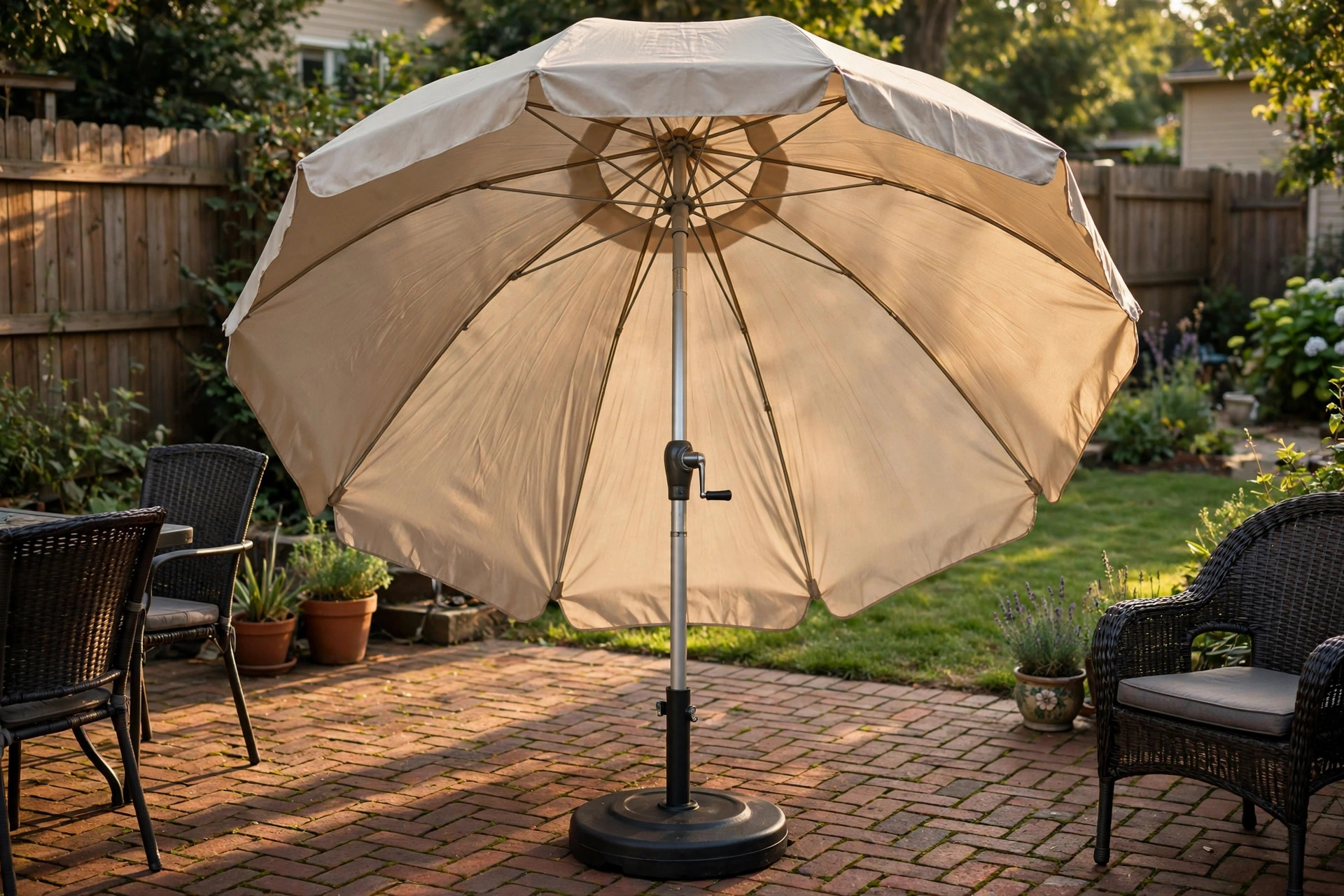

A patio umbrella gives welcome shade on hot afternoons. It shields guests from harsh sun and makes a patio feel like a room. Yet wind, rain, and time wear umbrellas down. Canopies fade and tear. Ribs bend. Cranks break. Many owners throw the whole umbrella away when only one part fails. That is a waste of money and good material. The best patio umbrella replacement parts let you fix what is broken and keep the rest. A simple repair can add years to a good umbrella. This guide explains which parts fail, how to choose them, what they cost, and how to fit them.
Why It Matters
A quality patio umbrella costs real money. A mid-range model can run two or three hundred dollars. A large cantilever model can cost far more. When the crank stops working or the canopy rips, the whole frame may still be sound. Replacement parts cost a fraction of a new umbrella. A new crank handle may cost ten dollars. A canopy can run sixty to one hundred fifty dollars, still less than a full replacement. Fixing rather than replacing also keeps waste out of the landfill. Metal poles, bases, and working hardware deserve a second life.
There is another reason to know about parts. Many umbrella makers stop selling parts for older models after a few years. If you wait until the canopy tears, the exact part may be gone. Owners who know the common sizes and fittings can buy generic parts that fit many brands. A little knowledge turns a dead umbrella into a working one in an afternoon.
What to Look For When You Choose Parts: Best Patio Umbrella Replacement Parts
Match the Size and Shape
Canopies are not all the same. Market umbrellas are usually round and come in sizes such as seven and a half, nine, ten, or eleven feet. Rectangular and square umbrellas have their own sizes. Measure your umbrella before you order anything. Measure from one tip of an open canopy to the opposite tip, not along the fabric. Count the ribs. Most umbrellas have six or eight ribs. The new part must match in size and rib count or it will not fit.
Match the Fitting
Cranks, tilt buttons, and finial caps differ between makers. Some cranks fit a standard square shaft. Others use a round shaft with a set screw. Take the broken part off and look at it closely. Note the shape of the shaft, the size of the screw, and the way it attaches. A photo of the part helps when you shop. Many hardware guides on sites like Bob Vila explain common fittings and how to measure them.
Pick Weather-Worthy Materials
Outdoor parts face sun, rain, and wind. Canopies made of solution-dyed acrylic or polyester with UV protection last longer than cheap cotton blends. Frames should be powder-coated aluminum or treated wood. Plastic gears wear fast; metal gears last longer. When you replace a part, choose one a step up in quality from the original if you can. Retailers such as Home Depot and Lowe’s stock a wide range of outdoor hardware and fabrics, which makes it easy to compare grades side by side.
Check Weight and Wind Ratings
If you replace a canopy, check that the new fabric is not much heavier than the old one. A heavy canopy on a light frame can tip the umbrella in wind. Cantilever umbrellas are especially sensitive to balance. Guides at The Spruce often note weight limits for common umbrella styles and give plain advice on safe pairings.
Types of Replacement Parts
Replacement Canopies
The canopy is the fabric top. It takes the most sun and fails first. Canopies fade, grow mildew, and tear along seams. A replacement canopy ships as fabric only; you keep your frame and pole. Look for canopies with a vented top, which lets hot air escape and cuts wind strain. A valance edge adds style and a bit more shade. Good canopies use ties or sleeves that match your rib count. When you shop, remember that a side table with an umbrella hole also needs the right pole diameter, and canopies often list compatible pole sizes.
Ribs and Arms
Ribs are the spokes that hold the canopy open. Arms connect the ribs to the center hub on many market umbrellas. Wind bends ribs, and rust eats them at the joints. Individual ribs can be replaced if you find the right length and width. Some kits include the small pins and clips that hold ribs in the hub. Steel ribs are stronger; aluminum ribs resist rust. Measure the old rib from end to end before you buy.
Cranks, Handles, and Gears
The crank is the handle you turn to open and close the umbrella. Its inner gear wears with use. When the handle spins freely or slips, the gear is likely stripped. A crank repair kit usually has a new handle, gear, and screws. Match the gear size to your pole. Some kits fit several pole diameters with adapter sleeves. If the whole crank housing cracked, buy the housing and crank together.
Tilt Mechanisms and Finials
Many market umbrellas tilt to block low sun. The tilt button or collar can jam or snap. Replacement tilt collars must match your pole diameter exactly. The finial is the decorative cap on top of the pole. It is small but it keeps water out of the pole. Finials are cheap and easy to swap.
Bases, Weights, and Covers
A wobbly umbrella is a broken umbrella waiting to happen. If your base cracked, replace it with one heavy enough for your umbrella size. Nine-foot umbrellas usually need at least fifty pounds of base weight. Covers protect the whole unit when it is not in use. A good cover costs little and adds years of life. For winter, patio furniture storage ideas for winter can guide you on where to keep the umbrella and its parts.
Cost and Price
Replacement parts are kind to the budget. Here is a rough guide to what owners pay in the United States.
– Canopy only: 40 to 160 dollars, depending on size and fabric grade – Rib sets or single ribs: 8 to 35 dollars – Crank and gear kits: 10 to 30 dollars – Tilt collars and finials: 5 to 20 dollars – Umbrella bases: 30 to 120 dollars – Protective covers: 15 to 45 dollars
Generic parts cost less than brand-name parts. A generic canopy may fit several brands and cost half as much as the original. The trade-off is fit and color match. Brand parts fit perfectly but cost more and may be hard to find for old models. Big retailers and specialty makers like Polywood and Frontgate list parts with clear size charts, which helps you compare. Product reviews at Consumer Reports can show which brands hold up over time before you spend money.
Shipping matters too. Canopies are bulky. Check shipping costs before you order. Buying the canopy and the crank kit from one store can save on shipping.
Care and Upkeep
A repaired umbrella still needs care. Close it when strong wind comes. Wind is the main killer of patio umbrellas. Even the best parts cannot save a frame left open in a storm. Clean the canopy with mild soap and water once or twice a season. Rinse well and let it dry fully before you close it. Damp fabric grows mildew.
Oil the crank gear and tilt joints once a year with a silicone spray. Do not use heavy grease, which collects dirt. Tighten screws on the hub and ribs each spring, since vibration loosens them over time. Check the base for cracks and make sure the pole sits snug in the base tube. Store the umbrella under a cover or indoors in winter. If you live where winters are harsh, take the canopy off the frame and store both parts dry. Home magazines like HGTV and furniture guides at Article often run seasonal checklists that remind owners of these small tasks.
Safety
A patio umbrella is a sail. Never leave it open in high wind or storms. Close it and tie the canopy when gusts come. Make sure the base is heavy enough for the size of the umbrella. A top-heavy umbrella can fall and hurt someone or damage furniture. Keep the umbrella away from grills and fire pits. Fabric can catch fire from flying sparks. Do not let children swing on the pole or hang from the ribs. When you replace parts, wear gloves. Metal edges and old screws can cut. Dispose of broken glass or sharp metal safely.
Frequently Asked Questions
How do I know which replacement canopy fits my umbrella?
Measure the open canopy from tip to tip across the center. Count the ribs. Note the shape: round, square, or rectangular. Then match those numbers to the part listing. If your umbrella came from a major retailer, the brand and model may be printed on the pole or under the canopy. Design stores such as IKEA and Wayfair list replacement options for their own models.
Can I replace just one bent rib?
Yes, in most cases. Remove the canopy from the rib tips, slide the bent rib out of the hub, and fit the new rib in its place. You need the same length and width. Some owners buy one spare rib when they buy the umbrella, so the match is exact.
My crank spins but the umbrella will not open. What is wrong?
The gear inside the crank housing is likely stripped. This is a common failure. A crank repair kit with a new gear and handle will fix it. Take the old gear out first so you can match the size.
Are generic parts as good as brand parts?
Good generic parts can be just as strong. The main risk is fit. Brand parts are made for one model and fit perfectly. Generic parts fit many models but may need small adjustments. Read reviews and check size charts before you buy. For seating comfort nearby, owners often add an outdoor pouf for patio seating next to the umbrella, and generic parts keep that whole setup affordable.
How long should a repaired umbrella last?
It depends on the part and the weather. A new canopy of good fabric can last three to five years with care. A new crank gear can last as long as the frame. If the pole itself is rusted through or the hub is cracked, it may be time for a new umbrella instead of more parts.
Where should I store spare parts in winter?
Keep small parts like cranks, finials, and screws in a dry box indoors. Store the canopy clean and dry, away from damp. Label each part with the umbrella model so you can find the right fit next spring.
A Short Final Word
The best patio umbrella replacement parts are the ones that fit well, resist weather, and cost far less than a new umbrella. Start by measuring your umbrella and finding what is actually broken. Replace that part with the best quality you can afford, and keep the receipt in case the fit is wrong. Then care for the repaired umbrella as you would a new one. Close it in wind, clean it each season, and store it dry in winter. A little repair work keeps your patio shaded for years and keeps good material out of the trash. That is a win for your wallet and your yard.
References
Article. (n.d.). Modern furniture. https://www.article.com Bob Vila. (n.d.). Home improvement advice. https://www.bobvila.com Consumer Reports. (n.d.). Product reviews and ratings. https://www.consumerreports.org Frontgate. (n.d.). Outdoor furniture and decor. https://www.frontgate.com HGTV. (n.d.). Home and garden ideas. https://www.hgtv.com IKEA. (n.d.). Home furnishings. https://www.ikea.com Lowe’s. (n.d.). Home improvement products. https://www.lowes.com Polywood. (n.d.). Outdoor furniture. https://www.polywood.com The Home Depot. (n.d.). Home improvement products. https://www.homedepot.com The Spruce. (n.d.). Home and garden advice. https://www.thespruce.com Wayfair. (n.d.). Furniture and home goods. https://www.wayfair.com
Was this guide helpful?

About Michael Thompson
The My Garden US editorial team writes practical, in-depth home and garden guides for American homeowners — tested advice, no fluff.
You May Also Like
Outdoor Planter Stand Set of Three: A Practical Guide for Small Patios
September 19, 2026 0 views
Outdoor Patio Heater Cover Waterproof Reviews: A Plain Buying Guide
February 2, 2026 0 views
Patio Furniture Sets for Large Families: How to Seat Everyone in Comfort
May 11, 2026 0 views