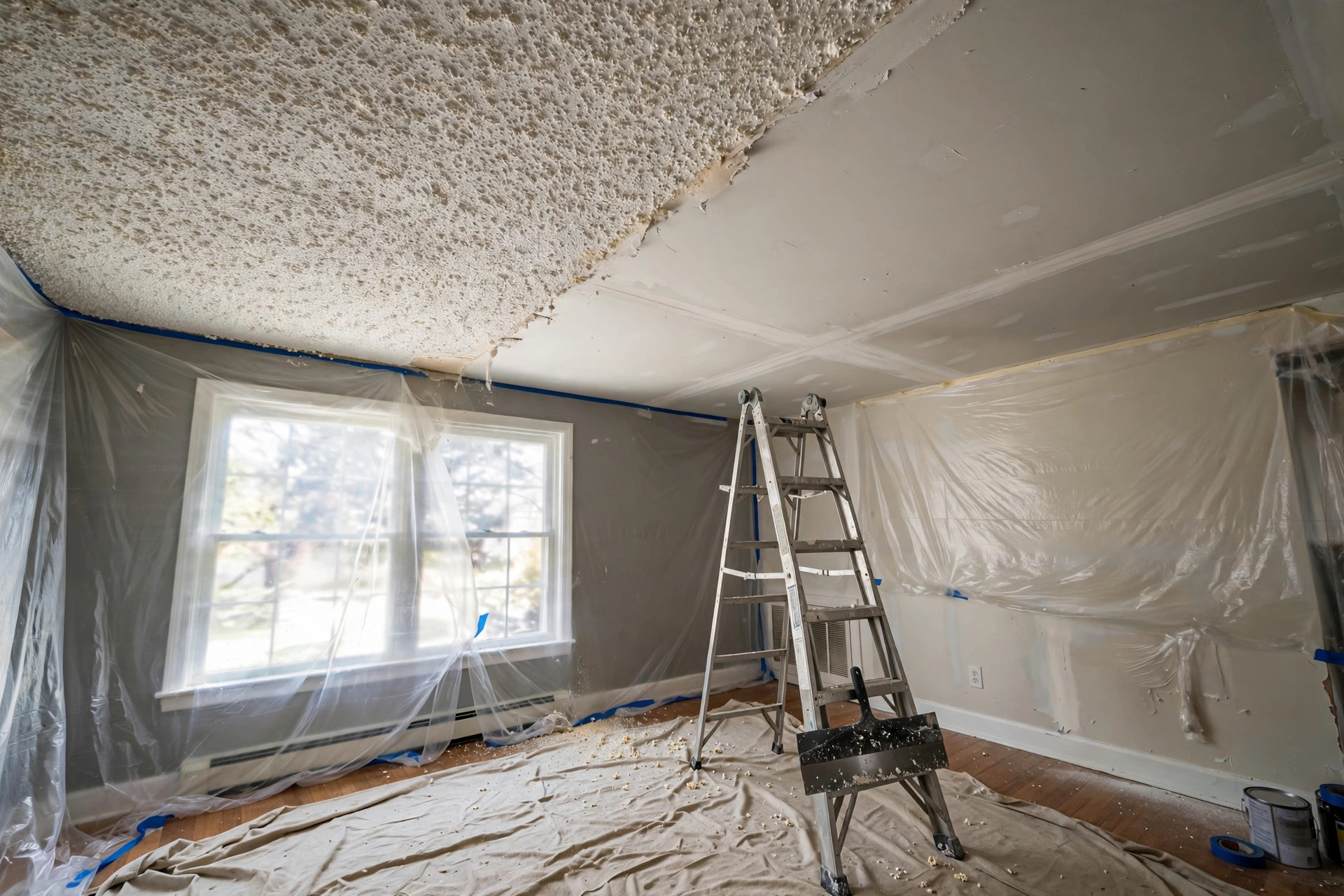

Many homes built between the 1950s and the 1980s still carry popcorn ceilings. The rough, bumpy texture once hid flaws and deadened sound. Today most buyers see it as dated, and sellers know it can drag down a listing. If you type popcorn ceiling removal cost near me into a search engine, you will find a wide spread of prices. This guide explains what the job usually costs in 2026, what drives the price up or down, and how to choose a contractor you can trust.
Why Homeowners Remove Popcorn Ceilings
A popcorn ceiling is a sprayed-on texture, sometimes called acoustic or stipple texture. It was cheap to apply and did a fair job of hiding uneven drywall seams. But time has not been kind to it.
First, it traps dust. The bumps catch every bit of grime that drifts upward, and washing a popcorn ceiling is nearly impossible. A sponge only breaks the texture loose.
Second, it yellows. Years of cigarette smoke, cooking grease, and sunlight turn white texture a dull yellow-gray. No paint job on the walls can fix that ceiling.
Third, it hurts resale. Real estate agents in many markets say smooth ceilings are one of the small upgrades that make rooms feel larger, cleaner, and more modern. A home with fresh, flat ceilings often photographs better and shows better.
Finally, some older popcorn ceilings contain asbestos. Material sprayed before the early 1980s may hold asbestos fibers. That does not mean you must panic, but it does mean you should test before you scrape. The EPA offers guidance on how asbestos in the home should be handled, and it is worth reading before any ceiling work begins.
Popcorn Ceiling Removal Cost Near Me: The 2026 Numbers
For a standard removal job — scrape, minor patching, and a fresh coat of paint — most American homeowners pay between $1 and $3 per square foot of ceiling. A 400-square-foot living room and hallway might run $400 to $1,200 for labor and basic materials.
But that is only the simple case. A fuller picture looks like this:
– Scrape only, no painting: $1 to $2 per square foot. – Scrape, skim coat, sand, and paint: $2 to $4 per square foot. – Asbestos abatement plus removal: $3 to $7 per square foot, sometimes more. – Small rooms (minimum charges): $200 to $500, because most contractors set a minimum for showing up.
Where you live matters. Labor rates in large coastal cities run higher than in small Midwestern towns. A job in San Diego or New York may cost half again as much as the same job in Dayton or Tulsa. When you search for popcorn ceiling removal cost near me, the quotes you get will reflect your local labor market, so collect at least three before you decide.
The condition of the ceiling matters too. If the texture was never painted, it often comes off easily with a spray of water and a wide blade. If it was painted over, scraping becomes much harder, and the contractor may switch to a skim coat or even new drywall. Painted texture can double the labor time.
How to Choose the Right Removal Service
Finding a contractor is easy. Finding a good one takes a little work. Start with these steps.
Ask about asbestos testing. Any honest contractor working on a pre-1980s home should ask whether the ceiling has been tested. Many will arrange a lab test for $25 to $50, or tell you where to mail a sample. A contractor who shrugs at the question is not the one you want. The Consumer Product Safety Commission also publishes material on older home hazards that is worth a read.
Check reviews and photos. Look for contractors with before-and-after photos of ceiling work specifically, not just general painting. Sites like Bob Vila and This Old House describe what a proper ceiling job looks like, so you can judge the photos with an informed eye.
Get the scope in writing. The quote should say exactly what is included: scraping, drywall repair, skim coating, priming, painting, and cleanup. It should also say what is not included, such as moving furniture or repairing water damage found underneath. Vague quotes lead to surprise charges.
Confirm licensing and insurance. Requirements vary by state, but a legitimate contractor carries liability insurance and, where required, a license. Ask to see proof. This protects you if a worker is hurt or a ceiling is damaged.
Ask about dust control. Ceiling scraping is dusty work even without asbestos. A good crew seals doorways with plastic sheeting, covers floors and vents, and runs the job with a HEPA vacuum nearby. Your whole house should not end up coated in white dust.
If your project also touches the walls, it helps to know what wallpaper removal prices and drywall repair run in your area, since the same contractors often handle both.
Your Options: Scrape, Cover, or Encapsulate
Scraping is not the only path to a smooth ceiling. Here are the three main options, with their trade-offs.
Wet Scraping
The classic method. The crew sprays the ceiling with water, lets it soak, then scrapes the softened texture off with a wide drywall knife. It is the cheapest option and works best on unpainted texture. Downsides: it is messy, it can gouge the drywall, and it almost always needs patching and a skim coat afterward.
Covering With New Drywall
Instead of removing the texture, the crew hangs a fresh layer of thin drywall over the old ceiling. This skips the mess of scraping entirely and gives a perfectly flat surface. It costs more in materials and the room loses about half an inch of ceiling height, which can matter around recessed lights and trim. But for painted-on texture that will not scrape, it is often the smartest choice.
Encapsulation or Skim Coating
A skim coat spreads joint compound directly over the old texture, burying the bumps under a smooth layer. Two or three thin coats, sanded between each, produce a flat finish. This works when the texture is firmly attached but costs more in labor than scraping. Paint stores like Behr and Benjamin Moore sell the primers and ceiling paints used for the final coat.
If you like texture but want something more current, textured wall finish contractors can apply modern knockdown or orange-peel finishes that read as fresh rather than dated.
What Raises or Lowers the Price
Several factors move your quote up or down.
Asbestos. A positive test changes everything. Asbestos work requires trained crews, containment, special disposal, and permits in many states. Expect the asbestos popcorn ceiling removal cost to run two to three times the normal rate.
Painted texture. As noted above, texture sealed under layers of paint resists water and must be scraped dry or covered. Either way, labor climbs.
Ceiling height. Standard 8-foot ceilings are easy. Vaulted or 12-foot ceilings need scaffolding, and scaffolding means more time and money.
Repairs underneath. Old ceilings sometimes hide water stains, cracked seams, or bad taping. A good contractor finds this after scraping and patches it. Budget 10 to 20 percent extra for the unknown.
Painting. A scrape without paint looks unfinished. Most homeowners add primer and two coats of flat ceiling paint. Ceiling paint from Sherwin-Williams or the paint aisle at Lowe’s and Home Depot adds material cost but completes the job.
DIY savings. Doing it yourself can cut the popcorn ceiling removal price per square foot to the cost of tools and materials — often under $0.50 per square foot. But DIY only makes sense for small, unpainted, asbestos-free ceilings. Family Handyman walks through the process for handy homeowners, and it is honest about how much mess is involved.
Care and Upkeep After Removal
A smooth ceiling is easy to live with, but a few habits keep it looking new.
Dust it twice a year with a dry microfiber mop or a soft brush attachment on your vacuum. Do not use water or wet cleaners on flat ceiling paint unless it is labeled washable.
Watch for stains. A brown ring means a roof or plumbing leak above. Fix the leak first, then seal the stain with a stain-blocking primer before touching up the paint.
Repaint every 7 to 10 years, or sooner in kitchens and baths where steam and grease collect. Flat ceiling paint hides minor flaws and touch-ups blend well.
If you refresh the walls at the same time, The Spruce has solid advice on choosing ceiling and wall colors that work together, and HGTV offers room-by-room inspiration for the finished space.
Safety: Asbestos, Lead, and Dust
This section deserves your full attention if your home predates 1978.
Asbestos. Popcorn texture applied before about 1980 may contain asbestos. Do not scrape, sand, or drill into it until a lab test comes back clean. If the test is positive, hire a licensed abatement contractor. Disturbing asbestos without containment can spread fibers through the whole house.
Lead paint. If the ceiling was painted before 1978, the paint may contain lead. Federal rules require lead-safe work practices in many cases. The EPA explains the renovation rules for older homes.
Dust. Even clean texture makes fine dust. Workers should wear respirators, and the work area should be sealed off from the rest of the home. If you stay in the house during the job, keep children and pets away from the work zone.
Electrical. Ceiling fixtures must be removed or worked around carefully. The power to the room should be off while fixtures are handled. If you are unsure, an electrician is worth the call.
Frequently Asked Questions
How long does popcorn ceiling removal take? A single 12-by-12 room usually takes one to two days for scraping, patching, and painting. A whole house can take a week or more, depending on size and condition.
Can I just paint over the popcorn texture? You can, and fresh paint does brighten the room. But painting seals the texture in place and makes future removal much harder. Most contractors advise removing it now rather than painting over it.
Does removing popcorn ceilings increase home value? Agents generally say yes. Smooth ceilings are a small modernizing upgrade, and the cost to remove popcorn ceiling and skim coat is often less than the value it adds at sale time in competitive markets. It will not transform a home’s value alone, but it removes a common buyer objection.
What is the cheapest way to get rid of a popcorn ceiling? DIY wet scraping of unpainted, asbestos-free texture is cheapest. Among professional options, plain scraping without a skim coat costs least, though the finish is rougher.
Should I test for asbestos before getting quotes? Yes. A $25 to $50 lab test tells every contractor exactly what they are bidding on, and it protects you from a crew that would scrape first and ask questions later.
Can I stay in the house during removal? For a standard scrape, yes, though it is dusty and noisy. For asbestos abatement, no — you must leave the work area, and often the home, until the job passes clearance testing.
A Final Word
Typing popcorn ceiling removal cost near me is the start, not the end. The numbers you find online are averages; your price depends on your ceiling’s age, condition, and your local market. Test for asbestos, get three written quotes, and choose the contractor who explains the work clearly rather than the one who simply bids lowest. A smooth, freshly painted ceiling is one of the most satisfying upgrades a homeowner can make — the whole room feels taller, brighter, and new.
References
Behr. (n.d.). Paints, primers, and stains. https://www.behr.com Benjamin Moore. (n.d.). Paints and stains. https://www.benjaminmoore.com Bob Vila. (n.d.). Home improvement advice. https://www.bobvila.com Family Handyman. (n.d.). DIY home repair and maintenance. https://www.familyhandyman.com HGTV. (n.d.). Home and garden ideas. https://www.hgtv.com Lowe’s. (n.d.). Home improvement products. https://www.lowes.com Sherwin-Williams. (n.d.). Paints and coatings. https://www.sherwin-williams.com The Home Depot. (n.d.). Home improvement products. https://www.homedepot.com The Spruce. (n.d.). Home and garden advice. https://www.thespruce.com This Old House. (n.d.). Home renovation guidance. https://www.thisoldhouse.com U.S. Consumer Product Safety Commission. (n.d.). Product safety information. https://www.cpsc.gov U.S. Environmental Protection Agency. (n.d.). Protecting human health and the environment. https://www.epa.gov
Was this guide helpful?

About David Wilson
The My Garden US editorial team writes practical, in-depth home and garden guides for American homeowners — tested advice, no fluff.
You May Also Like
Odorless Paint for Indoor Use: What USA Reviews Say
April 24, 2026 0 views
New Cabinet Hardware Installation Cost USA: A Plain Guide
July 3, 2026 0 views
The Best Paint for Laundry Room Walls: What Works in American Homes
August 2, 2026 0 views