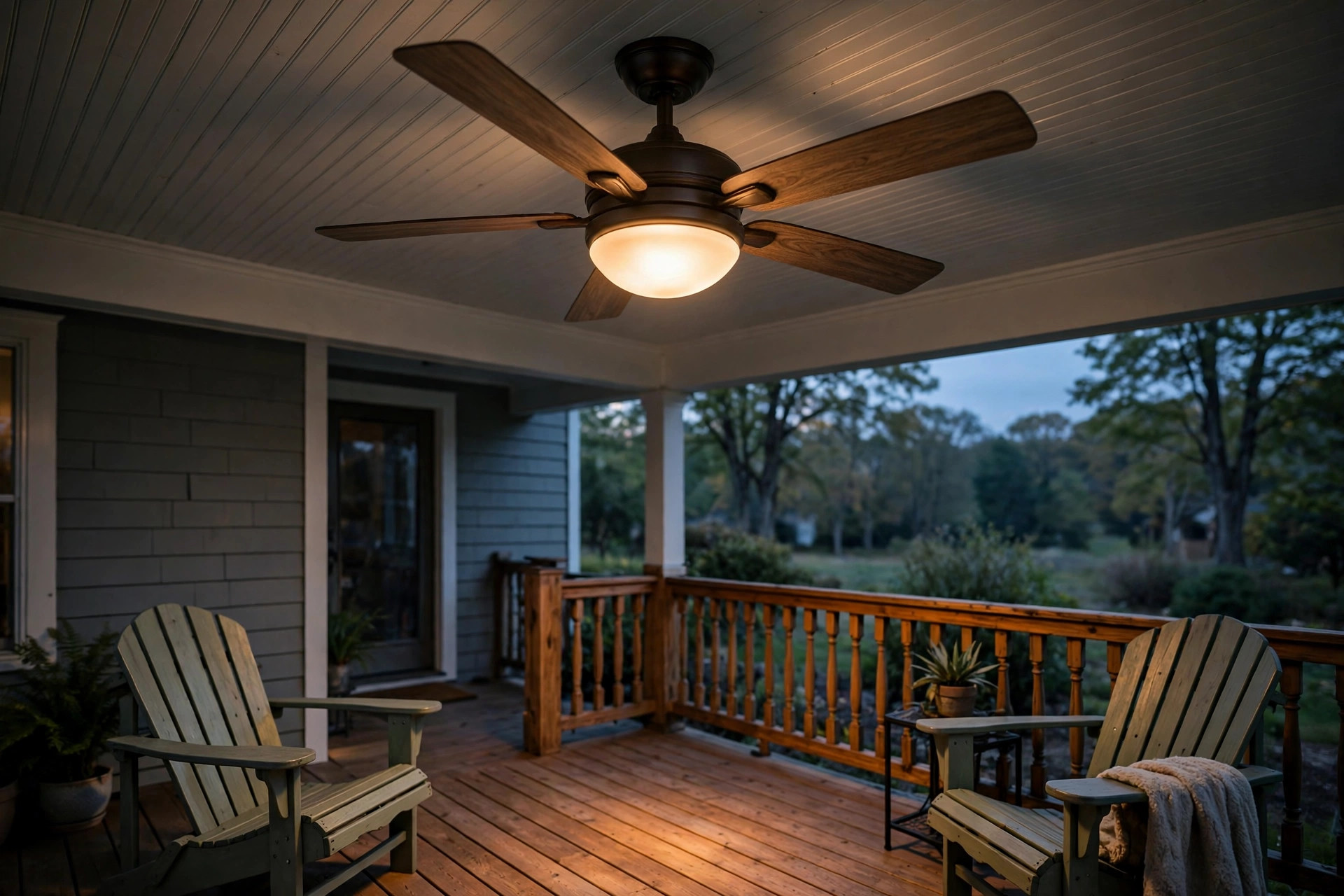

An outdoor ceiling fan with a light can change a porch. It cools the air on hot days. It gives light at night. Before you buy one, it helps to read outdoor ceiling fan with light reviews. Reviews tell you what other buyers liked. They also tell you what went wrong. This article explains how to read those reviews. It covers ratings, fan size, blade types, lights, prices, and care. It also covers safety rules for outdoor use.
Why Outdoor Ceiling Fans With Lights Matter
Many homes in the United States have a porch or a patio. On hot evenings the air can feel still and heavy. A ceiling fan moves the air. Moving air makes people feel cooler. The moving air can let you set the thermostat a few degrees higher indoors. That can save money on power bills over the summer.
A fan also keeps bugs away. Mosquitoes do not like strong moving air. Many buyers say their porch became usable again after they hung a fan. The light adds more value. You can sit outside after dark without extra lamps. You can read a book or talk with family. You can play cards with friends.
Reading reviews before you buy saves money. A cheap fan may shake or stop working after one season. Reviews from real buyers show these problems early. They also show which fans run quietly. Quiet fans matter on a porch where you talk and relax. A fan that buzzes or clicks can ruin a calm evening.
What to Look For in Outdoor Ceiling Fan With Light Reviews
Start with the overall rating. Most stores use five stars. A fan with four stars or more from many buyers is a good sign. But do not stop at the stars. Read what buyers wrote. Look for words about quiet work. Look for words about steady air flow.
Some reviews mention air movement in CFM. CFM means cubic feet per minute. A higher number means more air moves. For a small porch, 3,000 to 5,000 CFM may be enough. For a large patio, look for more than 5,000 CFM. Buyers often say whether the breeze feels strong or weak. Their words matter more than the number on the box.
Reviews also tell you about the light. Some lights are bright and white. Some are warm and soft. Check if buyers say the light is too dim. Check if the light kit can be changed or dimmed. A few buyers replace the bulbs with warm bulbs to suit their porch.
The number of reviews matters too. A fan with 20 perfect reviews may be new or untested. A fan with 2,000 reviews and four stars has proven itself. Check the dates of reviews. Old reviews may describe an old model. The maker may have changed the design since then. A fan that was great five years ago may not be the same fan today.
Pay attention to bad reviews. If many buyers report the same problem, it is real. Common problems include wobbling blades, loud motors, and remotes that stop working. One bad review about shipping does not tell you about the fan. Ten bad reviews about the motor do. Photos from buyers help a lot. They show the fan on a real porch. They show how bright the light looks at night. Product testing sites such as Consumer Reports also publish test results for ceiling fans, and their findings can back up what buyers say.
Types and Options
Outdoor fans are not all alike. The right type depends on where you will hang it and what weather it will face.
Wet-Rated Fans
A wet-rated fan can face direct rain. You can hang it under an open pergola or on an uncovered deck. Reviews of wet-rated fans often praise sealed motors. Sealed motors keep water out. Buyers also check that the blades resist warping when they get wet. These fans cost more than damp-rated fans. They are worth the money if rain can reach the fan.
Damp-Rated Fans
A damp-rated fan can face humidity and mist but not direct rain. You can hang it under a covered porch roof. Most porch fans are damp-rated. Reviews often note that damp-rated fans have more style options. You will find more finishes and blade colors in this group. Never hang a damp-rated fan where rain can fall on it. That voids the warranty and can be unsafe.
Light Styles
Light kits come in many styles. Some fans have a frosted glass dome. It gives soft light in all directions. Some have spotlights that point down at a table. A few have candle-style bulbs for an old look. Many new fans use LED lights. LEDs use less power and last many years. Reviews often say whether the LED is warm or cool in color. A warm light feels cozy on a porch. A cool light feels bright and clean. Some fans let you change the color temperature with a remote.
Blade Size and Material
Blade span matters. A 42-inch fan suits a small porch. A 52-inch fan suits a larger patio. A few fans reach 60 inches or more. Reviews often mention the size of the room where the fan hangs. Match your porch size to what buyers describe. Blades for outdoor fans are made of plastic, sealed wood, or metal. Plastic blades last longest in wet weather. They will not warp or crack. Wood blades look warmer and more natural. They must be sealed to survive outdoors. Metal blades are strong and modern. They can dent if hit, so keep them high enough.
Cost and Price
Prices for outdoor ceiling fans with lights range wide. A basic damp-rated fan can cost about 100 dollars. A large wet-rated fan with LED light and remote can cost 400 dollars or more. The average good fan costs between 150 and 250 dollars.
Reviews help you judge value. A 120-dollar fan with great reviews can beat a 300-dollar fan with poor reviews. Look at what buyers say about lasting power. A fan that lasts ten years costs less per year than a fan that fails after two summers. Check the warranty in the reviews. Some buyers praise makers who replaced broken parts fast. That kind of service adds real value.
Sales happen often. Spring and early summer bring patio sales. Fall clearance sales can cut prices deep. Many buyers in reviews say they waited for a sale and saved 50 dollars or more. Retailers like IKEA and Wayfair carry outdoor fans and run seasonal discounts, so it pays to compare prices across stores before you buy.
Care and Upkeep
Outdoor fans need more care than indoor fans. Dust and pollen build up on the blades. Wet blades can grow mold in damp climates. Clean the blades every few weeks in summer. Use a damp cloth and mild soap. Dry the blades after. This keeps the fan balanced and quiet.
Check the mounting screws twice a year. Heat and wind can loosen them. A loose fan will wobble and make noise. Tighten the screws with care. Do not over-tighten, or you can crack the mounting bracket. Oil the motor if the maker says to. Most modern fans use sealed motors that never need oil. Read the manual to be sure.
Clean the light cover as well. Bugs and dust collect inside the globe. A dirty globe cuts the light. Remove the globe and wash it with warm soapy water. Let it dry fully before you put it back. If the fan has a remote, change its batteries each season. Weak batteries cause missed signals. Many bad reviews about remotes turn out to be dead batteries.
Store nothing against the fan in winter. If you live where it snows, make sure the fan is rated for cold. Some buyers in northern states say their fan cracked in deep cold. A fan rated for your climate will avoid this trouble.
Safety
Safety comes first with any outdoor electric fixture. Only buy fans rated for outdoor use. Look for UL or ETL marks on the box. These marks show the fan passed safety tests. Indoor fans cost less, but they are not safe outside. Moisture can damage their wiring.
Hang the fan high enough. Blades should be at least seven feet above the floor. This keeps people from hitting their heads. It also keeps the blades clear of best outdoor rocking chair for porch backs and tall planters. Use a mounting box rated for fans. A plain light box is not strong enough. A fan needs a brace box that holds its weight and motion.
Turn off power at the breaker before you install the fan. Do not trust the wall switch alone. Water and electricity do not mix. After a storm, check the fan for damage before you turn it on. If wires show or the motor looks cracked, call an electrician. When in doubt, hire a licensed electrician to install the fan. The cost is small next to the risk of a bad job.
Frequently Asked Questions
Can any ceiling fan go outdoors?
No. Only fans rated for outdoor use are safe outside. Damp-rated fans suit covered porches. Wet-rated fans suit open areas that face rain. An indoor fan will rust and may short out in moisture. Always check the rating on the box and in the reviews.
Do outdoor ceiling fans with lights keep mosquitoes away?
They help a lot. Mosquitoes are weak fliers. The moving air makes it hard for them to land on you. Many buyers say mosquito bites dropped after they hung a fan. A fan does not kill mosquitoes. It only keeps them from settling near you. For best results, run the fan on medium or high when you sit outside.
Are LED light kits on outdoor fans bright enough to read by?
It depends on the fan. Reviews often say whether the light is strong enough for reading. A fan with a 15-watt LED may light a small porch well. Larger patios may need extra lighting. Many buyers pair their fan with string lights or wall lanterns. If reading matters to you, look for reviews that mention brightness in lumens. Around 1,600 lumens lights a good-sized porch.
What size fan do I need for my porch?
Measure your porch first. A porch up to 100 square feet suits a 42-inch fan. A porch from 100 to 225 square feet suits a 52-inch fan. Larger patios suit fans 60 inches or more. Reviews often list the porch size where the buyer hung the fan. Match those sizes to your own space. A fan that is too small will feel weak. A fan that is too big can overwhelm a small porch.
Should the fan have a remote control?
Most buyers say yes. A remote lets you change speed and light without standing up. This matters on a porch where you relax for hours. Check reviews for remote quality. Some remotes feel cheap or lose signal. A wall control is a good backup. A few fans work with smart home apps. Those cost more but add nice features like timers.
How long do outdoor ceiling fans last?
A good fan lasts 10 to 15 years with care. Cheap fans may last 3 to 5 years. Reviews that mention long use are gold. Look for buyers who update their review after two or three years. Their words tell you more than any ad. Clean the fan often and tighten the screws each year to reach the long end of that range.
A Short Final Word
Reading outdoor ceiling fan with light reviews is the best way to shop with confidence. Stars give you a quick picture. Words from buyers give you the truth. Match the rating to your porch size. Pick a wet or damp rating that fits your weather. Check the light style and the blade span. Compare prices across stores. Then hang the fan safely and enjoy it for years.
Your porch is part of your home. A good fan and light make it a room you use every evening. Pair it with a best outdoor sectional sofa for small patios and a best patio umbrella for wind reviews setup, and your outdoor space can feel complete.
References
Consumer Reports. (n.d.). Product reviews and ratings. https://www.consumerreports.org IKEA. (n.d.). Home furnishings. https://www.ikea.com Wayfair. (n.d.). Outdoor furniture and decor. https://www.wayfair.com
Was this guide helpful?

About Michael Thompson
The My Garden US editorial team writes practical, in-depth home and garden guides for American homeowners — tested advice, no fluff.
You May Also Like

Patio Furniture for Windy Areas: Reviews of the Best Choices
July 13, 2026 0 views
The Best Patio Umbrella for Small Balcony Living
February 11, 2026 0 views
Outdoor Side Table for Adirondack Chairs: A Complete Buyer’s Guide
May 16, 2026 0 views