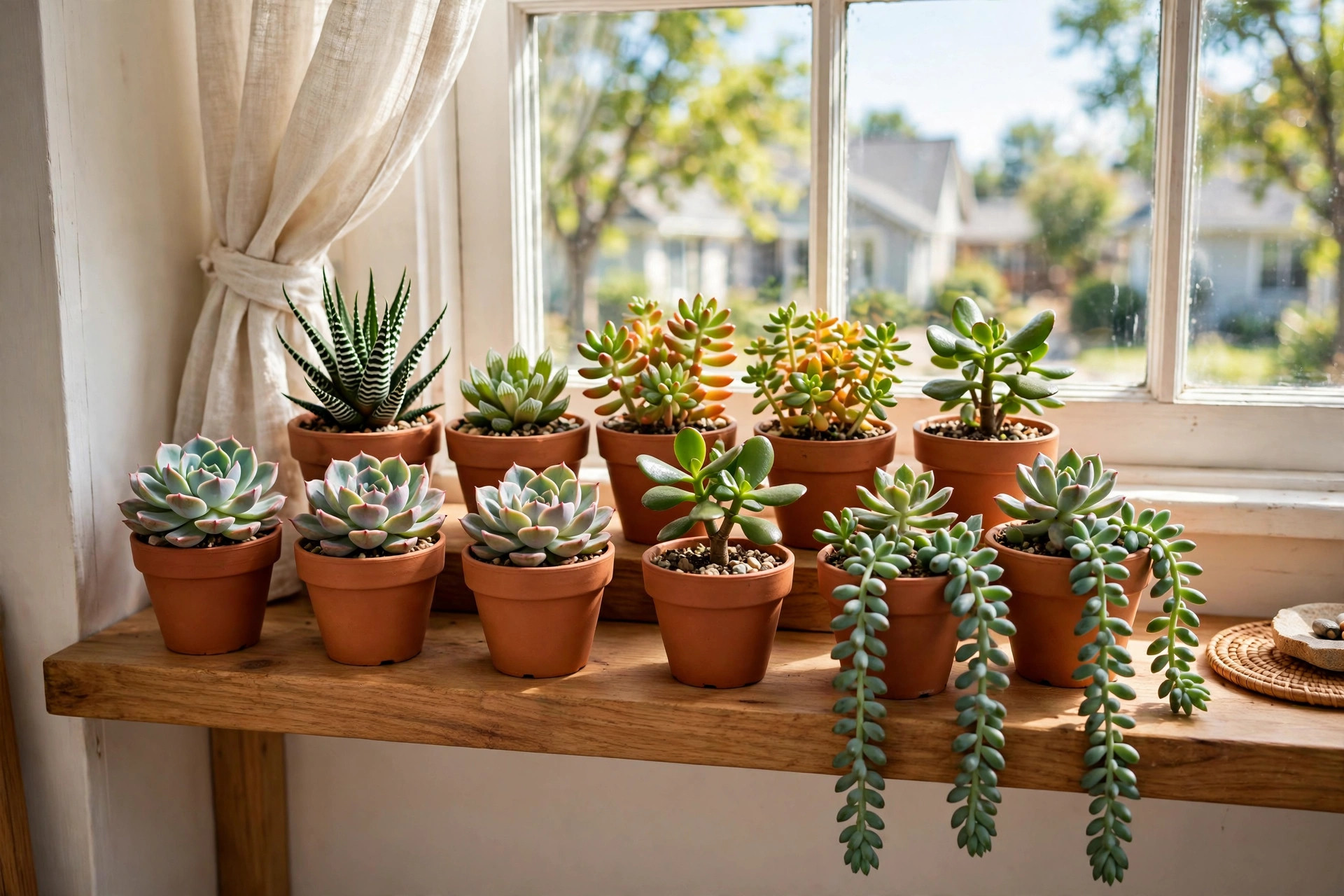

Finding Good Succulent Variety Packs Deals Near Me
The search for succulent variety packs deals near me starts with a simple fact. Succulents are some of the easiest plants a person can grow. They need little water. They survive neglect. They sit well on a windowsill, a desk, or a small porch. A variety pack gives you many kinds at once, often for the price of two or three single plants.
The trouble is that deals are not always easy to judge. A tray of twenty plants for ten dollars can be a fine bargain. It can also be a box of weak, stretched plants that die in a month. This guide walks you through the whole process. It shows where to look in your town, what to check before you pay, what kinds of succulents usually come in a pack, what prices are fair in the United States, and how to keep the plants alive after you bring them home.
Succulents have grown more popular every year since the late 1980s. Garden centers sell them year round. Big stores stock them near the checkout. Local nurseries carry them in spring and summer.
The term “variety pack” means one package with several different succulent types. Some packs have six plants. Some have twenty or more. Most come in small two-inch pots. They are often sold as starter sets for beginners, as gifts, or as favors for parties and weddings. A deal means a price that sits below the normal per-plant cost. You find deals at garden centers during clearance sales, at big-box stores in spring, at local nurseries on slow weekends, and through online seed and plant sellers that ship starter sets.
Why Variety Packs Make Sense: Succulent Variety Packs Deals near Me
A single succulent in a garden center often costs four to seven dollars. A variety pack of twelve may cost fifteen to twenty dollars. The math is simple. The per-plant price drops to about one to two dollars. For a beginner, that is the safest way to learn.
There is a second reason. Succulents vary a great deal. Some want bright sun. Some want shade. Some grow fast. Some grow slow. A pack lets you test many kinds in your own home. You will see which ones do well in your windows and which ones do not. The strong ones stay. The weak ones teach you something.
A third reason is beauty. A group of different succulents looks better than one lone plant. Colors mix. Shapes mix. A tray of varied rosettes, tall stems, and trailing vines can fill a whole shelf. Many people buy variety packs for wedding favors or party gifts for this reason.
Where to Find Deals Near You
Start close to home. The best deals are often the ones you can see with your own eyes.
Local Nurseries and Garden Centers
Local nurseries are the first stop. They grow plants on site or buy from regional growers. In spring, they stock large numbers of succulents. By late summer, they often mark down what is left. Ask the staff about clearance trays. Many nurseries set aside a discount table for plants that need quick homes. A tray of succulents that looks tired can still recover with a little care. Ask for a lower price on any tray that has a few damaged leaves.
Big-Box Stores
Big home improvement stores carry succulent variety packs in their garden sections. Spring is the best season. Displays go up in March and April in most states. Watch for rollback prices and end-of-aisle trays. Check the general gardening guides to learn which store displays tend to be fresh and which sit too long in poor light.
Grocery and Discount Stores
Many grocery stores sell small succulents near the flowers. Discount stores sell six-packs for a few dollars. The plants are small and the pots are plain. But the price can be the lowest in town. Check the soil before you buy. If the soil is dry and hard as a brick, the plant may be stressed. If the leaves look plump and firm, the plant is healthy.
Farmers Markets and Plant Swaps
Farmers markets often have a plant seller or two. Local growers sell starter packs at fair prices. You can talk to the grower and ask how the plants were raised. Plant swaps are even cheaper. You trade cuttings and offsets with other gardeners. A variety pack can be built from a swap for nothing at all.
Online Sellers and Mail Order
When nothing local looks good, mail order fills the gap. Trusted mail-order nurseries ship variety packs in small boxes with careful packing. A site like Gurney’s offers plant starter sets along with its seed and nursery stock. Another mail-order source worth a look is Park Seed, which has sold plants and seeds to American gardeners for many decades. Compare shipping costs before you order. Shipping can wipe out a deal if the box costs more than the plants.
What “Near Me” Really Means
Search engines now use your location to rank stores. Call the store before you drive over. Ask if they have succulent variety packs in stock right now.
What to Look for Before You Pay
A low price means little if the plants are dying. Learn to read a succulent the way a buyer reads a used car.
Check the Leaves
Healthy succulent leaves are plump and firm. They hold water inside. Gently squeeze a leaf between your fingers. It should feel full. Avoid plants with soft, mushy, or see-through leaves. Those are signs of rot. A few dry lower leaves are normal. Whole stems that feel soft are not.
Check the Color
Most succulents should show their true color. A green plant should look green, not pale yellow. A blue-gray plant should look dusty blue, not brown. Some stress color is fine. Many succulents turn red or purple at the edges in bright sun. That is normal and often pretty. Black or brown spots can mean disease or sunburn. Pass on those.
Check the Shape
A succulent grown in poor light stretches tall and thin. The stem grows long with wide gaps between leaves. Gardeners call this “etiolation.” The plant is weak. It may never grow back to a tight rosette. Pick packs where the plants are compact. The leaves should sit close together.
Check the Roots and Soil
Lift a plant from its pot if the seller allows it. White or light tan roots are healthy. Dark, slimy roots are rotten. The soil should drain fast. A gritty mix of sand and small stones is ideal. Soil that stays wet for days will kill succulents. If every plant in the pack sits in soggy peat moss, plan to repot them at home.
Count the Plants, Read the Label
Some packs promise “assorted succulents” with no names. That is fine for a cheap pack. Better packs list the variety names. Labels help you learn care needs. If two packs cost the same and one names its plants, take the labeled one. Also check the count. A “12-pack” with two dead plants is really a 10-pack.
For background on plant quality and care, the Almanac’s gardening section has plain seasonal advice. The Gardening Know How site explains common succulent problems in simple terms.
Common Types Found in Variety Packs
Most variety packs pull from a short list of easy, fast-growing types. You will see these names again and again.
Echeveria
Echeveria forms tight rosettes. They look like flowers made of thick leaves. Colors run from blue-green to pink to deep purple. They want bright light. They are the stars of most packs.
Sedum and Burro’s Tail
Sedums are tough ground-cover types with small, fat leaves. Burro’s tail trails down over the pot edge. Both forgive missed waterings. They root easily from fallen leaves.
Haworthia
Haworthia looks like a small aloe. It grows well in lower light than most succulents. It suits an office desk or a north window. Packs often include one or two haworthias for variety.
Jade Plant and Crassula
Jade plants grow into small trees over the years. They live for decades with simple care. Crassula cousins come in many shapes. They are slow but steady.
Cacti and Others
Some packs mix in small cacti. Others add lithops, the “living stones.” A few include string-of-pearls, which trails in long green beads. Read the labels so you know what you brought home.
If you want to learn the proper names and growing zones, the Proven Winners plant finder and the Monrovia catalog both list detailed plant profiles. For the science side, the National Institute of Food and Agriculture funds plant research that shapes how nurseries grow healthy stock.
Cost and Price: What Is Fair
Prices vary by region and season. These ranges reflect common United States prices in recent years.
– 6-pack, 2-inch pots: $8 to $15 – 12-pack, 2-inch pots: $15 to $28 – 20-pack or larger: $25 to $45 – Single 4-inch succulent: $5 to $10
A real deal sits at or below the low end of these ranges. A 12-pack for $12 is a deal. A 12-pack for $30 is not, unless the plants are large or rare.
Hidden Costs
Shipping can add $8 to $15 to an online order. Cold-weather heat packs add a few dollars more in winter. Soil and pots add cost at home. A bag of cactus mix costs $6 to $12. Small terra-cotta pots cost $1 to $3 each. Factor these in before you call an online price a deal.
When Prices Drop
Clearance happens in late summer and fall. Stores need shelf space. Mother’s Day and spring planting season bring the highest prices and the best selection. For the lowest price, buy in August or September. For the best plants, buy in April or May.
Related searches in this category include native grass seed usa online deals, tulip bulbs fall usa online deals, and organic herb seeds where to buy usa.
Care and Upkeep After You Buy
A variety pack is only a deal if the plants live. Follow these basics and most will thrive.
Light
Give succulents the brightest spot you have. A south-facing window is best in the northern hemisphere. East windows work for haworthia and other shade-tolerant types. If stems start to stretch, the light is too weak. Move the plant closer to the glass or add a simple grow light.
Water
Water deeply, then wait. Soak the soil until water runs from the drain hole. Then let the soil dry out fully. In summer, that may mean watering once a week. In winter, once a month can be enough. More succulents die from too much water than from too little. When in doubt, wait one more day.
Soil and Pots
Use a fast-draining cactus or succulent mix. You can mix regular potting soil with coarse sand or perlite in equal parts. Every pot must have a drain hole. Terra-cotta pots breathe and dry faster than plastic. That helps beginners avoid rot.
Repotting a New Pack
Most variety packs arrive root-bound in tiny pots. After a week of rest in your home, move each plant to a slightly larger pot. Handle the roots gently. Wait three to five days before watering so any root damage can heal.
Feeding
Succulents need little food. A half-strength cactus fertilizer once in spring and once in summer is plenty. Too much fertilizer burns the roots. Skip feeding in fall and winter when growth slows.
Safety Notes
Succulents are low-risk plants, but a few points matter.
– Pets: Some succulents, including jade plants, are toxic to cats and dogs. Keep packs out of reach of pets that chew leaves. Check each variety name against a pet-safety list before placing plants low. – Children: Small cacti have spines that hurt little fingers. Keep spiny types on high shelves. – Skin: A few succulents have sap that irritates skin. Wear gloves when repotting unknown types. – Mold: Soggy soil grows mold. If you see white fuzz on the soil, let it dry out and improve air flow.
Frequently Asked Questions
How long do succulent variety packs live?
With proper care, most live for years. Jade plants and aloes can live for decades. Small rosette types like echeveria live several years and produce offsets, or “pups,” that become new plants.
Can I keep a variety pack outside?
In warm climates, yes, for much of the year. Most succulents suffer below 40 degrees Fahrenheit. Bring them inside before the first frost. In hot desert sun, give them afternoon shade to prevent sunburn.
Why are my succulents stretching tall?
They need more light. Move them to a brighter window. You can cut the stretched stem, let the cut end dry for a few days, and replant it. New compact growth will follow.
How often should I water a new pack?
Water once when you bring it home, unless the soil is already wet. Then wait until the soil is fully dry. Stick a finger an inch into the soil. If it feels damp, wait.
Are cheap variety packs worth it?
Often yes, if the plants are healthy. A cheap pack of strong plants beats an expensive pack of weak ones. Judge the plants, not the price tag.
Can I propagate plants from a variety pack?
Yes. Many succulents grow from a single leaf. Twist a healthy leaf off gently, let it dry for two or three days, and lay it on soil. Roots and a tiny new plant often appear in a few weeks.
A Short Final Word
The hunt for succulent variety packs deals near me rewards the patient shopper. Check local nurseries first. Compare prices with a clear head. Inspect leaves, color, shape, and soil before you pay. Buy in late summer for the lowest prices, or in spring for the best selection. Bring your pack home, give it light and careful water, and you will have a shelf of living color for years. That is a deal worth having.
References
Burpee. (n.d.). Seeds, plants, and gardening supplies. https://www.burpee.com Gardening Know How. (n.d.). Gardening guides and plant care. https://www.gardeningknowhow.com Gurney’s Seed & Nursery Co. (n.d.). Seeds, plants, and garden supplies. https://www.gurneys.com Monrovia. (n.d.). Plants for home gardens. https://www.monrovia.com National Institute of Food and Agriculture. (n.d.). Agricultural research and extension. https://www.nifa.usda.gov Park Seed. (n.d.). Seeds, plants, and gardening supplies. https://www.parkseed.com Proven Winners. (n.d.). Plants and gardening inspiration. https://www.provenwinners.com The Old Farmer’s Almanac. (n.d.). Gardening calendars and advice. https://www.almanac.com The Spruce. (n.d.). Home and garden advice. https://www.thespruce.com White Flower Farm. (n.d.). Plants, bulbs, and garden supplies. https://www.whiteflowerfarm.com
Was this guide helpful?

About Lisa Anderson
The My Garden US editorial team writes practical, in-depth home and garden guides for American homeowners — tested advice, no fluff.
You May Also Like

Fiddle Leaf Figs for Florida Homes: A Complete Guide for USA Growers
February 28, 2026 0 views
Sunflower Seed Packs: Reviews and a Buying Guide for USA Gardeners
May 12, 2026 0 views
Lavender Seed Packets Texas Homes USA: A Plain Guide
January 7, 2026 0 views