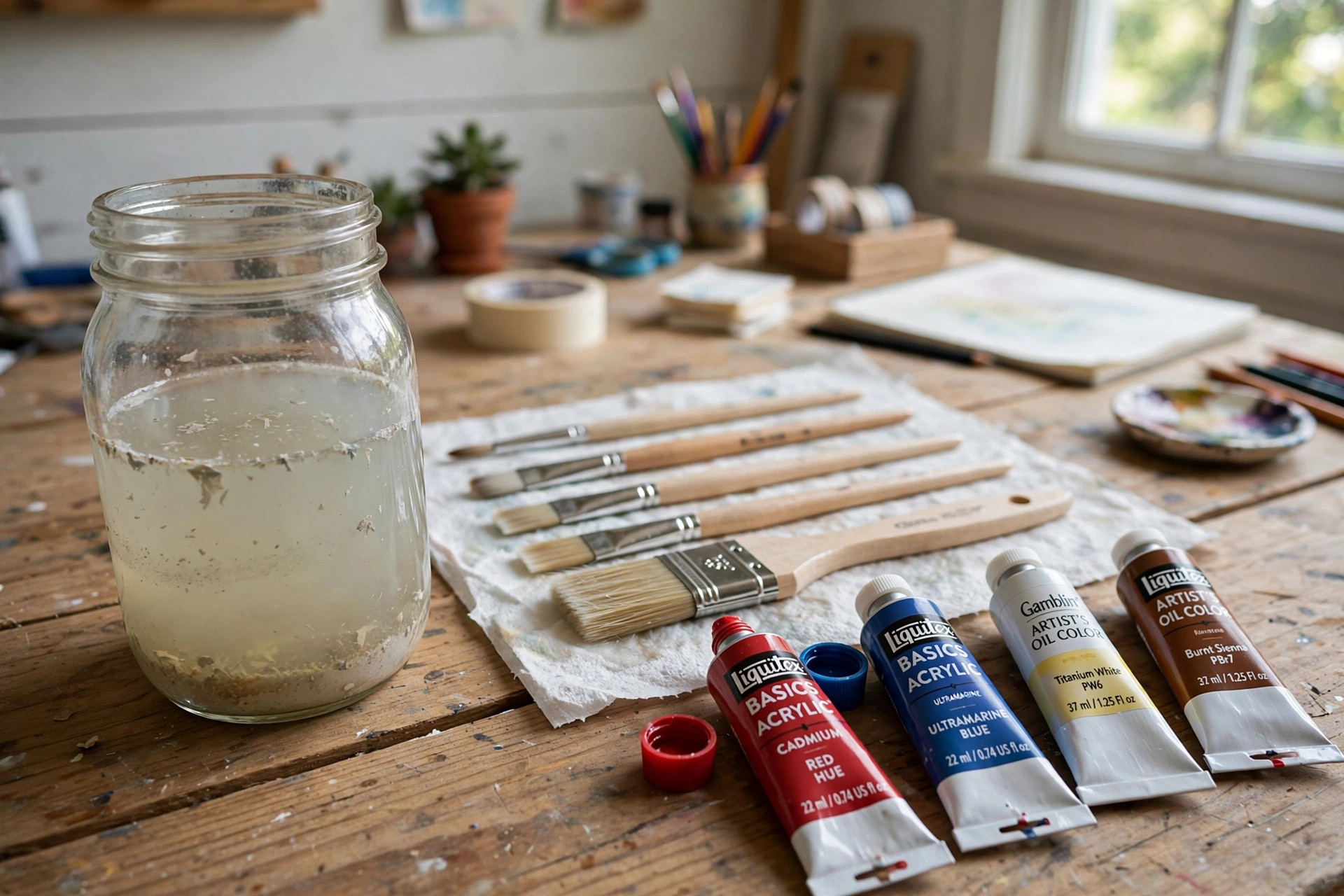

A paint brush cleaner for acrylic and oil paints is one of the most useful items on any painter’s shelf. Acrylic paint dries fast. Oil paint stays wet for days. Each type needs a different method of care. The right cleaner handles both kinds without harm to the bristles.
Good brushes are not cheap. A single quality brush can cost ten dollars or more. A cleaner that costs a few dollars can save the whole set. Painters who clean their brushes after every session find that their tools last for years.
This guide covers all of it. You will learn why a cleaner matters, what kinds are sold, how to choose the right one, what each kind costs, and how to stay safe while you work.
Why a Paint Brush Cleaner for Acrylic and Oil Paints Matters
A brush is a tool of fine hairs. Paint works its way into the base of those hairs. That spot is called the ferrule. If paint dries there, the bristles stiffen and spread. The brush then loses its fine point or edge.
Acrylic paint is water based, but it dries into a plastic film. Once that film sets in the bristles, plain water will not remove it. Oil paint is made with drying oils. It never truly washes out with water alone. It needs a solvent or a strong cleaner.
A paint brush cleaner for acrylic and oil paints is made to break down both types of paint. It softens dried acrylic film. It dissolves oil paint and linseed oil residue. It reaches into the ferrule where fingers cannot go.
Clean brushes also give better results. A stiff brush leaves streaks. A gummy brush will not hold a fine line. When the brush is clean, it springs back to shape. The paint flows as it should.
Money is another reason. Beginners often buy cheap brushes and throw them away when paint ruins them. A cleaner costs less than a new set of brushes. Over a year of steady painting, the savings are real.
What to Look for in a Brush Cleaner: Paint Brush Cleaner for Acrylic and Oil Paints
Not every product on the shelf works for both acrylic and oil. Some cleaners handle only water based paint. Some handle only oil. Read the label before you buy. Look for words like “dual action” or “for acrylic and oil.”
Check the strength. A mild cleaner is fine for daily wash of fresh paint. A strong cleaner is needed for dried paint or for brushes that were left overnight. Some painters keep two kinds: a gentle one for daily use and a heavy duty one for rescue work.
Check the smell and the fumes. Some solvents are harsh. They need fresh air and careful handling. Low odor cleaners cost a bit more but are easier to use at home. Citrus based cleaners are a middle ground. They cut paint well and smell less sharp.
Check the container size. A small jar is enough if you paint once a week. A larger bottle is better for daily painters or for studios. Large sizes cost less per ounce.
Check what the cleaner does to the brush. A good paint brush cleaner for acrylic and oil paints also conditions the bristles. It keeps them soft and shaped. Avoid any cleaner that leaves a greasy film or a strong odor on the brush after rinsing.
Key Points on the Label
Look at the list of uses. It should name acrylics and oils by name. Look at the safety notes. They should tell you about ventilation, gloves, and storage. Look for any warning against certain brush types. Some strong solvents can harm synthetic handles or loosen the glue in cheap ferrules.
Types and Options
Several kinds of paint brush cleaner for acrylic and oil paints are sold. Each works in its own way.
Liquid Solvent Cleaners
These are the classic choice. Mineral spirits and odorless mineral spirits dissolve oil paint with ease. They also work on wet acrylic paint. They act fast and rinse out with ease.
Plain mineral spirits have a strong smell. Odorless versions are refined to remove much of that smell. Odorless mineral spirits are the better pick for home studios. You can find them at most large hardware stores like Home Depot.
Citrus Based Cleaners
These use oil from orange or other citrus fruit. They cut through both acrylic and oil paint. They smell far milder than mineral spirits. Many painters like them for that reason.
Citrus cleaners work a bit slower than strong solvents. Leave the brush to soak for a few minutes longer. They are a good pick for schools and homes where strong fumes are a concern.
Brush Soap and Solid Cleaners
These come as bars or small tubs of soap. You wet the brush, work it into the soap, and rinse. They are excellent for acrylic paint and fine for oil paint that is still fresh.
Brush soap is gentle. It conditions natural bristles. It is the best daily cleaner for a working painter. Many art supply shops such as Blick and Michaels carry wide ranges of brush soap.
Combination Wash and Conditioner Products
Some products are made to do two jobs at once. They clean and they condition. They often come in wide mouth jars. The painter swirls the brush in the jar, then rinses.
These are handy for studios where many brushes need care at the end of the day. The wide jar makes the job quick.
How to Choose the Right Cleaner
Start with how you paint. If you paint mostly in acrylics, a brush soap plus a mild liquid cleaner is enough. If you paint mostly in oils, you need a real solvent like odorless mineral spirits.
Think about where you work. A small room with one window needs a low odor choice. A garage or a well ventilated studio can handle stronger solvents. Fume safety comes first. Never use a strong solvent in a closed room.
Think about your brush set. Natural hair brushes need gentle care and conditioning. Synthetic brushes are tougher but can still be ruined by paint left to dry. A paint brush cleaner for acrylic and oil paints that also conditions is the safest pick for a mixed set of brushes.
Read product reviews before you buy. Sites like Consumer Reports and The Spruce give plain advice on which products do the job. Craft stores like Joann list user reviews on many of their brush care products.
If you are new to painting, start with a starter acrylic paint set for beginners canvas art and a small jar of brush soap. Add a bottle of odorless mineral spirits when you move into oil painting. A good set of craft paint brushes for acrylics will last far longer when you clean it well from the first day.
How to Clean Brushes Step by Step
The method matters as much as the product. A bad method can ruin a brush even with a good cleaner.
For Acrylic Paint
Wipe the brush first. Press it gently against a paper towel. Remove as much paint as you can. Rinse the brush in lukewarm water. Never use hot water. Hot water can set acrylic paint and loosen the glue in the ferrule.
Work a paint brush cleaner for acrylic and oil paints into the bristles. For brush soap, swirl the wet brush on the bar. For liquid cleaner, dip and swirl. Use your fingers to work the cleaner down to the ferrule.
Rinse under lukewarm water. Repeat if the water still shows color. Reshape the bristles with your fingers. Lay the brush flat or hang it with the bristles down to dry.
For Oil Paint
Wipe off all loose paint with a rag. Dip the brush in the solvent cleaner. Swirl gently for a minute or two. Wipe again on a clean rag.
Repeat until the rag shows no color. Then wash the brush with brush soap and lukewarm water. This second wash removes the solvent and conditions the bristles. Rinse well. Reshape and dry as with acrylic brushes.
For Dried or Forgotten Brushes
Do not throw the brush away yet. Soak it in a strong paint brush cleaner for acrylic and oil paints for several hours or overnight. Use a glass jar. Keep the liquid level below the ferrule if you can.
After the soak, work the bristles gently. A soft toothbrush can help free loose paint. Wash with soap and water. Repeat the soak if needed. Many brushes that looked lost can be saved this way.
Cost and Price
A paint brush cleaner for acrylic and oil paints is one of the least costly parts of painting. Small jars of brush soap run from three to six dollars. Liquid solvents in quart cans run from eight to fifteen dollars. Citrus based cleaners fall in the middle.
Large sizes save money. A gallon of odorless mineral spirits costs less per ounce than a small bottle. But a gallon is heavy and takes up space. Buy only what you will use in a year. Solvents can go stale or leak if stored too long.
Brush soap lasts a long time. One bar can serve a casual painter for many months. Combination jar products last well too. The cleaning liquid in the jar can be reused until it grows too dark.
Consider the cost of the brushes you protect. A set of craft paint brushes for acrylics may cost twenty to fifty dollars. A cleaner that costs five dollars and doubles the life of the set pays for itself many times over.
Watch for sales at craft stores. Michaels and Joann often cut prices on brush care during seasonal sales. Hardware stores run sales on solvents in the spring and fall painting seasons.
Care and Upkeep of the Cleaner Itself
The cleaner also needs care. Used solvent can be reused. Let the dirty solvent sit in a closed jar. The paint settles to the bottom. Pour off the clear liquid on top into a clean jar. Mark the jar as reused solvent.
Dispose of old cleaner in the right way. Never pour solvents down the drain. Never pour them on the ground. Most towns have a household waste day for paint and solvents. The EPA gives plain guidance on how to handle household hazardous waste.
Brush soap needs no special care. Keep it in a dry spot. Let it dry between uses so it does not grow soft.
Store all cleaners away from heat. Keep them in a cool cabinet. Make sure the lids are tight. Keep them out of the reach of children and pets.
Safety
Safety is part of the job. Solvents give off fumes. Work near an open window or use a fan. If you feel dizzy or get a headache, stop and get fresh air at once.
Wear gloves when you use strong solvents. Nitrile gloves are cheap and work well. They keep the solvent off your skin. Some people get dry or cracked skin from long contact with cleaners.
Keep all cleaners away from flame. Mineral spirits can catch fire. Never smoke while you use them. Store them far from heaters and furnaces.
Read the label every time. Follow the first aid notes. Keep the number of your local poison control center near your work area. These steps are simple and they matter.
Home repair guides like This Old House, Bob Vila, and Family Handyman all stress the same safety rules for solvents and workshop chemicals.
FAQ
Can one cleaner really handle both acrylic and oil paints?
Yes. A true paint brush cleaner for acrylic and oil paints is made for both. It breaks down the plastic film of dried acrylic and dissolves the oil base of oil paint. Check the label to be sure it names both types.
Will the cleaner harm natural hair brushes?
A good cleaner will not harm them. In fact, brush soap and conditioner products help natural hair stay soft. Harsh solvents used too often can dry out natural hair. Follow the solvent wash with a soap wash to keep the bristles in good shape.
How often should I clean my brushes?
Clean them after every painting session. Even a short session leaves paint in the ferrule. Acrylic paint can start to set in less than an hour. A quick clean takes only a few minutes and adds years to the life of the brush.
Can I use dish soap instead of a brush cleaner?
Dish soap works in a pinch for fresh paint. It is not as good as a real brush cleaner. It does not break down dried acrylic film well. It does not dissolve oil paint. For the best care, use a product made for the job.
What should I do with a brush that has hard dried paint?
Soak it in a strong cleaner overnight. Many stiff brushes come back to life after a long soak. If the bristles stay hard and splayed after two soaks, the brush may be beyond help. Save it for rough work like mixing or applying glue.
Is odorless mineral spirits safe to use at home?
It is safer than regular mineral spirits but still needs care. Use it near an open window. Wear gloves. Keep the lid on the can when you are not using it. Store it away from heat and out of the reach of children.
A Short Final Word
A paint brush cleaner for acrylic and oil paints is a small thing that does a large job. It keeps good brushes in service for years. It saves money. It keeps paint flowing the way the painter wants.
Pick the right kind for your paint and your space. Learn the simple steps. Follow the safety rules. Your brushes will repay you with every smooth stroke.
For your next craft project, consider painting wood craft blanks for painting and signs once your brushes are clean and ready. A clean brush makes the paint on wood smooth and even.
References
Blick Art Materials. (n.d.). Art and craft supplies. https://www.dickblick.com Bob Vila. (n.d.). Home improvement advice. https://www.bobvila.com Consumer Reports. (n.d.). Product reviews and ratings. https://www.consumerreports.org Family Handyman. (n.d.). DIY home repair and maintenance. https://www.familyhandyman.com JOANN. (n.d.). Fabric and craft supplies. https://www.joann.com Michaels. (n.d.). Arts and crafts supplies. https://www.michaels.com The Home Depot. (n.d.). Home improvement products. https://www.homedepot.com The Spruce. (n.d.). Home and garden advice. https://www.thespruce.com This Old House. (n.d.). Home renovation guidance. https://www.thisoldhouse.com U.S. Environmental Protection Agency. (n.d.). Protecting human health and the environment. https://www.epa.gov
Was this guide helpful?

About Lisa Anderson
The My Garden US editorial team writes practical, in-depth home and garden guides for American homeowners — tested advice, no fluff.
You May Also Like

Macrame Wall Hanging Kit Large for Living Room: A Complete Guide to Handmade Wall Art
May 18, 2026 0 views
A DIY Book Nook Kit for Bookshelf Decor Crafts Turns a Plain Shelf Into a Tiny World
January 9, 2026 0 views
A Practical Guide to the DIY Bird Feeder Kit for Backyard Crafts USA
May 30, 2026 0 views