
Introduction
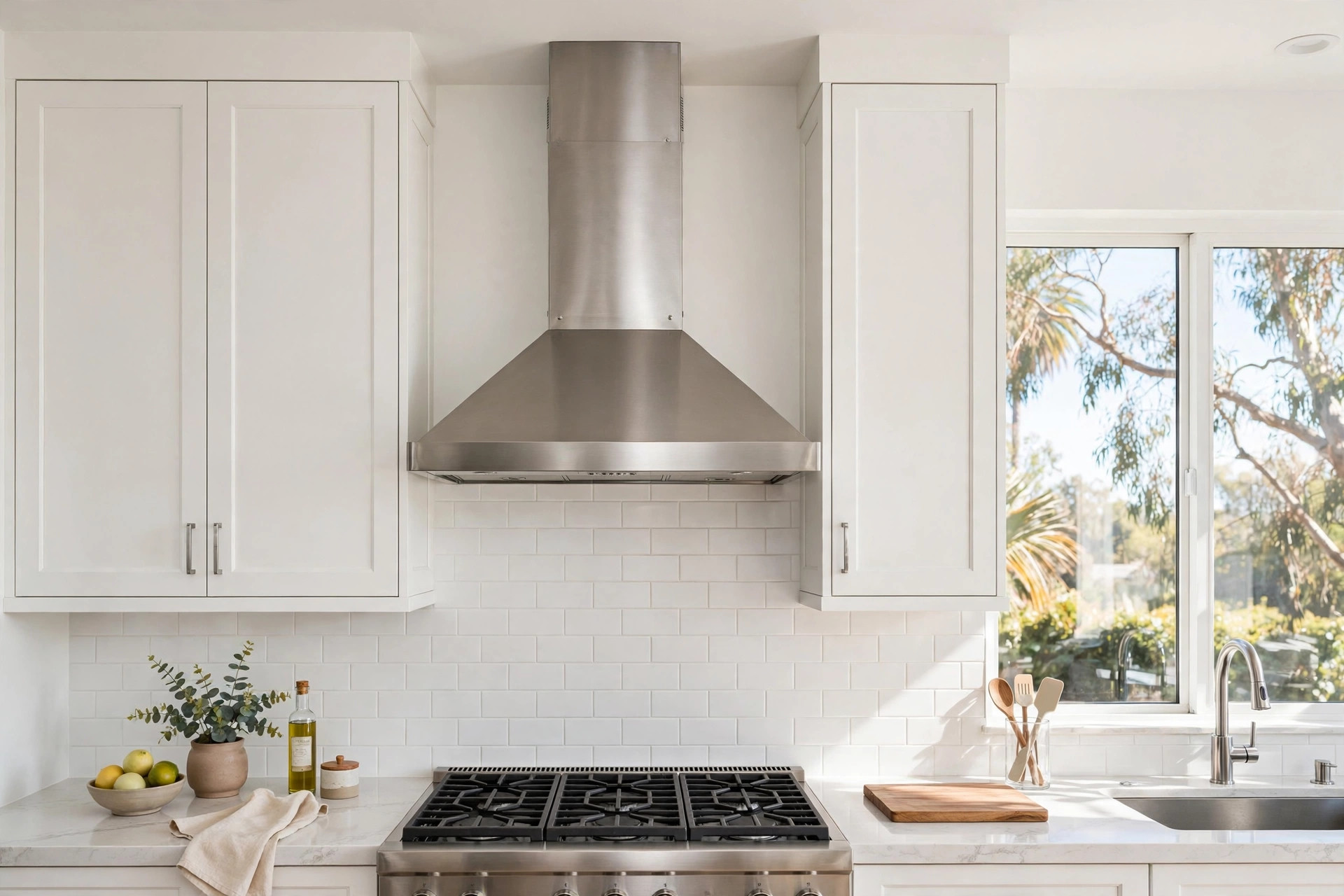
A kitchen in California is the true center of the home. Friends gather there. Family meals start there. A range hood keeps that center clean by pulling heat, smoke, steam, and cooking grease out of the air before they settle on walls, cabinets, and counters. Stainless range hoods for California homes have grown in demand because they match the look of modern kitchens and stand up well to daily use. This guide explains the topic in plain terms. You will learn what a range hood does, the main types, how to size one, how venting works in California homes, what the prices look like, and how to care for the unit. If you are planning a full kitchen update, it also helps to read a stainless range hood buying guide and to think about how the hood works beside your gas kitchen ranges and undermount stainless sinks.
Why a Range Hood Matters in a California Kitchen: Stainless Range Hoods California Homes Usa
Cooking makes more than good food. It makes smoke, steam, grease particles, and heat. Without a hood, these spread through the room. Grease lands on cabinet faces and on the ceiling. Smoke leaves a stale smell in curtains and furniture. Steam can lift paint and loosen wallpaper over time. A good hood captures most of this at the source, right above the pots and pans.
California homes add their own reasons. Many have open floor plans, so cooking smells drift into the living room and dining room. Many still use gas cooktops, which give off combustion gases along with cooking fumes. Gas burners release small amounts of nitrogen dioxide and carbon monoxide, and a vented hood carries these outside. Builders and remodelers in the state also watch indoor air rules, and a working hood is a simple way to meet them. The U.S. Environmental Protection Agency notes that indoor air can hold more pollutants than outdoor air, which is one reason steady ventilation matters in any home (see U.S. Environmental Protection Agency for indoor air guidance, and check energy and appliance standards at Www.energystar.gov).
A stainless finish is more than a style choice. Stainless steel resists heat, wipes clean, and does not chip like paint can. In a busy kitchen, that durability pays off year after year. Home buyers in California also notice the look. A clean steel hood over the range signals a cared-for kitchen, and real estate agents often point to the kitchen as the room that sells the house.
What to Look For When You Choose
Size and Fit
The hood should be at least as wide as the cooktop. A 30-inch hood suits a 30-inch range. A 36-inch hood suits a 36-inch range or cooktop. Many buyers pick a hood one size wider than the cooktop, because a wider capture area catches more smoke from front burners. Measure the wall space, the cabinet width, and the ceiling height before you shop. Retailers such as Www.homedepot.com and Www.lowes.com list exact widths, depths, and mounting heights for each model, which makes planning easier.
Airflow Power (CFM)
Airflow is rated in CFM, or cubic feet per minute. A higher CFM number means the fan moves more air. For most home kitchens, 300 to 600 CFM is enough. Heavy cooking with gas burners, woks, or frequent frying may call for 600 to 900 CFM. A hood that is too weak will not clear the air. A hood that is too strong for a small kitchen can pull heated or cooled air out of the house and make the furnace or air conditioner work harder. Match the CFM to your cooktop and your cooking habits.
Noise Level (Sones)
Noise is rated in sones. A quiet hood runs near 1 sone, which is close to the hum of a refrigerator. A loud hood can reach 6 sones or more, which makes normal talk hard. Check the sone rating at each fan speed. Variable speed fans help, because you can run the hood low for light cooking and turn it up only when you fry or sear. Reviews at Www.consumerreports.org often rate noise along with performance, and brand sites such as Www.geappliances.com and Whirlpool publish sone ratings in their spec sheets.
Venting: Ducted or Ductless
A ducted hood sends air outside through ductwork. It removes smoke, grease, steam, and gases fully. A ductless hood pulls air through filters and blows it back into the room. It catches grease and some smells but cannot remove heat, steam, or combustion gases. In California, where gas cooking is common, a ducted hood is the better choice whenever the house allows it. If you live in a condo where ducts are not possible, a ductless model is better than nothing. Choose a model with good charcoal filters, and change those filters on time.
Filters
Most stainless range hoods use one of three filter types. Mesh filters are light screens that catch grease. Baffle filters are metal channels that trap grease and last a long time. Charcoal filters absorb smells and are used in ductless hoods. Baffle filters are the most common in mid-price and high-end hoods because they clean well and go through the dishwasher. Look for filters you can remove and wash with ease.
Types of Stainless Range Hoods
Wall-mount chimney hoods attach to the wall above the range and run a chimney cover to the ceiling. They suit kitchens where the range sits against a wall. They are the most popular style in new California homes.
Island hoods hang from the ceiling above a cooktop in a kitchen island. They need strong CFM because smoke can escape on all four sides. They also need careful duct routing through the ceiling.
Under-cabinet hoods mount beneath the wall cabinet above the range. They cost less and suit smaller kitchens. The capture area is smaller, so they work best for light to moderate cooking.
Insert hoods, also called power packs, fit inside a custom wood or plaster hood cover. They give a clean, built-in look while the motor hides inside. Many high-end remodels in California use this style.
Downdraft hoods sit behind the cooktop and pull air down and out. They save the view in open kitchens but are less effective than overhead hoods, because heat and smoke rise. They suit electric cooktops better than gas.
Cost and Price
Prices vary by type, size, power, and brand. A basic under-cabinet stainless hood can cost 100 to 300 dollars. A mid-range wall-mount or island hood often costs 400 to 1,200 dollars. High-end insert systems and designer island hoods can run 1,500 to 3,000 dollars or more.
Installation is a separate cost. A simple swap of an old hood for a new one may cost 150 to 300 dollars in labor. A new duct run through the roof or an outside wall can add 500 to 1,500 dollars, depending on the distance and the roof type. Electrical work, permits, and drywall repair add more. Get two or three written quotes from licensed installers. Prices on retailer sites give a fair starting point; compare models at The Home Depot, Lowe’s, and brand pages such as Www.bosch-home.com before you call a contractor.
Running costs are low. The fan uses little electricity, and most models now use LED lights that last for years. The main ongoing cost is time: cleaning filters and wiping the steel. If you plan the hood as part of a larger remodel, ask your contractor for one quote that covers the hood, the duct run, and the patch work. Bundling the work often costs less than calling three separate trades on three separate days.
Care and Upkeep
Clean the grease filters every month if you cook daily. Baffle and mesh filters can go in the dishwasher or soak in hot water with dish soap. A clogged filter cuts airflow and lets grease build up inside the hood. That buildup is a fire risk.
Wipe the stainless surface weekly with a soft cloth and warm soapy water. Wipe with the grain of the steel to avoid streaks. Do not use steel wool or harsh powder cleaners. They scratch the finish. For fingerprints, a small amount of mineral oil or a stainless cleaner on a microfiber cloth works well.
Check the lights twice a year. Replace LED bulbs or halogen lamps as the manual directs. Look at the duct joints once a year for leaks, and keep the outside vent cap clear of nests and leaves. A blocked vent makes the fan loud and weak.
Guides at Www.thisoldhouse.com and Www.bobvila.com walk through filter cleaning and small repairs step by step, and The Spruce offers seasonal kitchen care checklists.
Safety Notes
Keep a clear space above the cooktop. Most makers ask for 24 to 30 inches between an electric cooktop and the hood, and 30 to 36 inches above a gas cooktop. A hood hung too low can catch heat damage or block your view of the pans. A hood hung too high will miss the smoke.
Turn the hood on a few minutes before you start cooking and leave it on for ten minutes after you finish. This habit clears the last of the fumes. If you have a very strong hood, crack a window when you run it on high. This gives the house makeup air and keeps the fan from pulling exhaust gases down a chimney or water heater vent.
Never leave the range unattended while frying. Clean the filters on schedule, because grease inside the hood and ducts can burn. If the hood has a fire sensor or auto shut-off, keep those features working and test them as the manual says.
Frequently Asked Questions
What size stainless range hood do I need for a 36-inch gas range?
Choose a hood that is at least 36 inches wide. Many buyers pick a 42-inch hood over a 36-inch gas range for better capture. Make sure the CFM rating suits gas cooking, often 600 CFM or more for heavy use.
Are ductless range hoods legal in California?
Ductless hoods are sold and used in California, but they do not remove combustion gases from gas burners. If your kitchen has a gas range or cooktop, a ducted hood that vents outside is the safer and smarter choice. Check local building rules before you buy.
How much CFM do I need for a stainless range hood?
For light electric cooking, 250 to 400 CFM is enough. For gas cooking, plan for 1 CFM for every 100 BTU of burner output. A typical 60,000 BTU gas range calls for about 600 CFM. Large pro-style ranges may need 900 CFM or more.
Can I install a range hood myself?
A simple replacement of an under-cabinet hood is a fair do-it-yourself project if you are comfortable with basic wiring. New ductwork, roof cuts, and gas line moves are jobs for licensed pros. When in doubt, hire an installer.
How often should I clean the range hood filters?
Clean metal filters every one to two months with daily cooking. Replace charcoal filters in ductless hoods every three to six months, or as the manual says. Homes that fry often should clean more.
Does a stainless range hood need special cleaners?
No special cleaner is required. Warm soapy water and a soft cloth handle most jobs. A light stainless cleaner helps with fingerprints. Avoid bleach, steel wool, and abrasive powders.
A Final Word
A stainless range hood is one of the hardest-working parts of a California kitchen. It protects your cabinets, your paint, and your indoor air. Pick the right size, choose ducted venting when you can, and keep the filters clean. Do these things and the hood will serve you quietly for many years.
References
Bob Vila. (n.d.). Home improvement advice. https://www.bobvila.com Bosch. (n.d.). Home appliances. https://www.bosch-home.com Consumer Reports. (n.d.). Product reviews and ratings. https://www.consumerreports.org ENERGY STAR. (n.d.). Energy efficient products. https://www.energystar.gov GE Appliances. (n.d.). Kitchen and home appliances. https://www.geappliances.com Lowe’s. (n.d.). Home improvement products. https://www.lowes.com The Home Depot. (n.d.). Home improvement products. https://www.homedepot.com The Spruce. (n.d.). Home and garden advice. https://www.thespruce.com This Old House. (n.d.). Home renovation guidance. https://www.thisoldhouse.com U.S. Environmental Protection Agency. (n.d.). Protecting human health and the environment. https://www.epa.gov Whirlpool. (n.d.). Home appliances. https://www.whirlpool.com Www. (n.d.). Home and garden information. https://www
Was this guide helpful?

About James Carter
The My Garden US editorial team writes practical, in-depth home and garden guides for American homeowners — tested advice, no fluff.
You May Also Like

Where to Find Shaker Cabinet Doors Deals Near Me
June 26, 2026 0 views
Microwave Drawer Units Buying Guide USA: How to Choose the Right One
June 9, 2026 0 views
Shaker Cabinet Doors for Texas Homes: A Simple Guide
July 1, 2026 0 views