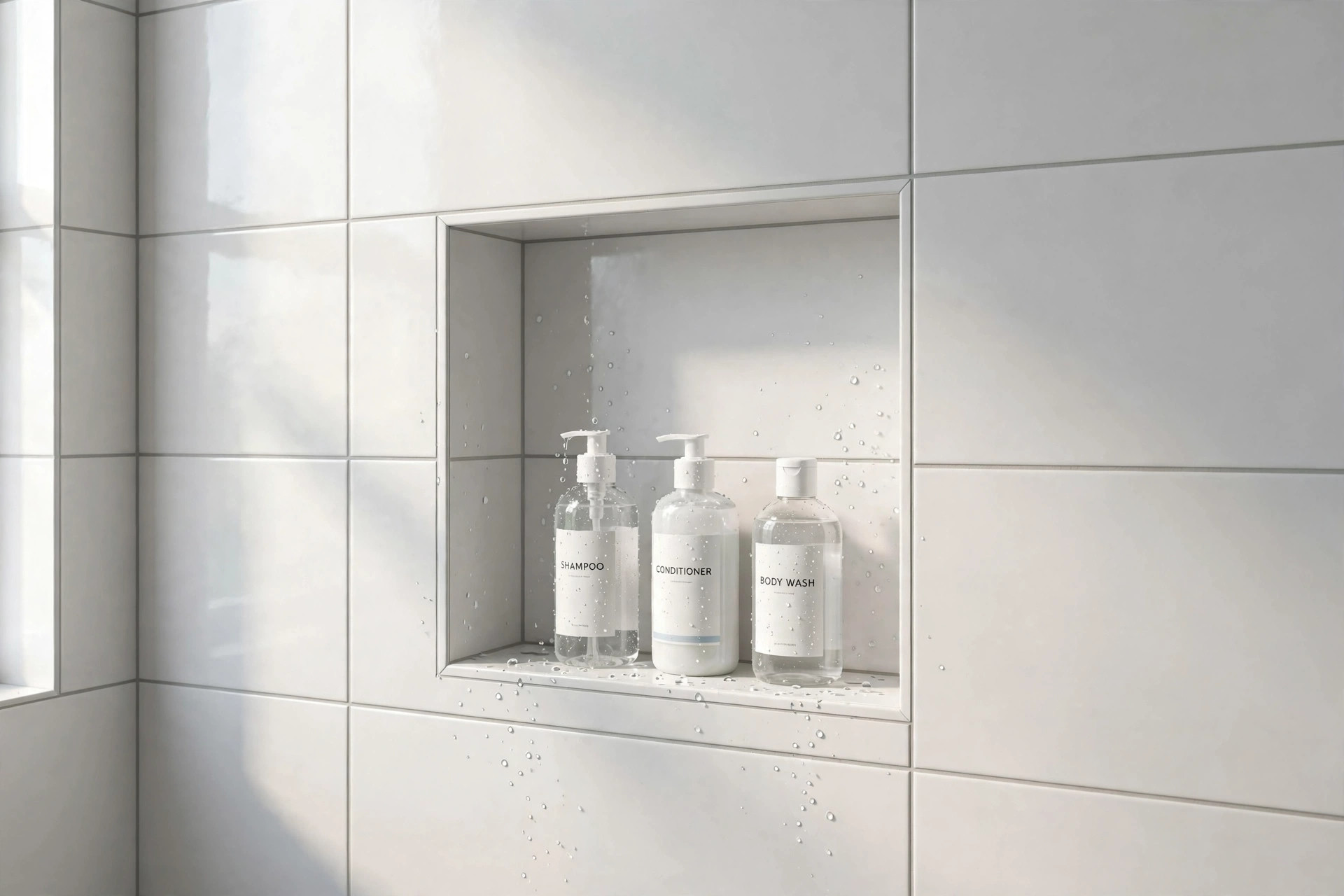

A shower niche is a recess in the shower wall that holds soap, shampoo, and other bath goods. The best shower niche size for tile USA homes is one that fits both the tile grid and the stud wall behind it. Many home owners plan the niche after the wall is closed, and that order is wrong. When the niche is planned late, tiles must be cut into odd slivers and the niche may land off center. This guide explains the standard sizes, how to match the niche to common American tile, and what the work costs.
Why Niche Size Matters
The size of a shower niche sets how useful it is and how it looks. A niche that is too small will not hold a tall shampoo bottle. A niche that is too large will look empty and may be hard to drain. Size also decides the tile cuts. Tile comes in set sizes, and a niche that lines up with whole tiles needs fewer cuts. Fewer cuts mean cleaner grout lines and less waste. In older American homes the wall studs set a firm limit. Studs in most homes sit 16 inches apart from center to center. That spacing shapes what widths are easy to build without moving a stud.
A good niche keeps water out of the wall. Every cut in tile is a spot that must be sealed. A niche planned to whole-tile courses has fewer seams to seal. That is why tile setters ask for the niche size before the first tile is cut.
Standard Niche Sizes: Best Shower Niche Size for Tile Usa
The most common finished niche in American showers is 12 inches wide by 12 inches tall. It fits between two studs with room for the frame. It holds the daily bottles of a single user. The next common size is 12 inches wide by 24 inches tall, often called a double niche because it gives room for tall bottles on one shelf. A wide niche of 24 inches by 12 inches works well over a tub or across a long back wall.
Depth is set by the wall itself. A standard 2 by 4 stud wall gives about 3.5 inches of depth, and the finished niche is usually 3.25 to 3.5 inches deep. That is enough for most bottles. A 2 by 6 wall gives about 5.5 inches, which holds large salon bottles with room to spare. Depth should never be cut into a load bearing wall beyond the stud cavity. Plan the niche on a wall that can give it up.
How to Size a Niche for Your Tile
Tile size drives the cleanest niche. Before you frame, know the exact tile you will use. The 12 by 24 inch wall tile is now the most common large tile in American baths, and many guides to tile for shower walls note that it tiles fast and shows few grout lines. For 12 by 24 tile, a 12 by 24 niche is the clean choice. It spans one full tile wide and two full tile courses tall, with the grout lines landing right at the niche edges.
For 12 by 12 tile, use a 12 by 12 or 12 by 24 niche. The width lands on full tiles and the height covers one or two courses. For 4 by 12 subway tile, which is still common in older rehabs, a 12 by 18 or 12 by 24 niche keeps the cuts small. The trim tile guide at Daltile shows how trim pieces finish raw edges at the niche throat. Add the grout joint when you measure. A 1/8 inch joint across four tiles adds up to half an inch. Measure the tile with its joints before you set the opening.
Match the Niche to Whole Tiles
The rule is simple. Set the rough opening so the finished inside edges land on tile edges, not tile centers. A niche cut through the middle of a tile forces two cut pieces and a seam in the worst spot. Talk with your tile setter at the start. Many large format tile for small bathrooms projects need this talk even more, because one cut tile can throw off the whole wall.
Framing the Opening
Framing is wood or metal around the niche. Use pressure treated wood or a waterproof niche kit in wet areas. The rough opening should be about 1/2 inch larger than the finished size all around. That room holds the backer board, the waterproof layer, and the tile. Keep the bottom of the niche sloped. A slope of about 1/4 inch over the depth lets water run back into the shower. Flat niche floors pool water, and standing water breeds mold.
Types of Shower Niches
The single niche is one box in the wall. It suits small showers and guest baths. The double niche is one tall box split by a shelf, often in tile or glass. It suits a family bath where each person wants a level. The horizontal niche is wide and short, often set above the tub deck or at knee height for foot shaving. The corner niche is small and set where two walls meet. It saves wall space but needs care in waterproofing because it has more inside corners.
Preformed niches are factory made from foam or plastic with a waterproof skin. They set fast and come in standard sizes. Site built niches are framed and lined by hand. They can be any size and match odd tile. For a remodel where the tile is already bought, a site built niche gives the exact fit. For a fast job with standard tile, a preformed niche saves time.
Where to Place the Niche
Place the niche on a side wall, not the wall that holds the shower head. The head wall takes the most water and is harder to waterproof around. Keep the niche at least a few inches above the spray line of the shower head. A common height is chest level, about 48 to 60 inches off the shower floor. That height is easy to reach and keeps most direct spray off the shelf.
Think about who uses the shower. A tall niche with a shelf serves two users. A niche at standing height does not serve a seated user in a bench shower. In a walk in shower, set the niche where the bather stands, not across the room. Also think about the view. A niche on the wall seen from the door will be on display. That is the wall to tile with care.
Cost and Price
A site built tile niche adds cost in labor more than in material. Framing and lining take a few hours. Tiling the niche takes longer than tiling flat wall, because each piece is cut and the inside corners must be sealed. In most American markets a single tiled niche adds 150 to 400 dollars to a shower tile job. A double or oversize niche adds 300 to 600 dollars. A full shower remodel cost breakdown will list the niche as its own line item, and it is wise to get that line in writing before work starts.
Preformed niche kits cost 40 to 120 dollars for the box, plus tile and labor. The tile used inside the niche is the same tile as the wall in most jobs, so material cost stays low. Shelf pieces in stone or glass cost more. If you want a glass shelf in a double niche, plan 30 to 80 dollars for the shelf. Waterproofing kits from Home Depot and Lowe’s carry the membranes most setters use, and their stores also sell the grout and sealant for the niche edges.
Tiling the Niche Step by Step
Start with a clean rough opening. Line the back and sides with backer board and a waterproof membrane. Follow the membrane maker’s guide for the inside corners. The tile goes on the back first, then the sides, then the top. The bottom tile goes in with a slight slope toward the shower. Use a matching grout color. A dark grout in a light niche shows every drip. Seal the grout once it has cured. Some setters set a single stone slab as the niche floor. That cuts out one grout bed and drains well. A slab sill from LL Flooring or a stone shop is a common pick for that job.
Cut tiles for the niche with a wet saw. Dry cuts chip the glaze. Set the side tiles so their cut edges turn into the niche, not out onto the wall. The factory edge should face the room. Leave a small gap at the inside corners for sealant. Grout alone cracks in corners. A bead of color matched silicone holds the corner. Wipe the niche before the grout haze sets. Haze is hard to scrub from a small box later.
Care and Upkeep
A tiled niche needs the same care as the rest of the shower, plus a little more. Soap scum settles on the shelf first. Wipe the shelf once a week with a non acid cleaner. Acid cleaners etch stone and dull glaze over time. Check the grout lines twice a year. If a line cracks, clean it and press in fresh grout, then seal it. Check the bottom slope. If water pools, the slope may have been set flat. A pool that never drains will feed mold.
Replace the silicone in the inside corners when it peels or turns dark. Peeling silicone lets water behind the tile. A tube of silicone costs little and the job takes minutes. Keep bottles on a small tray if they leak. Oil from some soaps stains grout. A tray keeps the stain off the shelf. Reviews of floor and wall care at Shaw and Mohawk note that gentle cleaners keep finishes sound, and the same rule holds for niche tile.
Safety
A niche must not weaken the wall. Never cut a stud to widen a niche without a plan from a builder. In a load bearing wall, cutting a stud can shift weight to the wrong place. If the niche must be wide, build it on a non load bearing wall or use a preformed niche that fits between studs.
Waterproofing is the main safety task. The membrane must run behind the tile and tie into the wall membrane. Miss that step and water enters the wall cavity. That can rot the frame and feed mold. Also mind sharp edges. Cut tile edges inside the niche can be sharp. A trim piece or a rounded edge tile keeps the opening safe for hands. Keep heavy glass bottles low on the shelf. A fall from a high shelf can crack the tile floor.
Frequently Asked Questions
What is the best shower niche size for tile USA homes? The most common and safest pick is 12 inches wide by 12 inches tall for a single niche, or 12 by 24 for a tall niche. These sizes fit between standard 16 inch studs and match common American tile sizes with few cuts.
How tall should a shower niche be for large bottles? Allow at least 18 to 24 inches of clear height for tall shampoo and conditioner bottles. A 12 by 24 niche with one shelf gives room for short goods on top and tall bottles below.
How deep is a standard shower niche? In a 2 by 4 wall the finished depth is about 3.5 inches. In a 2 by 6 wall it is about 5.5 inches. Most bath bottles are under 3 inches wide, so the standard depth works for daily use.
Can I put a niche on an outside wall? Yes, but it needs care. An outside wall may hold pipes, vents, or insulation. The niche must not cut through the exterior sheathing or break the weather layer. Many builders prefer an inside wall for that reason.
Should the niche match the tile exactly? Yes. Plan the opening so the inside edges land on tile edges. That cuts waste and keeps the grout lines clean. Measure your tile with its grout joints before the wall is framed.
How do I stop water from sitting in the niche? Slope the niche floor about 1/4 inch toward the shower. Seal the grout, use silicone in the inside corners, and keep the shelf clear of clutter so water can run off.
A Final Word
The best shower niche size for tile USA homes is not one fixed number. It is the size that fits your wall framing, your tile grid, and your bottles. Start with 12 by 12 for a single niche or 12 by 24 for a tall one. Match it to whole tiles. Slope the floor. Seal every corner. Done right, the niche looks like it grew with the wall, and it will hold your goods for the life of the shower. For more on bath tiling methods, the guides at This Old House and The Spruce are solid next reads.
References
Daltile. (n.d.). Ceramic and porcelain tile. https://www.daltile.com LL Flooring. (n.d.). Hardwood, vinyl, and tile flooring. https://www.llflooring.com Lowe’s. (n.d.). Home improvement products. https://www.lowes.com Mohawk Flooring. (n.d.). Flooring products. https://www.mohawkflooring.com Shaw Floors. (n.d.). Flooring products. https://www.shawfloors.com The Home Depot. (n.d.). Home improvement products. https://www.homedepot.com The Spruce. (n.d.). Home and garden advice. https://www.thespruce.com This Old House. (n.d.). Home renovation guidance. https://www.thisoldhouse.com
Was this guide helpful?

About Michael Thompson
The My Garden US editorial team writes practical, in-depth home and garden guides for American homeowners — tested advice, no fluff.
You May Also Like
Walk In Shower Installation Cost Near Me: A Plain Guide for Homeowners
August 5, 2026 0 views
Brick Paver Driveway Cost Per Square Foot: A Plain Guide for Homeowners
July 9, 2026 0 views
Zellige Tile Backsplash Cost and Reviews: A Plain Guide for Homeowners
July 20, 2026 0 views