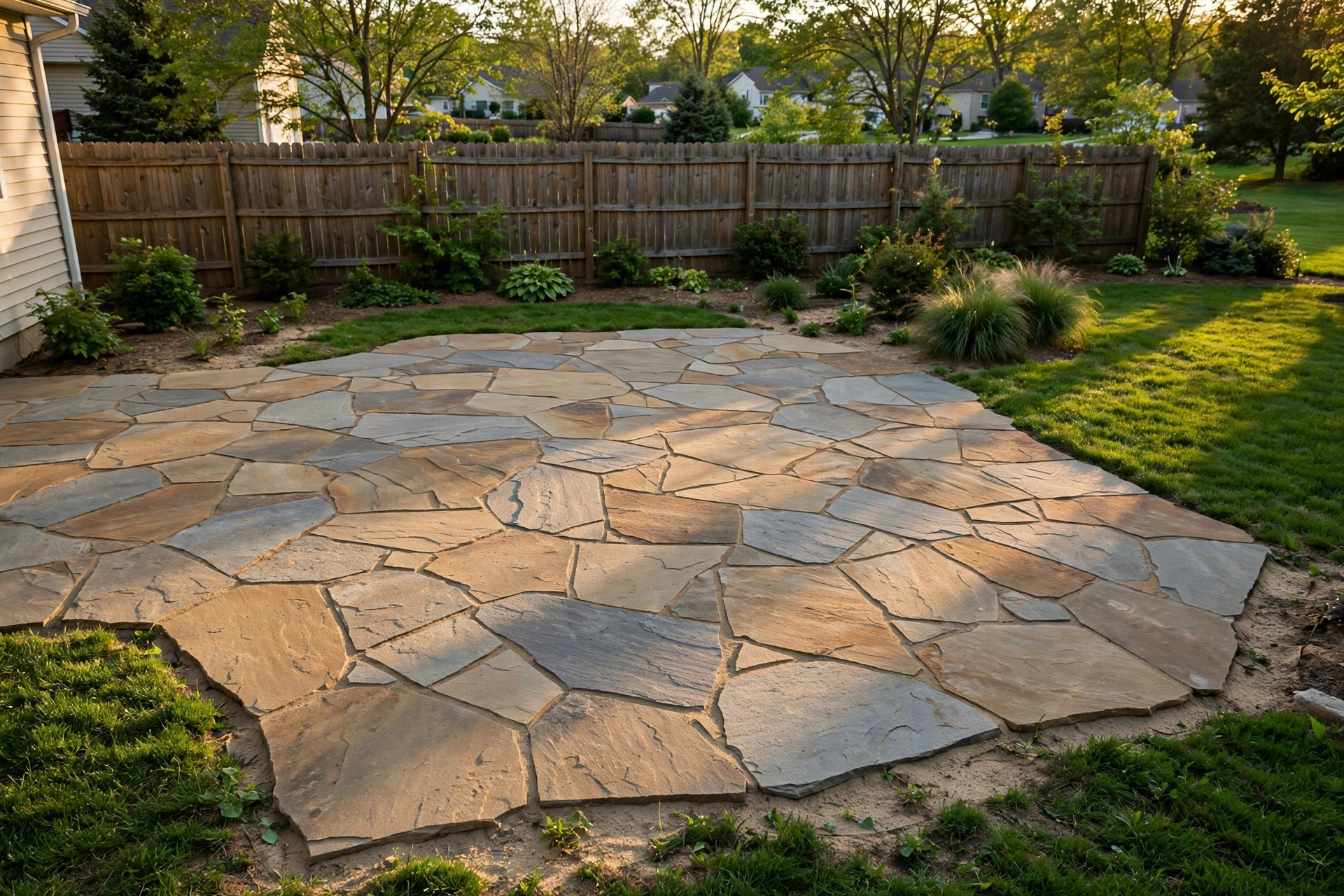

When you search for flagstone patio installation cost near me, you want a plain answer. What will it cost to have a stone patio put in at your home. The answer depends on where you live, how big the patio will be, and what kind of stone you pick. This guide gives you the full picture in simple terms, so you can plan your budget and talk to local builders with confidence.
Why a Flagstone Patio Matters
A patio is an outdoor room. It gives you a place to sit, eat, and gather with family and friends. Of all the patio choices, flagstone is one of the most loved. Flagstone is natural stone, cut into flat pieces. No two pieces look alike. The result is a surface that looks warm and timeless, like a country path or an old garden.
Unlike poured concrete, flagstone does not crack in one long line when the ground shifts. If one stone settles, a worker can lift it, add sand, and set it back down. That simple repair is a big reason homeowners choose stone. A flagstone patio also adds value to a home. Buyers notice it. Appraisers notice it. It lasts for decades when it is built well.
Still, flagstone costs more than concrete or pavers in most towns. Knowing the flagstone patio installation cost near me before you call anyone helps you avoid surprise bills and pushy sales talk.
What Drives the Cost: Flagstone Patio Installation Cost near Me
Several things set the final price. Understanding each one lets you see where your money goes.
Size of the Patio
Size matters most. Builders usually quote a price per square foot. A small patio of 200 square feet costs far less than a large one of 600 square feet. Measure the space you want. Draw a rough shape on paper. Multiply length by width to get a rough square footage. This number is the base of every estimate.
Type of Stone
Flagstone comes in many kinds. Sandstone is common and often the least costly. Limestone is a bit higher. Slate and bluestone cost more. Quartzite is among the dearest. Local stone is almost always cheaper than stone shipped from far away. A stone quarry near your town keeps transport costs low. Ask your builder what stone is local to your area.
Thickness and Shape
Flagstone is sold by thickness, often one to two inches for patios. Thicker stone costs more but lasts longer. Irregular pieces take more labor to fit together than square-cut pieces. If you want a neat, even look with tight joints, expect to pay more for the extra labor.
Site Preparation
The ground must be dug out, leveled, and filled with a base of crushed gravel and sand. If your yard slopes, builders must build up one side or add a low retaining edge. Old concrete or roots in the way add labor. Sites that are hard to reach with a truck also cost more, since stone must be carried by hand.
Labor Rates in Your Area
Labor is the other large cost. In big cities, skilled masons charge more per hour than in small towns. This is the main reason flagstone patio installation cost near me differs from the number you read for a home in another state. Local demand matters too. In a busy building season, prices rise.
Typical Price Ranges
Across the United States, most homeowners pay between twelve and thirty dollars per square foot for a professionally installed flagstone patio. This includes stone, base material, and labor. For a 300 square foot patio, that means roughly three thousand six hundred to nine thousand dollars.
Dry-laid patios sit at the low end of the range. In this method, stones are set on a bed of sand and gravel, and the joints are filled with sand or fine gravel. Wet-laid patios sit at the high end. In this method, stones are set in mortar over a concrete slab. The mortar method gives a smooth, firm surface that works well for outdoor furniture. It costs more because it needs concrete, mortar, and more skilled labor.
Keep in mind that your zip code can move you up or down in this range. A patio in a rural county may cost near the bottom. The same patio in a large metro area may cost near the top. That is why the words near me matter in your search.
How to Choose the Right Stone
Picking stone is part looks and part sense. Walk on samples if you can. Some stones feel rough under bare feet. Others are smooth but slippery when wet. Ask these questions at the yard.
First, is the stone hard enough for your climate. Soft sandstone can flake in places with many freeze and thaw cycles. Your builder will know which local stone holds up best.
Second, what color fits your home. Flagstone comes in tan, gray, red, brown, blue, and mixed blends. Hold a sample against your house and your roof. The stone should match, not fight, the colors you already have.
Third, how thick is it. For a patio that will hold a grill and heavy chairs, one and a half to two inches is a safe choice. Thinner stone can crack under weight.
Fourth, how many joints do you want. Irregular flagstone with wide joints gives a rustic look and lets you plant moss or ground cover between stones. Tight joints give a cleaner, more formal look but need more cutting and fitting.
Guides at The Spruce and This Old House explain stone grades and setting methods in plain terms, and the project guides at Home Depot and Lowe’s show how materials are sold by the pallet or the ton.
Types of Installation
There are two main ways to build a flagstone patio. Each suits a different need and budget.
Dry-Laid on Sand and Gravel
This is the classic method. Workers dig down about six inches, lay landscape fabric, add four inches of crushed gravel, compact it, add one inch of coarse sand, and set the stones. Joints are swept full of sand or fine stone dust. The patio can be walked on right away. Water drains between the joints, so puddles are rare. If the ground settles, stones can be lifted and reset. This method costs less and suits most backyards.
Wet-Laid on Concrete
This method starts with a poured concrete slab. Stones are set on top with mortar, and joints are filled with mortar too. The result is flat, firm, and easy to sweep. Chairs do not wobble. It is the best choice when the patio connects to an indoor floor at the same level, because the surface height can be set exactly. The cost is higher, and repairs are harder, since a cracked mortar joint must be chipped out and redone.
Some builders offer a middle path: dry-laid stone with polymeric sand in the joints. This special sand hardens when wet and resists weeds and ants better than plain sand. It adds a modest cost.
Cost and Price: Getting Local Quotes
To learn the flagstone patio installation cost near me in real terms, get at least three written quotes from local builders. A good quote lists the square footage, the stone type and thickness, the base depth, the setting method, and the price of any extras such as steps, edging, or a fire pit base.
Be wary of quotes that seem far below the others. A very low price often means a thin base, cheap stone, or no written warranty. A thin base is the most common cause of a sinking patio. Ask each builder how deep the base will be and what material they use. Four inches of compacted gravel is the minimum for most soils.
Also ask about the schedule. A crew of three can finish a 300 square foot dry-laid patio in three to five days. A wet-laid patio takes longer because the concrete must cure before stones go down.
Payment terms matter. A common pattern is a deposit of one third to start, another third when stone arrives, and the rest when the work is done and you are satisfied. Never pay the full amount up front.
Flooring suppliers such as LL Flooring, Shaw Floors, Mohawk Flooring, and Daltile carry stone and tile lines that can help you compare colors and prices before you meet a builder. For other outdoor and indoor flooring ideas, see our guides on exposed aggregate concrete cost near me, rubber flooring for home gym reviews usa, and marble look porcelain tile reviews usa.
Care and Upkeep
A flagstone patio asks little of you, but a small routine keeps it looking fine for years.
Sweep it often. Leaves and dirt hold moisture, and moisture feeds moss and stains. A stiff broom once a week is enough in most seasons.
Wash it once or twice a year. A garden hose and a deck brush handle most dirt. For tough stains, use a mild stone cleaner made for natural stone. Do not use strong acids or bleach. They can etch the surface and change the color.
Refill the joints. Sand settles and washes out over time. Every year or two, sweep fresh sand or polymeric sand into the joints. This keeps stones from shifting and blocks weeds.
Seal if you wish. A penetrating sealer soaks into the stone and guards against stains from food, drink, and rust. It does not change the look much. Most sealers last two to three years. Sealing is a choice, not a must. Many homeowners skip it and still enjoy their patio for decades.
Watch for settling. After the first winter, check for stones that sit lower than their neighbors. Lift them, add sand, and set them back. Catching this early keeps the surface even and safe.
Safety
Stone is safe when it is set well, but a few points deserve care.
Slip risk rises when stone is wet. Some polished or very smooth stones are slick. If your patio will sit near a pool or a sprinkler, choose a stone with a natural rough face. Ask the yard for the slip rating if one is listed.
Trip risk comes from uneven edges. Stones should sit level with each other, with no lip higher than a quarter inch. This matters most on paths and steps.
Weight is a factor during the build. Flagstone is heavy. A full pallet can weigh over a ton. Keep children and pets away from the work area while stone is being moved. A good crew stacks pallets on firm, level ground away from play areas.
Check local rules. Some towns require a permit for patios above a certain size, or for patios near property lines and septic fields. A short call to your town office settles the question. Your builder should know the local rules, but the duty to comply is yours as the homeowner.
Work gloves and eye protection are a must for anyone cutting stone. Cutting makes sharp chips and fine dust. A dust mask is wise for long cutting sessions.
FAQ
How much does a 12 by 12 flagstone patio cost A 12 by 12 patio is 144 square feet. At twelve to thirty dollars per square foot, the installed price usually falls between about one thousand seven hundred and four thousand three hundred dollars. Dry-laid on sand sits near the low end. Mortar-set on concrete sits near the high end.
Is flagstone cheaper than pavers It depends. Basic concrete pavers often cost less than natural flagstone, both for material and for labor, because pavers are uniform and quick to lay. High-end pavers can cost as much as mid-range flagstone. If budget is the top concern, ask your builder to quote both.
Can I install a flagstone patio myself A small dry-laid patio is a fair do-it-yourself project for a strong, patient homeowner. You will need to rent a compactor and buy gravel, sand, and stone by the ton. The work is heavy and slow. Most homeowners hire out patios larger than about 200 square feet, or any patio that needs steps or a retaining edge.
How long does a flagstone patio last A well-built dry-laid patio lasts twenty-five to forty years, and often longer, because individual stones can be reset. A mortar-set patio on a sound concrete base can last just as long, though mortar joints may need repair after fifteen to twenty years.
Does flagstone get hot in the sun Light-colored stone stays cooler than dark stone. In full sun on a hot day, any stone warms up. Choosing tan or light gray flagstone helps, and a shade tree or umbrella makes the patio far more comfortable in summer.
Will weeds grow between the stones Some will. Polymeric sand in the joints slows weeds a great deal. A yearly sweep of fresh joint sand and a quick pass with a weed torch or a natural weed killer keeps the surface clean. Planting low ground cover like creeping thyme between wide joints turns the gaps into a feature.
A Short Final Word
Searching for flagstone patio installation cost near me is the right first step. Now you know the parts of the price: size, stone, site work, and local labor. Measure your space, pick a stone that suits your climate and your home, and collect three written quotes. A little care in planning buys you a patio that looks fine, feels solid underfoot, and serves your family for decades. The stone was laid down by nature long ago. With a good builder, it will grace your yard for the rest of your time in the home.
References
Daltile. (n.d.). Ceramic and porcelain tile. https://www.daltile.com LL Flooring. (n.d.). Hardwood, vinyl, and tile flooring. https://www.llflooring.com Lowe’s. (n.d.). Home improvement products. https://www.lowes.com Mohawk Flooring. (n.d.). Flooring products. https://www.mohawkflooring.com Shaw Floors. (n.d.). Flooring products. https://www.shawfloors.com The Home Depot. (n.d.). Home improvement products. https://www.homedepot.com The Spruce. (n.d.). Home and garden advice. https://www.thespruce.com This Old House. (n.d.). Home renovation guidance. https://www.thisoldhouse.com
Was this guide helpful?

About Robert Taylor
The My Garden US editorial team writes practical, in-depth home and garden guides for American homeowners — tested advice, no fluff.
You May Also Like

Vintage Style Area Rugs for Sale USA: A Plain Guide to Buying Them
January 26, 2026 0 views
Saltillo Tile for Kitchen Floor Reviews: A USA Buyer’s Guide
April 19, 2026 0 views
Flooring Waste Factor Calculator for DIYers: How Much Extra Flooring to Buy
February 23, 2026 0 views