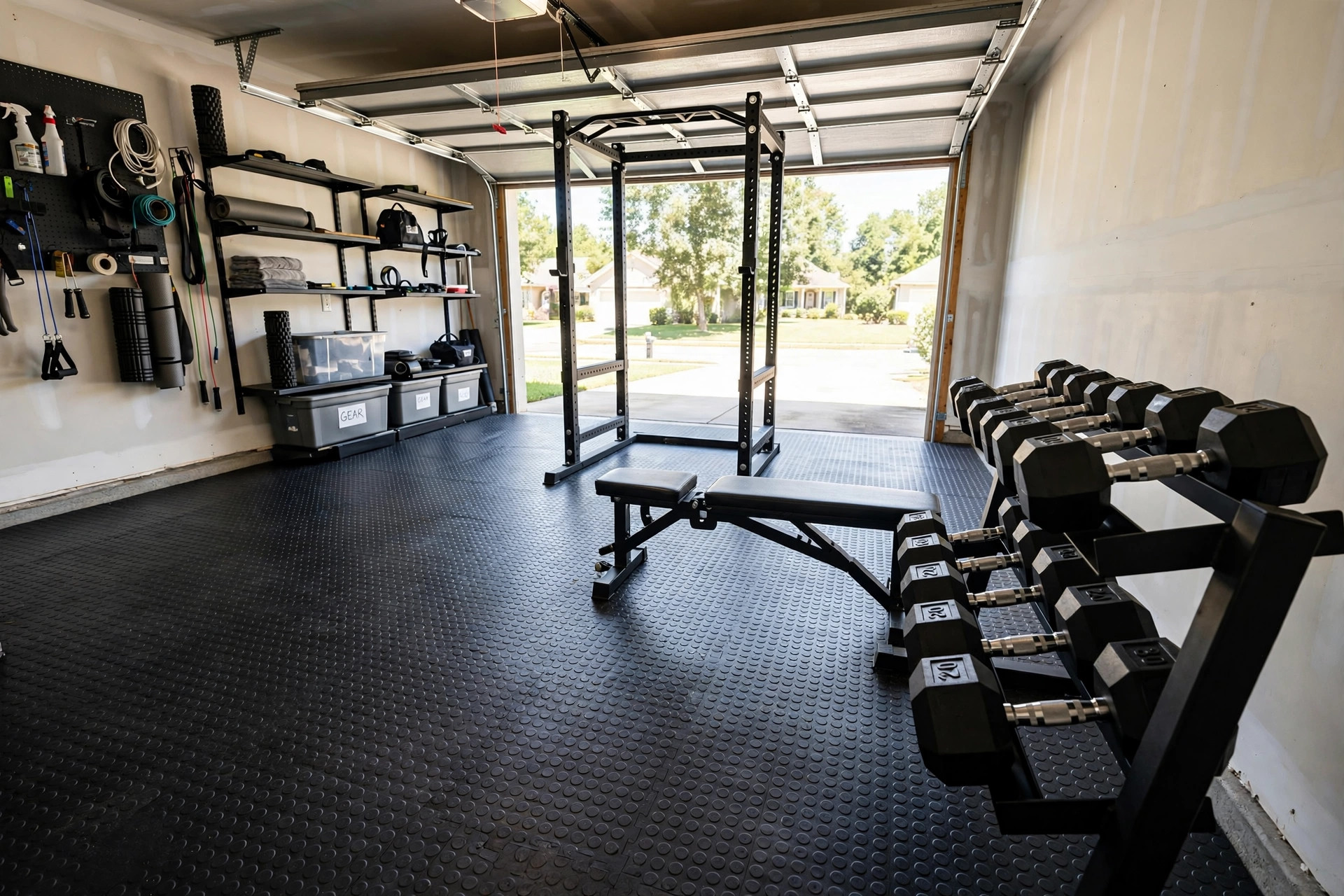

More and more people are setting up a gym at home. A spare room, a corner of the garage, or part of the basement can become a place to train. Reading rubber flooring for home gym reviews usa before you buy can save you money and regret. The right floor protects your joints, your equipment, and the room under your feet. The wrong floor tears, smells, or slips when it gets wet.
This guide covers why rubber is the common choice, what to look for, the main types on the market, what it costs, how to care for it, and how to stay safe. It ends with answers to common questions and a short final word.
Why Rubber Flooring Matters in a Home Gym
A home gym is hard on floors. Weights drop. Feet pound. Machines shake and rattle. Bare concrete or wood floors do not forgive this kind of use. Concrete cracks and chips. Wood dents and scratches. Carpet holds sweat and smell.
Rubber handles all of this well. It is the material used in school weight rooms and public fitness centers for a simple reason. It absorbs shock. When a dumbbell falls, the rubber takes the blow instead of the floor. This keeps the room in good shape and keeps the noise down.
Noise control matters at home more than in a public gym. Neighbors, family, and sleeping children all notice when weights hit a hard floor. Rubber flooring softens that sound. It also gives a steady grip under your feet. Squats, lunges, and deadlifts all feel safer on a surface that does not move.
Comfort is another point. Standing on bare concrete for a long session tires the feet and legs. A rubber surface has give. It takes some of the stress off ankles, knees, and the lower back.
What to Look For Before You Buy: Rubber Flooring for Home Gym Reviews Usa
Not all rubber flooring is the same. Buyers who are happy with their choice tend to check the same few points before they order. Those who skip these steps are the ones who leave low ratings.
Thickness and Density
Thickness is the first thing to study. Thin mats, about one quarter of an inch, suit light work such as yoga, stretching, and bodyweight moves. They cost less and weigh less. But they will not protect a floor under heavy weights.
For a true home gym with barbells and dumbbells, look at mats from three eighths of an inch to three quarters of an inch. Heavier weights need more cushion. A power rack and a loaded barbell can press hard into thin rubber and leave marks.
Density matters as much as thickness. Dense rubber resists cuts and tears. It does not dent under a weight bench left in one spot. Cheaper foam mats look like rubber but are not. They are light, soft, and easy to tear. Read the product details and make sure you are buying real rubber or a high-density rubber blend.
Surface Texture
Surface texture decides grip. A smooth sheet can get slick with sweat. A coin pattern or diamond plate pattern gives the shoe something to hold. Most gym flooring uses one of these raised patterns.
Some buyers prefer a flat, fine texture for areas where they do floor work. The right choice depends on the training you plan. If you lift heavy, choose grip. If you stretch and roll, choose a smoother finish.
Size, Fit, and Edges
Measure your space before you order. Write down the length and width of the room. Note doors, posts, and any spot the floor must fit around. Many buyers learn too late that they ordered too little or too much.
Look at the edges of the pieces. Interlocking tiles have puzzle-style edges that lock together. Some tiles come with straight edges too, which give a cleaner border. A finished edge makes the room look neat and keeps the tiles from lifting.
Types of Rubber Flooring: Mats, Tiles, and Rolls
Home gym rubber flooring comes in three main forms. Each has strengths and limits. Rubber gym flooring reviews often come down to which form the buyer picked.
Interlocking Rubber Tiles
Interlocking tiles are the most popular choice for home gyms. They fit together like a puzzle. No glue is needed. A single person can lay a room of tiles in an afternoon.
The main benefit is easy repair. If one tile wears out or stains, you lift it and drop in a new one. The rest of the floor stays put. Tiles also move well. Renters like them because they can take the floor to a new home.
The limit is the seams. Heavy wheels, such as those on a rowing machine or a loaded sled, can catch on seams and pull tiles apart. For most home use this is not a problem, but buyers who push sleds often choose rolls instead.
Rubber Rolls
Rubber rolls cover large rooms with few seams. A roll is unrolled, cut to fit, and laid flat. The result looks like a public gym floor.
Rolls are heavy and hard to move alone. Two people make the job much easier. Once down, they stay in place by weight alone. Glue is an option but not a must in a home setting.
Buyers who want a professional look often pick rolls. The price per square foot is often lower than tiles when the room is large. But cutting a roll around posts and corners takes care and a sharp blade.
Stall Mats and Flat Mats
Horse stall mats are a common budget pick in the United States. They are thick, dense, and sold at farm stores and large home centers at a low price. Many home gym owners build a whole floor from stall mats and give them high marks.
The trade-off is smell. Stall mats can carry a strong rubber odor when new. The smell fades with time and air, but it can be strong in the first weeks. Size is another limit. Stall mats come in fixed sizes, often four feet by six feet, so fitting a room exactly takes planning.
Smaller flat mats are handy for a single station. A mat under a bench or in front of a rack gives protection where it is needed most. They are light and easy to move. They do not suit a full room.
Some buyers compare rubber with other tough floors. If your gym shares space with pets, it is worth reading about pet friendly flooring options for the rest of the house. And if the gym sits in a below-grade room, the notes on waterproof flooring for basement gyms are worth a look.
Cost and Price: What Homeowners Pay
Prices for home gym rubber flooring in the United States fall in a wide range. Thin foam-style mats can cost under one dollar per square foot. Quality rubber tiles and rolls run from about two dollars to ten dollars per square foot, depending on thickness, brand, and finish.
A small corner gym of one hundred square feet may cost two hundred to four hundred dollars to floor. A full garage gym of four hundred square feet may run one thousand to two thousand dollars. Delivery adds to the total. Rubber is heavy, and shipping a large order can cost more than buyers expect. Check whether the seller offers free freight or local pickup.
Watch for the total cost, not just the price per piece. A tile that seems cheap may need twice as many pieces per square foot. A roll that seems costly may cover a large room with no waste. Do the math for your exact room size before you compare.
Many shoppers compare prices at large home improvement stores. Browsing the flooring section at Home Depot or Lowe’s gives a quick sense of the market. Specialty sellers and flooring brands such as LL Flooring, Shaw Floors, and Mohawk Flooring also list rubber and sport flooring lines. For a broader view of floor materials in general, guides at The Spruce and This Old House explain how rubber compares with vinyl, tile, and wood. Homeowners who prefer a hard tile look in other rooms sometimes check tile makers such as Daltile for comparison.
The cheapest option is rarely the best value. Very cheap mats wear through in a year or two. A floor that costs twice as much but lasts ten years is the better deal. Read buyer reviews that mention long-term use, not just first impressions.
Care and Upkeep
Rubber flooring needs little care, which is part of its appeal. Regular sweeping or vacuuming keeps dust and grit off the surface. Grit is the main enemy. Sand and small stones grind into the rubber and wear it down over time.
Mop the floor with warm water and a mild soap. A damp mop is enough for most weeks. Avoid harsh chemicals, bleach, and strong solvents. These can break down the rubber surface and fade the color.
Some rubber floors benefit from a rubber floor finish or sealant. This step is a choice, not a must. A finish can make the floor easier to clean and give it a slight sheen. Test any product in a corner first to make sure it does not make the floor slick.
Deal with spills at once. Water alone will not harm rubber, but standing water can seep under tiles and reach the subfloor. Sweat is salty and can leave marks if it dries on the surface. Wipe the floor after heavy sessions.
Air the room when the floor is new. Many rubber products carry a factory smell. Open windows and run a fan for the first days. Storing the mats in a garage or on a porch for a day or two before install also helps.
Safety Tips
A safe home gym starts with the floor. Keep these points in mind.
First, make sure the floor lies flat with no curled edges. A lifted edge is a trip hazard. Interlocking tiles that curl can be pressed flat with weight or trimmed at the edge. Rolls should be cut with room to expand and contract with heat.
Second, watch for slipperiness. Rubber is grippy when dry, but water, oil, and sweat can make it slick. Keep a towel handy. Clean spills at once. Shoes with worn soles are a common cause of slips on any gym floor.
Third, check the weight limits of your floor and subfloor. Rubber protects the surface, but a very heavy rack can still stress a wood subfloor. If you lift very heavy weights, consider a plywood platform under the lifting area. Many buyers use a layer of plywood topped with rubber for the best of both.
Fourth, keep the room aired out. Rubber can give off a smell when new, and some people are sensitive to it. Good airflow helps the smell fade and keeps the training space fresh.
Fifth, anchor tall equipment. A squat rack on rubber can shift under load. Bolt the rack through the floor or to a platform where the maker allows it. A floor that stays put is a floor you can trust.
Frequently Asked Questions
How thick should rubber flooring be for a home gym? For light training, a quarter inch is enough. For free weights and a power rack, choose three eighths to three quarters of an inch. Heavy deadlift zones do best with three quarters of an inch or a plywood and rubber platform.
Do rubber mats smell, and does the smell go away? Most rubber mats have a smell when new. It fades with air and time, often within a few weeks. Air the room, wipe the mats with mild soap, and keep a fan running. Buyers who are sensitive to odor often pick low-odor or recycled rubber lines and let them air out before install.
Can I put rubber flooring over concrete? Yes. Concrete is the most common base. Make sure it is clean, dry, and level. If the slab gets damp, lay a vapor barrier first. In a damp basement, read up on waterproof flooring for basement gyms before you decide.
Tiles or rolls: which is better for a home gym? Tiles win for easy install, easy repair, and renters. Rolls win for large rooms, a seamless look, and sled work. Both protect the floor well. Your room size and training style should decide.
How do I clean rubber gym flooring? Sweep or vacuum often, then damp mop with warm water and mild soap. Skip bleach and harsh solvents. Wipe sweat after sessions and fix spills at once so water does not reach the subfloor.
Is rubber flooring better than foam for a home gym? For real training with weights, yes. Foam is light and soft but tears and dents under heavy gear. Rubber costs more but lasts far longer. Foam suits play areas and light stretching only. For hard-surface comparisons in other rooms, many buyers also read luxury vinyl plank flooring reviews to see how vinyl stacks up.
A Final Word
Reading rubber flooring for home gym reviews usa is a smart first step, but the final choice comes down to your room, your training, and your budget. Measure first. Pick a thickness that matches your weights. Choose tiles for easy repair or rolls for a clean, wide surface. Keep the floor clean and dry, and it will serve you for years. A good floor is quiet under your feet. It asks for little and gives back every session.
References
Daltile. (n.d.). Ceramic and porcelain tile. https://www.daltile.com LL Flooring. (n.d.). Hardwood, vinyl, and tile flooring. https://www.llflooring.com Lowe’s. (n.d.). Home improvement products. https://www.lowes.com Mohawk Flooring. (n.d.). Flooring products. https://www.mohawkflooring.com Shaw Floors. (n.d.). Flooring products. https://www.shawfloors.com The Home Depot. (n.d.). Home improvement products. https://www.homedepot.com The Spruce. (n.d.). Home and garden advice. https://www.thespruce.com This Old House. (n.d.). Home renovation guidance. https://www.thisoldhouse.com
Was this guide helpful?

About Michael Thompson
The My Garden US editorial team writes practical, in-depth home and garden guides for American homeowners — tested advice, no fluff.
You May Also Like
Moroccan Tile for Laundry Room Floor USA: A Complete Guide
February 1, 2026 0 views
Polished Concrete Floors Cost Residential USA: A Plain Guide
January 14, 2026 0 views
Deck Resurfacing Cost Per Square Foot USA
July 1, 2026 0 views