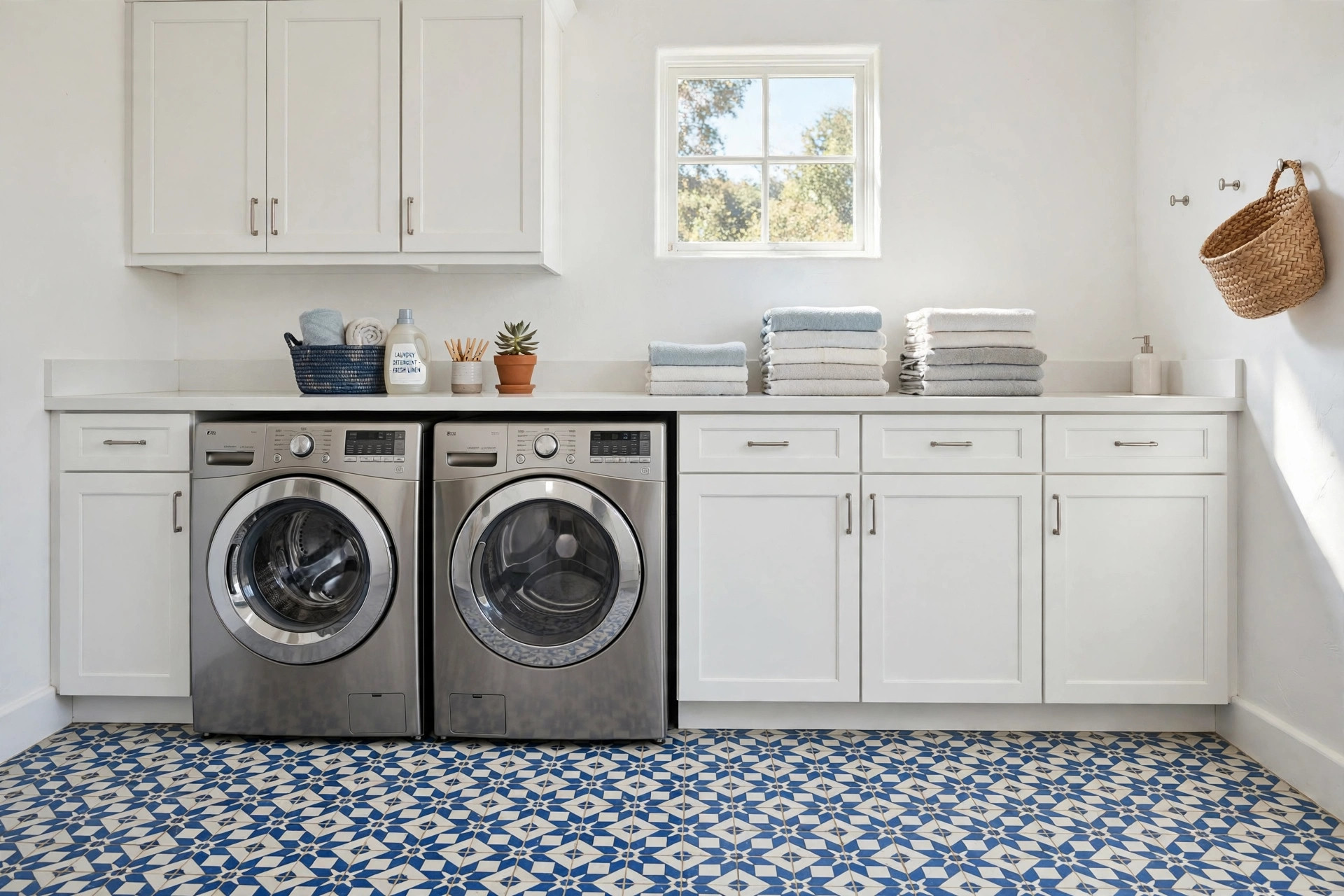

Moroccan tile for laundry room floor usa shoppers has become a popular search for a simple reason. A laundry room is a hard working space. Water, soap, and heat pass through it every week. Most owners treat it as a room no one will see. A patterned floor changes that. Moroccan style tile brings bold shapes, rich color, and old world craft into a room that is usually plain. This guide walks through why this tile fits the laundry room, what to look for when you shop, what it costs, and how to keep it in good shape for years.
Why Moroccan Tile Suits a Laundry Room
Laundry rooms take more abuse than most small rooms in the home. A washer can drip. A dryer vent can spill warm air. Detergent can fall on the floor. Tile is one of the few floor materials that stands up to all of this without trouble. It does not swell when it gets wet. It does not stain the way bare wood does. A quick mop keeps it clean.
Moroccan tile adds one more gain on top of that. Patterned tile hides the small wear marks that plain tile shows. Lint, dust, and light scuffs blend into a busy star or eight point pattern. The floor looks neat longer between cleanings. Many owners of small laundry rooms also find that a strong pattern makes the room feel planned rather than forgotten. When friends walk past an open laundry door, they see a floor that looks like it belongs in a design magazine.
The look itself has deep roots. True Moroccan tile comes from North Africa, where hand cut pieces form zellige mosaics and bold cement tile designs. Modern American makers now sell ceramic and porcelain tile in the same patterns at a fraction of the old cost. You get the charm of a hand made floor with the strength of factory made tile.
What to Look for When You Choose: Moroccan Tile for Laundry Room Floor Usa
Not every patterned tile belongs under a washer and dryer. A laundry room has its own demands. Keep these points in mind as you shop.
Material: Ceramic, Porcelain, or Cement
Three materials dominate the market.
Porcelain is the top pick for most laundry rooms. It is dense, fired at high heat, and takes in almost no water. A dropped detergent bottle or a slow washer leak will not harm it. Porcelain tile also resists wear from foot traffic and from sliding a laundry basket across the floor. Home guides from This Old House often rank porcelain as the most practical hard surface for wet utility spaces.
Ceramic costs less than porcelain and comes in many Moroccan designs. It suits light use rooms well. But ceramic is more porous. It needs a good glaze and sealed grout to stand up to standing water. If your laundry room sees a lot of water on the floor, porcelain is the safer choice.
Cement tile, also called encaustic tile, is the most true to the Moroccan look. It is hand pressed, with rich color worked through the body of the tile. It is beautiful, but it is also soft and porous. It needs sealing at install and resealing every year or two. In a room where water spills are common, cement tile asks for more care than most owners want to give. Many buyers find that a porcelain tile with a Moroccan print gives the look without the upkeep.
Size and Pattern Scale
Moroccan patterns come in many sizes, from small 4 inch squares to large 24 inch format tiles. The size of your laundry room should guide the pick.
Small laundry rooms, which are common in many American homes, do well with medium tile in the 8 to 12 inch range. The pattern repeats often enough to read clearly but not so often that the floor feels busy. Large format tiles work in bigger laundry spaces. They show fewer grout lines, which means less grout to seal and clean.
Also think about pattern direction. Some Moroccan patterns are strong and directional, like a bold star grid. These look best when the installer lays out the room first and centers the pattern. Ask your installer to dry lay the tile before the mortar goes down. This small step keeps the pattern straight and balanced around the machines.
Finish and Slip Resistance
A laundry room floor can get wet. A glossy glazed tile looks rich, but it can be slick under wet feet. Look for tile with a matte or satin finish. Check the slip rating on the box. Tile sold in the United States often lists a dynamic coefficient of friction, or DCOF. A value of 0.42 or higher is rated for wet areas. Retailers such as Lowe’s and Home Depot list this number in the product details online.
Types and Options
The term “Moroccan tile” covers several distinct looks. Each has its own mood and price point.
Zellige style. Real zellige is hand cut in Morocco and costs a great deal. Most American buyers choose a zellige look tile, a porcelain or ceramic tile with soft edges and a wavy glaze that copies the hand made feel. It suits walls well, and it can dress up a laundry room backsplash above the folding counter.
Cement look patterned tile. These are porcelain tiles printed with classic Moroccan star and cross patterns. They give the boldest, most colorful result. Blue and white, black and white, and terracotta mixes are the most common. This is the look most people picture when they search for patterned tile for laundry rooms.
Moroccan inspired geometric tile. These use the shapes of Moroccan design in quieter colors. Grays, soft blues, and creams keep the pattern calm. This choice works well in homes where the laundry room sits near a kitchen or hallway and the floor must blend with the rest of the house.
Peel and stick options. For renters, or for owners who want to test the look before they commit, adhesive backed tile is worth a look. Our guide to the best adhesive tile for laundry room options walks through the top rated choices. Peel and stick tile is not as durable as set tile, but it costs little and installs in a day.
For more on how patterned floors fit other small work rooms, see our guide on the best tile for mudroom floor.
Cost and Price
Price is one of the first questions every buyer asks. Costs vary by material, brand, and where you buy.
Material cost. Budget ceramic Moroccan look tile starts near $2 to $4 per square foot. Mid range porcelain with printed patterns runs $4 to $8 per square foot. Premium porcelain and hand made style tile can reach $10 to $20 per square foot or more. Real imported Moroccan cement tile often costs $10 to $18 per square foot before freight.
Installation cost. Tile labor in the United States often runs $5 to $12 per square foot, depending on the region and the skill of the installer. Patterned tile can push labor toward the high end of that range, because the installer must keep the design aligned across the whole floor. Our overview of tile installation cost per square foot covers the full range in more detail.
Small room math. The good news is that laundry rooms are small. A typical laundry room is 40 to 80 square feet. At $6 per square foot for tile and $8 per square foot for labor, an 60 square foot room costs about $840 in total. That makes a bold patterned floor one of the cheapest ways to transform a room in the whole house.
Extra costs. Plan for underlayment board, thinset mortar, grout, and sealer. If the old floor must be removed, add for tear out and disposal. Buying 10 percent extra tile for cuts and future repairs is a wise step.
Care and Upkeep
Moroccan pattern tile is easy to live with once it is installed right. A few simple habits keep it looking new.
Sweep or vacuum the floor weekly. Grit is the main enemy of any tile glaze. Small stones caught under a shoe or a basket can wear the surface over time. A soft broom takes a minute and stops the problem.
Mop with warm water and a mild cleaner. Harsh acids and bleach can dull some glazes and eat at grout. A neutral pH tile cleaner works for almost every glazed tile. Brands carried by major flooring retailers, such as those at Shaw Floors, often suggest the same gentle approach in their care guides.
Seal the grout. Glazed tile itself does not need sealer, but grout does. Seal it at install and refresh the sealer every year or two in a laundry room. Sealed grout resists stains from detergent and stops water from working down to the subfloor.
Act fast on leaks. Tile can handle water, but the floor under it may not. If the washer supply hose leaks, shut the water off and dry the floor right away. Check the baseboards and the wall behind the machines for damp spots.
If you chose cement tile, seal the tile surface too, and reseal on schedule. Design resources like The Spruce note that unsealed cement tile can soak up spills and stain within minutes.
Safety
A laundry room floor must be safe as well as pretty. Keep these safety points in mind.
Slip resistance comes first. As noted above, choose tile with a DCOF of 0.42 or higher for a wet work room. Matte finishes grip better than high gloss. In front of the washer, a washable runner rug adds extra grip and catches drips.
Grouted floors are hard. A dropped glass measuring cup will break. Keep breakable items on the counter, not on the floor. Anti fatigue mats in front of the folding table make long folding sessions easier on knees and feet.
Electrical safety matters in any room with water and machines. Keep power cords off the floor. If you add radiant heat under the tile, hire a licensed electrician and follow the maker’s guide to the letter. Product details from makers such as Mohawk Flooring include install limits that keep electric heat safe.
Frequently Asked Questions
Is Moroccan tile waterproof enough for a laundry room?
Glazed porcelain Moroccan look tile is nearly waterproof. It takes in less than half a percent of water, which is why it is a top pick for wet rooms. Ceramic is less dense but still fine when it has a good glaze. Cement tile is the least water resistant and needs regular sealing. For a laundry room, porcelain with a Moroccan print is the safest all around choice.
Can I install Moroccan tile over an old vinyl floor?
Sometimes. The old floor must be clean, level, and firmly bonded to the subfloor. Most installers prefer to remove old sheet vinyl first, because tile set over a loose or cushioned floor can crack. An installer can test the old floor in a few minutes and tell you which path is safe.
How do I keep the pattern straight during install?
Dry lay the tile first. The installer sets the tiles on the floor without mortar, checks the pattern, and marks the layout. Many patterned tiles have arrows or marks on the back that show which way each tile should face. A skilled installer follows them and steps back often to check the whole design.
Will patterned tile make a small laundry room look smaller?
A bold pattern can feel busy in a very small room, but it rarely makes the room feel smaller. Many design writers say a continuous pattern across the whole floor draws the eye and makes the space feel planned. If you worry about the effect, choose a pattern with a light background and small repeat.
What grout color works best with Moroccan pattern tile?
Most owners pick a grout color pulled from the pattern itself. A warm gray or soft beige hides soil and matches many Moroccan designs. White grout looks crisp but shows dirt fast in a laundry room. Dark grout hides dirt best but can make a colorful pattern look heavy. Match grout to the lightest color in the tile for a balanced look.
Does Moroccan tile raise home value?
A well done tile floor in a laundry room is a plus at resale. Buyers see a finished, durable space instead of a plain utility box. Very bold colors can divide taste, so if resale is a near term goal, lean toward classic blue and white or soft gray patterns rather than the brightest mixes.
A Short Final Word
Moroccan tile for laundry room floor usa buyers has a clear appeal. It turns a plain work room into a space with character, and it does so with a material that handles water, heat, and daily wear. Porcelain with a Moroccan print gives most owners the best mix of beauty, strength, and fair cost. Shop with the DCOF rating, the pattern scale, and the sealer needs in mind. Buy a little extra tile. Seal the grout. The result is a laundry room floor that looks sharp on day one and still looks sharp ten years later.
See LL Flooring for more detail.
References
Daltile. (n.d.). Ceramic and porcelain tile. https://www.daltile.com LL Flooring. (n.d.). Hardwood, vinyl, and tile flooring. https://www.llflooring.com Lowe’s. (n.d.). Home improvement products. https://www.lowes.com Mohawk Flooring. (n.d.). Flooring products. https://www.mohawkflooring.com Shaw Floors. (n.d.). Flooring products. https://www.shawfloors.com The Home Depot. (n.d.). Home improvement products. https://www.homedepot.com The Spruce. (n.d.). Home and garden advice. https://www.thespruce.com This Old House. (n.d.). Home renovation guidance. https://www.thisoldhouse.com
Was this guide helpful?

About James Carter
The My Garden US editorial team writes practical, in-depth home and garden guides for American homeowners — tested advice, no fluff.
You May Also Like
Waterproofing Shower Before Tile Guide USA
March 6, 2026 0 views
Garage Floor Tiles Interlocking Reviews USA: What Buyers Say
June 21, 2026 0 views
Moisture Resistant Flooring for Coastal Homes: A Buyer’s Guide
April 25, 2026 0 views