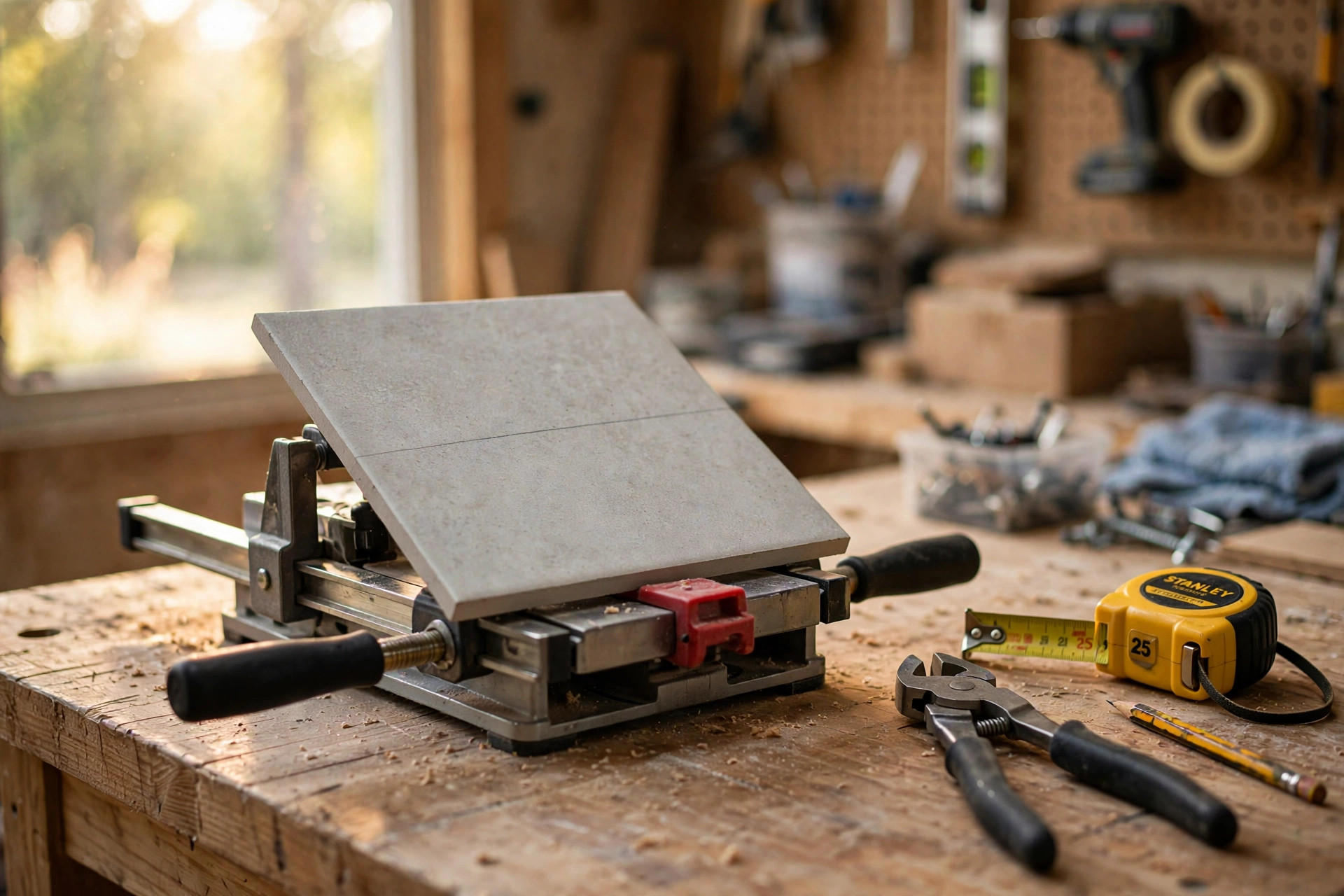

Many home owners in the United States want to cut tile without a saw. A power tile saw costs money. It takes space. It makes noise. Most small tile jobs do not need one. A few hand tools can do the same work. This guide shows how to cut tile without a saw usa style. The methods work on ceramic tile, porcelain tile, and mosaic sheets. They fit the needs of a normal home project. Read the whole guide before you start. Then pick the method that fits your tile and your budget.
Why Cut Tile Without a Saw
A wet tile saw is the tool most pros use. It spins a diamond blade through water. It cuts fast. It cuts hard tile with ease. But it has real drawbacks for a home owner. The saw costs one hundred dollars or more to buy. Renting one costs forty to sixty dollars a day in most US towns. The tool is heavy. It needs water. It makes a mess in the kitchen or bath where you work.
For small jobs, hand tools make more sense. A back splash behind a sink needs a few cuts. A small bath floor needs a few more. A tile repair in a hallway needs only one or two. In these cases a saw is overkill. Hand tools cost far less. They fit in a drawer. They make little noise. They also make little dust, which matters inside a home.
Learning how to cut tile without a saw usa home owners practice also helps with planning. When you know each cut takes some care, you plan the layout better. You order a few extra tiles. You waste less. That saves money on the whole job. If you want to know what a full job costs, read about tile installation cost per square foot usa before you buy materials.
What You Need Before You Start: How to Cut Tile Without a Saw Usa
Good results start with good tools and safe habits. Gather everything first. Do not start cutting until the work area is ready.
Basic Tools
You need a pencil or felt tip marker to mark lines. A steel straightedge or a square keeps your lines true. A tape measure lets you plan each cut. A pair of safety glasses and work gloves are a must. Tile chips are sharp. Small pieces fly when you snap tile.
For the cutting itself, pick at least one of these hand tools. A manual tile cutter is the best all round choice. It scores and snaps tile up to about sixteen inches wide. Tile nippers bite small chips off the edge of a tile. A carbide glass cutter and a straightedge score straight lines on wall tile. A coping saw with a ceramic rod blade cuts curves. A carbide grit drill bit makes round holes for pipes. Each tool is sold at big home stores. You can see the range of tile types at Daltile to match the tool to your tile.
Safety Gear
Wear safety glasses on every cut. Tile shards move fast and they are sharp. Wear sturdy work gloves when you snap tile. The broken edge can slice skin. Work in good light so you can see the score line. Keep children and pets out of the room. Sweep up chips right away. Sharp bits hide in dust and cut bare feet later.
How to Cut Tile Without a Saw: USA Methods
Five main methods cover almost every hand cut. Try each method on a scrap tile first. Practice makes the cuts cleaner.
Method 1: Manual Score-and-Snap Cutter
The manual tile cutter is the top pick for most home owners. It has a flat bed, a guide rail, and a small carbide scoring wheel. It also has a breaker bar that presses the tile down on both sides of the score line.
Place the tile flat on the bed. Line up the wheel with your mark. Push the wheel across the tile in one smooth move. Press with firm, even force. One pass is enough. Two passes wear the wheel and hurt the cut. Then set the breaker bar over the line. Press down on the handle. The tile snaps along the score. The edge is clean and straight.
This tool handles ceramic and most porcelain tiles. It works well on tiles from four inches to sixteen inches wide. A good manual cutter costs thirty to eighty dollars. It lasts for many jobs. Sites like Home Depot and Lowe’s carry several models in store.
Method 2: Tile Nippers
Tile nippers look like heavy pliers. They have hard carbide jaws. They bite small pieces off the tile edge. They are best for small cuts and curves. They work well around outlets, pipes, and door frames.
Mark the shape on the tile. Start at the edge. Take small bites, about one eighth of an inch at a time. Work slowly toward the line. Do not try to bite off a large chunk at once. The tile will crack past the line. Keep the jaws flat on the tile face. Wear glasses. Small chips will fly.
Nippers leave a rough edge. That is normal. You can smooth the edge with a rubbing stone or a tile file. The rough edge often hides under trim or grout. Nippers cost ten to twenty dollars. Every tile job needs a pair, even when a saw is used.
Method 3: Carbide Glass Cutter and Straightedge
A simple glass cutter can score thin wall tile. This method works best on ceramic wall tile up to a quarter inch thick. It does not work well on thick floor tile or hard porcelain.
Lay the tile face up on a flat surface. Place a steel straightedge on your mark. Hold it firm. Run the carbide wheel along the edge in one smooth pass. Press hard enough to make a clear score. You should hear a light scratching sound. Then move the tile so the score line sits over the edge of a table or a pencil. Press down on both sides. The tile snaps clean along the line.
This method costs almost nothing. A glass cutter is about five dollars. A straightedge is a few more. It is a good choice for one or two cuts. For many cuts, a manual tile cutter is faster. You can read clear tool guides at This Old House to compare the two.
Method 4: Coping Saw With a Ceramic Blade
Curves and round cuts need a different tool. A coping saw takes a special rod blade coated with carbide grit. The blade cuts tile like a tiny saw file. It has no teeth, so it does not chip the glaze much.
Clamp the tile to a workbench with the waste area hanging past the edge. Drill a small hole inside the waste area if the cut starts in the middle. Thread the rod blade through the hole and fix it in the saw frame. Cut slowly along the line. Let the grit do the work. Do not force the saw. Rushing cracks the tile.
This method takes patience. It suits odd shapes around pipes and fixtures. A coping saw costs about fifteen dollars. Extra rod blades cost a few dollars each. They wear out, so buy spares.
Method 5: Drilling Holes With a Carbide Bit
Pipes and shower valves need round holes. A carbide grit hole saw or a spear point bit does the job in a hand drill. Tape the tile face with masking tape where the hole goes. The tape keeps the bit from walking and guards the glaze.
Mark the center. Start the drill at a slow speed. Press with light, even force. Let the bit grind through the glaze first. Then keep a steady pace through the body of the tile. Cool the bit with a little water now and then. Heat shortens bit life. Do not push hard at the end of the hole. Ease off so the back of the tile does not blow out.
This method works on ceramic and soft porcelain. Very hard porcelain may need more time. Patience beats force every time.
Cost and Price
Cutting tile by hand costs much less than using a power saw. A manual tile cutter costs thirty to eighty dollars. Tile nippers cost ten to twenty dollars. A glass cutter costs about five dollars. A coping saw with blades costs about twenty dollars total. A set of carbide drill bits costs fifteen to thirty dollars. For under one hundred dollars, you can own every hand tool you need.
Compare that with a wet tile saw. A basic wet saw costs one hundred to two hundred dollars. Renting one costs forty to sixty dollars per day. You also need a diamond blade at some point, which costs twenty to fifty dollars. For a one room job, hand tools win on price.
The tile itself is the bigger cost. Ceramic tile runs one to five dollars per square foot in most US stores. Porcelain runs two to ten dollars. Natural stone costs more. Always buy ten percent extra tile. Hand cuts waste a few tiles while you learn. The extra tiles also serve as spares for future repairs. You can compare current prices at LL Flooring, Shaw Floors, and Mohawk Flooring.
If you are still choosing tile, note that wood look tile has its own pros and cons. Our guide on wood look tile pros and cons reviews can help you decide if it suits your floor.
Care and Upkeep of Your Tools
Hand tile tools last long with simple care. Wipe the scoring wheel of a manual cutter after each use. A drop of light oil keeps the rail smooth. Store the cutter flat so the bed does not bend. Keep tile nippers dry. Wipe the jaws clean of dust. A little oil on the joint keeps them moving free.
Glass cutters need a sharp wheel. When scores get weak, replace the cutter. They are cheap. Rod saw blades wear down with use. Toss a blade when it stops cutting. Drill bits last longer when you cool them with water. Let them air dry before you store them.
Clean the work area after each session. Tile dust gets into tool joints. It wears them out. A quick sweep and wipe keeps tools ready for the next job.
Safety
Safety matters more than speed. Always wear safety glasses. Tile chips fly without warning. Wear gloves when you snap tile. The fresh edge is razor sharp. Do not rush a cut. A rushed score line leads to a bad break. A bad break leads to another try, and more sharp waste.
Keep your hands behind the scoring wheel. Never pull a blade toward your body. Clamp tile before you saw curves. A tile that slips can crack or cut you. Work on a stable table. A wobbly bench ruins scores.
Dust is less of a problem with hand tools than with power saws. Still, sweep often. Wear a dust mask if you file or grind edges for a long time. Keep a first aid kit close. Small cuts from tile edges are common and easy to treat.
For general home safety standards, The Spruce offers clear guides on safe DIY work in the home.
FAQ
Can I cut porcelain tile without a saw?
Yes, but it takes more care. Porcelain is harder and denser than ceramic. A manual tile cutter with a sharp wheel handles most porcelain floor tile. Score with firm, even pressure in one pass. Thick porcelain may resist. In that case, score twice on the same line with care, then snap. Tile nippers also work on porcelain edges. Take very small bites.
What is the easiest way to cut tile by hand?
The manual score-and-snap cutter is the easiest. You line up the tile, score once, and press the handle. The learning curve is short. Most people get clean cuts after two or three tries on scrap tile. It costs less than a saw and needs no water or power.
Can I cut tile with a regular utility knife?
No. A utility knife cannot cut through tile. The blade is too soft and too thin. It will only scratch the glaze. Use a carbide scoring tool made for tile or glass. The wheel is much harder than steel and made to bite into glaze.
How do I cut a curve in tile without a saw?
Use tile nippers for rough curves. Bite small pieces from the edge up to your line. For smooth curves, use a coping saw with a carbide rod blade. Mark the curve, drill a starter hole in the waste area, and saw slowly along the line. Smooth the edge with a tile file or rubbing stone.
Do I need water when cutting tile by hand?
No. Hand scoring and snapping need no water. That is one of their big perks. You only need a little water when drilling holes with a carbide bit. The water cools the bit. Dip the bit or drip water on the spot as you drill.
How many extra tiles should I buy?
Buy ten to fifteen percent more than the job needs. Beginners break more tiles while learning. Extra tiles also cover future repairs. Tile lines change over the years. A box of spares in the garage saves a lot of trouble later.
A Short Final Word
You do not need a power saw for most home tile jobs. A manual cutter, a pair of nippers, and a little practice handle straight cuts, curves, and holes. The tools cost little. They make little mess. They teach you to plan each cut with care. Take your time on scrap tile first. Wear your safety gear. Then cut with confidence.
When the tile work is done, the room feels new. A clean tile floor or back splash lifts the whole space. And for the rooms beyond the tile, small touches finish the job. A soft machine washable runner for hallway usa can warm up a newly tiled hallway with ease.
References
Daltile. (n.d.). Ceramic and porcelain tile. https://www.daltile.com LL Flooring. (n.d.). Hardwood, vinyl, and tile flooring. https://www.llflooring.com Lowe’s. (n.d.). Home improvement products. https://www.lowes.com Mohawk Flooring. (n.d.). Flooring products. https://www.mohawkflooring.com Shaw Floors. (n.d.). Flooring products. https://www.shawfloors.com The Home Depot. (n.d.). Home improvement products. https://www.homedepot.com The Spruce. (n.d.). Home and garden advice. https://www.thespruce.com This Old House. (n.d.). Home renovation guidance. https://www.thisoldhouse.com
Was this guide helpful?

About Sarah Mitchell
The My Garden US editorial team writes practical, in-depth home and garden guides for American homeowners — tested advice, no fluff.
You May Also Like
Schluter Ditra vs Redgard Comparison USA: Which Tile Membrane Is Right for Your Floor
July 14, 2026 0 views
Interlocking Deck Tiles for Concrete Patio: A Plain Homeowner Guide
February 23, 2026 0 views
Wet Saw vs Snap Cutter for Tile USA: How to Choose the Right Tool
April 20, 2026 0 views