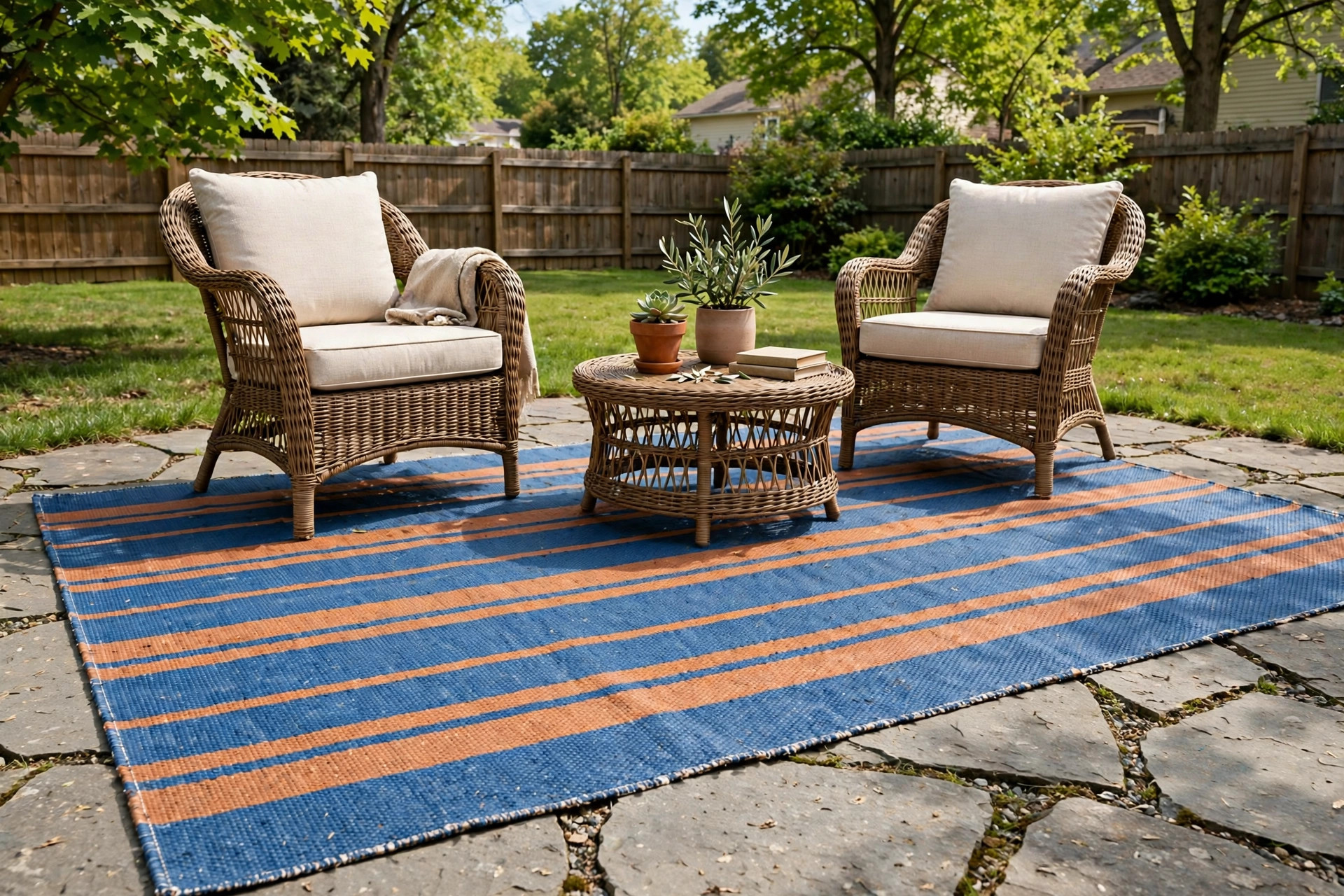

A patio should feel like a room. The stone or wood underfoot can look fine, yet it often feels bare. An outdoor rug changes that in an afternoon. This guide on the best outdoor rugs for patio reviews USA walks you through what matters: materials that stand up to rain and sun, sizes that fit common patios, honest price ranges, and simple care. It is written in plain terms so any homeowner can make a sound choice.
The American patio faces real weather. Summer sun in Texas and Arizona bakes everything. Afternoon storms in Florida and the Midwest soak everything. Snow in the North tests every fabric. A rug made for the indoors will fade, rot, or grow mildew in a single season. A rug made for the outdoors resists these forces. The difference is in the fiber, the weave, and the backing. Reviews from real buyers across the country point to the same few facts again and again: polypropylene rugs last the longest for the price, flat weaves dry fastest after rain, and rugs without a rubber backing allow water to pass through and escape.
Why an Outdoor Rug Matters for Your Patio
A bare patio shows every flaw. Hairline cracks in the concrete stand out. Faded pavers look tired. A rug covers these faults at once. It also softens hard surfaces underfoot. Stone and tile feel cold in the morning and hot at noon. A rug makes the floor pleasant from the first step. Under a dining table it protects the patio surface from chair legs. Under a seating set it defines the space and makes the chairs feel placed rather than scattered.
Comfort is not the only gain. A rug brings color and pattern to the yard. Many American backyards run to green and gray. A blue striped rug or a terracotta pattern adds warmth without paint or new furniture. It is one of the least costly ways to renew a patio. For renters it matters even more, since a rug needs no nails and no permits. Roll it out in the spring and roll it up in the fall.
Reviews across the USA also note a practical point: a rug marks the living area. Children know where the play zone is. Guests know where to sit. It gives the yard a plan. Small yards gain the most, since the rug makes the patio read as an outdoor room rather than a slab.
What to Look for When You Choose a Patio Rug: Best Outdoor Rugs for Patio Reviews Usa
The Right Material
Material decides how long a rug will live. The most common outdoor fiber in American stores is polypropylene. It is a plastic yarn, and it does not take in water. Mold and mildew find little to feed on. It holds its color under strong sun, and it rinses clean with a hose. Reviewers at This Old House and The Spruce rate polypropylene rugs as the best value in most tests.
Polyester is the next most common fiber. It feels a little softer than polypropylene. It resists stains well, and it holds bright colors. But it dries a bit slower, and strong sun can fade it sooner. It still serves well on covered patios that see less direct weather.
Recycled plastic rugs, sometimes sold as outdoor mats, are woven from reclaimed bottles. They are thin and light. They dry in minutes after a storm. Many coastal buyers like them for docks and porches. They feel firm underfoot, so they suit walkways more than sitting areas.
Natural fibers such as jute, sisal, and cotton do not belong on an open patio. They soak up water and rot. Keep them on covered porches that stay dry. A few blended rugs mix natural looks with plastic fibers. Check the label. If it says 100 percent plastic, it will handle rain.
Weave and Thickness
A flat weave lies close to the ground and sheds water. A thick pile holds water and takes longer to dry. For open patios, choose a flat or low-pile weave. A reversible rug, one you can flip, doubles the wear you get from it. Many top-rated outdoor rugs in USA reviews are reversible. You turn them when one side starts to fade.
The edges matter too. Bound edges hold their shape. Unbound edges can curl and lift, which is a trip hazard. If your patio sees wind, look for a rug that lies flat out of the package. Some buyers place rug tape or rug pads under the corners for extra grip.
Size and Shape
Measure your patio before you shop. A common error is buying a rug too small. Under a dining set, the rug should extend past the table on all sides so chairs stay on it when pulled back. A six-chair set usually needs an 8 by 10 foot rug. Under a seating set, the front legs of all chairs should rest on the rug.
For long narrow patios, a runner works best. For square patios, square rugs look right. Round rugs soften the lines of square pavers and suit bistro sets. Leave a border of bare patio around the rug so the space reads larger. That bare border also gives rain a path to run off.
Color and Pattern Under Sun
Light colors stay cooler underfoot in hot states. Dark colors hide dirt but can burn bare feet at noon in Texas and Florida. Patterns hide stains better than solid colors. Stripes and borders are classic on American patios and age well in reviews. Earth tones pair with wood decks. Blues and greens pair with pools. If your patio has busy stone, a simple pattern keeps the eye calm.
Types of Outdoor Rugs on the USA Market
Flatweave Polypropylene Rugs
These are the workhorses. They are light, tough, and cheap to replace. They come in every size from doormat to 9 by 12 feet. They rinse clean and dry fast. Most reviews call them the best outdoor rugs for patio use on a budget. Their weak point is feel. They are firm underfoot and offer little cushion.
Tufted Polyester Rugs
Rug makers such as Shaw Floors and Mohawk Flooring sell tufted lines aimed at covered patios and screened porches. They need longer to dry after a storm, so they are a poor pick for open decks in rainy states. Buyers praise their comfort and color.
Recycled Plastic Mats
Made from woven plastic strips, these mats are feather light and shed water at once. They fold up small for winter storage. They are popular in lake houses and beach homes. Their pattern range runs bold and bright. They offer no cushion, but they are easy to shake out and clean.
Rug Pad Systems
Some buyers pair a thin outdoor rug with a rug pad. The pad adds cushion and stops slipping. Choose a pad labeled for outdoor use. Indoor pads trap water and rot. A proper outdoor pad is made of open mesh that drains. This system suits seating areas where bare feet matter.
Custom and Large Sizes
Most stock sizes run up to 9 by 12 feet. Larger patios may need a custom rug or two matching rugs laid side by side, which can define a dining zone and a lounge zone on one big patio.
Cost and Price: What American Buyers Pay
Prices follow size and material more than brand. A small 4 by 6 foot polypropylene rug often sells between 40 and 90 dollars. A mid-size 5 by 8 foot rug runs 80 to 180 dollars. A large 8 by 10 foot rug runs 150 to 350 dollars. Hand-looked or patterned designs sit at the top of these ranges.
Tufted polyester rugs cost more, often 120 to 300 dollars for a 5 by 8 foot size. Recycled plastic mats are the least costly per square foot, often under 60 dollars for a large mat. Rug pads add 30 to 80 dollars depending on size.
Season matters. Prices fall at the end of summer when big stores such as The Home Depot and Lowe’s clear their outdoor stock. Buying in September or October can save a third. Reviews note that cheap rugs from discount stores often last only one season, while mid-range rugs last three to five years. The best value sits in the middle: not the cheapest, not the dearest.
Shipping is worth a check. Large rugs are bulky. Some retailers charge extra for freight. Others ship free above a set amount. Factor this into the true cost before you compare two rugs.
Care and Upkeep Through the Seasons
Outdoor rugs need little care, but they need some. Sweep the rug once a week with a broom or brush off leaves and dust. Hose it down every few weeks in dusty months. For stains, scrub with mild soap and water and a soft brush, then rinse well. Let the rug dry fully in the sun. Never fold a wet rug for storage, since trapped damp breeds mildew.
In winter, store the rug if your state sees snow and ice. Roll it, do not fold it, to avoid creases. Keep it in a dry garage or shed. In mild states the rug can stay out year round, but flip it once a season to even out fading. Pet owners should rinse spots at once, since urine can stain even plastic fibers if left to bake in the sun.
Safety Notes for Patio Rugs
A rug that slides is a hazard. Test the rug on your patio surface before you trust it. Stone and sealed concrete can be slick under a light rug. Use outdoor rug tape or a proper outdoor pad on hard surfaces. Make sure edges lie flat. Curled corners trip bare feet, and they catch brooms and mowers.
Keep the rug clear of grills and fire pits. Plastic fibers melt. Place the rug at least six feet from an open flame. Some buyers use a fire-resistant mat under the grill itself and keep the rug in the seating zone.
Check drainage. A rug must not block the slope of the patio. Water should run off the edge, not pool under the rug. Stagnant water breeds mosquitoes and stains the stone. If your patio ponds in one corner, keep the rug clear of that spot.
Families with small children should avoid rugs with long fringes. Fringe tangles in feet and stroller wheels. Choose a clean bound edge instead. These points come up often in buyer reviews, and they are worth heeding.
Frequently Asked Questions
How long do outdoor rugs last on a patio?
A good polypropylene rug lasts three to five years on an open patio in most of the USA. Rugs on covered porches last longer, often six years or more. Sun is the main enemy. Fading comes first, then the fibers grow brittle. Rotating the rug and storing it in winter add years.
Can I leave an outdoor rug out in the rain?
Yes, if it is made for the outdoors. Polypropylene and recycled plastic rugs are built for rain. They dry fast and resist mildew. Polyester rugs can handle light rain but should be covered in long storms. Natural fiber rugs should never sit in rain. Always let the rug dry fully between storms.
What size rug fits a standard patio?
A 12 by 14 foot patio suits an 8 by 10 foot rug under a dining set. A small 10 by 10 foot patio suits a 5 by 8 foot rug under a bistro set. Measure your furniture first. The rule from flooring guides is simple: all front chair legs should rest on the rug, with a foot of rug past the chairs. If you are unsure, mock up the size with painter’s tape on the patio before you buy.
Will an outdoor rug damage my patio or deck?
A clean outdoor rug harms nothing. Trouble comes from trapped water and grit. Sweep under the rug now and then so dirt does not grind into the stone. On wood decks, lift the rug after rain so the boards can dry. A rug pad made for outdoors helps air move under the rug.
Are outdoor rugs safe around pools?
Yes, with care. Choose a quick-dry flat weave and a rug without a rubber backing so chlorinated water drains away. Place the rug where wet feet will not slip on it, such as under chairs rather than at the pool steps. Rinse chlorine off the rug now and then to slow fading. For more on pool deck surfaces, see guides to non slip outdoor tile for pool deck.
How do I clean mildew off an outdoor rug?
Mix one part white vinegar with three parts water, or use mild soap and water. Scrub with a soft brush, then rinse well and dry in full sun. Bleach can fade colors, so test a corner first. Prevention works best: keep the rug in sun, let air move under it, and never store it damp.
Related Flooring Choices for the Patio
A rug is only one layer of the patio floor. Many homeowners pair it with the right hard surface underneath. If you are still choosing the base, read about the best tile for outdoor patio and compare porcelain vs ceramic tile for floors. The tile under the rug sets the drainage and the grip, and the rug adds the comfort on top. Tile makers such as Daltile publish care notes for the stone or porcelain beneath your rug, which is worth a read before you buy.
A Short Final Word
The best outdoor rugs for patio reviews USA agree on a simple recipe. Pick plastic fiber, pick a flat weave, pick the right size, and pay a fair mid-range price. The rug will last for years with little care. It will make the patio warmer to the eye and softer to the foot. Measure once, buy once, and enjoy the room you gain.
References
Daltile. (n.d.). Ceramic and porcelain tile. https://www.daltile.com LL Flooring. (n.d.). Hardwood, vinyl, and tile flooring. https://www.llflooring.com Lowe’s. (n.d.). Home improvement products. https://www.lowes.com Mohawk Flooring. (n.d.). Flooring products. https://www.mohawkflooring.com Shaw Floors. (n.d.). Flooring products. https://www.shawfloors.com The Home Depot. (n.d.). Home improvement products. https://www.homedepot.com The Spruce. (n.d.). Home and garden advice. https://www.thespruce.com This Old House. (n.d.). Home renovation guidance. https://www.thisoldhouse.com
Was this guide helpful?

About Michael Thompson
The My Garden US editorial team writes practical, in-depth home and garden guides for American homeowners — tested advice, no fluff.
You May Also Like
Regrouting Shower Tile Cost Near Me: What Homeowners Should Know
April 28, 2026 0 views
Slate Tile Flooring for Entryway Spaces: A Practical Guide for American Homes
March 10, 2026 0 views
Flooring That Increases Home Value Most in the USA
July 26, 2026 0 views