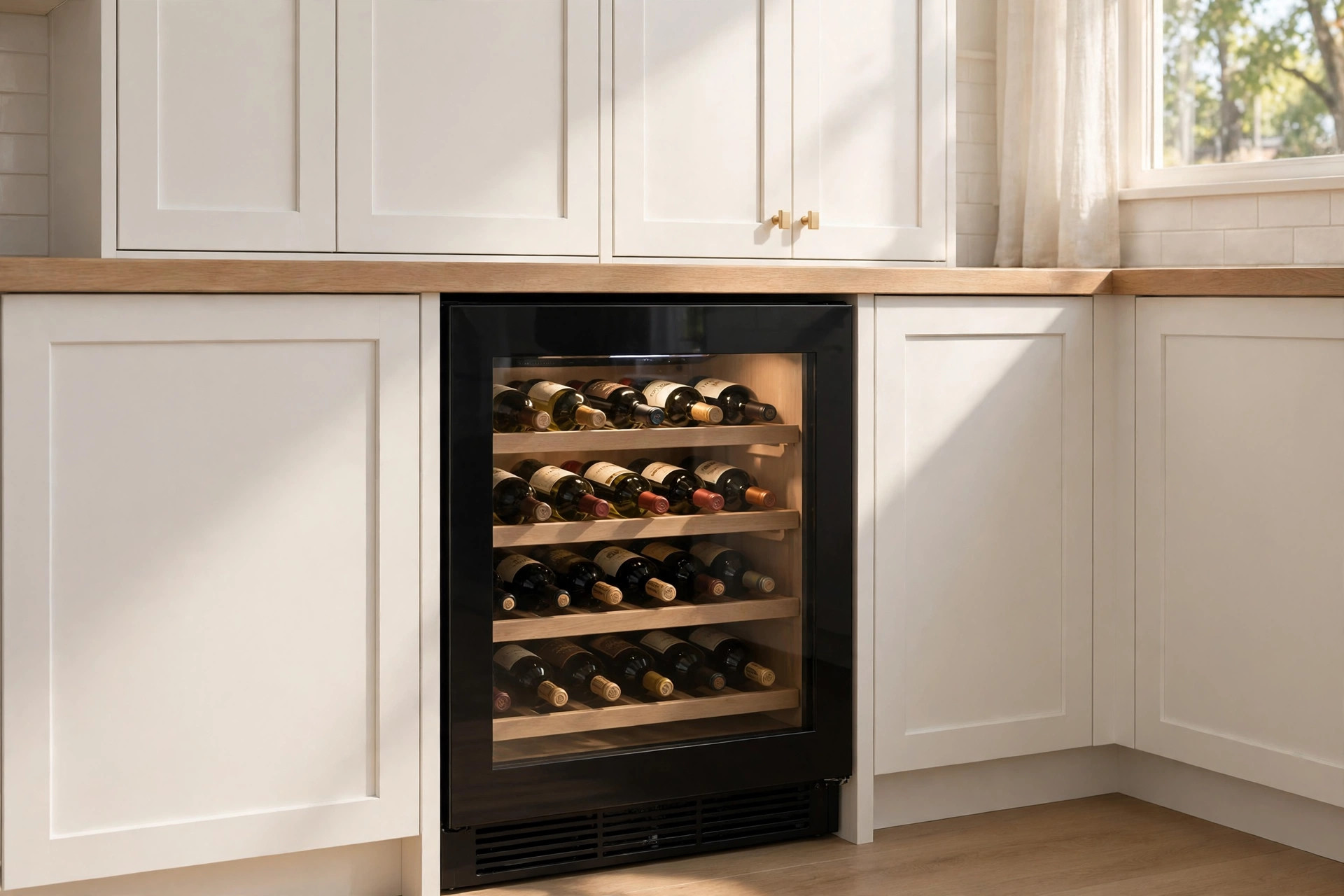

This under counter wine fridges buying guide usa shoppers can trust will help you choose with care. A wine fridge keeps bottles at the right temperature. It fits under the counter and stays out of the way. Many home owners want one in the kitchen or bar. But models differ in size, price, and features. This guide explains each point in plain words. You will learn what matters most. You will learn how to match a unit to your space. By the end, you can shop with a clear plan.
Why a Wine Fridge Matters
Wine does not like heat. It does not like light. It does not like shaking. A kitchen fridge runs too cold for wine. It also hums and moves with each open and close. That motion can harm the flavor. A wine fridge holds a steady cool air. Most models sit near 55 degrees. That is the safe zone for reds and whites.
Space matters too. Bottles take up room on a counter. They can fall and break. An under counter wine fridge hides them away. It keeps them safe behind glass. Many models lock with a key. That keeps young hands out.
Style plays a role as well. A built-in unit looks neat in a kitchen. It matches the cabinets. It adds a touch of class to a home bar. Guests notice it. It says the owner cares about wine.
Heat is the top threat to stored wine. A warm room can age wine too fast. A hot day can cook it. Once heat harms the flavor, the loss is set. A wine fridge guards against that risk. It also guards against dry air. Corks dry out in dry air. Dry corks let air in. Air spoils the wine. A wine fridge holds a fair level of damp air. That keeps corks snug.
What to Look For When You Buy: Under Counter Wine Fridges Buying Guide Usa
Size and Fit
Start with the space. Measure the opening under your counter. Write down the width, height, and depth. Standard counters are 24 inches deep. Most under counter models fit that depth. Widths often run 15, 18, or 24 inches. Leave one inch of air at the back. Leave a small gap on the sides. Good air flow keeps the unit cool and quiet.
Count your bottles. A small unit may hold 20 to 30 bottles. A wide unit may hold 50 or more. Buy a little more space than you need. Your stock will grow with time.
Single Zone or Dual Zone
A single zone unit holds one temperature. It suits one kind of wine. A dual zone unit has two zones. One zone can sit at 45 degrees for whites. The other can sit at 55 degrees for reds. Dual zone costs more. It serves a mixed cellar best.
Compressor or Thermoelectric
Compressor units cool with a pump. They work well in warm rooms. They hold low temperatures with ease. They make some noise. Thermoelectric units have no pump. They run quiet. They cost less to run. They do not cool as deep. They suit a cool kitchen or a basement bar.
Door Type
Most doors are glass. Glass lets you see the bottles. It looks fine. Pick a door with UV tint. Sun light through a window can spoil wine. A steel door blocks light best. It hides the bottles from view.
Built-In or Freestanding
A built-in unit vents from the front. It fits flush with cabinets. It does not need side air space. A freestanding unit vents from the back and sides. It needs room to breathe. Never push a freestanding unit into a tight slot. It will overheat. Check the product sheet before you buy. The experts at Bob Vila explain vent needs in plain terms.
Types and Options
Under counter wine fridges come in a few styles. Each suits a home need.
Single door compact. These are slim and hold 20 to 30 bottles. They fit a small kitchen or a wet bar. They cost the least.
Full width cabinet. These span 24 inches and hold 50 or more bottles. They serve a real collector. They look like a second small fridge.
Dual zone tower. These are tall and narrow. They split heat zones from top to bottom. They suit homes that drink red and white.
Drawers. Some wine fridges open as drawers. They slide out under the counter. They hide the bottles from sight. They cost more but look sharp.
Outdoor rated. A few models can sit in a patio kitchen. They seal against dust and damp. They cost more. Most homes do not need one.
Rack design sets units apart. Thin wire racks cost less. They can scratch labels. Wood racks cost more. They look warm and hold bottles still. Some racks pull out like a drawer. That helps you reach back bottles with ease. Split racks let you store tall bottles. Check the rack style in photos before you buy. It affects daily use more than you may think.
Related kitchen upgrades pair well with a wine fridge. If you plan a full update, look at shaker cabinet doors to match your trim. A clean cabinet line makes the wine unit stand out. For cooking space, microwave drawer units free the counter above. Guides on shaker cabinet doors buying help you match wood tones.
Cost and Price
Prices run from low to high. A small thermoelectric unit may cost near 250 dollars. A mid range compressor unit may cost 600 to 900 dollars. A wide dual zone built-in may cost 1,200 to 2,500 dollars. Top brands with wood racks cost even more.
Set your budget before you shop. Think about the long run. A cheap unit may hum loud. It may fail in two years. A strong brand may run for ten years or more. The Consumer Reports test data helps you weigh value for the price.
Watch for added costs. Delivery may add a fee. Built-in units may need a trim kit. An electrician may need to add an outlet. A plumber is not needed. Wine fridges do not use water lines.
Sales bring prices down at clear times. Big sales land near spring and fall. Holiday weekends bring cuts too. If you can wait a month, watch for a sale. You may save one hundred dollars or more. Do not trade a key feature for a small cut. The vent type and the size matter more than a low sticker.
Energy Use and Care
Wine fridges use more power than you may think. They run all day and night. Look for the ENERGY STAR mark. It shows the unit passed strict tests. The ENERGY STAR site lists rated models by size.
Keep the unit clean. Wipe the shelves each month. Pull out dust from the back grill twice a year. A dusty coil works hard and burns more power. Check the door seal. Close the door on a dollar bill. If the bill slips out with ease, the seal is weak. A weak seal leaks cold air.
Do not fill the unit to the brim on day one. Give the cool air room to move. Leave small gaps between bottles. Wood racks need care too. Wipe spills at once. Wine stains set fast.
Check the temperature now and then. A cheap dial gauge works well. Place it on a middle shelf. Read it after a full day. If the gauge reads off from the panel, call for service. Small shifts are fine. Big swings are not.
Vibration can harm wine over time. A compressor makes a low hum. That is normal. But a unit that shakes or rattles needs care. Level the feet first. A level unit hums less. If the rattle stays, have a tech look at the pump mounts. Thermoelectric units have no pump. They run near silent. That is why many buyers pick them for a dining room wall.
Keep the room temperature in mind. Most units work best when the room sits between 60 and 80 degrees. A hot garage will strain the pump. A cold porch may confuse the sensor. The guides at This Old House give sound tips on placement.
Safety
Wine fridges plug into a wall outlet. Use a grounded outlet. Do not use a long cord. Keep water away from the plug. If the unit leaks water, unplug it at once. Call a repair tech.
Lock the door if children live in the home. Most units come with a key lock. Store the key up high. Heavy units can tip. Never climb on an open door. Never let a child swing on it.
Glass doors can break. Do not slam them. If glass cracks, stop using the unit. Replace the door before you store bottles again.
FAQ
How cold should a wine fridge be?
Most wine pros point to 55 degrees. That suits long term storage. For serving, whites taste best near 45 to 50 degrees. Reds taste best near 60 to 65 degrees. A dual zone unit gives you both.
Can I put a freestanding wine fridge under the counter?
Only if the maker says so. Most freestanding units need side and back air. A tight slot will trap heat. The pump will work too hard. It may fail early. Buy a front vent built-in model for a counter slot.
How many bottles should I plan for?
Count what you own now. Add half again. Most first time buyers outgrow a small unit in a year. A 40 bottle unit is a safe start for a casual drinker. A true collector may want 80 or more.
Do wine fridges need a drain?
No. They do not make ice. They do not drip water like a full fridge. Some models have a small tray that catches moisture. Empty it when you clean.
How long does a wine fridge last?
A good unit lasts 8 to 12 years. Cheap models may fail in 3 to 5 years. Keep the coils clean. Keep the room mild. These steps add years to the life.
Is a wine fridge worth the money?
If you drink wine each week, yes. It guards your bottles from heat and light. It keeps serving temps right. It adds value to a kitchen. If you drink one bottle a month, a dark closet may do.
Can I store red and white wine together?
Yes, at 55 degrees both keep well. That is the trade point. For serving, move white to a colder spot for an hour. Move red to a cool counter for a bit. A dual zone unit removes that chore.
Will a wine fridge add much to my power bill?
Most units add only a few dollars a month. An ENERGY STAR rated model costs less to run. Keep the coils clean. Keep the door closed. These small steps cut the bill.
A Short Final Word
A good under counter wine fridge is a quiet worker. It guards your wine day and night. Measure your space first. Pick the size that fits your stock. Choose single or dual zone based on what you drink. Check the vent type before you slide it in. Compare prices with care, and read test notes before you pay.
The market holds many fine units. The right one fits your space, your stock, and your budget. Shops like Home Depot and Lowe’s carry a wide stock. Brand sites such as GE Appliances, Bosch, and Whirlpool list specs in full. With this guide in hand, you can shop with calm and pick a unit that will serve you for years.
Related guides on this site include stainless range hoods buying guide usa, gas kitchen ranges buying guide usa, and french door refrigerators buying guide usa.
References
Bob Vila. (n.d.). Home improvement advice. https://www.bobvila.com Bosch. (n.d.). Home appliances. https://www.bosch-home.com Consumer Reports. (n.d.). Product reviews and ratings. https://www.consumerreports.org ENERGY STAR. (n.d.). Energy efficient products. https://www.energystar.gov GE Appliances. (n.d.). Kitchen and home appliances. https://www.geappliances.com Lowe’s. (n.d.). Home improvement products. https://www.lowes.com The Home Depot. (n.d.). Home improvement products. https://www.homedepot.com The Spruce. (n.d.). Home and garden advice. https://www.thespruce.com This Old House. (n.d.). Home renovation guidance. https://www.thisoldhouse.com Whirlpool. (n.d.). Home appliances. https://www.whirlpool.com
Was this guide helpful?

About James Carter
The My Garden US editorial team writes practical, in-depth home and garden guides for American homeowners — tested advice, no fluff.
You May Also Like

Under Sink Filters Texas Homes USA: A Plain Guide for Cleaner Tap Water
May 10, 2026 0 views
Kitchen Island Hanging Lights for Sale in the USA: A Complete Buyer’s Guide
September 11, 2026 0 views
Stainless Range Hoods for Sale USA: A Plain Buyer’s Guide
July 1, 2026 0 views