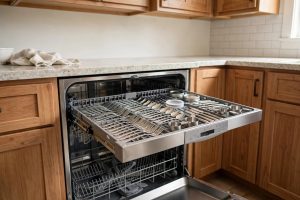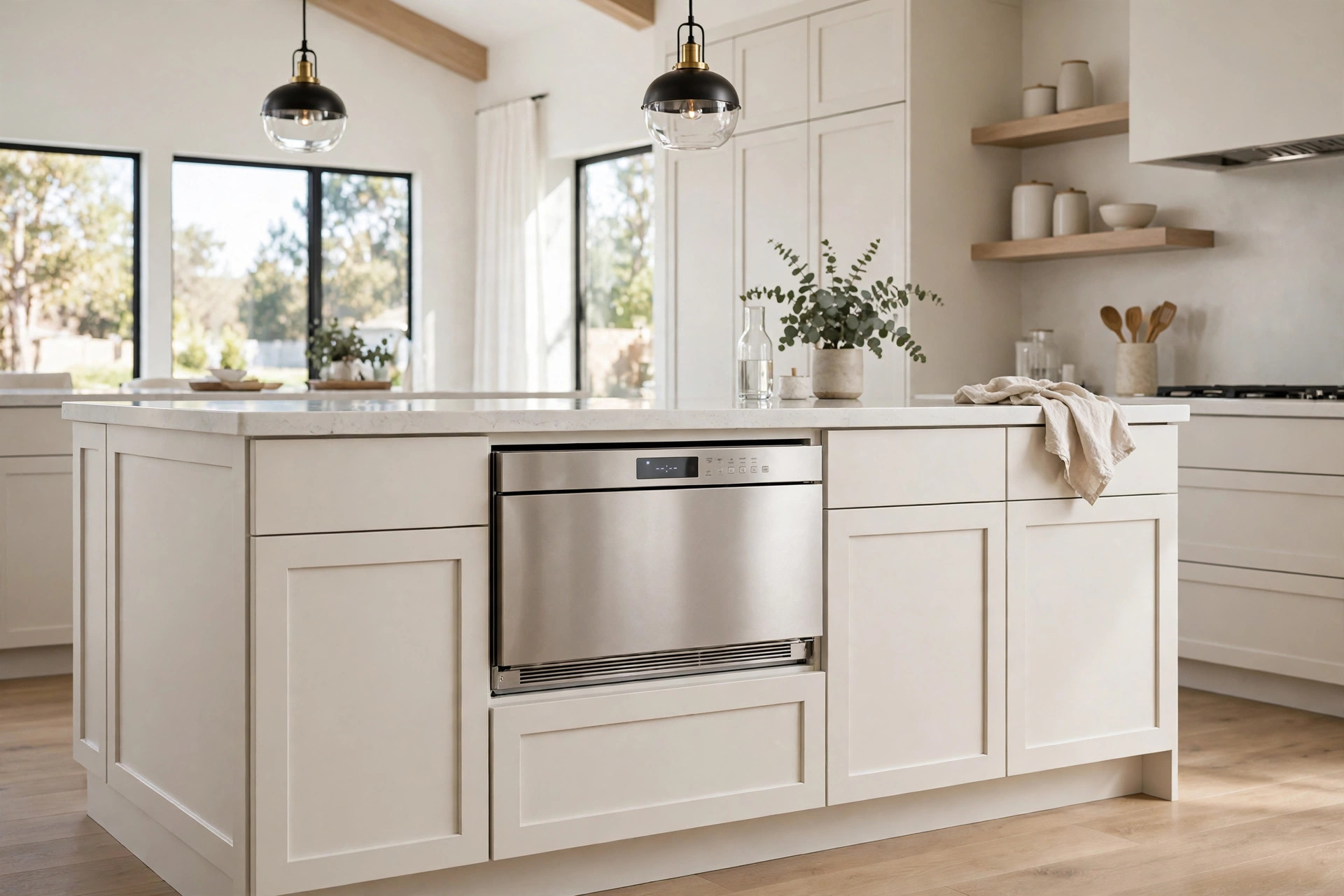

A drawer microwave sits low in a cabinet or an island. It opens with a small push, like a desk drawer. The microwave drawer units reviews buying guide usa below pulls together what reviewers and owners report most often. Read it before you shop. It covers how these units work, what to compare, what they cost, and how to keep one running for years.
Why Drawer Microwaves Deserve a Buying Guide
Most American kitchens still use a microwave mounted over the range. It works, but it has clear faults. Short people must reach up high. Hot food is harder to lift down. The range hood behind it is often weak.
A drawer unit solves these points. It sits near counter height or lower. You place food in and take it out at waist level. Spills land inside the drawer, not on the cooktop. Reviewers praise this easy access in almost every write-up.
The trade-off is price and space. Drawer microwaves cost more than countertop models. They also take up cabinet room. For many buyers, the comfort and the look are worth it. The rest of this microwave drawer units reviews buying guide usa will help you decide if you belong in that group.
How to Read Microwave Drawer Reviews: Microwave Drawer Units Reviews Buying Guide Usa
Review sites test many things at once. Knowing what each claim means saves time.
First, look at heating tests. Good reviewers heat coffee, melt cheese, and thaw chicken. They check whether the food warms evenly. Many drawer models heat more evenly than old over-the-range units. The wide, flat bottom has no turntable to get stuck.
Second, look at noise notes. Some drawers hum more than others. A quiet model matters in an open kitchen where people talk.
Third, look at long-term owner notes. Sites such as Consumer Reports and The Spruce gather scores from thousands of owners. These scores point out which brands fail early and which ones last. They also track repair rates.
Fourth, check dates. A review from five years ago may describe a model that is no longer sold. Give weight to reviews written in the last two years.
How to Choose a Microwave Drawer
Start with the cutout. Every drawer microwave needs a cabinet opening of a fixed width and height. Measure your space before you fall in love with a model. Standard sizes run from 24 inches to 30 inches wide. Some units also need extra depth for cords and vents.
Next, pick the power level. Most drawer units offer between 950 and 1,200 watts. More watts mean faster cooking. A 1,000-watt unit handles daily jobs well. Heavy users may want 1,100 or more.
Then think about sensor cooking. Many models read steam from the food and set the time on their own. Owners who reheat leftovers daily call this the best feature. It removes guesswork.
Also compare the controls. Touch pads near the top edge are the norm. Look for big, clear labels. Fingers that are wet or greasy should still work the keys.
Finally, match the finish. Stainless steel is the most common choice. Black stainless and panel-ready fronts also exist. A panel-ready front takes a cabinet panel so the drawer blends into your kitchen. Brands such as Whirlpool and GE Appliances offer several finish options across their lines.
Types and Options
Drawer microwaves come in a few main forms.
Standard drawer microwaves are the most common. They hold about 1.2 cubic feet. They fit plates up to dinner size. Most families buy this type.
Combination drawer units add a second function, often convection cooking or broiling. They cost more but can replace a small oven for some tasks. Bosch lists models with added cooking modes in its appliance range.
Panel-ready models hide behind a wood or laminate front. You see only a handle. This suits high-end kitchens where every appliance blends in.
Smart-enabled drawers connect to a phone app. Owners can check cooking status or get alerts when food is done. Reviews are mixed on this feature. Some love it. Others never open the app.
When you compare options, keep notes on which reviews mention the features you want. A simple chart on paper works well.
ADA-compliant models are built for lower, easier access. Their controls tilt up for better reading. Reviewers in homes with older adults often rate these models high for daily ease.
Outdoor-rated drawers are a niche pick. A few makers sell units sealed against damp air for covered patios and outdoor kitchens. Check the rating plate. Standard indoor drawers must never go outside.
Cost and Price
Drawer microwaves are a premium buy. In 2026, prices in the United States run from about 1,100 dollars to about 2,600 dollars.
Entry models near 1,100 dollars give basic drawer function with solid heating. Mid-range units from 1,400 to 1,800 dollars add sensor cooking, better finishes, and quieter fans. Top models above 2,000 dollars bring convection modes, smart controls, or panel-ready fronts.
Installation adds cost. A carpenter may need to cut or resize a cabinet. Electric work may be needed for a dedicated outlet. Plan on 200 to 600 dollars for labor, more if the cabinet must be rebuilt.
Watch for sales. Big-box retailers such as Home Depot and Lowe’s run appliance sales several times a year. Holiday weekends often bring the deepest cuts.
Do not forget the long-run cost. A drawer microwave draws about the same power as a standard unit when cooking. Energy use is small next to a range or an oven. What adds up is repair. A new door spring or a rail kit can cost a few hundred dollars with labor. Reading owner repair reports before you buy helps you pick a model with cheap, common parts.
Delivery and haul-away fees also apply. Stores may charge 50 to 100 dollars to carry the new unit in and take the old one out. Ask about these fees when you price a model so the total stays clear.
Installation Basics
Most owners hire a pro. The steps look simple but the details matter.
The cabinet opening must match the unit’s cutout sheet. Leave room at the back for the power cord. The unit plugs into a standard grounded outlet on its own circuit. Do not share the outlet with a toaster or a coffee maker.
Ventilation needs are light. Drawer microwaves vent to the front. No duct work is required. That is one reason they fit well in islands.
Height matters for comfort. Many owners set the top of the unit near counter height, about 36 inches. Taller people may raise it a few inches. Lower settings work for seated users or homes with wheelchair access.
Guidance from outlets like This Old House and Bob Vila covers cabinet prep in detail. Read a full install guide before you cut any wood.
Care and Upkeep
A drawer microwave needs little care, but small habits pay off.
Wipe the inside after use. Food splatter is easy to remove when fresh. Use a damp cloth with mild soap. Skip steel wool and harsh powders. They scratch the coating.
Clean the touch panel with a soft cloth. Water left on the keys can seep in. Dry the area after cleaning.
Check the drawer seal now and then. A clean seal keeps heat in. Wipe the rubber edge with a damp cloth every few weeks.
Do not slam the drawer. Gentle use keeps the motor and rails in good shape. Most repairs owners report trace back to rough handling or heavy pans dropped on the rails.
Replace nothing on your own inside the case. Microwave parts hold charge after unplugging. Call a service tech for any inner repair.
Safety
Drawer microwaves are safe when used right. A few rules keep it that way.
Never run the unit empty. The energy has nowhere to go. This can damage the magnetron.
Use microwave-safe dishes only. Glass, ceramic, and marked plastics are fine. Metal, foil, and brown paper bags are not.
Stir and test food heat before serving kids. Drawer models heat evenly, but hot spots can still form. This is extra important with baby food.
Keep the vents clear. The front grille needs open air. Do not block it with towels or boxes.
Supervise young children. The low height makes the drawer easy for small kids to reach. Many models have a child lock. Turn it on if kids use the kitchen.
Do not put sealed jars or whole eggs inside. Pressure builds fast and the container can burst. Pierce skins on potatoes and squash before cooking so steam can escape.
Let food rest one minute after cooking. This finishes the heating and evens out hot spots. Use oven mitts or a towel for the dish, even when the drawer floor feels cool.
Frequently Asked Questions
Are microwave drawers better than over-the-range models? For access and looks, yes. Food goes in and out at a safe height. For raw power per dollar, an over-the-range unit often wins. Your kitchen layout and budget decide. If you are also shopping for the vent above your range, see our stainless range hoods buying guide usa.
How long do microwave drawer units last? Most owners report 8 to 12 years of daily use. Units with strong owner-review scores last longest. Gentle daily care adds life.
Can I install a drawer microwave myself? A handy owner can do the physical drop-in. Cabinet cutting and electric work are best left to pros. Mistakes here are costly.
Do drawer microwaves cook evenly without a turntable? Yes, for most foods. The flat floor lets heat spread well. Stirring once still helps thick dishes. Reviews agree that evenness is a strong point.
Are they hard to repair? Parts cost more than countertop models. Labor is about the same as other built-in appliances. Extended plans from the store can be worth the price on premium units.
What size plate fits inside? Most drawers hold a 9 by 13 inch dish and a standard dinner plate. Check the inner width on the spec sheet before you buy if you use large platters. Shoppers comparing other built-in cooking appliances may also like our gas kitchen ranges buying guide usa.
Does the drawer style waste electricity? No. A drawer microwave uses about the same power as a standard microwave of equal watts. It also frees the counter, which can reduce clutter-driven cooking habits like extra takeout orders.
Can a drawer microwave replace my oven? Not fully. Convection drawer models handle baking tasks, but they are small. They work well as a second heat source in homes where the main oven runs daily.
A Short Final Word
Drawer microwaves are not cheap, but they change how a kitchen feels. Food moves in and out at a natural height. The counter stays clear. The room looks planned, not patched together.
Use this microwave drawer units reviews buying guide usa as a checklist. Measure first. Read recent reviews. Compare power, features, and finish. Then buy from a seller with a fair return policy. For a broader look at drawer-style models, read our microwave drawer units buying guide usa. A careful purchase now gives you a decade of easy meals.
References
Bob Vila. (n.d.). Home improvement advice. https://www.bobvila.com Bosch. (n.d.). Home appliances. https://www.bosch-home.com Consumer Reports. (n.d.). Product reviews and ratings. https://www.consumerreports.org GE Appliances. (n.d.). Kitchen and home appliances. https://www.geappliances.com Lowe’s. (n.d.). Home improvement products. https://www.lowes.com The Home Depot. (n.d.). Home improvement products. https://www.homedepot.com The Spruce. (n.d.). Home and garden advice. https://www.thespruce.com This Old House. (n.d.). Home renovation guidance. https://www.thisoldhouse.com Whirlpool. (n.d.). Home appliances. https://www.whirlpool.com
Was this guide helpful?

About Lisa Anderson
The My Garden US editorial team writes practical, in-depth home and garden guides for American homeowners — tested advice, no fluff.
You May Also Like

Kitchen Backsplash Tiles for Florida Homes in the USA
August 27, 2026 0 views
Pot Filler Faucets for California Homes: A Plain Buying Guide
June 16, 2026 0 views
Pot Filler Faucets Reviews and Buying Guide for USA Kitchens
August 31, 2026 0 views