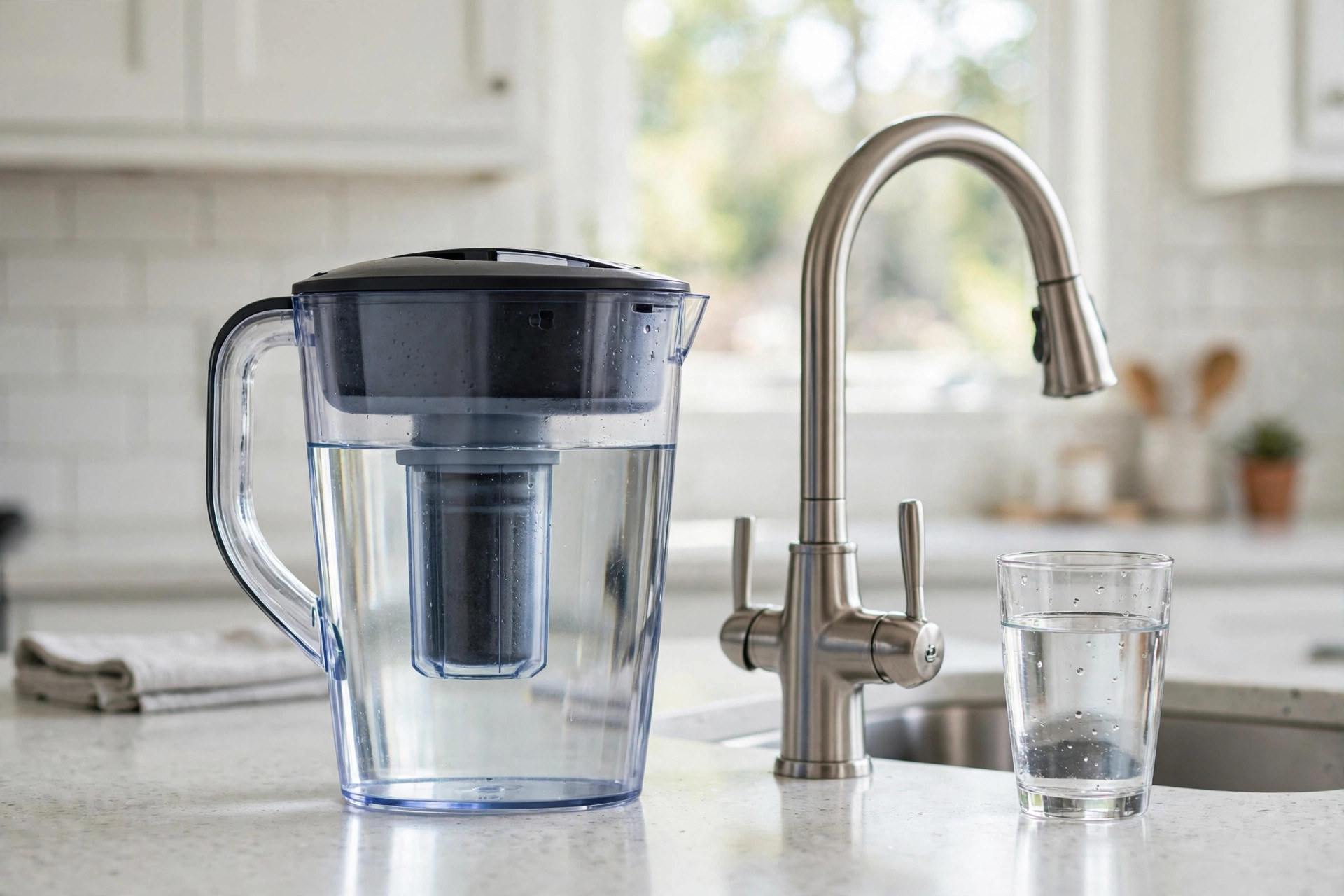

Lead in drinking water is a quiet danger. You cannot see it. You cannot taste it. You cannot smell it. Yet it can harm children and adults alike. Many families across the United States turn to a simple tool for help: the water filter pitcher. This guide gathers what reviews of water filter pitchers for lead in the USA really say. It explains how these pitchers work, what to look for, what they cost, and how to keep them working well.
Why Lead in Drinking Water Matters
Lead usually gets into tap water through old pipes. Many homes built before 1986 still have lead service lines or lead solder in their plumbing. Water that sits in the pipes overnight can pick up lead. The longer the water sits, the more lead it can carry.
The U.S. Environmental Protection Agency states that there is no safe level of lead in drinking water. Children face the greatest risk. Lead can slow a child’s growth and harm learning and behavior. Adults face risks too, including higher blood pressure and kidney trouble. These facts are why so many households take the problem seriously.
Testing is the first step. Many local water utilities publish a yearly water quality report. Homeowners can also order a test kit or ask a certified lab to test their tap water. Guidance from the EPA on lead in drinking water is a good place to begin your research. You can find official lead information at U.S. Environmental Protection Agency.
A water filter pitcher is not a full cure for a lead problem. But for many homes, it is a practical first line of defense. It is cheap, easy to use, and needs no plumber.
How to Read Reviews of Water Filter Pitchers for Lead: Water Filter Pitcher for Lead Reviews Usa
Thousands of reviews of these pitchers appear online. Not all of them are useful. Here is how to read them with a clear eye.
First, look for the word “certified.” A pitcher may claim to remove lead. The claim only means something if an independent lab tested it. In the United States, the key standard for lead reduction is NSF/ANSI 53. A pitcher certified to NSF/ANSI 53 for lead has passed a real lab test. Look for the certification mark on the box or the maker’s site.
Second, check what percentage of lead the filter removes. Many certified pitchers claim to reduce lead by 96 percent or more in lab tests. Reviews that quote the lab number are more trustworthy than reviews that only say “the water tastes better.”
Third, note the test conditions. Lab tests use a set amount of lead in the water. Your tap water may have more or less. A pitcher that works well in a test may still leave some lead behind in a home with very old pipes. Reviews from users who tested their own water before and after are worth more than reviews based only on taste.
Fourth, watch the filter life. Most pitcher filters last about two to three months, or about 40 gallons. Reviews often mention how fast the filter slows down near the end of its life. A pitcher that pours well for the full rated life is a better value than one that clogs early.
Fifth, read the one-star and two-star reviews. They often reveal real problems: cracked lids, slow filling, leaks, or filters that are hard to find in stores. A pitcher with hundreds of reviews and a rating above 4 stars is usually a safe choice, but the complaints still teach you what to expect.
What to Look for When You Choose One
Reviews point to a short list of features that matter most.
Lead certification. This is the single most important feature. Buy only a pitcher whose filter is certified to NSF/ANSI 53 for lead reduction. Without this certification, you cannot be sure it removes lead at all. Many major filter makers publish their certifications online. Aquasana, for example, describes its water filtration products and testing at Aquasana.
Filter type. Most pitcher filters use activated carbon. Carbon is good at removing chlorine and improving taste. Some pitchers add special media designed to catch lead. Pitchers with this extra media tend to perform better for lead. The box or the product page should name the standard it meets.
Pitcher size. Most pitchers hold 8 to 12 cups. A family of four may fill the pitcher several times a day. Larger pitchers mean fewer refills but take more room in the refrigerator. Measure your shelf height before you buy.
Fill speed. Gravity pulls water through the filter. Some pitchers fill in five minutes. Others take fifteen or more. Slow pitchers annoy busy families. Reviews almost always mention this.
Filter cost and availability. The pitcher itself is cheap. The filters are the real cost. Check the price of replacement filters before you buy the pitcher. Check that the filters are easy to find at common stores. Retailers like The Home Depot and Lowe’s carry many popular brands and filters. You can browse their water filtration sections at The Home Depot and Lowe’s.
Ease of cleaning. Most pitchers are hand wash only. Some parts go in the dishwasher. A wide mouth makes the pitcher easier to clean and fill.
Filter change indicator. Some pitchers have a small timer or a sticker dial. Others count gallons with an electronic meter. Any reminder helps, because a spent filter stops removing lead.
If you want a wider view of lead filtration for the whole home, read our guide to lead in drinking water filters.
Types and Options
Water filter pitchers for lead fall into a few main groups.
Standard carbon pitchers. These are the most common and the cheapest. They improve taste and odor. Only some are certified for lead. Read the label with care. A standard pitcher without lead certification is not a lead solution.
Lead-specific pitchers. These use carbon plus added media that traps lead. They cost a little more. They carry the NSF/ANSI 53 mark for lead. Reviews show they are the best choice for homes worried about lead.
Long-life filter pitchers. Some newer pitchers use filters rated for six months or about 120 gallons. They cost more up front but may save money over a year. Check that the long-life filter still carries lead certification.
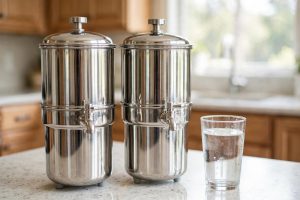
Countertop gravity dispensers. These are larger cousins of the pitcher. They sit on the counter and hold two or three gallons. They filter the same way, by gravity. They suit large families or small offices.
For a deeper comparison of filter styles, see our roundup of the best filters for lead removal. If you prefer a filter that attaches to the tap, our faucet water filter reviews cover that option.
Practical home advice sites also review these products. This Old House covers water filtration topics for homeowners at This Old House. The Family Handyman offers hands-on product guidance at Family Handyman.
Cost and Price
A water filter pitcher is one of the cheapest ways to treat drinking water.
The pitcher itself costs between 25 and 70 dollars. Lead-specific models sit at the higher end of that range. Replacement filters cost between 8 and 18 dollars each. Most filters last two to three months.
That works out to roughly 50 to 120 dollars a year for filters. A family that drinks only filtered water should plan on the higher end. Subscription plans from some brands lower the per-filter price by 10 to 15 percent.
Compare this with the alternatives. Bottled water for a family can cost 300 to 600 dollars a year. An under-sink reverse osmosis system costs 150 to 400 dollars plus installation. A whole-house system costs far more.
The pitcher wins on price. It loses on speed and volume. You must remember to keep it full. For a single person or a couple, that is easy. For a large family, it becomes a daily chore.
Fixture makers sometimes bundle filtration into kitchen products. Moen describes its kitchen filtration and faucet products at Moen. Delta Faucet covers similar kitchen water products at Delta Faucet. Kohler also offers kitchen and water filtration lines at Kohler.
Care and Upkeep
A pitcher only removes lead if you care for it. These simple habits keep it working.
Wash the pitcher once a week with warm water and mild soap. Rinse it well. Do not use harsh cleaners. They can damage the plastic and leave a taste.
Change the filter on schedule. Mark the date on a calendar or set a phone reminder. Do not stretch a filter past its rated life. An old filter can slow to a drip and may let lead through.
Flush each new filter as the instructions direct. Most makers ask you to run two or three pitchers of water through a new filter and throw that water away. This clears loose carbon dust.
Keep the pitcher cool. Store it in the refrigerator. Warm water grows bacteria faster. Never pour hot water through the pitcher. Heat can damage the filter media.
Check the seal between the filter and the pitcher body. If the filter sits loose, water can flow around it instead of through it. Push the filter in firmly each time you replace it.
Buy filters from a trusted seller. Counterfeit filters are a real problem online. They may look right but contain poor media. Buy from the maker or a major retailer.
Safety
A water filter pitcher improves safety, but it has limits. Keep these points in mind.
No pitcher removes all lead all the time. Lab tests show high reduction rates, not perfect results. If your water test shows very high lead levels, talk to your water utility or a plumber about pipe replacement or a stronger system.
The filter only works on cold water. Hot water can release more lead from pipes and can damage the filter. Run the cold tap until the water turns cold before you fill the pitcher.
Let the water run after long still periods. If the tap has not been used for six hours or more, run the cold water for 30 seconds to two minutes before filling the pitcher. This flushes water that sat in the pipes.
Children and pregnant women need the most care. If anyone in the home is pregnant or under six years old, take lead seriously. Test the water. Use certified filtration. Ask your doctor about blood lead testing if you have concerns.
Keep the certification in mind when you shop. The NSF mark is your proof. If a seller cannot show it, choose another product.
Frequently Asked Questions
Do water filter pitchers really remove lead? Yes, if the filter is certified to NSF/ANSI 53 for lead reduction. Lab tests show that certified pitcher filters can cut lead by 96 percent or more. Pitchers without this certification may remove little or no lead. Always check the certification before you buy.
How do I know a pitcher is certified for lead? Look for the NSF mark and the words “NSF/ANSI 53” with lead listed as a reduced contaminant. The mark should appear on the box, the filter, or the maker’s website. You can also search the NSF database by brand and model.
How often should I change the filter? Most pitcher filters last about 40 gallons, which is roughly two to three months for a typical household. Some long-life filters last six months. Change the filter when the indicator says so, or sooner if the water flows very slowly.
Is a pitcher enough if my water has high lead? It may not be. A pitcher is a good step, but very high lead calls for stronger action. Flush the pipes, test the water, and ask your utility about lead service lines. A plumber can advise on under-sink or whole-house options.
Do pitchers remove other contaminants too? Most pitcher filters also reduce chlorine, which improves taste and smell. Many are certified to NSF/ANSI 42 for taste and odor. Some also reduce mercury, copper, or certain pesticides. Read the performance data sheet for the full list.
Can I use filtered water for baby formula? Many parents do. The CDC notes that cold tap water filtered through an NSF-certified filter is one option for mixing formula. If your home has lead pipes, talk to your pediatrician first. They can advise on the safest choice for your baby.
A Short Final Word
A water filter pitcher is a small tool with a big job. It costs little. It needs no tools to install. And when the filter carries real lead certification, reviews show it does what it promises. Read the labels. Change the filter on time. Test your water when in doubt. These plain steps give your family cleaner, safer water every day.
References
Aquasana. (n.d.). Water filtration systems. https://www.aquasana.com Delta Faucet. (n.d.). Kitchen and bathroom faucets. https://www.deltafaucet.com Family Handyman. (n.d.). DIY home repair and maintenance. https://www.familyhandyman.com Kohler. (n.d.). Bathroom and kitchen fixtures. https://www.kohler.com Lowe’s. (n.d.). Home improvement products. https://www.lowes.com Moen. (n.d.). Faucets and plumbing fixtures. https://www.moen.com The Home Depot. (n.d.). Home improvement products. https://www.homedepot.com This Old House. (n.d.). Home renovation guidance. https://www.thisoldhouse.com U.S. Environmental Protection Agency. (n.d.). Protecting human health and the environment. https://www.epa.gov
Was this guide helpful?

About David Wilson
The My Garden US editorial team writes practical, in-depth home and garden guides for American homeowners — tested advice, no fluff.
You May Also Like
Best Continuous Feed Garbage Disposal for Homes in the USA
July 16, 2026 0 views
Matte Black Kitchen Faucet: Pros and Cons for American Homes
January 28, 2026 0 views
Best Drain Strainer for Shower Hair USA: A Practical Homeowner Guide
July 31, 2026 0 views