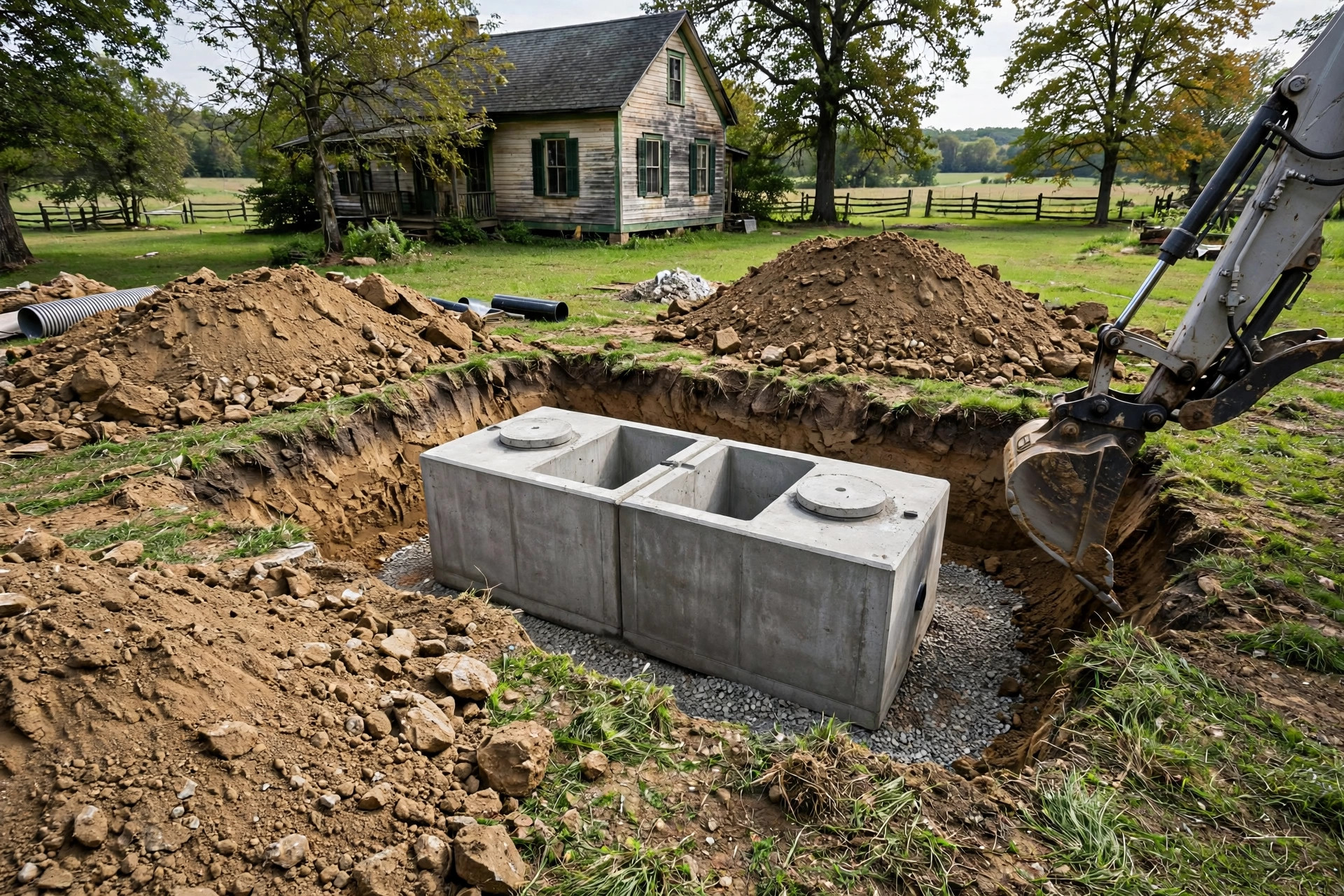

When a homeowner types septic tank replacement cost near me 2026 into a search bar, the question behind the words is simple. How much will this cost, and how do I find someone near my home who will do the work well? A septic tank sits out of sight under the yard. It asks for little and gives no warning when it starts to fail. Then one day the drains run slow, the grass turns bright green over the drain field, and a smell rises that will not go away. At that point the tank may need more than a pump. It may need full replacement. This guide explains what drives the price, what types of tanks exist, how to pick a local installer, and how to keep the new system sound for years.
Why Septic Tank Replacement Matters
A septic system handles all the waste water a home makes. Sinks, showers, toilets, and washing machines all drain into the tank. Solid matter settles to the bottom. Scum floats to the top. The water in the middle flows out to the drain field, where soil filters it clean. When the tank cracks, collapses, or stops separating waste, raw sewage can back up into the home or rise into the yard. This is a health hazard. It can also pollute wells and nearby streams.
Replacement matters because a failing tank cannot be ignored. Pumping buys time, but it does not fix a cracked wall or a crushed inlet pipe. Many local health departments require repair or replacement once a system fails inspection. A home with a failed system can be hard to sell. Buyers ask for proof of a working septic system, and lenders may ask for an inspection report. For all these reasons, the cost of replacement is money well spent, and finding the right price starts with knowing what shapes it.
What Drives Septic Tank Replacement Cost Near Me 2026
Prices vary by state, county, and even street. A job in a sandy coastal county may cost far less than the same job on rocky ground in the hills. Here are the main factors that set the price.
Tank size. Homes are sized by bedroom count. A three-bedroom home may need a 1,000-gallon tank. A five-bedroom home may need a 1,500-gallon tank. Larger tanks cost more for the tank itself and for the digging.
Tank material. Concrete, fiberglass, polyethylene, and steel tanks each carry a different price. Concrete is heavy and long lasting. Fiberglass and polyethylene are light and easy to set, but they cost more up front.
Soil and site work. The excavator must dig a hole deep enough for the tank and the inlet lines. Rocky soil, high water tables, and tight access all add hours to the job. If the old tank must be crushed and filled or hauled away, that adds to the bill as well.
Drain field condition. Many replacements include only the tank. If the drain field has failed too, the job grows much larger. A new drain field can cost as much as the tank itself, or more.
Permits and inspections. Most counties require a permit before the old tank is removed. An inspector may need to see the new tank set in place before it is covered. Permit fees are small next to the total, but they add days to the schedule.
Local labor rates. Labor rates differ across the country. Urban counties near large cities often run higher than rural ones. This is why the phrase “near me” matters so much in this search. A national average tells you little about your own county.
In 2026, most homeowners report paying between 3,000 and 10,000 dollars for a standard tank replacement, with a midpoint near 6,000 dollars. Simple jobs with easy access fall below that range. Jobs that need a new drain field, a pump chamber, or major grading can run above 15,000 dollars. Always get written bids from at least three licensed local installers before you decide.
Types of Septic Tanks and How They Affect Price
Not all tanks are the same. The material you choose shapes both the price and the life of the system.
Concrete tanks. These are the most common. A precast concrete tank is strong and resists soil pressure. It can last 40 years or more with good care. The weight means a crane or large excavator must set it, which adds to labor cost. Concrete can crack over time, and the baffles inside may need repair.
Fiberglass tanks. Fiberglass tanks are light and resist rust and chemicals. They go in fast, which keeps labor down. The tank itself often costs more than concrete. In areas with high ground water, a fiberglass tank must be anchored so it does not float.
Polyethylene tanks. Plastic tanks are the lightest option. Two workers can move a small one by hand. They cost less to ship and set. Like fiberglass, they need anchoring in wet ground. Some local codes limit their use, so check with your county before you choose.
Steel tanks. Steel was common decades ago but is rare now. Steel rusts and fails sooner than the other materials. Almost no installer recommends steel for a new job in 2026.
Your installer can tell you which materials your county allows. In many areas, concrete remains the standard and the best value over the life of the system.
How to Choose a Local Installer
The phrase “near me” is more than a search habit. Septic work is local work. The installer must know your county codes, your soil types, and the inspectors who will sign off on the job. A contractor from far away may bid low and then learn your local rules at your expense.
Start with your county health department. Many counties keep a list of licensed septic installers and pumpers. Ask friends and neighbors who have had work done. Read reviews, but read them with care. Look for mentions of clean work sites, clear bids, and systems that passed inspection the first time.
When you call, ask these questions. Are you licensed in this county? How many replacements did you do last year? What is included in the bid, and what is not? Do you handle the permit and the inspection? What warranty do you give on the tank and on your labor? A good installer answers plainly and puts the bid in writing.
Get at least three bids. Compare them line by line. The lowest bid is not always the best value. One bid may include the permit, the pump, and the final grading while another lists them as extras. Ask each bidder to walk the site before they price the job. An installer who prices from a desk has not seen your soil.
You can also look for guidance on hiring home contractors from trusted home improvement sources such as Www.thisoldhouse.com, which covers contractor selection and project planning in plain language. The Www.familyhandyman.com site offers step-by-step project advice that can help you understand the scope of the work before you sign.
The Replacement Process Step by Step
Knowing the steps helps you follow the work and spot trouble early.
Inspection and design. The installer inspects the old system and may dig test pits to check the soil. A site plan is drawn and filed with the county for a permit.
Locating and exposing the old tank. The crew finds the old tank, often with a probe or a metal detector. The tank is pumped out before removal so the crew can work safely.
Removal. The old tank is crushed in place and filled with clean soil, or it is lifted out and hauled away. County rules decide which method is allowed.
Setting the new tank. The hole is dug to grade and lined with gravel or sand. The new tank is lowered in and leveled. Inlet and outlet pipes are connected, and the baffles are checked.
Backfill and grading. The tank is filled with water to settle it, then backfilled. The yard is graded so water drains away from the tank and the drain field.
Final inspection. The county inspector checks the set tank, the pipe slopes, and the connections. Once it passes, the crew finishes the surface work.
Most jobs take two to four days of actual work. Permits and inspections can stretch the calendar to two or three weeks from bid to finish.
Care and Upkeep After Replacement
A new tank can serve for decades if you treat it well. These habits protect your investment.
Pump on schedule. Most homes need pumping every three to five years. A family of five with a garbage disposal may need it more often. Mark the date on a calendar and keep the receipt.
Watch what goes down the drain. The tank digests waste, not trash. Do not flush wipes, even those labeled flushable. Keep grease, paint, and strong chemicals out of the drains. A garbage disposal adds load, so use it lightly.
Save water. Every gallon that enters the tank must leave through the drain field. Fix leaky faucets and running toilets. Spread laundry loads across the week instead of washing all day Saturday. Low-flow fixtures from makers such as Www.kohler.com, Www.moen.com, and Delta Faucet cut daily water use and ease the load on the system.
Know your water quality. If your home uses well water, test it now and then. A Well water testing near me cost 2026 can catch bacteria or nitrates that signal a system problem. Good records also help if you ever sell the home.
Protect the drain field. Do not park cars on it. Do not build sheds or patios over it. Keep deep-rooted trees at least 30 feet away. Plant only grass over the field so the soil can breathe.
If you notice a Sewer gas smell in bathroom solutions usa, do not ignore it. It may point to a dry trap or a vent problem, but it can also be an early sign of septic trouble. Call a professional and find the cause.
For general home water guidance, the Www.epa.gov publishes plain guides on septic care and safe water practices. Homeowners planning Best pot filler placement over range usa should also check how new fixtures change daily water use, since every fixture adds flow to the system. Retailers such as Www.homedepot.com and Www.lowes.com stock septic-safe products and replacement parts with clear labels. Water treatment brands like Www.aquasana.com offer filtration options for homes that want cleaner tap water without adding load to the tank. For broader project planning, Bob Vila covers home systems in depth.
Safety During and After the Job
Septic work carries real dangers, and safety rules are strict for good reason. Never enter an open tank or pit. The gases inside can overcome a person in seconds. Keep children and pets away from the work site while the hole is open. Make sure the crew fences or covers the excavation at the end of each day.
After the job, keep the tank lids locked and marked. Risers that bring the lids to ground level make pumping easy, but they must have child-proof covers. If you smell strong gas near the tank, leave the area and call the installer or the fire department. Do not try to inspect it yourself.
Frequently Asked Questions
How long does a septic tank last? A concrete tank often lasts 40 years or more. Fiberglass and polyethylene tanks can last 30 to 40 years. Steel tanks fail much sooner. Pumping on time and keeping water use low add years to any tank.
Can I replace only the tank and keep the old drain field? Yes, if the drain field still works. The installer will test it before the job. If the field is clogged or flooded, it must be replaced too, which raises the cost a great deal.
Do I need a permit to replace my septic tank? In almost every county, yes. The permit makes sure the new system meets current code. Your installer should handle the paperwork and schedule the inspection.
How do I know the tank needs replacement and not just pumping? Slow drains across the whole house, sewage backing up, wet spots over the tank, and a strong smell that pumping does not fix all point to failure. A licensed inspector can confirm with a camera and a soil check.
Will my yard be ruined by the work? The work area will be dug up, but a good crew grades and seeds or sods the disturbed ground when done. Ask about surface restoration in the bid so you know what is included.
Does homeowners insurance cover septic replacement? Most policies do not cover wear and failure from age. Some cover sudden damage, such as a tank crushed by a fallen tree. Read your policy and call your agent before you assume.
A Final Word
Septic tank replacement cost near me 2026 is not a single number. It is a range shaped by your soil, your county, your tank size, and the state of your drain field. The homeowners who pay a fair price are the ones who get three written bids, hire a licensed local installer, and understand the work before it starts. A new tank, set right and cared for, will serve your home quietly for decades. That is money spent once and value kept for a very long time.
Related guides on this site include best whole house water filter system usa, whole house water filtration cost installed, and reverse osmosis system under sink reviews usa.
References
Best pot filler placement over range usa. (n.d.). Home and garden information. https://best-pot-filler-placement-over-range-usa/ Delta Faucet. (n.d.). Kitchen and bathroom faucets. https://www.deltafaucet.com Family Handyman. (n.d.). DIY home repair and maintenance. https://www.familyhandyman.com Kohler. (n.d.). Bathroom and kitchen fixtures. https://www.kohler.com Lowe’s. (n.d.). Home improvement products. https://www.lowes.com Moen. (n.d.). Faucets and plumbing fixtures. https://www.moen.com Sewer gas smell in bathroom solutions usa. (n.d.). Home and garden information. https://sewer-gas-smell-in-bathroom-solutions-usa/ The Home Depot. (n.d.). Home improvement products. https://www.homedepot.com This Old House. (n.d.). Home renovation guidance. https://www.thisoldhouse.com U.S. Environmental Protection Agency. (n.d.). Protecting human health and the environment. https://www.epa.gov Well water testing near me cost 2026. (n.d.). Home and garden information. https://well-water-testing-near-me-cost-2026/ Www. (n.d.). Home and garden information. https://www
Was this guide helpful?

About James Carter
The My Garden US editorial team writes practical, in-depth home and garden guides for American homeowners — tested advice, no fluff.
You May Also Like

Rough In Basement Bathroom Cost USA: What Homeowners Pay
September 19, 2026 0 views
Freestanding Tub Faucet Floor Mount Reviews: A Buyer Guide for 2026
April 20, 2026 0 views
Water Softener for Florida Homes Reviews USA: What Buyers Need to Know
February 23, 2026 0 views