Introduction
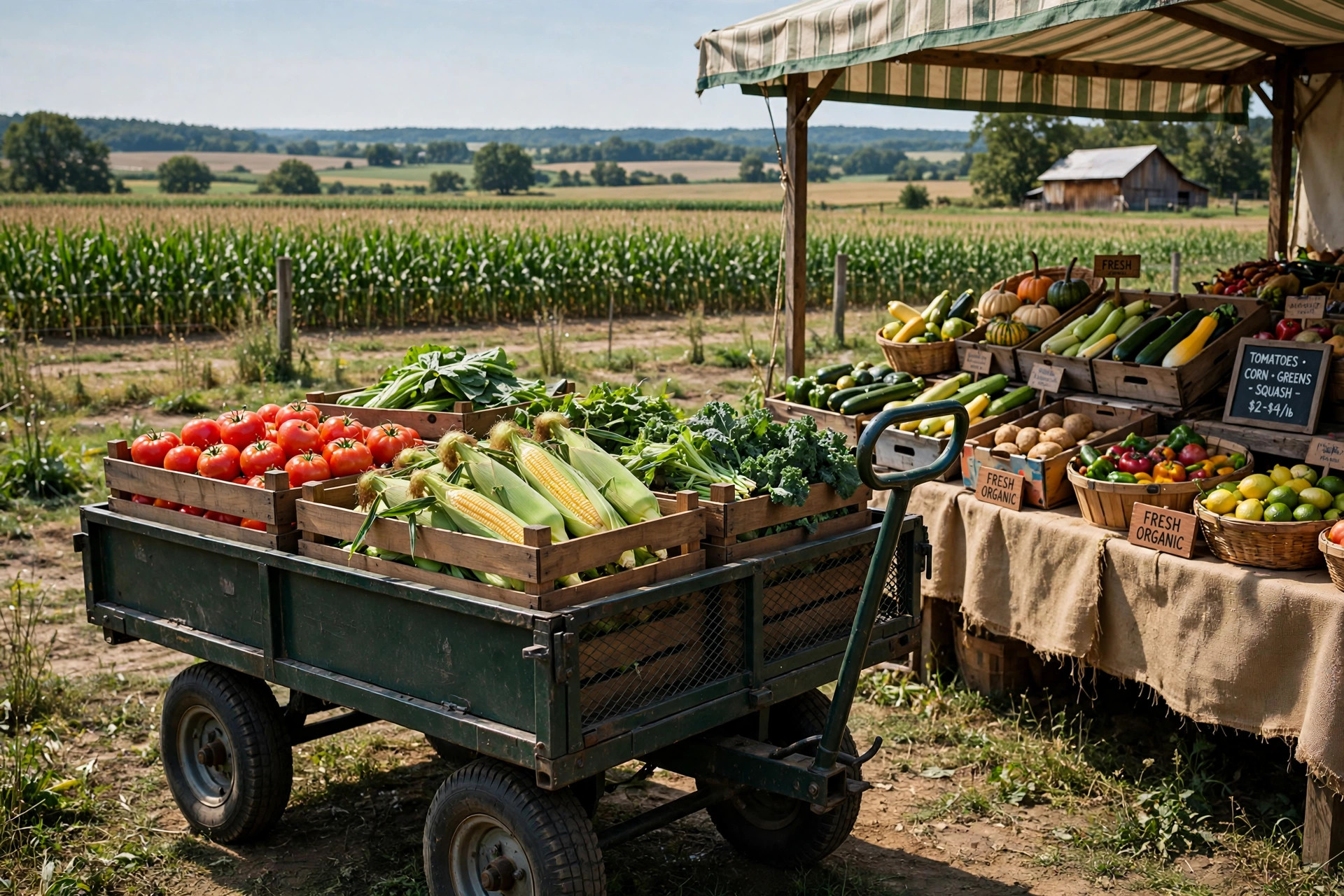
Every Saturday morning, vendors set up tables long before the first shoppers arrive. Crates of tomatoes, baskets of corn, and jars of jam must move from the truck to the stall. A good cart makes this work fast and easy. This guide to the best garden cart for farmers market selling will help you choose one with care.
Many growers start out by carrying boxes by hand. That works for a season. Then the back starts to ache and the morning setup takes too long. A strong cart changes the whole day. It lets one person move a full load in two or three trips instead of ten.
This article covers what matters in a market cart. You will learn what to look for, what kinds exist, what they cost, and how to keep them in good shape. You will also find answers to the most common questions from new vendors.
Why a Good Market Cart Matters: Best Garden Cart for Farmers Market
A farmers market is not like a garden. The ground is often gravel or grass. The distance from the parking lot to the stall can be long. Weather may be hot or rainy. A cart built for light yard work will fail fast under this kind of strain.
The best garden cart for farmers market use does three things well. It carries heavy loads without bending. It rolls over rough ground without tipping. And it loads and unloads fast, so setup time stays short.
Time is money at a market. Vendors who set up in twenty minutes sell more than those who take an hour. A cart with flat, open sides lets you slide crates in and out in seconds. A cart with high, fixed walls slows you down.
There is also the matter of your body. Market work means lifting all morning and all afternoon. A well-made cart keeps most of the weight on its wheels, not on your arms. Over a whole season, that saves your shoulders and back.
For a first look at heavy-duty options, see our notes on the best garden cart for heavy loads. The lessons there apply directly to market work.
What to Look for When You Choose
Not all carts suit market life. Here are the features that count most.
Weight Capacity
Check the rated load before anything else. A good market cart should carry at least 300 pounds. Some strong models carry 600 to 1,200 pounds. Fresh produce is heavy. A crate of sweet corn can weigh 50 pounds. Ten crates add up fast.
Buy more capacity than you think you need. You will grow into it as your stall grows.
Bed Size and Shape
A flat bed with removable or drop-down sides works best. It lets you load big, flat crates and tall baskets. A deep tub-style cart holds loose items but makes stacking crates hard.
Most vendors do well with a bed around 4 feet long and 2 feet wide. That size holds two standard market crates side by side.
Wheels and Tires
Wheels decide how the cart moves. Pneumatic tires, the kind you fill with air, roll best over grass, gravel, and dirt. They cushion the load too, which keeps delicate fruit from bruising.
Solid rubber wheels never go flat but ride rough. Small plastic wheels are fine for a paved patio and poor for a market field. Look for tires at least 10 inches wide for soft ground.
Frame and Materials
Steel frames are the strongest. They handle daily abuse for years. Powder-coated steel resists rust. Wooden carts look nice and cost less, but they rot in rain and split under heavy loads.
The bed should be metal mesh or thick plastic. Both wash clean fast after a day with muddy greens.
Handle and Pull Style
A two-wheel cart with a single pull handle is common. For market use, a four-wheel wagon style with a steering handle often works better. It tracks straight, turns easy, and does not tip when you let go.
Some carts fold flat for storage. If your truck bed or garage is tight, folding is worth the extra cost.
Consumer Reports tests carts and wagons for build quality and ease of use, which can help you compare brands before you buy.
Types of Carts for Market Vendors
There are four main types. Each suits a different kind of seller.
Utility Wagons
These are the classic four-wheel wagons with mesh sides. They carry 300 to 500 pounds and fold flat. Produce sellers love them for hauling crates from the truck. They cost little and last well. Many vendors start here.
Dump Carts
Dump carts have a tub that tilts to empty. They are great for loose loads like mulch, soil, or unsorted produce. For packed crates, the deep tub is less handy. The Home Depot and Lowe’s stores carry a wide range of these models if you want to see one in person.
Platform Carts
A platform cart is a flat deck on four wheels, like a small flatbed. You stack crates as high as you like and strap them down. Setup is fast. They work best on pavement or packed ground, where the small wheels roll smooth.
Two-Wheel Hand Trucks and Dollies
Hand trucks carry stacked boxes upright. They take up almost no space in a truck. For a vendor with a small stall and short hauls, a good hand truck may be all you need. They struggle on soft ground, though.
Cost and Price
Prices vary by type and build. Expect to pay about 60 to 150 dollars for a solid folding utility wagon. That is the sweet spot for most market vendors. These carts handle weekly use for several seasons.
Dump carts and heavy steel carts run 150 to 400 dollars. They suit vendors who sell every week and haul very heavy loads. Commercial-grade wagons can pass 500 dollars, but few small sellers need that level of build.
Do not judge by price alone. A cheap cart with thin wheels will cost more in the long run when it breaks mid-season. A mid-priced cart with pneumatic tires and a steel frame is the best value for most sellers.
Watch for seasonal sales. Garden tools often drop in price in late summer and fall, which is perfect timing if your market season ends in autumn. Bob Vila‘s buying guides often round up the best seasonal deals on carts and wagons.
Keep your receipt and register the warranty if one comes with the cart. Good makers stand behind their frames for a year or more.
Care and Upkeep
A market cart works hard. A little care keeps it working for years.
Wash the bed after each market day. Rinse off mud, leaf bits, and juice from crushed fruit. These hold moisture and cause rust. A quick hose-down takes five minutes. For tips on choosing a hose that reaches across a big yard, see our guide to the best garden hose for large yards.
Check tire pressure before you load up. Low tires make pulling hard and can damage the rims. Keep a small pump in your market kit.
Oil the wheel bearings once a season. A few drops of light oil on each axle keeps the wheels turning free. Tighten any loose bolts. Vibration from rough ground shakes hardware loose over time.
Store the cart dry. If it folds, fold it and lean it against a wall under cover. If it stays outside, throw a tarp over it. Sun and rain age plastic handles and fade paint.
Fiskars and Corona both publish simple care guides for wheeled garden tools, and their advice applies to market carts as well.
Safety at the Market
A loaded cart can weigh as much as a grown man. Treat it with respect.
Never overload past the rated capacity. An overloaded cart is hard to steer and can tip on a slope. It can also bend the frame, which is costly to fix.
Watch the ground. Wet grass, loose gravel, and ruts can grab a wheel and tip the load. Walk the path from your truck to your stall before you start hauling. Move slow on slopes.
Keep children clear of moving carts. A cart rolling down a slight grade picks up speed fast. Set the brake or wedge a wheel with a block when you park on a hill.
Load heavy crates low and centered. Put light items like tablecloths and signs on top. A low center of gravity keeps the cart steady.
Lift with your legs, not your back, when you raise crates onto the bed. Even with a cart, market day is hard work. Take breaks and drink water.
Frequently Asked Questions
What size cart do I need for a small produce stall?
A wagon with a 4-by-2-foot bed and a 300-pound rating suits most small stalls. It moves a full market load in two or three trips. If you sell only flowers or herbs, which are light, you can go smaller.
Are folding carts strong enough for weekly market use?
Yes, if you buy a good one. Look for a steel frame, a 300-pound or higher rating, and real reviews from other vendors. Cheap folding carts with plastic joints break fast. Gardener’s Supply Company sells folding wagons built for this kind of weekly work.
Should I get pneumatic tires or solid tires?
Pneumatic tires ride smoother over grass and gravel and protect soft fruit from bruising. Solid tires never go flat. For most outdoor markets, pneumatic tires are the better pick. Carry a small patch kit just in case.
Can I use a garden cart to display produce at my stall?
Some vendors do use a low cart as a display stand, and it can look charming. Check your market’s rules first. Many markets require tables of a set height for food safety. A cart works best as a hauler, with tables for display.
How do I keep produce from bruising on the ride?
Pack crates tight so they cannot slide. Put a folded blanket or burlap sacks on the bed for padding. Drive slow over rough spots. The Spruce has helpful packing tips for market vendors that pair well with a good cart.
Is a cart worth it for a first-year vendor?
Yes. Even a basic wagon pays for itself in saved time and saved backs. New vendors often share a cart with a neighbor stall until they know their needs. After one season, you will know exactly what size and style you want.
A Short Final Word
Choosing the best garden cart for farmers market work is not hard once you know what counts. Pick a steel frame, a 300-pound rating or better, pneumatic tires, and a flat bed with low sides. Wash it, oil it, and store it dry, and it will serve you for many seasons.
Start simple if you are new. A good folding wagon handles most stalls at a fair price. As your business grows, you can step up to a heavier cart. The right cart will not make the early mornings easy, but it will make them shorter. And at a farmers market, shorter mornings mean more time selling.
For comfort during long setup days, many vendors also keep a sturdy seat nearby. Our review of the best garden kneeler with handles reviews covers options that double as a low seat between rushes. Burpee‘s gardening resources and the Family Handyman project guides offer more ideas for building an efficient market setup around your cart.
References
Bob Vila. (n.d.). Home improvement advice. https://www.bobvila.com Burpee. (n.d.). Seeds, plants, and gardening supplies. https://www.burpee.com Consumer Reports. (n.d.). Product reviews and ratings. https://www.consumerreports.org Family Handyman. (n.d.). DIY home repair and maintenance. https://www.familyhandyman.com Fiskars. (n.d.). Garden and cutting tools. https://www.fiskars.com Gardener’s Supply Company. (n.d.). Gardening tools and supplies. https://www.gardeners.com The Home Depot. (n.d.). Home improvement products. https://www.homedepot.com The Spruce. (n.d.). Home and garden advice. https://www.thespruce.com
Was this guide helpful?

About David Wilson
The My Garden US editorial team writes practical, in-depth home and garden guides for American homeowners — tested advice, no fluff.