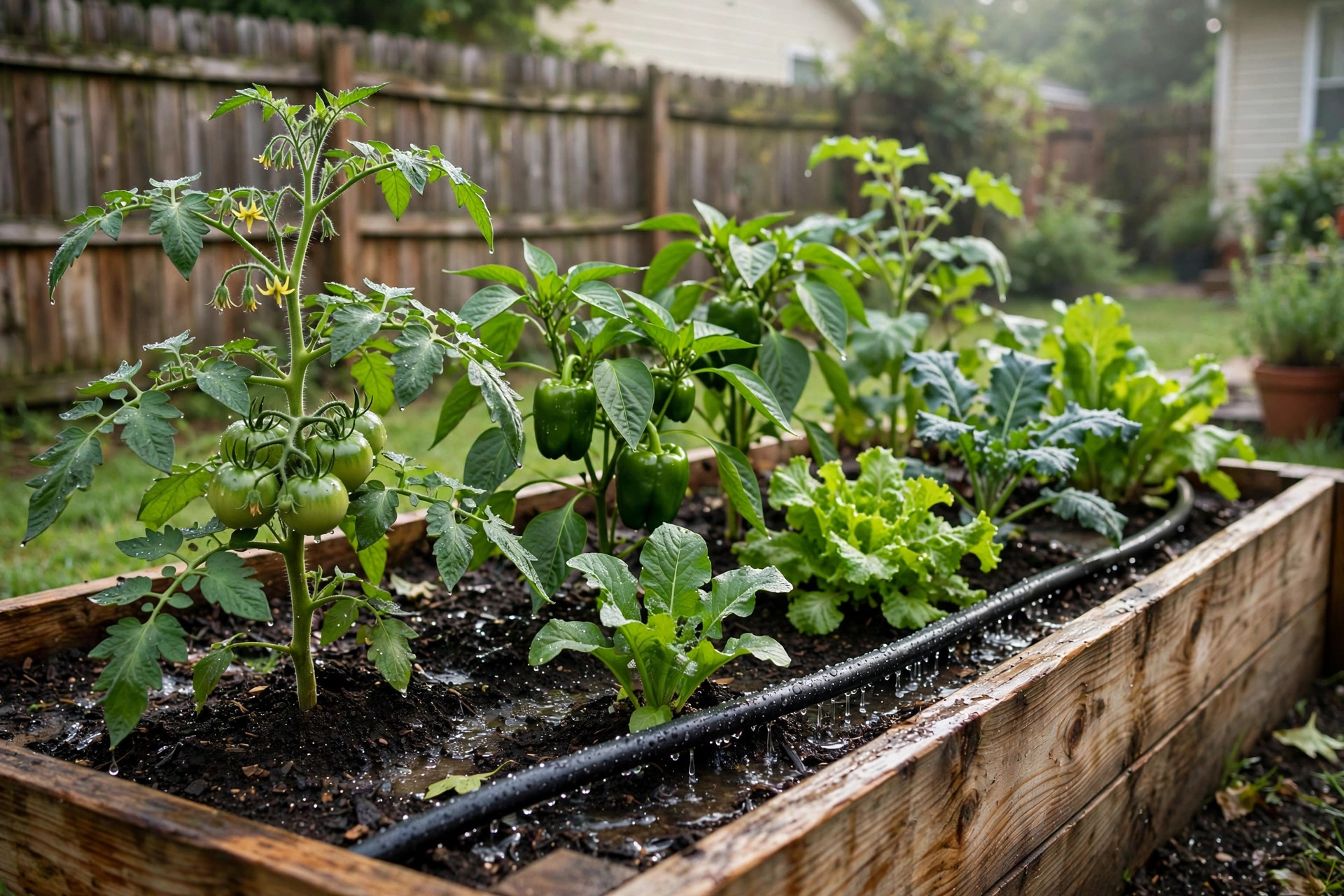

A raised bed watering schedule for vegetables is one of the simplest plans a gardener can make. Raised beds warm up fast in spring. They drain well. Plants grow strong roots in the loose soil. But the same loose soil dries out faster than ground soil. A tomato plant in a raised bed may need water every day in July. Without a plan, beds get too little water or too much. Both harm the crop.
This guide gives you a plain schedule you can follow. It covers how often to water, how much to give, and which tools make the job easy. It also covers cost, care, and safety.
Why Your Raised Beds Need a Watering Schedule
Raised beds are not the same as garden rows in the ground. The soil sits above grade. Air moves around the sides of the bed. Sun hits the bed walls. Water leaves the soil through drainage and through plant leaves. On a hot day, the top two inches of a raised bed can dry out by noon.
Vegetables are thirsty plants. They are mostly water. A cucumber is over 90 percent water. If the soil dries out at the wrong time, the plant slows down. Tomatoes crack. Lettuce turns bitter. Peppers drop their blossoms. A steady schedule keeps the soil moist at root depth, where it counts.
A schedule also saves water. When you water by habit, you learn how much each bed needs. You stop guessing. Many gardeners who follow a set plan use less water than those who water when they remember. Tools from Gardener’s Supply, such as soaker hoses and timers, make a plan easy to keep.
How Often to Water Your Raised Vegetable Beds: Raised Bed Watering Schedule for Vegetables
The honest answer is this: check the soil, not the clock. But most gardeners want a starting point. Here is a simple baseline for a typical raised bed that is 6 to 12 inches deep, filled with good soil.
Spring (planting time): Water new transplants every day for the first week. Give seeds light water once or twice a day until they sprout. The goal is damp soil in the top inch.
Summer (steady growth): Water deeply every one to three days. In heat above 85 degrees, water daily. In mild weather, every two or three days is enough.
Fall (harvest time): Water every two to four days. Plants slow down. Days are shorter. The soil holds moisture longer.
Push your finger two inches into the soil. If it feels dry at that depth, water. If it feels damp, wait a day. After a few weeks of this check, you will know your beds by feel. Gardeners who use a soil thermometer and moisture guide from a trusted source like Fiskars (fiskars.com) often find the readings back up what their fingers tell them.
Watering by Season
Spring beds need gentle care. Young roots sit near the surface. Short, light watering works best. A watering can or a fine spray setting on a hose nozzle gives seeds the soft rain they need without washing them away.
Summer is the hard season. Long days and strong sun pull water fast. Water early in the morning. Morning watering lets leaves dry before night. Wet leaves at night invite disease. Give the soil a deep soak so water reaches six to eight inches down. Shallow daily sprinkles grow shallow roots. Deep, spaced watering grows deep roots.
Fall is the easy season. Cut back. Overwatering in fall leads to soft, weak growth and rot. Keep an eye on rain. If your area gets an inch of rain in a week, you may skip watering entirely. Advice on seasonal timing from The Spruce and Bob Vila follows this same pattern: more water in heat, less in cool weather.
Watering by Vegetable Type
Not all vegetables drink the same amount. Group plants with like needs in the same bed when you can. Here are plain rules for the common crops.
Leafy Greens
Lettuce, spinach, kale, and chard have shallow roots. They dry out fast. Water them lightly every day in summer. Keep the top few inches moist at all times. They repay you with crisp, sweet leaves.
Fruiting Vegetables
Tomatoes, peppers, cucumbers, and squash need deep, steady water. Uneven watering causes tomato blossom end rot and cracked fruit. Water these beds deeply two to three times a week. Mulch the soil surface with straw to hold moisture. A drip irrigation kit for raised beds feeds water right to the roots and keeps leaves dry.
Root Vegetables
Carrots, beets, and radishes need even moisture while seeds sprout and roots form. Once roots size up, they need less. Water every two to three days in summer. Too much water late in the season makes roots split.
New Seedlings and Transplants
Everything new needs extra water. Seeds must stay damp until they sprout. Transplants need daily water until new roots take hold, usually seven to ten days. After that, move them to the normal schedule for their type.
Tools That Make a Schedule Easy to Keep
A good schedule is only as good as the tools behind it. Here are the tools most raised bed gardeners use.
Soaker hoses. These flat or round hoses weep water along their length. Lay one down the middle of the bed. Water goes straight into the soil with almost no waste. Our guide on how to use a soaker hose effectively shows simple layouts for common bed sizes. Home improvement retailers such as The Home Depot and Lowe’s stock soaker hoses in several lengths.
Drip irrigation kits. Drip lines with emitters give each plant its own water source. Kits made for raised beds come with tubing, emitters, and a timer hookup. They cost more than soaker hoses but water more evenly. Family Handyman offers step-by-step installation guides that a beginner can follow in an afternoon.
Timers. A hose timer turns water on and off by itself. Set it for early morning. The schedule runs even when you are away. Mechanical timers are cheap and simple. Digital timers allow different days and run times.
Watering cans and hose nozzles. For small beds and seedlings, nothing beats a can with a rose head. A hose nozzle with several spray settings handles everything from a fine mist for seeds to a strong stream for cleaning tools. Corona Tools and other garden brands make sturdy nozzles that last for years.
Rain barrels. A barrel under a downspout catches free rainwater. Use it for hand watering between scheduled soakings. Our review of the best rain barrel for garden watering covers size, spigots, and overflow safety.
Soil choice matters too. A bed filled with the best soil for raised vegetable beds or a home-mixed raised garden bed soil mix recipe holds water better than plain topsoil. Mix compost into the bed each spring. Compost acts like a sponge.
Seed and plant advice from Burpee often notes that consistent moisture matters more than the exact amount. Most vegetables do well when the soil stays evenly damp, never soggy and never bone dry.
Cost and Price of Watering Tools
You can run a full schedule on a small budget. Here are typical price ranges in the United States.
– Watering can: 15 to 40 dollars. – Hose nozzle with settings: 10 to 30 dollars. – Soaker hose, 50 feet: 15 to 35 dollars. – Drip irrigation kit for raised beds: 30 to 100 dollars, based on bed count. – Hose timer, mechanical: 20 to 40 dollars; digital: 35 to 80 dollars. – Rain barrel, 50 gallons: 80 to 150 dollars.
Start simple. A soaker hose and a mechanical timer cost less than 60 dollars together. They handle most beds well. Add a drip kit later if you expand. Check Consumer Reports ratings before buying a timer or kit, since quality varies by brand and model.
Care and Upkeep of Your Watering System
Tools last longer with a little care. Flush soaker hoses and drip lines in spring to clear winter sediment. Check emitters each month in summer. Hard water leaves mineral crust that blocks small openings. Soak clogged emitters in vinegar for an hour, then rinse.
Drain hoses and timers before the first freeze. Water left inside expands as ice and cracks fittings. Store timers indoors for winter. Coil hoses loosely in a shed or garage. These steps take one afternoon in fall and save you from buying replacements each spring.
Keep a simple log. Write the date and how long you watered. Note rain days. After one season, your log becomes a custom schedule for your beds, your soil, and your weather. It is more accurate than any general chart.
Safety Notes for Garden Watering
Water and electricity do not mix. Keep timers, cords, and outlets dry and off the ground. Use outdoor-rated extension cords only.
Do not drink from a garden hose unless it is labeled safe for drinking water. Standard hoses can leach lead and other chemicals, especially when water sits in a hot hose. Let the hose run for a few seconds before filling a watering can for edible crops.
Check local rules before a big watering project. Some towns limit outdoor watering in dry months. A rain barrel helps you follow these rules, since stored rainwater often falls outside the limits. When in doubt, water in the early morning and follow the posted schedule.
Lift with care. A full five-gallon watering can weighs over 40 pounds. Fill cans halfway for heavy beds, or use a hose. Bend at the knees, not the back.
FAQ
How much water does a raised bed need per week? Most vegetable beds need about one to two inches of water per week from rain and watering combined. In hot, dry weather, plan on the higher end. A rain gauge in the bed tells you exactly what fell.
Is it better to water in the morning or evening? Morning is best. Water between 5 and 9 a.m. Leaves dry quickly as the day warms. Evening watering leaves plants wet all night, which invites mildew and blight.
Can I overwater a raised bed? Yes. Raised beds drain well, but soggy soil still harms roots. Roots need air as well as water. If water pools on the surface or the soil smells sour, cut back. Mulch and compost improve drainage over time.
Should I water the leaves or the soil? Water the soil. Wet leaves spread disease in tomatoes, cucumbers, and squash. Soaker hoses and drip lines keep water at the base of the plant, where roots can use it.
How do I water when I go on vacation? Set a hose timer before you leave. A timer paired with a soaker hose or drip kit waters on schedule with no help needed. Test the setup for three days before the trip to make sure it runs as planned.
Do mulched beds need less water? Yes. A two to three inch layer of straw or shredded leaves cuts water loss from the soil surface. Mulched beds in summer often need watering one day less per week than bare beds.
A Final Word
A raised bed watering schedule for vegetables does not need to be complex. Water deeply in the morning. Check the soil with your finger. Adjust for heat, rain, and plant type. Add a soaker hose and a timer when you are ready, and keep a short log through one season.
Do this, and your beds will reward you. Tomatoes will size up without cracks. Greens will stay sweet. Roots will grow straight and clean. The schedule is simple. The harvest is the proof.
References
Bob Vila. (n.d.). Home improvement advice. https://www.bobvila.com Burpee. (n.d.). Seeds, plants, and gardening supplies. https://www.burpee.com Consumer Reports. (n.d.). Product reviews and ratings. https://www.consumerreports.org Corona Tools. (n.d.). Garden and landscape tools. https://www.corona-tools.com Family Handyman. (n.d.). DIY home repair and maintenance. https://www.familyhandyman.com Fiskars. (n.d.). Garden and cutting tools. https://www.fiskars.com Gardener’s Supply Company. (n.d.). Gardening tools and supplies. https://www.gardeners.com Lowe’s. (n.d.). Home improvement products. https://www.lowes.com The Home Depot. (n.d.). Home improvement products. https://www.homedepot.com The Spruce. (n.d.). Home and garden advice. https://www.thespruce.com
Was this guide helpful?

About Michael Thompson
The My Garden US editorial team writes practical, in-depth home and garden guides for American homeowners — tested advice, no fluff.
You May Also Like
Seed Packet Organizer for Gardeners: A Simple Way to Keep Every Packet in Order
May 26, 2026 0 views
Best Garden Kneeler with Tool Pouch: A Practical Guide
May 6, 2026 0 views
The Best Garden Wagon for Hauling Soil: What to Buy and Why
August 29, 2026 0 views