
Finding modern wall bookshelves usa online deals is easier now than it was ten years ago. A bookcase used to mean a heavy piece of wood furniture that sat on the floor. Today many homeowners prefer shelves that fix to the wall. They save floor space. They look clean and modern. And because so many stores now sell furniture on the web, prices are easier to compare. This guide walks you through the whole subject in plain language: why wall shelves matter, what to look for, the main types, fair prices, care, safety, and answers to common questions. By the end you will know how to spot a real deal and how to avoid a poor purchase.
Why Wall Bookshelves Matter in a Modern Home
Floor space is valuable in most American homes. Apartments, condos, and small houses all have rooms where every square foot counts. A wall bookshelf rises off the floor and uses space that would otherwise stand empty. It gives you storage without crowding the room. A reading corner with a chair and a couch throw pillows arrangement, for example, feels open when the books sit on the wall instead of in a bulky case.
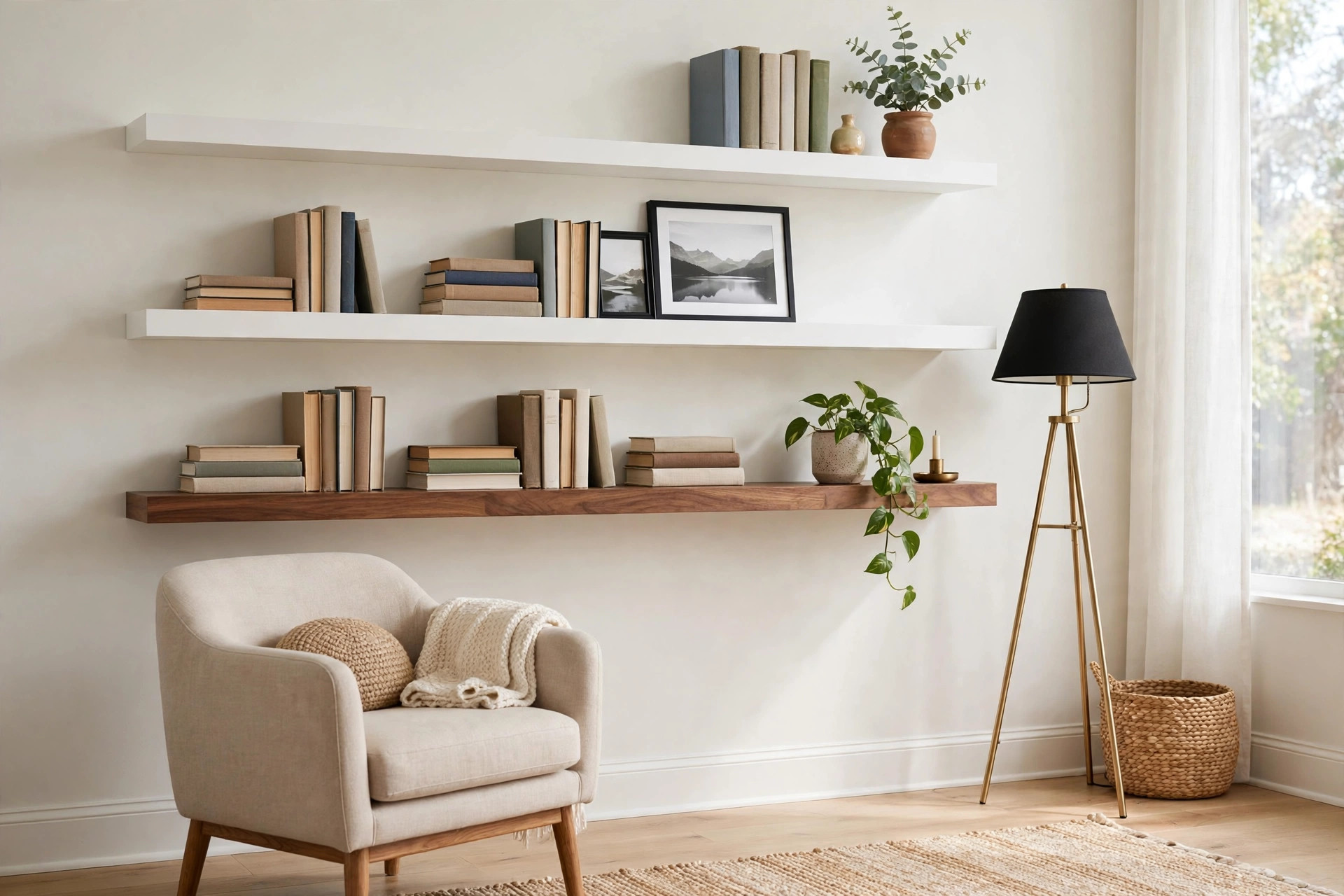
Modern design also favors clean lines. A slab of walnut-stained wood or a row of white floating shelves fits that look. The shelf itself almost disappears, and the books become part of the wall art. Many buyers use wall shelves to display more than books. They add small plants, framed photos, and travel souvenirs. The result is a room that feels personal without feeling cluttered.
Online shopping has changed the buying process as well. Home furnishing sites now carry hundreds of wall shelf models. You can filter by length, depth, color, and price. Customer reviews tell you which shelves sag after a year and which hold up. Sales events run through the year, so a little patience often brings a real price drop. Sites like Wayfair and IKEA both run regular promotions on wall storage, and price comparison across stores takes only a few minutes.
What to Look For When You Shop: Modern Wall Bookshelves Usa Online Deals
Before you click “buy,” study the details. The best deals are not always the cheapest shelves. A shelf that fails in six months is no deal at all.
Weight Capacity
Check the stated weight limit. Books are heavy. A single shelf of paperback novels can weigh 30 pounds or more. Look for a rating of at least 20 to 25 pounds per shelf, and more for shelves longer than 36 inches. If the store page does not list a weight limit, treat that as a warning sign. Trusted home sites such as The Spruce publish guides on how to judge shelf strength before you buy.
Mounting Hardware
Good wall shelves include solid brackets, screws, and wall anchors. The hardware should match the shelf length. Long shelves need at least three mounting points, not two. Hidden bracket systems look sleek, but they must be made of steel, not thin plastic. Read reviews and look for comments about mounting. If many buyers say the wall anchors stripped or snapped, move on.
Material Quality
Most modern wall bookshelves are made from engineered wood, solid wood, or metal with wood boards. Engineered wood, such as medium-density fiberboard, keeps prices low and works fine for light loads. Solid wood or thick plywood holds heavy books better and lasts longer. Steel brackets add strength to any shelf. Stores like Article and CB2 list the core materials on each product page, which helps you compare like with like.
Depth and Length
Standard books need a shelf depth of 8 to 10 inches. Paperbacks fit on 7 inches. Art books and binders need 10 to 12 inches. Measure the largest books you plan to store, then add an inch of margin. For length, two 24-inch shelves often work better than one 48-inch shelf. Shorter spans sag less under load.
Finish and Color
Modern finishes lean toward matte white, black, natural oak, and walnut. A matte finish hides fingerprints and dust better than gloss. If your walls are light, a white shelf blends in. If you want contrast, dark walnut on a pale wall makes a strong statement. Home design magazines like HGTV show many examples of shelf colors paired with wall paint, which can help you picture the result in your own room.
Types of Modern Wall Bookshelves
The market offers several distinct styles. Each suits a different room and a different need.
Floating Shelves
Floating shelves hide their brackets inside the shelf. They look as if they grow out of the wall. They suit small collections: a row of novels, a few plants, some framed prints. Because the support is hidden, quality matters. Buy from makers that state a real weight limit. They pair well with a reading nook that also holds a small table, and some shoppers combine them with sofa console tables behind a couch for a matching look.
Wall-Mounted Bookcases
These are full bookcases, with sides, a back, and several shelves, but they hang on the wall instead of standing on the floor. They hold far more books than floating shelves. They work well in home offices and living rooms. Because they carry a heavy load, they must be fixed into wall studs with strong screws. Never hang a loaded bookcase on drywall anchors alone.
Ladder and Leaning Shelves
Leaning shelves rest against the wall at a slight angle and fasten at the top. They need little drilling, which makes them friendly for renters. They hold a medium load and look relaxed and casual. The bottom shelf is deepest, the top shelf shallowest. They suit living rooms and bedrooms where you want storage without a built-in feel.
Cube and Grid Units
Cube shelves divide into square or rectangular compartments. Each cube holds a stack of books or a storage box. They work on the wall or on the floor. On the wall they need strong fixing because a grid of cubes gets heavy fast. They suit children’s rooms and playrooms, where each cube can hold toys on one shelf and books on another. Design sites such as Apartment Therapy often show cube units used as room dividers and wall features.
Corner Shelves
Corner shelves fit into the angle where two walls meet. They turn dead space into storage. They hold a modest number of books and suit small bedrooms and home offices. Measure the corner carefully, since wall angles are not always a perfect 90 degrees.
Kitchen and Specialty Shelves
Some buyers use shallow wall shelves in the kitchen for cookbooks and spice jars. A shelf depth of 6 to 8 inches works for most cookbooks. If you plan a kitchen reading and cooking corner, you may also be shopping for kitchen island stools at the same time, and it pays to match wood tones across the two purchases. Retailers like Crate and Barrel and West Elm carry shelving lines in finishes that match their kitchen furniture.
Cost and Price: What Counts as a Deal
Wall bookshelf prices in the USA span a wide range. A single floating shelf from a budget store may cost 15 to 30 dollars. A set of three floating shelves often runs 40 to 80 dollars. Wall-mounted bookcases start near 80 dollars and can reach 400 dollars for solid wood models from design brands.
A real online deal usually means 20 to 40 percent off the regular price. Larger discounts deserve a second look. If a shelf is marked 70 percent off, check the original price against other stores. Some sellers raise the “regular” price so the discount looks bigger than it is. Compare the same or similar models across two or three stores before you buy.
Shipping matters. A 60-dollar shelf with 25 dollars of shipping is no deal. Many large stores ship furniture free above a set order total. Bundling helps: buying two or three shelves at once can push the order over the free-shipping line. Watch for holiday sales in late November, spring clearance in March and April, and back-to-school sales in August. These windows often bring the lowest prices of the year on home storage.
Also check the return policy. A shelf that looks right on screen may look wrong on your wall. A store with free returns removes the risk. Keep the box until the shelf is mounted and you are happy with it. Review sites like Houzz let you read long-term owner feedback, which helps you judge whether a low price comes with hidden costs.
Care and Upkeep
Wall bookshelves need little care, but a few habits keep them looking new.
Dust the shelves every two to four weeks. A dry microfiber cloth works well. Books collect dust on their top edges, so run the cloth along the row once in a while. For wood shelves, wipe with a slightly damp cloth and dry at once. Never soak engineered wood, since the core can swell.
Check the mounting screws once a year. Houses settle, and screws can work loose over time. Tighten any that feel slack. If a screw spins without biting, replace the anchor. For heavy shelves, pull the books off once a year and confirm the brackets are still firm.
Keep shelves away from direct sun when you can. Sunlight fades wood finish and yellows book pages. If the shelf sits near a window, close the blinds during the brightest hours. Keep plants in saucers so water never drips onto the wood.
Rotate heavy books across the shelf length. Do not stack all the largest books at one end. Even weight keeps the shelf level and reduces sag.
Safety: Mounting Matters More Than Style
A wall bookshelf full of books can weigh as much as a grown adult. Mounting is a safety job, not a style choice.
Find the wall studs first. A stud finder costs little and saves trouble. Screws driven into studs hold far more weight than any drywall anchor. For a shelf that will hold many books, every bracket should hit a stud. If the studs do not line up with the shelf, add a wooden mounting rail fixed to the studs, then hang the shelf from the rail.
Use anchors rated for the load. Standard plastic anchors suit light loads on drywall. Toggle bolts suit heavier loads. Follow the weight rating on the anchor package, and stay below it with margin.
In homes with small children, fasten every shelf and every tall unit to the wall. Children climb. A shelf that tips can cause serious injury. Place the heaviest books on the lowest shelf to keep the center of gravity low. Keep tempting items, like toys, off high shelves so children do not climb to reach them.
In earthquake zones, add extra fixing. L-brackets at the top of a bookcase, screwed into a stud, keep the unit from walking off the wall. The federal safety site CPSC publishes anchoring guidance, though the exact page may move; check their home page search for furniture anchoring tips.
If you rent, ask your landlord before drilling. Many landlords allow small holes that you fill and paint over when you leave. Leaning shelves that need only one or two screws at the top are often the easiest choice for a rental.
FAQ
How much weight can a floating shelf hold?
It depends on the shelf and the wall. A quality floating shelf fixed into studs can hold 20 to 50 pounds. The same shelf on drywall anchors alone may hold only 10 to 15 pounds. Always check the product rating and mount into studs for book loads.
Are wall bookshelves cheaper than standing bookcases?
Often yes. A set of floating shelves costs less than a full bookcase of the same storage length. Wall-mounted bookcases cost about the same as standing ones of similar quality. The savings come mainly from smaller floating shelf sets.
Can I mount shelves on any wall?
No. Solid drywall over studs works well. Plaster walls work but need care when drilling. Concrete and brick walls need masonry anchors and a hammer drill. Thin panel walls in some older mobile homes may not hold screws at all. When in doubt, ask a handyman.
How do I stop shelves from sagging?
Keep spans short, buy thick shelves, and spread heavy books across the full length. A shelf thicker than one inch sags far less than a thin one. For spans over 36 inches, add a center bracket.
When is the best time to buy online?
Late November sales, spring clearance, and August back-to-school events usually bring the lowest prices. Sign up for store newsletters to hear about flash sales. Comparing prices across stores on the same day gives you the truest picture.
Do I need tools to install wall shelves?
Yes, at minimum a drill, a level, a tape measure, and a stud finder. A pencil marks the holes. Most shelves include the screws and anchors, but check the box list before you start so you are not missing a part.
A Final Word
Modern wall bookshelves are a simple upgrade with a large payoff. They free floor space, suit the clean lines of modern rooms, and cost less than most people expect. The key steps are simple: measure your books, pick a shelf with a real weight rating, buy from a store with fair shipping and returns, and mount into studs. Do that, and your shelves will look good and hold firm for years. Watch the seasonal sales, compare two or three stores, and you will likely find modern wall bookshelves usa online deals that are genuine bargains rather than marketing tricks.
References
Apartment Therapy. (n.d.). Home design ideas and inspiration. https://www.apartmenttherapy.com Article. (n.d.). Modern furniture. https://www.article.com CB2. (n.d.). Modern furniture and decor. https://www.cb2.com Crate and Barrel. (n.d.). Furniture and home decor. https://www.crateandbarrel.com HGTV. (n.d.). Home and garden ideas. https://www.hgtv.com Houzz. (n.d.). Home design and remodeling. https://www.houzz.com IKEA. (n.d.). Home furnishings. https://www.ikea.com The Spruce. (n.d.). Home and garden advice. https://www.thespruce.com U.S. Consumer Product Safety Commission. (n.d.). Product safety information. https://www.cpsc.gov Wayfair. (n.d.). Furniture and home goods. https://www.wayfair.com West Elm. (n.d.). Modern furniture and home decor. https://www.westelm.com
Was this guide helpful?

About Jennifer Lee
The My Garden US editorial team writes practical, in-depth home and garden guides for American homeowners — tested advice, no fluff.
You May Also Like

Sofa Console Tables in California Homes: A Plain Guide to Choice and Care
January 16, 2026 0 views
Velvet Living Sofas: A Practical Guide for American Homes
July 6, 2026 0 views
Living Room Wall Art for Sale USA: A Complete Buyer’s Guide
October 2, 2026 1 views