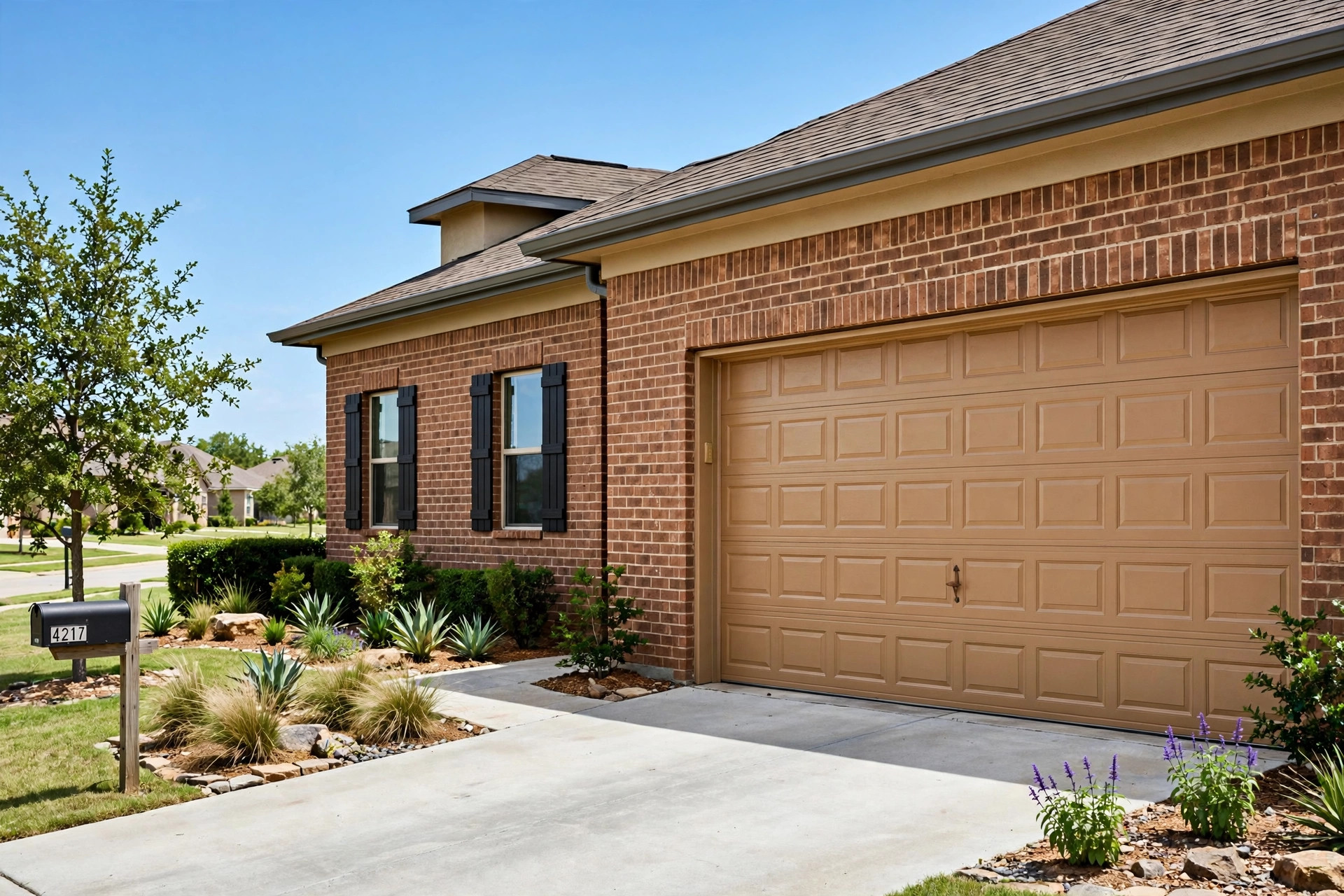

A garage door is the largest moving part on most Texas houses. It can be hot to the touch by noon in July. The top rated insulated garage doors for Texas homes are built to handle that heat, keep the garage cooler, and cut down on noise. They also protect against storms along the Gulf Coast and hail across the Hill Country.
Many Texas homeowners now treat the garage as extra living space. It holds a home gym, a workshop, or a laundry room. A plain steel door turns that space into an oven. An insulated door changes the picture. This guide explains what to look for, how much to pay, and how to keep your door in good shape.
Why Insulated Garage Doors Matter in Texas
Texas heat is long and strong. In many towns, daytime highs stay above 90 degrees for months. An uninsulated garage door lets that heat pour into the garage. If a bedroom sits above the garage, the heat moves up too.
Insulation slows this transfer. A good insulated door can keep a garage 10 to 20 degrees cooler than a bare steel door on a hot day. That makes the space more usable and can trim cooling bills. Homeowners who are also planning other exterior upgrades may look at buying guide for energy efficient sliding patio doors for the same reason: the exterior shell of the house matters most in a hot climate.
Noise is another benefit. Insulated doors are heavier and denser. They rattle less in wind and close with a solid sound. If you live near a busy road, you will notice the difference.
Storms are a third reason. Texas sees hurricanes on the coast and strong storms inland. Wind-rated insulated doors stand up better than thin non-insulated doors. In storm zones, the right door can be a safety feature, not just a comfort feature.
What to Look For When You Shop: Top Rated Insulated Garage Doors for Texas Homes
Start with the basics. A good door fits your opening, matches your home, and carries a solid warranty. Beyond that, three things matter most in Texas.
R-Value
R-value measures how well the door resists heat flow. Higher is better. For Texas, look for doors rated R-8 to R-16. Doors with R-16 or higher work best for garages that are used as living or work space.
Be careful about how makers report R-value. Some use polystyrene panels. Others use polyurethane foam. Polyurethane usually gives a higher R-value in a thinner door. Compare the test method when you can. Home design guides explain these ratings in plain terms.
Door Construction
Most insulated doors have a steel sandwich: an outer steel skin, an insulation layer, and an inner steel skin. Three-layer doors are the quietest and strongest. Two-layer doors have insulation glued to the back of a single steel skin. They cost less but dent more easily.
Steel gauge matters. Thicker steel resists dings from basketballs and hail. Look for 24 or 25 gauge steel on quality doors. Some makers also offer aluminum doors with insulation for a modern look.
Wind Rating
The Texas Gulf Coast falls under strict wind codes. Doors there often need a wind load rating and may require a permit. Ask your dealer whether the door meets local wind codes. Inland Texas towns also face strong thunderstorm winds, so a wind-rated door is a smart pick almost anywhere in the state. Home improvement advice covers wind ratings and local code questions in useful detail.
Types of Insulated Garage Doors
You have several styles to choose from. All of them can be insulated.
Sectional steel doors. These are the most common. They roll up in panels on tracks. Raised panel, recessed panel, and long panel designs are all available with insulation. They fit most homes and budgets.
Carriage house doors. These look like old barn doors with crossbucks and decorative handles. They open like sectional doors but carry a traditional look. They are popular on Texas ranch and farmhouse style homes.
Modern aluminum and glass doors. These use aluminum frames with glass or insulated panels. They suit new builds with clean lines. In Texas heat, choose glass with a low heat gain rating so the door does not turn into a solar oven.
Wood and wood-look composite doors. Real wood is beautiful but heavy and needs regular upkeep in Texas sun. Wood-look composite doors give the same charm with less care. Many are built with insulated cores.
Overlay and custom doors. These add decorative boards over an insulated base. They suit craftsman and colonial homes.
Think about how the door fits the front of your house. A door that matches the style of your home adds to its curb appeal. Many dealers offer online design tools that let you upload a photo of your home and try different door styles on it. This is a simple way to see the result before you spend any money.
Also think about light. Garage door windows can brighten a dark garage. In Texas, small windows near the top of the door add light without adding much heat. Frosted or tinted glass keeps the inside private while still letting light in.
When you compare styles, visit home improvement retailers or home improvement stores in person if you can. Seeing the door finish and feeling the weight of the panel helps more than pictures.
Cost and Price
Prices for top rated insulated garage doors for Texas homes vary by size, style, and insulation level.
A standard single-car insulated door often runs from about 900 to 1,800 dollars installed. A double-car door often runs from 1,600 to 3,500 dollars installed. Carriage house and custom designs can run higher.
Installation cost matters. A professional installer makes sure the door balances right and the opener works well. Poor installation causes most door problems. Get quotes from two or three local dealers before you decide.
Watch for add-ons. Windows, decorative hardware, and high-cycle springs add to the price. Battery backup for the opener is worth the extra money in areas with frequent power outages. A quiet belt-drive opener is another popular upgrade, since a chain-drive unit can sound harsh in a quiet neighborhood at night.
Think about value over time. A well-insulated door can lower cooling costs for rooms near the garage. It also improves curb appeal, which matters when you sell. Many Texas buyers notice the garage door right away because it faces the street.
Care and Upkeep
Insulated doors need little care, but they still need some. Plan for two quick checks a year.
Wash the door once or twice a year with mild soap and water. Texas dust and pollen build up fast. Do not use harsh chemicals on the finish. For paint touch-ups, follow the maker’s color guide.
Lubricate the moving parts once a year. Use a silicone-based spray on hinges, rollers, and springs. Avoid grease, which collects grit. Check the weather seal at the bottom of the door. Replace it when it cracks or flattens. A good seal keeps heat and dust out.
Test the balance every year. Disconnect the opener and lift the door halfway. It should stay in place. If it falls or shoots up, the springs need adjustment. Call a professional for spring work. Springs are under high tension and can cause serious injury.
Check the safety sensors once a year. Wave a broom under the door while it closes. It should reverse. If it does not, clean or realign the sensors. DIY home repair guides walk through these basic checks step by step.
If you plan other door projects around the house, a storm door installation follows many of the same steps: measure twice, seal well, and check the fit.
Safety
Garage doors are heavy. Safety rules are simple but important.
Keep fingers and hands away from the moving panels and the track. Never let children play with the remote or the wall button. Keep remotes out of their reach.
Test the auto-reverse feature every month. Put a roll of paper towels on the ground under the door. When the door touches it, the door should reverse. If it does not, call for service at once.
Never try to adjust or replace torsion springs yourself. The tension can cause severe harm. Hire a trained technician.
If you lose power, know how to use the manual release cord. It is usually red and hangs from the opener trolley. Pull it to disconnect the opener, then lift the door by hand. These steps are covered well in home renovation guides.
Choose an opener with a battery backup if your area loses power often. Modern openers also have rolling codes that make it harder for thieves to copy your remote signal.
One more safety note for Texas families: children play in driveways and near garage doors. Set the opener force and the reverse sensitivity with care so the door reacts to even a small object. Teach older kids to stand clear of a moving door and to never race under it while it closes.
Frequently Asked Questions
Do insulated garage doors really help in Texas heat?
Yes. Insulation slows heat moving into the garage. A high R-value door can keep the garage much cooler than a bare steel door. The gain is biggest when the garage connects to living space or holds heat-sensitive items.
What R-value should I get for a Texas home?
Aim for R-8 to R-16 for most Texas homes. Choose R-12 to R-16 if the garage is finished or used as a workshop, gym, or laundry room. Higher R-value doors cost more but pay back in comfort.
Are insulated garage doors quieter?
Yes. The insulation adds mass and stiffness to the door. It dampens rattles from wind and thumps from opening and closing. Three-layer steel doors are the quietest of the common types.
How long does an insulated garage door last?
A quality steel door lasts 20 to 30 years with basic care. Springs and rollers wear out sooner and need replacement every 7 to 12 years depending on use. Salt air near the coast can shorten door life, so rinse the door more often there.
Can I add insulation to my existing garage door?
Insulation kits exist for some doors, but results vary. A factory-insulated door is built to balance the extra weight. An old door with added panels may strain the opener and springs. In most cases, replacing the door gives a better result.
Should I buy a wind-rated door if I do not live on the coast?
It is still a good idea. Inland Texas storms bring strong winds and hail. A wind-rated door costs a bit more but adds protection. It can also help with insurance in some areas. Exterior product guides and siding and exterior resources discuss how exterior products handle severe weather.
A Final Word
The top rated insulated garage doors for Texas homes do three jobs at once. They fight the heat, quiet the street, and stand up to storms. Start with R-value and construction, then pick a style that suits your house. Get a professional installation and keep up with simple care. Done right, a new door will serve your home for decades.
If you are comparing other exterior projects at the same time, guides on sliding patio doors for apartments use the same shopping steps: set your budget, compare ratings, and check the warranty. For garage door brands and styles, garage door makers and residential door companies publish useful product catalogs.
References
Amarr. (n.d.). Garage doors. https://www.amarr.com Bob Vila. (n.d.). Home improvement advice. https://www.bobvila.com CertainTeed. (n.d.). Building materials and exterior products. https://www.certainteed.com Clopay. (n.d.). Garage doors. https://www.clopaydoor.com Family Handyman. (n.d.). DIY home repair and maintenance. https://www.familyhandyman.com James Hardie. (n.d.). Fiber cement siding and exterior products. https://www.jameshardie.com Lowe’s. (n.d.). Home improvement products. https://www.lowes.com The Home Depot. (n.d.). Home improvement products. https://www.homedepot.com The Spruce. (n.d.). Home and garden advice. https://www.thespruce.com This Old House. (n.d.). Home renovation guidance. https://www.thisoldhouse.com
Was this guide helpful?

About James Carter
The My Garden US editorial team writes practical, in-depth home and garden guides for American homeowners — tested advice, no fluff.
You May Also Like

The Best Metal Roofing Installation for Homeowners: A Plain-Speaking Guide
April 18, 2026 0 views
Durable Asphalt Shingle Roofing Buying Guide
January 13, 2026 0 views
Top Rated Double Hung Windows for Florida Homes
July 19, 2026 0 views