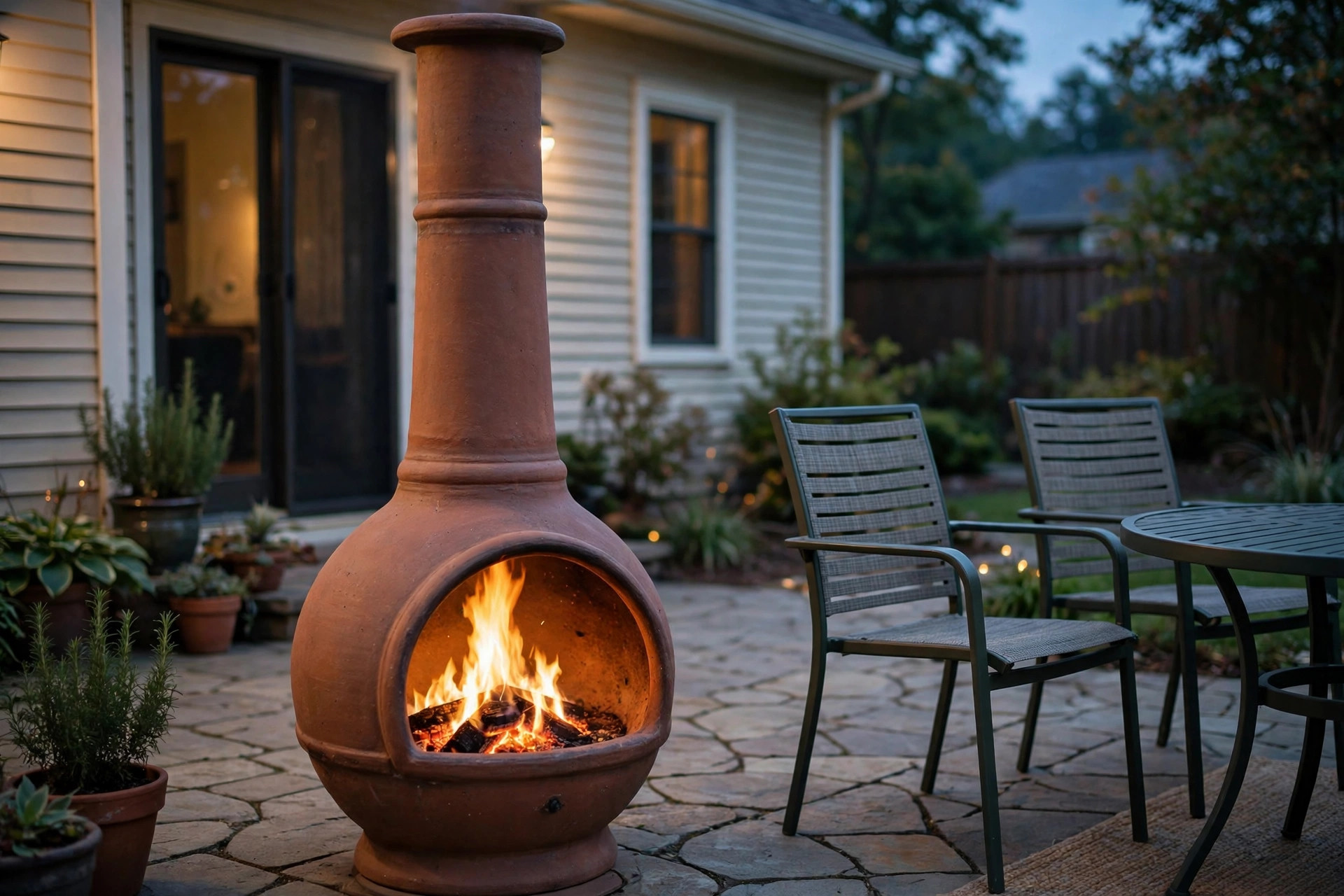

A warm fire on the patio can turn a plain evening into a fine one. But many buyers do not want a wood fire with smoke, sparks, and ash. That is where ventless chimineas for patios for sale come in. These units give the look of a classic chiminea without the heavy smoke of burning wood. They use clean fuels such as gel, bio-ethanol, or propane. This guide explains what they are, how to choose one, what they cost, and how to keep them safe.
Why a Ventless Chiminea Matters
A chiminea is a round outdoor fireplace with a wide belly and a tall neck. The shape draws flames up and out the top. Old clay models from Mexico burned wood and sent smoke through the neck. A ventless chiminea keeps the same shape but works in a different way. Instead of wood, it burns a fuel that makes little or no smoke. That is why it is called ventless. It needs no flue, no chimney cap, and no special vent.
For many home owners, this is a real help. You do not have to store firewood. You do not have to sweep ash out of the bowl each night. You do not have to worry that smoke will drift into your neighbor’s yard. You light the burner, enjoy the flame, and turn it off when you are done. The fire looks real because it is a real flame. It is simply a cleaner flame.
Ventless models also fit places where a wood fire is not allowed. Many towns have burn rules that limit or ban wood fires on patios. A ventless unit often falls under different rules, since it works much like a gas grill. You should still check your local rules before you buy. But for many buyers, a ventless model is the only kind they can use.
How Ventless Chimineas Work: Ventless Chimineas for Patios for Sale
Most ventless chimineas use one of three fuels. Gel fuel comes in small cans that sit inside the fire bowl. You remove the lid, light the gel, and it burns for two or three hours with a steady flame. Bio-ethanol burns from a small tank or burner tray. It gives a taller, brighter flame and refills from a bottle. Propane models connect to a small gas tank, often hidden inside the body of the unit. A knob controls the flame size.
The body of the chiminea shapes and shows off the flame. Clay, cast iron, steel, and copper are common. The fire sits in the bowl. The neck rises above it. Heat and light spread out from the front opening. Because there is almost no smoke, you can sit closer than you would with a wood fire.
Some models sold as ventless chimineas still have a working chimney neck. On these units, the neck is mostly for looks and for moving warm air up. Heat rises through the neck and away from the seating area. Other models are more like ventless outdoor fireplaces with a short neck. Both kinds count as ventless as long as they burn clean fuel.
What to Look for When You Buy
Size is the first thing to check. A small tabletop model may stand two feet tall. A full-size floor model may stand five feet tall. Measure your patio before you shop. Leave at least three feet of open space on all sides of the unit. Make sure the neck will not hit an awning, a tree limb, or the eave of your house.
The body material matters too. Cast iron lasts for many years and holds heat well. It is heavy, so it stays put in wind. Steel is lighter and often costs less. It can rust if the finish chips, so check the coating. Clay looks classic but can crack if it gets wet and then freezes. Copper looks fine and resists rust, but it costs more. If your patio is open to rain, pick a model with a cover or a rust-proof body.
Check the fuel type and how long one fill lasts. A gel can may burn for two hours. A bio-ethanol burner may run for four or five hours on one fill. A propane tank of twenty pounds may last for eight to ten hours of evening use. Think about how you will use it. If you want short evening fires, gel is simple. If you want long parties, propane may serve you better.
Look at how the fire is controlled. Some models have a simple open flame. Others have a control knob or a snuffer lid. A snuffer lid lets you put the flame out fast. That is a good safety feature. Check that the burner sits steady inside the bowl and cannot tip over.
Also look at the base. A wide, flat base keeps the unit from rocking. If your patio is made of wood decking, check the maker’s advice about heat shields. Some units need a fire-proof pad under them. A pad or hearth board from a home improvement store can solve this.
When you read product listings for ventless chimineas for patios for sale, compare the listed heat output, the fuel type, and the body material side by side. Do not buy on looks alone. A pretty unit that burns for only one hour may not suit your needs.
Types and Options
Gel-Fuel Ventless Chimineas
Gel models are the simplest. They use cans of gel fuel that you place in the bowl. You light them with a long match or lighter. Each can burns for two to three hours. When it is done, you let it cool and throw the empty can away. There is no refill to spill and no tank to connect. These models are often the cheapest to buy. They are a good pick for buyers who want a fire a few times a month.
Bio-Ethanol Ventless Chimineas
Bio-ethanol models use a liquid fuel poured into a burner tray. The flame is bright and tall, and it looks like a real wood fire. One fill often lasts three to five hours. You buy the fuel in bottles and pour it in before you light. Never pour fuel on a lit burner. Let the unit cool before you refill. These models cost more than gel models but give a nicer flame.
Propane Ventless Chimineas
Propane models hook to a gas tank. Many hide the tank inside the body. You turn a knob to light and adjust the flame. A full tank lasts many evenings. These models often have the highest heat output. They cost more up front, but the fuel cost per hour is often lower than gel. If you want to heat a large patio, a propane model may be the best pick. For general buying advice on outdoor heating, guides at The Spruce can help you compare options.
Cost and Price
Prices for ventless chimineas for patios for sale cover a wide range. Small gel-fuel models often sell for fifty to one hundred fifty dollars. Mid-size bio-ethanol models often sell for one hundred fifty to four hundred dollars. Large propane models often sell for three hundred to eight hundred dollars or more. Hand-made copper or high-end cast iron models can cost over one thousand dollars.
Fuel adds to the cost over time. Gel cans often cost three to six dollars each. If you burn two cans per evening, the cost adds up. Bio-ethanol fuel often costs eight to fifteen dollars per liter. Propane is often the cheapest fuel per hour of use. A twenty-pound tank refill may cost fifteen to twenty-five dollars and last many evenings.
Also plan for extras. A weather cover may cost twenty to fifty dollars. A fire-proof pad for a wood deck may cost thirty to eighty dollars. If you buy a propane model, you may need a spare tank. Add these costs to your budget before you buy. Shoppers who like to compare prices often check both The Home Depot and Lowe’s before they decide.
Care and Upkeep
Ventless chimineas need less care than wood-burning ones. But they still need some care. Wipe the body with a damp cloth when it gets dirty. Do not use harsh cleaners on painted or coated steel. Check the burner or fuel tray before each use. Make sure no dirt or leaves have fallen inside.
If the body is cast iron, check for rust spots each spring. Sand a small spot and touch it up with high-heat paint. If the body is clay, keep it dry. Move it under cover in winter or wrap it in a waterproof cover. Clay that soaks up water can crack when it freezes.
Store fuel in a safe place. Keep gel cans and ethanol bottles in a cool, dry spot away from the unit. Keep propane tanks upright and outdoors, never in a closed garage. Let the unit cool fully before you cover it. A cover keeps dust and rain off and makes the unit last longer.
Once a year, check the whole unit. Look at the base, the bowl, and the neck. Make sure nothing has cracked or bent. Make sure the burner still sits level. A few minutes of care each year can add years to the life of the unit. Repair guides at Family Handyman show how to fix small problems on outdoor fire features.
Safety
A ventless chiminea is safer than a wood fire in many ways. But it still holds an open flame. Treat it with care. Keep it at least three feet from walls, railings, and furniture. Never put it under a low roof or awning. Keep children and pets at a safe distance. Never leave a lit unit alone.
Never use wood, paper, or trash in a ventless unit. It is built for its listed fuel only. Using the wrong fuel can cause a flash fire. Read the maker’s fuel list and follow it. When you refill a bio-ethanol burner, let it cool for at least fifteen minutes first.
Keep a fire extinguisher or a bucket of sand nearby when the unit is lit. Do not use water on a fuel fire. If the flame gets out of control, use the snuffer lid or turn off the gas. Then step back and call for help if you need it.
Check your local fire rules before you buy. Some towns treat all open flames the same, ventless or not. Others allow ventless units where wood fires are banned. The U.S. Environmental Protection Agency offers general guidance on clean-burning fires and air rules that may apply in your area. A quick call to your local fire department can save you trouble.
Frequently Asked Questions
Do ventless chimineas really make no smoke?
They make almost no smoke. Gel, bio-ethanol, and propane all burn very clean. You may see a small wisp when you first light the burner, but it should clear in a minute. If you see steady smoke, something is wrong. Check the fuel and the burner.
Can I use a ventless chiminea on a wood deck?
Often yes, but take care. Put a fire-proof pad or hearth board under the unit. Keep the unit away from rails and walls. Check the maker’s guide for the needed clearances. Some makers say not to use their unit on a wood deck at all. Follow what your model says.
How much heat does a ventless chiminea give?
It gives less heat than a wood fire. Most models warm the area a few feet around them. They are best for mood and light, with some warmth. If you need real heat for a large patio, a propane model with high output will serve you better than a small gel model. You may also want to look at related top rated chimineas for patios for cold climates if warmth is your main goal.
Are ventless chimineas allowed where wood fires are banned?
Often they are, but not always. Many burn rules target wood smoke. Ventless units make no wood smoke. But some local rules ban all open flames on patios. Check with your town or fire department before you buy.
What fuel is cheapest to run?
Propane is often the cheapest per hour. Gel is often the most costly per hour. Bio-ethanol sits in the middle. Think about how often you will use the unit. For daily use, propane saves money over time. For rare use, gel is simple and the cost stays low.
Can I cook on a ventless chiminea?
No. These units are not built for cooking. The bowl and burner are not food-safe. The fuel can give off fumes that are not safe near food. If you want to cook outside, buy a grill or outdoor oven made for that job. Makers such as Napoleon sell outdoor cooking gear built for food.
Related Picks for Your Patio
If you are shopping for a full patio setup, a few related buys can help. A premium fireplace screens with doors buying guide can help if you also own a wood fireplace indoors. For extra warmth on cool nights, read freestanding electric stoves reviews and buying guide. Brands such as Heatilator also make a range of hearth products worth a look.
A Final Word
Ventless chimineas for patios for sale give you the charm of a fire without the work of wood. They light fast, burn clean, and shut off in seconds. Pick the right size and fuel for your patio. Keep it clean and covered. Follow the safety rules. Do these simple things, and your chiminea will give you many fine evenings under the open sky.
References
Family Handyman. (n.d.). DIY home repair and maintenance. https://www.familyhandyman.com Heatilator. (n.d.). Fireplaces and fireplace products. https://www.heatilator.com Lowe’s. (n.d.). Home improvement products. https://www.lowes.com Napoleon. (n.d.). Fireplaces, grills, and heating products. https://www.napoleon.com The Home Depot. (n.d.). Home improvement products. https://www.homedepot.com The Spruce. (n.d.). Home and garden advice. https://www.thespruce.com This Old House. (n.d.). Home renovation guidance. https://www.thisoldhouse.com U.S. Environmental Protection Agency. (n.d.). Protecting human health and the environment. https://www.epa.gov
Was this guide helpful?

About Robert Taylor
The My Garden US editorial team writes practical, in-depth home and garden guides for American homeowners — tested advice, no fluff.
You May Also Like
Buy Infrared Outdoor Heaters Online in Florida: What to Know Before You Order
March 19, 2026 0 views
Best Direct Vent Gas Fireplaces for American Homes: A Complete Buyer’s Guide
September 29, 2026 0 views
Affordable Floating Fireplace Mantels for USA Homes Guide
March 20, 2026 0 views