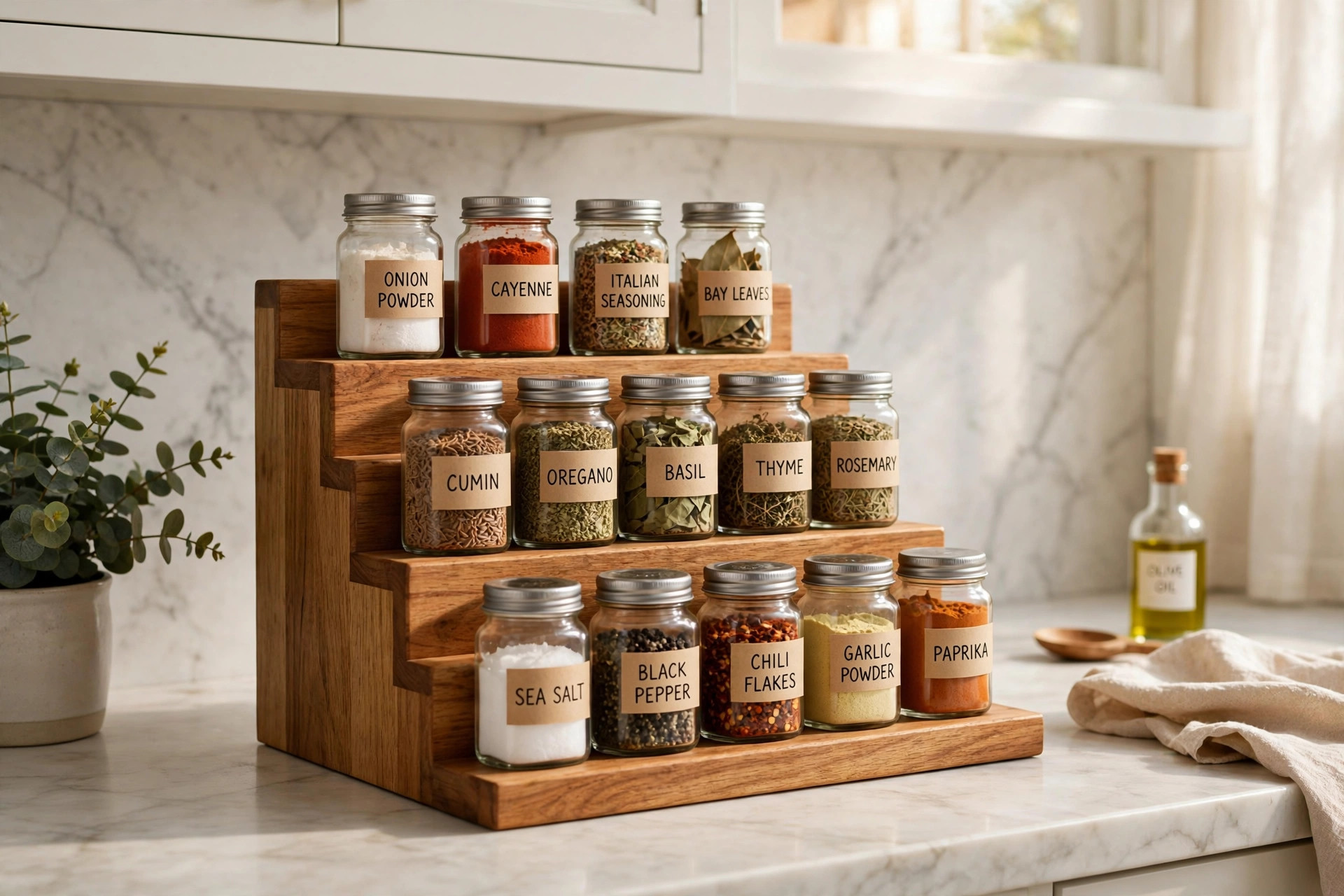

Most home cooks reach for the same three or four jars every week and leave the rest buried in a dark cabinet. This guide to spice rack organizers reviews and buying guide sets out to change that habit. A good organizer turns a cluttered shelf into a small library of flavor where every jar is visible and every label faces forward. The market offers dozens of styles, from simple wooden steps to full cabinet systems, and prices run from under ten dollars to well over one hundred. This article reviews the main types, compares their strengths, and lays out a clear buying method so you can choose with confidence.
Why a Spice Rack Organizer Matters
Spices lose strength with time and heat. A jar that sits at the back of a cabinet, above a hot stove, or under a bright light will fade faster than one stored in a cool, dark, steady spot. An organizer solves the first half of that problem by making storage deliberate. When you can see what you own, you stop buying a second jar of cumin and you use the smoked paprika before its best months pass.
There is also a plain kitchen argument. Cooks work faster when tools are in order. Reaching into a deep cabinet and reading five labels with your shoulder twisted is a small irritation that repeats hundreds of times a year. A rack that presents jars in a single facing row, a stepped tier, or a spinning turntable cuts that motion to a glance. Families with small kitchens benefit most, because every inch of shelf and drawer space has to earn its place.
What to Look for Before You Buy: Spice Rack Organizers Reviews and Buying Guide
Reviews of spice rack organizers keep returning to the same five factors. Hold any model against these before you judge its price.
Size and Capacity
Count your jars first. Open your cabinets and gather every spice jar in one place. Most American homes hold between twenty and forty jars, and many organizers advertise capacities from twelve to sixty. Match the rack to your real count, not to an imagined smaller number. A twelve-jar rack that leaves twenty jars loose on the shelf is not organization at all.
Measure the space where the rack will live. Countertop racks need depth as well as width; stepped designs can run twelve to eighteen inches deep. In-drawer inserts must fit the inside dimensions of the drawer, not just the nominal drawer size, and tall jars need clearance under the drawer above. Door-mounted racks must clear shelves and hinges when the door swings shut.
Material
Wood organizers bring warmth and suit traditional kitchens. Bamboo resists moisture well and has become a favorite for drawer inserts, and many shoppers browse affordable organizer designs before settling on a style. Metal racks, often chrome or stainless steel, handle weight without flexing and wipe clean. Acrylic looks modern and lets you read labels through the sides, but it can scratch and it shows dust. Plastic is the least expensive option and is fine for light use inside cabinets. For kitchens near a stove, heat-safe materials matter more than looks.
Visibility and Access
The best designs let you read every label without moving a jar. Stepped tiers lift the back rows into view. Turntables spin the whole collection past your eyes. Wall-mounted rows place labels at eye level. Single-level trays in deep cabinets are the weakest option because front jars hide the back ones. When you read reviews, look for comments about label visibility. It is the most common point of praise and the most common complaint.
Stability
A rack that tips when you pull a jar is worse than no rack. Wide bases, rubber feet, and low centers of gravity keep countertop models steady. Wall and door mounts must anchor into studs or solid cabinet backs, not just drywall. Heavy glass jars shift the balance, so test with your full load before you trust it.
Labels and Refill Friendliness
Some sets arrive with pre-filled jars and matching labels. These look sharp but tie you to jar sizes and spice lists that may not fit your cooking. Many buyers prefer an empty organizer and buy their own labels separately, then store jars in airtight glass containers that keep flavor sealed in. Check whether the rack fits standard jar sizes, because odd sizes lock you into the maker’s refills.
Types of Spice Rack Organizers
The reviews sort organizers into four broad families. Each fits a different kitchen.
Tiered Countertop Racks
These are the classic spice rack: two to four stepped levels that hold jars like stadium seating on the counter or inside a cabinet. They are the easiest to read at a glance and need no installation. Reviewers praise them for speed during cooking. Their weakness is footprint. On a crowded counter they consume valuable workspace, and tall back rows may not fit under low cabinets.
In-Drawer Inserts
A shallow drawer near the stove becomes a spice station with a sloped insert that holds jars at an angle, labels facing up. This is the choice most often recommended by kitchen designers because it uses hidden space and keeps jars away from heat and light. The trade is capacity. Drawers hold fewer jars than a wall of shelves, and very tall jars may not clear the drawer above.
Wall-Mounted and Door-Mounted Racks
Wire or solid rails fixed to a wall, a cabinet door, or the inside of a pantry door turn unused vertical space into storage. They keep counters clear and put spices at eye level. Reviews are strongest for pantry-door models in larger kitchens. Installation takes more effort, and doors must carry the weight without sagging. If you rent your home, check your lease before drilling.
Cabinet Turntables and Carousel Units
A round platform that spins inside a cabinet brings every jar to the front with a flick of the wrist. Two-tier turntables double capacity for tall cabinets, while single-tier models suit low shelves. Reviewers like them for deep corner cabinets where nothing else reaches the back. Small jars can slide off during a fast spin, so raised rims help.
How the Reviews Compare: The Strongest Picks by Type
No single model wins every kitchen, so the fairest way to read the reviews is by category. For countertop display, solid bamboo tiered racks earn the most consistent praise for sturdiness and looks at a moderate price. Wire step racks cost less and suit renters, though some reviewers note that round jars can slip on narrow wire rungs.
For drawers, sloped bamboo and beech inserts lead the ratings. Owners report that jars stop sliding once the insert is full and that the angled face makes labels easy to read while standing. Guides on drawer organization projects show how to fit these inserts into standard drawer boxes. One frequent warning: measure twice, because many inserts fit standard drawers but not shallow or extra-wide ones.
Among door-mounted racks, enclosed metal designs with a lip at the front score best, and big-box cabinet door storage options make this style easy to find. Open wire racks look airy but let jars jump during a hard door swing. For turntables, models with a non-slip base and a raised edge rate highest, especially two-tier versions for deep cabinets.
Budget buyers find good value in simple metal countertop racks and basic turntables, both often under twenty-five dollars. Mid-range bamboo and clear acrylic designs run thirty to sixty dollars and earn better long-term reviews. Premium wall systems with matching labeled jars climb past one hundred dollars and suit full kitchen refreshes more than casual upgrades.
Related Kitchen Storage to Consider
Spice racks work best as part of a wider plan. Many shoppers who research spice storage also look into best kitchen cabinet organizers for plates and food staples, pantry shelving units for bulk goods, and rotating lazy susan turntables for oils and sauces that do not fit the spice rack. Broader kitchen organization guides and small-space storage ideas can help you plan the whole zone at once, keeping shelf heights and door clearances in agreement.
Cost and Price Ranges
Prices follow material and complexity more than brand name.
– Basic wire or plastic racks: ten to twenty-five dollars. Fine for small collections and trial runs. – Bamboo and wood tiered racks or drawer inserts: twenty-five to sixty dollars. The sweet spot for most kitchens. – Two-tier turntables and door-mounted systems: thirty to seventy dollars. – Acrylic display racks: thirty to eighty dollars. You pay for looks. – Full wall systems with jars and labels: eighty to one hundred fifty dollars or more.
Set a budget before you browse. A thirty-dollar rack that fits your cabinet beats a ninety-dollar system that does not.
Care and Upkeep
Dust is the main enemy of a spice rack, and kitchen grease is the second. Wipe wooden and bamboo racks with a damp cloth and dry them at once so moisture does not soak in. Metal racks can take a mild soap solution. Acrylic needs a soft cloth and plain water; strong cleaners can cloud it.
Every six months, pull every jar out and check dates. Ground spices hold their strength for roughly two to three years; whole seeds and peppercorns last longer. Sniff before you toss. A jar that still smells sharp is still working. Refill from bulk bags when you can. It costs less and cuts packaging.
Keep the rack away from the stove if your design allows it. Heat is the fastest way to age spices. A drawer or pantry spot stays cooler than a countertop beside the range.
Safety Considerations
A loaded spice rack is heavier than it looks, so treat mounting hardware with respect. Wall-mounted racks should fasten into wall studs or solid cabinet backing. Door-mounted units should use the full set of supplied screws and brackets, and the door hinges should show no strain after loading.
Glass jars break when they fall. Keep racks stable on level surfaces and add a lip or raised edge if your chosen model lacks one. In homes with small children, store chili flakes, hot sauces, and anything in glass on higher shelves. Also keep the rack away from open flames. Dried spices and wooden racks can catch fire if they sit too close to a gas burner.
For general kitchen storage safety guidance, resources from consumer safety groups explain how to anchor storage and prevent tip-over accidents.
Frequently Asked Questions
How many jars should a spice rack hold? Match the rack to your count. Gather all your jars before you shop. Most homes need room for twenty to forty jars. Buying too small is the most common regret in buyer reviews.
Are pre-filled spice sets worth it? They look neat and save a shopping trip, but the spice selection rarely matches your cooking and some jars may be old stock. Most reviewers recommend an empty organizer and jars you fill yourself so freshness and choice stay in your hands.
What is the best place to keep a spice rack? Somewhere cool, dark, and steady. A drawer, a pantry door, or a cabinet away from the stove all work well. Countertop racks near the range are convenient but shorten spice life through heat.
Do spice rack organizers fit all jar sizes? No. Standard four-ounce jars fit most racks, but tall grinders, wide salt cellars, and small sample tins often do not. Measure your tallest and widest jars and compare against the product dimensions before you order.
Can I mount a spice rack on a rental kitchen wall? It depends on your lease. Door-mounted racks that use over-door hooks need no drilling and suit renters. Wall racks that need screws into studs should wait for a home you own, or get written approval first.
How often should I replace spices? Check ground spices every two to three years and whole spices every three to four. The sniff test is reliable. Weak smell means weak flavor, and no organizer can save a faded jar.
A Final Word
The right spice rack organizer is the one that fits your jars, your space, and your cooking habits. Count and measure before you browse. Choose the type that matches your kitchen layout. Read the reviews with your own dimensions in hand, and give the features you will touch every day more weight than the looks you will notice once. A modest rack that gets used beats a beautiful one that does not.
References
Apartment Therapy. (n.d.). Home design ideas and inspiration. https://www.apartmenttherapy.com Family Handyman. (n.d.). DIY home repair and maintenance. https://www.familyhandyman.com IKEA. (n.d.). Home furnishings. https://www.ikea.com Lowe’s. (n.d.). Home improvement products. https://www.lowes.com OXO. (n.d.). Kitchen tools and storage. https://www.oxo.com Target. (n.d.). Retail store. https://www.target.com The Home Depot. (n.d.). Home improvement products. https://www.homedepot.com The Spruce. (n.d.). Home and garden advice. https://www.thespruce.com U.S. Consumer Product Safety Commission. (n.d.). Product safety information. https://www.cpsc.gov Wayfair. (n.d.). Furniture and home goods. https://www.wayfair.com
Was this guide helpful?

About Jennifer Lee
The My Garden US editorial team writes practical, in-depth home and garden guides for American homeowners — tested advice, no fluff.
You May Also Like

Stackable Bathroom Vanity Organizers: A Complete Buying Guide
April 21, 2026 0 views
Under Bed Storage Containers Price Comparison USA
April 10, 2026 0 views
Affordable Under Bed Storage Containers Buying Guide
September 15, 2026 0 views