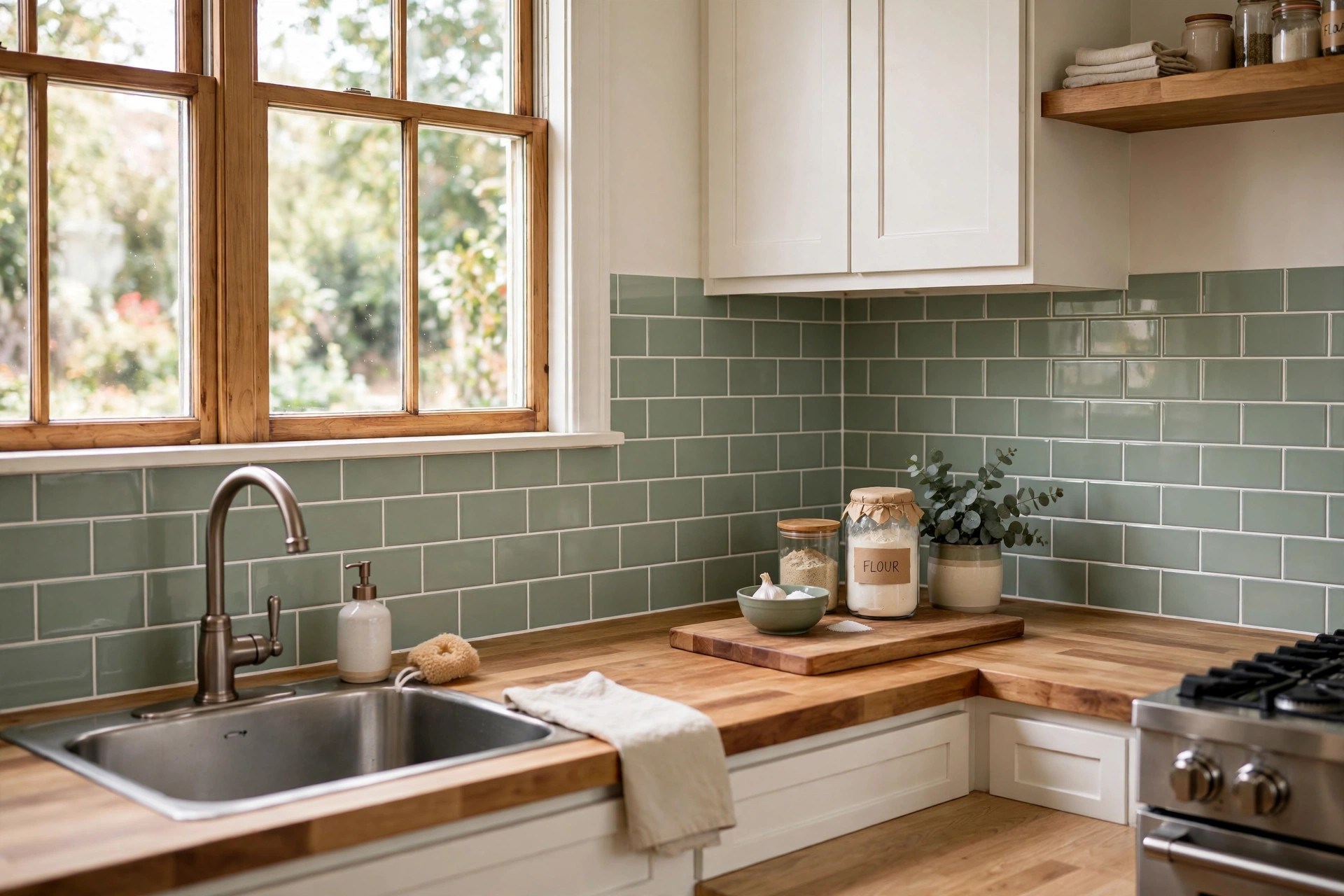

The idea of painted tile backsplash pros cons comes up in many American kitchens. A homeowner looks at a dated tile wall above the stove and wonders if paint can save it. The tile may be from the nineteen eighties. The color may be wrong. A full tear-out would cost thousands. Paint looks like a cheap fix. But it is not always the right fix. This guide walks through the good points and the bad points in plain terms, so you can decide with clear eyes.
Why Homeowners Paint Tile Instead of Replacing It
A kitchen remodel is one of the most costly projects in a home. New tile, new labor, and new grout can run into the thousands. Painting the tile that is already on the wall can cost under two hundred dollars. That gap is why the painted tile backsplash has grown so popular in recent years.
Time is another reason. A full backsplash replacement takes a contractor several days. Painting can be done in a weekend. The kitchen stays in use. There is no dust from demolition. For renters and for owners on a budget, that speed matters.
There is also the style question. Many older tiles are sound and flat. They are simply out of style. A coat of paint can turn a green seventies tile into a clean white surface. Homeowners who plan to sell the house in a few years often choose this path. It is a low cost way to refresh a kitchen before listing.
The painting pros at Sherwin-Williams often note that preparation is the key step in any tile project. The same advice appears in many This Old House guides. Paint will only hold if the tile is clean, dry, and properly primed.
How to Choose Paint and Primer for Tile: Painted Tile Backsplash Pros Cons Usa
Surface Preparation
Tile is slick. Glossy tile is very slick. Paint will not stick to a greasy, glossy surface. The first step is a deep clean. Use a degreaser. Kitchen walls hold years of cooking oil. Scrub every inch. Rinse well. Let the wall dry fully.
Next, sand the tile lightly. A fine sanding pad will dull the gloss. The goal is not to remove the glaze. The goal is to give the primer something to grip. Wipe away the dust with a damp cloth. Tape off the counter, the cabinets, and the edges.
Primer
A bonding primer is the heart of the job. Standard wall primer will not do. You need a primer made for slick or glossy surfaces. Shellac based and urethane based primers both work well on tile. Two thin coats are better than one thick coat. Let each coat dry for the full time on the can.
Paint
For kitchens, an enamel or urethane based topcoat is best. Latex enamel is common. It cures hard and resists moisture. Oil based enamels are also used, but they have strong fumes and long dry times. A semi gloss or satin finish looks best on tile. Flat paint will mark too easily in a kitchen.
Test your system first. Paint a small hidden area behind the stove or under a cabinet. Let it cure for a week. Then try to scratch it with a fingernail. If it chips, the prep or primer was not enough.
The paint selection guides at Behr explain how different finishes behave in wet rooms. The same point is made by the color experts at Benjamin Moore. A kitchen needs paint that can face heat, steam, and scrubbing.
Types of Tile Paint and Their Trade-Offs
Acrylic Enamel
Acrylic enamel is the most common choice. It is water based. Cleanup is easy. Odor is low. It cures to a hard shell in about two to three weeks. The finish holds up well to daily kitchen use. Most homeowners pick this type.
Urethane Modified Enamel
This paint adds urethane resin to the acrylic base. It is harder than standard enamel. It resists chips and scuffs better. The trade-off is cost. It runs higher per gallon. It can also show brush marks if applied too thick. Thin coats and a foam roller give the best result.
Two-Part Epoxy Tile Paint
Some kits use a two-part epoxy. You mix two cans before painting. The result is very tough. It is close to the hardness of factory glaze. The trade-off is working time. Once mixed, you have only a few hours. The fumes are strong. A mask and open windows are needed.
Chalk Paint and Milk Paint
Chalk paint sticks to tile with little prep. That is its appeal. But it is soft. It needs a wax or sealer topcoat. In a kitchen, near heat and grease, chalk paint is a poor choice. It will wear fast. Save it for furniture.
Tile Refinishing Kits
Stores sell tile refinishing kits. These include a cleaner, a bonding agent, and a topcoat in one box. They work for small jobs. The finish is smooth and glossy. The trade-off is choice. Most kits come only in white or off white. They also demand exact steps. Miss a step and the finish will peel.
If you are unsure which product fits your kitchen, the staff at Lowe’s and The Home Depot can show you tile rated paints in the store. Product pages also list dry times and coverage rates.
Cost and Price
Painting a tile backsplash is one of the cheapest kitchen updates. A small backsplash of thirty to fifty square feet needs one gallon of primer and one gallon of paint. Quality primer runs twenty to thirty dollars a gallon. Quality enamel runs thirty to sixty dollars a gallon. Add rollers, tape, sanding pads, and cleaner. The total for a do it yourself job is often one hundred to two hundred dollars.
Hiring a painter changes the math. A professional may charge three hundred to eight hundred dollars for the same job. That is still far less than a new tile install. A new tile backsplash costs eight hundred to three thousand dollars installed, depending on the tile.
Hidden costs exist. If the old tile is loose or cracked, paint will not fix it. Loose tile must be re-set. Cracked grout must be repaired. Bad caulk must be replaced. These repairs add time and cost. Factor them in before you buy paint.
A related upgrade is painting the cabinets to match. Our guide to best paint for kitchen cabinets usa reviews covers paint choices for that job. If you plan a full refresh, you may also want to read about kitchen cabinet refinishing service cost usa before you call a pro.
The Pros of a Painted Tile Backsplash
Low cost is the clearest pro. Few kitchen changes give so much visual change for so little money. A weekend and two hundred dollars can transform a tired wall.
Speed is another pro. There is no demolition. There is no dumpster. There is no tile saw. The kitchen stays open while you work. Most of the time is just waiting for coats to dry.
Color freedom is a third pro. New tile comes in the colors the store stocks. Paint comes in thousands of colors. You can match the walls, the cabinets, or the new curtains. If you dislike the result, you can paint over it again.
Reversibility is worth noting. Painted tile can be stripped or tiled over later. It does not damage the wall structure the way demolition does. For a home you plan to sell, this low risk matters.
The design writers at The Spruce often feature painted tile kitchens. The makeover stories at HGTV show how a new color can change a whole room. The how to guides at Bob Vila stress that the pros only outweigh the cons when prep is done right.
The Cons of a Painted Tile Backsplash
Durability is the main con. Painted tile is not as tough as new tile. It can chip. It can scratch. It can peel near heat and steam. The stove area takes the most abuse. Grease and heat break paint down over time.
Finish quality is another con. Paint cannot hide grout lines. It cannot fix lumpy tile. A close look will show that the tile was painted. Some buyers see this as a cheap cover up. It may not help resale value the way new tile would.
Upkeep is harder. You cannot scrub painted tile with harsh cleaners. Abrasive pads will scratch the finish. You must clean gently with a soft sponge. Stains may set faster on paint than on glazed tile.
Longevity is limited. A good paint job may last three to seven years in a kitchen. New tile lasts decades. If this is your forever home, the math favors replacement in the long run.
Moisture is a risk behind the stove and sink. Steam works under paint edges. Peeling starts at edges and chips. Once peeling starts, it spreads. A repair means sanding and repainting the whole section.
Care and Upkeep
Treat a painted tile backsplash with care. Use a soft sponge and mild soap. Avoid bleach and ammonia cleaners. Avoid scouring pads. Wipe spills soon. Do not let grease sit on the surface.
Touch up chips quickly. Keep a small jar of the topcoat for repairs. Lightly sand the chip. Dab on paint with a small brush. Small chips are easy to hide if you catch them early.
Re-caulk the seam where the backsplash meets the counter each year. Good caulk keeps water out. Water under paint causes bubbles. Check the seam each spring.
Expect to repaint every few years in a busy kitchen. A kitchen used daily will show wear by year three or four. Plan for a light refresh coat rather than a full redo.
Safety
Paint fumes are the main safety issue. Use paint in a room with open windows and a fan. Wear a mask rated for paint vapors if you use oil based or epoxy products. Keep children and pets out of the kitchen while you paint.
Old tile may hide old materials. Homes built before 1978 may have lead paint under old layers. If you sand old tile, test for lead first. Test kits are sold at most hardware stores. If lead is present, do not sand. Call a certified professional.
Electrical safety matters too. Cover outlets and switches with tape before you paint. Do not paint over outlet covers. Remove them first and paint around the boxes.
Frequently Asked Questions
Can you paint over ceramic tile in a kitchen?
Yes. Ceramic tile takes paint well if it is clean and primed. Porcelain tile is harder and slicker, so it needs more sanding and a strong bonding primer. Glass tile is the hardest to paint. The paint may peel from glass no matter how well you prep.
How long does a painted tile backsplash last?
Three to seven years is normal in a busy kitchen. Good prep and a hard enamel topcoat last longer. Heavy heat, steam, and rough cleaning shorten the life. Areas behind the stove wear first.
Will the paint peel near the stove?
It can. Heat and grease are hard on paint. Keep the paint a few inches from open flame burners when possible. Clean the stove area often so grease does not build up. A hard urethane enamel resists this better than standard latex.
Is painting tile cheaper than replacing it?
Yes, by a wide margin. A do it yourself paint job costs one to two hundred dollars. A new tile backsplash costs eight hundred to three thousand dollars installed. The trade is durability. New tile lasts far longer.
What paint finish is best for a tile backsplash?
Semi gloss or satin. These finishes resist moisture and wipe clean. Flat paint marks too easily. High gloss can look good but shows every flaw in the tile. Most pros pick semi gloss for kitchens.
Should I hire a professional or do it myself?
A careful homeowner can do this job well. The steps are simple. The work is in the prep. Hire a pro if the tile is damaged, if lead paint may be present, or if you want a sprayed finish. A pro can also handle epoxy products with more safety gear.
A Short Final Word
The painted tile backsplash is a good tool for the right job. It is cheap. It is fast. It changes a room in a weekend. But it is not new tile. It will not last as long. It will not fool a close look. Weigh your budget, your timeline, and how long you plan to stay in the home. For a quick refresh or a pre sale update, paint is hard to beat. For a forever kitchen, save for new tile.
If you are refreshing more than the backsplash, see our accent wall painting ideas for living rooms for ways to tie the kitchen color into the rest of the home.
References
Behr. (n.d.). Paints, primers, and stains. https://www.behr.com Benjamin Moore. (n.d.). Paints and stains. https://www.benjaminmoore.com Bob Vila. (n.d.). Home improvement advice. https://www.bobvila.com HGTV. (n.d.). Home and garden ideas. https://www.hgtv.com Lowe’s. (n.d.). Home improvement products. https://www.lowes.com Sherwin-Williams. (n.d.). Paints and coatings. https://www.sherwin-williams.com The Home Depot. (n.d.). Home improvement products. https://www.homedepot.com The Spruce. (n.d.). Home and garden advice. https://www.thespruce.com This Old House. (n.d.). Home renovation guidance. https://www.thisoldhouse.com
Was this guide helpful?

About Michael Thompson
The My Garden US editorial team writes practical, in-depth home and garden guides for American homeowners — tested advice, no fluff.
You May Also Like

Floral Wallpaper for Bedroom for Sale USA: A Buyer’s Guide
September 10, 2026 0 views
Two Tone Kitchen Cabinet Paint Ideas for American Homes
March 7, 2026 0 views
Steamer Wallpaper Removal Tool Reviews USA: A Plain Guide for Homeowners
February 4, 2026 0 views