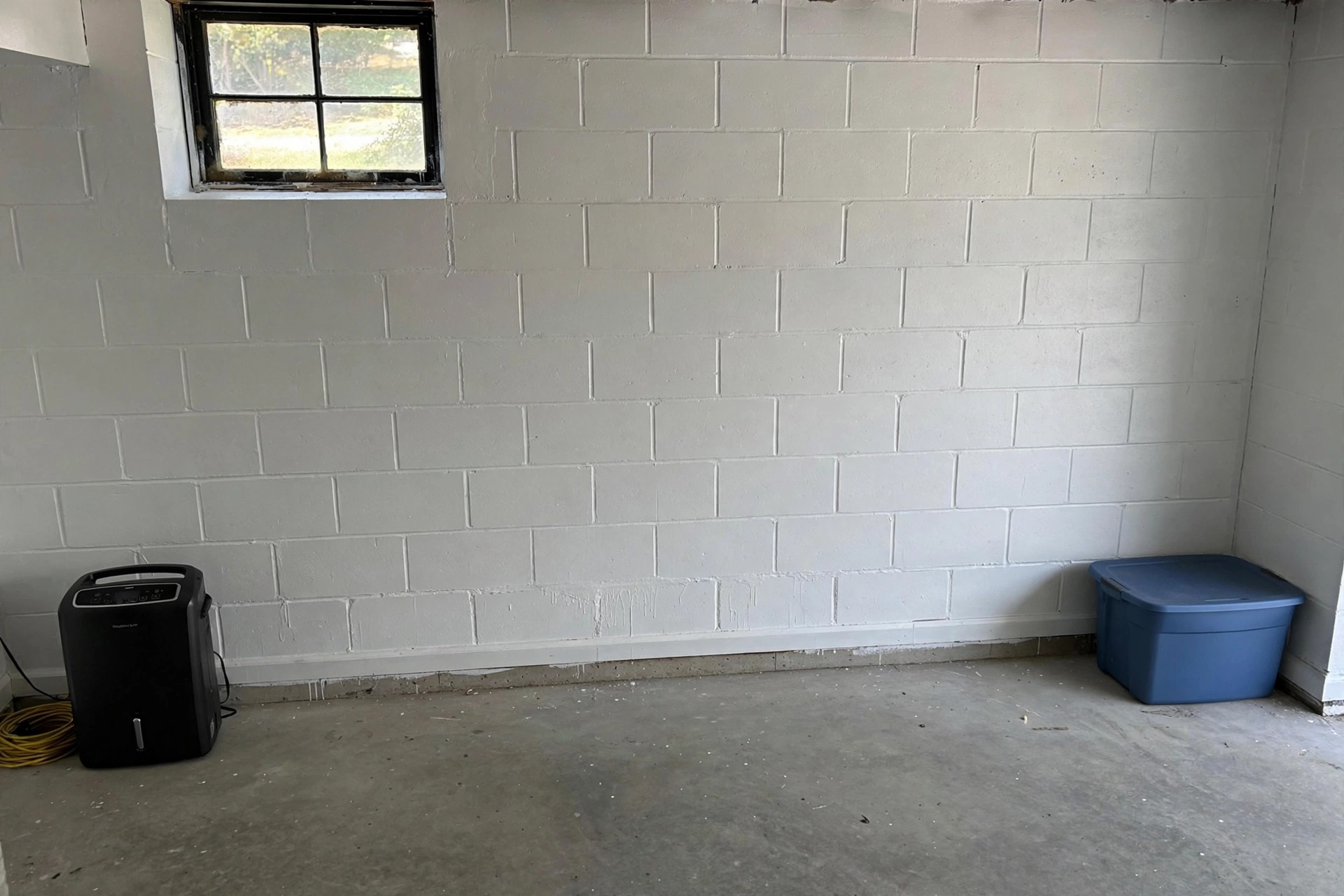

A damp basement can spoil a good house. Paint peels. White crust forms on the blocks. A musty smell creeps up the stairs. When the walls weep with water, ordinary house paint will not hold. The paint that homeowners reach for in this case is masonry paint, and two names come up again and again: Drylok and Behr. This drylok vs behr basement paint comparison looks at both brands with a steady eye, so you can pick the right one for your walls.
Before we start, a word of caution. No paint fixes water that flows through a wall under pressure. If water runs across your floor in a heavy rain, you need grading work, gutters, or a drain system first. Paint is the last step, not the first. With that said, let us look at the two products.
What Each Product Is
Drylok is made by United Gilsonite Laboratories, an old Ohio company that has sold waterproofing products for many decades. The main product, Drylok Masonry Waterproofer, is sold in white and tinted colors. It is made to go on bare concrete block, poured concrete, brick, and stone. The maker says it stops water that comes through walls at up to ten pounds of hydrostatic pressure per square inch. That is a strong claim, and it is the main reason the product has a loyal following among people with damp basements.
Behr is the paint brand sold through The Home Depot, and also carried at Lowe’s for some lines. Behr makes several products for basement use. The one that comes closest to Drylok is Behr Premium Concrete & Masonry Waterproofer. It is made for interior and exterior masonry walls and is sold in white and a set of tinted shades. Behr also sells standard concrete and masonry paint, which is a strong coating but does not claim the same water-stopping power as a dedicated waterproofer. In this comparison, we test the waterproofer lines against each other.
Both products are latex-based, low in odor compared with old oil paints, and clean up with soap and water. Both are sold in one-gallon and five-gallon pails at most large stores and through paint dealers.
Why It Matters: Drylok vs Behr Basement Paint Comparison
A basement wall is not like a bedroom wall. It lives below grade, and water in the soil pushes against it for much of the year. When moisture passes through concrete, it carries salts with it. As the water dries on the inside face, the salts stay behind as a white powder called efflorescence. Over time, the cycle breaks down ordinary paint from the back side. A masonry waterproofer is built to bond to damp masonry and resist that push of water. Benjamin Moore paint specialists and guides at The Spruce both note that surface preparation matters more than the brand on the can. A dirty wall will fail with any paint.
The choice between the two brands matters for another reason: cost. A full basement needs many gallons. A difference of ten dollars a gallon can mean two or three hundred dollars on a big job. The reviews at Bob Vila and This Old House both stress that the cheap can is not always the cheap job. A product that needs three coats where another needs two can cost more in the end.
How to Choose: What to Look For
When you stand in the paint aisle, keep four points in mind.
First, pressure rating. Drylok states a clear number for water pressure. Behr’s waterproofer describes its use for water resistance on masonry but does not state a pressure figure in the same way. If your walls have had seepage, a stated pressure rating is worth more than a general promise.
Second, film thickness. Masonry waterproofers must go on thick to work. Drylok asks for two coats, each heavy enough that the maker warns against spreading it thin. Behr also asks for two coats on bare masonry. Thin spots are the place where water finds a path, so a product that covers well in two coats saves both paint and labor.
Third, color and finish. Drylok’s main waterproofer comes in white, which you can tint to a set of light colors, and it dries to a sandy, textured finish. Behr’s waterproofer comes in white and a wider range of ready-mixed tinted colors, and it dries smoother. If the basement is a living space, the look of the finish may matter to you. The decorating team at HGTV often notes that lighter colors make a basement feel larger.
Fourth, warranty and history. Drylok has been sold as a basement waterproofer for decades and carries a long product history. Behr backs its products with the support system of a large retail chain, which makes returns and help easy to get. Paint guides at Sherwin-Williams remind buyers that a product warranty is only as good as the directions you followed.
Side by Side: The Main Differences
The table below is a plain summary of how the two products stack up on the points that matter most.
Waterproofing claim. Drylok makes a specific claim about holding back water under pressure, and the maker prints test results for it. Behr claims water resistance for masonry walls but stays quieter on pressure numbers. Edge: Drylok.
Ease of purchase. Behr is sold in every Home Depot in the country, and many stores stock deep shelves of it. Drylok is widely sold too, including at Home Depot and Lowe’s, but in some areas the shelf stock runs lower. Edge: Behr, by a small margin.
Color choice. Drylok waterproofer is white at heart, with a set of tint bases. Behr offers more ready-mixed colors and easier tinting at the store counter. If you want a colored basement wall, Behr makes it simpler. Edge: Behr.
Texture of finish. Drylok dries with a sandy, gritty texture that many people find true to a basement look. Behr dries smoother and more like a standard wall paint. This is a matter of taste. For a raw basement, the sandy look hides wall flaws. For a finished room, the smoother look paints over better.
Application. Both go on with a brush or roller, and both need thick coats. Users of Drylok often report that it needs a heavy hand and good brushing to work into the pores of the block. Behr rolls on a bit more like standard paint. Neither is hard work for a careful do-it-yourselfer.
Odor and cleanup. Both are water-based. Odor is mild in both cases, and both clean up with soap and water. The basement still needs airflow while you work.
Cost and Price
A gallon of either waterproofer typically runs in the range of thirty to fifty dollars, with five-gallon pails bringing the per-gallon price down. Prices move with the market, so check your store. What matters is the cost per finished square foot.
Drylok covers about seventy-five to one hundred square feet per gallon per coat on rough block, which is low because the product must go on thick. Two coats are required. A one-thousand-square-foot basement wall area may need around twenty-five gallons of Drylok, sometimes more on rough block.
Behr’s waterproofer lists coverage in a similar range on rough masonry, with two coats required as well. In practice, the two products cost about the same for a full job. Where the price can split is in tinting and in store sales. Behr goes on sale often at Home Depot, and those sales can cut the bill by a good deal. Watch the flyers.
Do not forget the hidden costs. A stiff brush, a good roller with a thick nap, painter’s tape, and drop cloths add to the total. And the most important cost of all: your time. Two thick coats on block walls is slow work. Many guides, including those at This Old House, suggest that hiring a painter for a large basement may cost as much as the paint itself.
Preparation: The Step That Decides the Job
Both makers say the same thing, and it is the truest sentence in this whole drylok vs behr basement paint comparison: the paint is only as good as the wall under it.
Start by cleaning the walls. Scrub off efflorescence, the white crust, with a wire brush. Wash with a masonry cleaner or a mild detergent and rinse well. Let the walls dry as much as they will. New concrete must cure fully, often for thirty days or more, before you paint it.
Fill cracks and holes with a hydraulic cement patch. These patches set fast, even in damp spots, and they stop the small leaks that paint cannot bridge. Let the patch cure as the maker directs.
Fix the water from outside first. Clean the gutters. Make sure downspouts throw water at least six feet from the foundation. Grade the soil so it slopes away from the house. A dehumidifier in the basement helps paint cure and keeps the new coating dry. None of this is optional if you want the job to last.
How to Apply
Work in a well-ventilated basement. Wear gloves and eye protection. Old paint dust may contain lead in older homes, so test first if the house dates before 1978.
Mix the paint well. Cut in around the top and edges with a brush. Then roll the main wall area with a roller that has a thick nap, at least three-quarters of an inch, so it pushes paint into the pores of the block. The first coat should be worked into the wall, not laid on like wall paint. Let it dry fully, usually four hours or more, then apply the second coat in the same heavy way.
Do not thin the paint. Thinning breaks the waterproofing film. Do not paint in cold or very damp air if you can help it. Temperatures above fifty degrees are best.
Cleanup is soap and water. Rinse brushes and rollers before the paint sets.
Care and Upkeep
A good waterproofer job should last many years. Keep the basement humidity down with a dehumidifier set near fifty percent. Check the walls each spring for new efflorescence or blisters. Small spots can be scraped, patched, and touched up with the same product. Do not paint over a waterproofer with a standard latex topcoat if the maker warns against it, since some topcoats can trap moisture.
If you want a colored wall and used white waterproofer, most makers allow tinting or a compatible topcoat after full cure. Check the can.
Safety
Work with the windows open and a fan moving air. Wear a mask rated for paint mist when rolling overhead or in tight spots. Keep children and pets out of the work area until the paint is dry. Store leftover paint sealed, upright, and away from freezing. Read the safety sheet on the can before you start.
Frequently Asked Questions
Can I use either product on a wall that is wet right now? Both products are made for damp masonry, but neither should go on a wall with water flowing over it. Dry the wall as much as you can, patch active leaks with hydraulic cement, and then paint.
Is Drylok just paint, or is it different from Behr’s waterproofer? They belong to the same family: thick latex coatings made to block water through masonry. Drylok states a pressure rating; Behr states water resistance without the same pressure figure. Both need two heavy coats.
Which one is better for a living-space basement? If the basement is a family room, the smoother finish and wider colors of the Behr line may suit you. If the wall has a history of seepage, the stated pressure rating of Drylok gives more confidence. Many homeowners pick by the problem, not the room.
Can I paint over old Drylok with Behr, or the reverse? Yes, once the old coating is clean, sound, and fully dry. Scrape any loose paint first. A test patch in a hidden spot is wise. Paint sticks best to paint that is firmly bonded.
How long do I wait before using the basement again? Most water-based masonry coatings dry to the touch in a few hours and cure in about a week. Keep the dehumidifier running and give the second coat a full day before moving furniture back.
Do I need a primer? On bare masonry, both products are self-priming when applied as directed in two coats. On previously painted walls in good shape, a bonding primer is a safe extra step, especially if the old paint is glossy.
A Short Final Word
This drylok vs behr basement paint comparison comes down to the wall in front of you. For a wall with a known seepage problem, Drylok’s stated pressure rating is the stronger story. For a dry basement that needs a tough, good-looking masonry coating in a color you like, Behr is easy to buy, easy to tint, and easy to apply. Either way, the preparation work decides the result. Clean the wall, patch the cracks, fix the water outside, and put on two heavy coats. Do that, and the paint on the can matters less than the care in the job.
For related painting projects around the house, see our guides on woodland nursery wallpaper for sale usa, pool deck paint reviews for hot climates, and orange peel texture repair kit reviews.
References
Benjamin Moore. (n.d.). Paints and stains. https://www.benjaminmoore.com Bob Vila. (n.d.). Home improvement advice. https://www.bobvila.com HGTV. (n.d.). Home and garden ideas. https://www.hgtv.com Lowe’s. (n.d.). Home improvement products. https://www.lowes.com Sherwin-Williams. (n.d.). Paints and coatings. https://www.sherwin-williams.com The Home Depot. (n.d.). Home improvement products. https://www.homedepot.com The Spruce. (n.d.). Home and garden advice. https://www.thespruce.com This Old House. (n.d.). Home renovation guidance. https://www.thisoldhouse.com
Was this guide helpful?

About Michael Thompson
The My Garden US editorial team writes practical, in-depth home and garden guides for American homeowners — tested advice, no fluff.
You May Also Like

Concrete Floor Paint for Basements: What the Reviews Tell Us
June 10, 2026 0 views
Concrete Countertop Sealer Reviews USA: What Homeowners Should Know
June 25, 2026 0 views
Sherwin Williams Exterior Paint Colors 2026: A Guide for American Homes
September 17, 2026 0 views