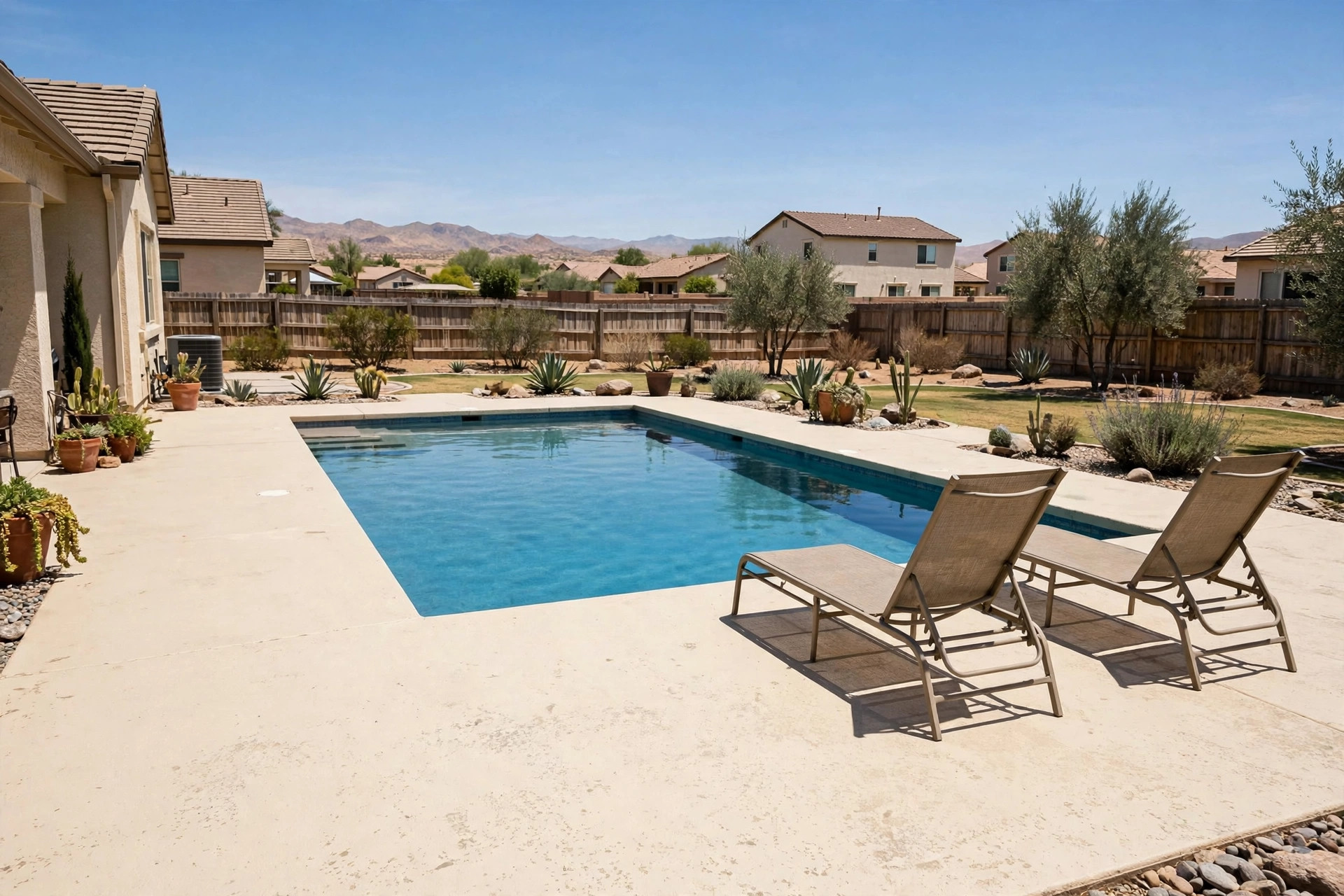

Introduction
This guide brings together pool deck paint reviews for hot climates in one place. It looks at which paints hold up in strong sun and which ones fail. Pool owners in warm states face a hard problem. Bare concrete gets too hot to walk on by noon. It also cracks and stains with time. The right paint can cool the deck, protect the concrete, and make the pool area look clean. The wrong paint peels within a year. It can even trap heat and make bare feet worse. This article explains what works, what to avoid, how much it costs, and how to keep the finish in good shape.
Why Pool Deck Paint Matters in Hot Climates: Pool Deck Paint Reviews for Hot Climates
A pool deck in Arizona, Texas, or Florida can reach surface temperatures well above the air temperature. Dark colors soak up heat. Wet concrete near a pool also stays damp, which can feed algae. Paint built for pool decks does three jobs. First, it reflects sun and keeps the surface cooler underfoot. Second, it seals the concrete against water, pool chemicals, and stains. Third, it adds grip so wet feet do not slip. When buyers read pool deck paint reviews for hot climates, they look for proof that a product does all three through many hot summers. A coating that looks fine in spring but peels by August is a waste of money.
What to Look for in Pool Deck Paint for Heat
Heat Reflective Color
Color is the biggest factor in surface heat. Light colors such as white, sand, and pale gray reflect sun. Dark blue or charcoal can burn feet. Many brands now sell special cool colors made to reflect infrared light even in mid tones. Reviews often note a drop of ten to twenty degrees in surface temperature with light shades. When you shop, look for the words cool, heat reflective, or solar reflective on the label.
UV Resistance
Sun breaks down cheap paint. Ultraviolet rays chalk the surface and dull the color. In hot climates the sun is strong for most of the year. Good pool deck paints use resins that resist UV damage. Reviews that mention color holding after two or three summers point to strong UV resistance. Paints with weak UV protection fade fast and lose their grip texture.
Slip Resistance
A wet pool deck must not be slick. Look for paint made for decks and pools, not ordinary house paint. Many products include fine grit or a sand texture. Others allow a slip additive to be mixed in. Reviewers often praise products that stay grippy when wet. They warn against paints that feel fine dry but turn slick with pool water. This is a safety issue, so it matters more than color.
Bond to Concrete
Pool decks are usually bare or old painted concrete. Heat makes weak bonds fail. The best paints bond to damp or rough concrete and move a little with the slab. Epoxy and acrylic systems are the two main choices. Reviews show that proper surface prep matters as much as the product. A good paint over a dirty deck will still peel.
Chemical and Water Resistance
Pool water carries chlorine or salt. Splashes sit on the deck for hours. The paint must stand up to chemicals without blistering. Look for products labeled for pool decks, patios, or masonry. Reviews from pool owners often note whether bleach or chlorine left marks. Water resistance also stops the paint from lifting in the wet band right at the pool edge.
Types of Pool Deck Paint
Acrylic Concrete Paint
Acrylic paint is the most common choice for home pools. It goes on with a roller like house paint. It dries fast and cleans up with water. Acrylic breathes a little, which helps in heat because trapped moisture can escape. Reviews say acrylic works well when the deck is prepped right. Its weak point is wear. In high traffic spots it may need a new coat every two to three years. For large decks, acrylic is easy to recoat without stripping the old layer.
Epoxy Coatings
Epoxy is tougher than acrylic. It forms a hard shell that resists chemicals and wear. Garage floor kits use epoxy, and some pool owners adapt them for decks. Reviews note that epoxy lasts longer but can be slippery unless grit is added. It also costs more and is harder to apply. Some two part epoxies set fast in heat, so summer application can be tricky. Epoxy is best for small decks or for owners who want a long lasting finish. For more on tough floor finishes, see this look at garage floor epoxy coating kit reviews usa.
Concrete Stains
Concrete stain is not paint. It soaks into the surface and tints it. Stain will not peel because it has no film. Reviews for warm climates often praise stain for a natural look that stays cool. The trade off is less protection. Stain does not seal cracks or add grip by itself. Many owners pair stain with a clear sealer. For a full guide to staining outdoor concrete, see these concrete stain for patio reviews usa.
Textured Cool Deck Coatings
Some brands sell thick coatings made just for pool decks. They go on with a trowel or special roller and form a bumpy, cushioned layer. Reviews call these cool deck systems because they stay noticeably cooler than plain concrete. They cost more than paint but need less upkeep. Homeowners who walk barefoot a lot often choose them over plain paint.
Reading Reviews the Smart Way
Not all reviews are equal. The best pool deck paint reviews for hot climates come from owners in hot states with one or more years of use. Short reviews written days after painting tell you little about heat life. Look for details. Did the color fade. Did the grip last. Did edges peel near the water line. Check several stores and maker sites, because a product can score well in one place and poorly in another. Sites such as Consumer Reports test coatings under controlled conditions, which adds weight to owner reports. Guides at The Spruce and Bob Vila often compare top brands side by side. Big retailers like Home Depot and Lowe’s host large numbers of owner reviews from warm regions. Maker pages from Behr, Sherwin-Williams, and Benjamin Moore list product data sheets that tell you the true limits of each paint.
How to Prepare a Pool Deck Before Painting
Prep decides the result. Start by cleaning the deck hard. Wash with a pressure washer to lift dirt, algae, and loose paint. Let the deck dry for at least two days. Test for moisture by taping a square of plastic to the concrete for a day. If water beads under it, wait longer. Etch smooth or sealed concrete with an etching solution so the paint can grip. Repair cracks with concrete filler and let it cure. Tape off the pool edge, drains, and coping stones. Masking takes time but saves cleanup. Detailed how to guides at Family Handyman walk through each step with photos.
Application Tips for Hot Weather
Heat helps paint dry but can cause problems. Do not paint in direct midday sun. The paint skins over too fast and does not bond. Start early in the morning or late in the day. Follow the label for temperature limits. Most acrylics want air above fifty degrees and below ninety. Work in small sections and keep a wet edge. Two thin coats beat one thick coat. Thin coats bond better and show fewer roller marks. Let the first coat dry fully before the second. Keep the pool covered if possible so wind does not blow dust onto wet paint. Most paints need three to seven days of cure before heavy use. Plan the project when the pool can stay closed that long.
Cost and Price
Paint itself is the smallest cost in most pool deck jobs. Acrylic concrete paint runs about thirty to sixty dollars per gallon. A gallon covers roughly two hundred to three hundred square feet per coat. A typical five hundred square foot deck needs about five to eight gallons for two coats. That puts paint at two hundred to five hundred dollars. Epoxy kits cost more, often one hundred to three hundred dollars for a kit that covers a few hundred square feet. Textured cool deck systems can reach two to four dollars per square foot in materials alone. If you hire a pro, labor can add two to five dollars per square foot on top. Prep supplies such as cleaner, etcher, crack filler, and tape add another fifty to one hundred dollars. Reviews often note that cheap paint ends up costing more because it must be redone sooner. A mid price paint with good heat reviews is usually the best value.
Care and Upkeep
A painted pool deck needs light care to last. Sweep often. Sand and grit grind the finish when walked on. Rinse the deck weekly with a hose to wash off chlorine and sunscreen. Use a mild soap for stains. Avoid harsh acids and bleach, which can dull the paint. Fix small chips right away with leftover paint so water cannot get under the film. Recoat high traffic paths every two to three years before the wear shows through. In very hot climates, check the deck each spring for chalking or fading. A quick recoat of the worn spots keeps the whole job looking even.
Safety
Wet paint fumes can be strong. Work with good airflow and wear a respirator when using solvent based products. Keep children and pets off the deck until it cures. Check slip resistance before the first swim. Pour water on the finished deck and walk it in bare feet. If it feels slick, add a clear anti slip topcoat. The EPA offers guidance on safe paint use and disposal around homes. Never wash paint tools into the pool or storm drains. Let leftover paint dry in the can and dispose of it per local rules.
FAQ
What is the best color of pool deck paint for hot climates? Light colors stay coolest. White, off white, light tan, and pale gray reflect the most sun. Some brands offer heat reflective mid tones that stay cooler than standard colors. Avoid dark colors near the pool if bare feet are the norm.
How long does pool deck paint last in the heat? Acrylic paint usually lasts two to four years in strong sun with heavy use. Epoxy can last five years or more. Textured cool deck coatings often go the longest. Prep quality and sun exposure decide the real life.
Can I paint over old pool deck paint? Yes, if the old paint is sound. Wash and roughen the surface so the new coat bonds. Scrape off all loose or peeling paint first. If the old coating is oil based, use a compatible product or prime first.
Does pool deck paint really keep the deck cooler? Light colors and heat reflective formulas can cut surface temperature by ten degrees or more compared with bare or dark concrete. Reviews from hot states back this up. No paint can make a deck cool in full desert sun, but the right color makes bare feet bearable.
Should I use paint or stain on my pool deck? Paint gives color, protection, and grip in one product. Stain gives a natural look and will not peel, but it protects less. Many hot climate owners choose light acrylic paint for comfort and easy recoating. Owners who hate peeling often pick stain with a sealer. If your deck connects to a wood deck, also read the best exterior wood stain for decks usa guide and this porch and patio paint buying guide usa.
When is the best time of year to paint a pool deck in a hot climate? Paint in spring or fall when days are warm but not blazing. Avoid the peak summer heat because paint dries too fast and bonds poorly. Make sure no rain is due for at least two days after painting.
Final Word
The core lesson from pool deck paint reviews for hot climates is simple. Light color, strong UV resistance, real slip texture, and careful prep matter more than brand hype. Read reviews from hot states with at least a year of wear. Budget for two coats and good prep supplies. Then paint in mild weather and give the finish time to cure. Do this and the deck will stay cooler, safer, and better looking for years. For more project ideas, browse the outdoor living ideas at HGTV.
References
Behr. (n.d.). Paints, primers, and stains. https://www.behr.com Benjamin Moore. (n.d.). Paints and stains. https://www.benjaminmoore.com Bob Vila. (n.d.). Home improvement advice. https://www.bobvila.com Consumer Reports. (n.d.). Product reviews and ratings. https://www.consumerreports.org Family Handyman. (n.d.). DIY home repair and maintenance. https://www.familyhandyman.com HGTV. (n.d.). Home and garden ideas. https://www.hgtv.com Lowe’s. (n.d.). Home improvement products. https://www.lowes.com Sherwin-Williams. (n.d.). Paints and coatings. https://www.sherwin-williams.com The Home Depot. (n.d.). Home improvement products. https://www.homedepot.com The Spruce. (n.d.). Home and garden advice. https://www.thespruce.com U.S. Environmental Protection Agency. (n.d.). Protecting human health and the environment. https://www.epa.gov
Was this guide helpful?

About Emily Rodriguez
The My Garden US editorial team writes practical, in-depth home and garden guides for American homeowners — tested advice, no fluff.
You May Also Like

Best Paint for Shutters Reviews USA: How to Choose a Lasting Finish
March 14, 2026 0 views
Skim Coat Drywall Cost Per Square Foot: A Plain Guide for Homeowners
January 10, 2026 0 views
Refinishing Hardwood Floors vs Painting: Which Is Right for Your Home
June 20, 2026 0 views