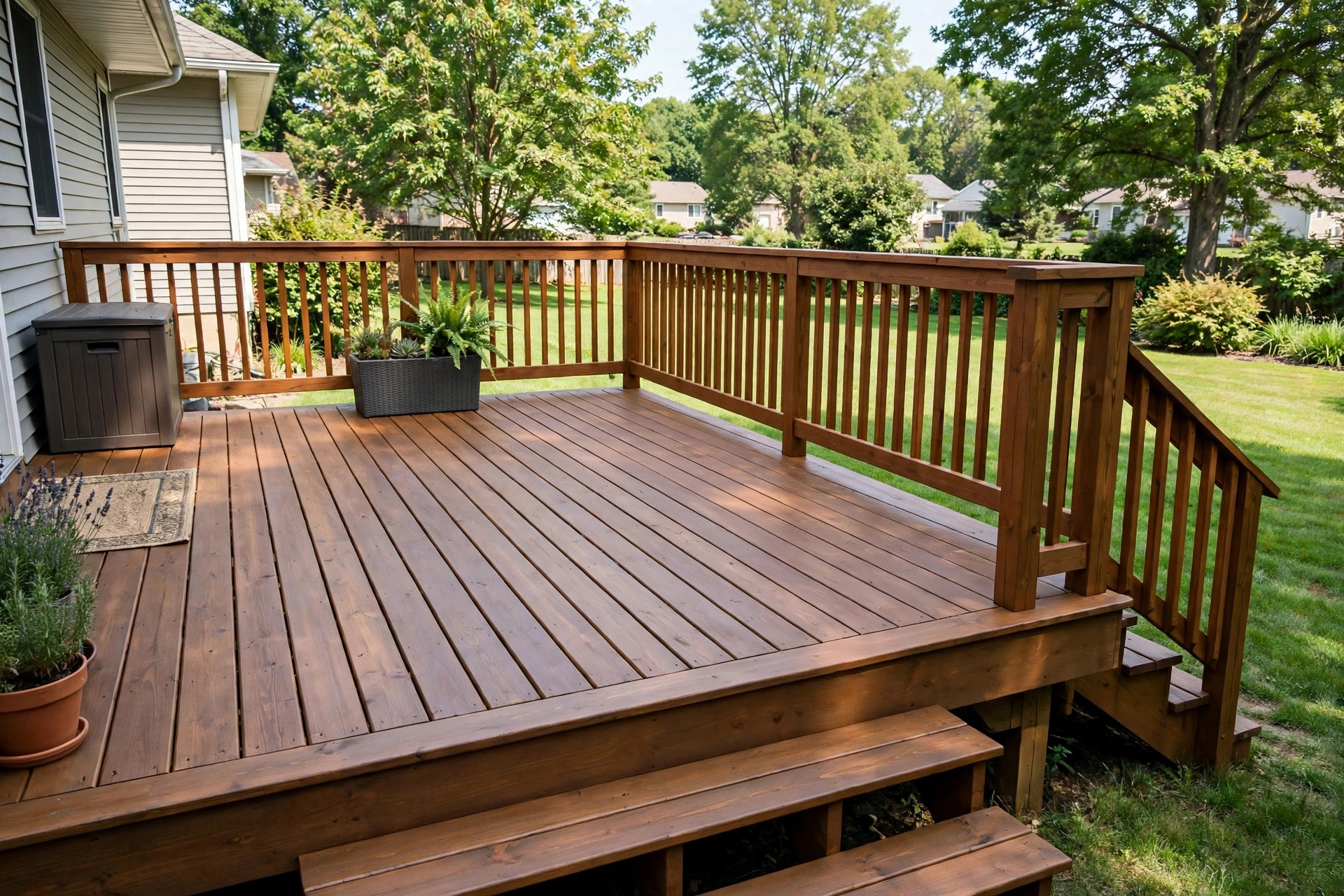

Many deck owners in the United States face the same question each spring. This solid stain vs paint for deck usa guide will help you answer it. Both products add color. Both guard wood from sun and rain. Yet they behave in different ways. The choice shapes how your deck looks, how long the finish lasts, and how much work you will face in the years ahead.
A deck is not like a wall inside the house. It takes hard use. Feet move across it. Chairs drag on it. The sun beats on it all day. Rain pools on it after storms. Snow may sit on it for weeks in the north. So the finish you pick must be tough. It must grip the wood. And it must fail in a way that is easy to fix.
Let us walk through the facts, step by step.
Why the Choice Matters
A deck finish does more than add beauty. It slows rot. It slows warping and cracking. It blocks the sun’s rays that turn wood gray and brittle. In the United States, where weather runs from desert heat to coastal fog to mountain snow, a good finish can add years to the life of your boards.
The wrong finish costs money twice. First you pay for the product and the labor. Then you pay again when it peels or flakes and must be stripped. That is why it pays to know how solid stain and paint differ before you open the first can.
What Solid Stain Is: Solid Stain vs Paint for Deck Usa Guide
How It Works
Solid stain is a thick form of wood stain. It carries a high load of color pigment. When you brush it on, much of the pigment sinks into the wood grain. A thin skin of color stays on the surface. The result hides the grain fully, like paint, but the bond with the wood is deeper.
Because solid stain soaks in, it moves with the wood as the boards swell and shrink. It is less likely to crack and peel in sheets. When it wears, it tends to fade and thin out slowly, rather than lift off in flakes.
Strengths of Solid Stain
Solid stain lets wood breathe. Moisture can escape from the board without pushing the finish off. This makes it a strong choice for decks, where rain sits on the boards and humidity moves through the wood.
It also renews well. A fresh coat after cleaning often bonds to the old coat with little extra work. Many deck owners like this because recoating takes a day, not a week of stripping.
Solid stain hides flaws too. Knots, grain marks, and small stains from years of weather disappear under the color. It is a kind way to give new life to an old deck.
Weak Points of Solid Stain
Solid stain does not build as thick a film as paint. It may wear faster on stair treads and high-traffic paths. You may need to recoat every two to four years, based on sun, weather, and use.
The color range is smaller than paint. Most makers offer dozens of shades, not thousands. If you want a bold or exact custom color, paint gives more choice.
It also fades. Deep colors lose richness in strong sun. Lighter colors last longer in bright regions like the Southwest.
What Deck Paint Is
How It Works
Paint forms a film on top of the wood. It sits on the surface rather than sinking deep into it. Primer bonds to the wood. Then one or two coats of paint build the skin that gives color and guard.
The film is thick. It hides everything: grain, knots, nail heads, old marks. It gives a smooth, clean look that many owners love. Modern porch and deck paints are made to resist foot traffic and wear.
Strengths of Paint
Paint offers huge color choice. Thousands of shades are ready at the store. You can match trim, siding, or an exact design plan.
A good paint film guards well against sun and rain. On vertical surfaces, such as deck railings and posts, paint can last many years with little wear.
Paint also covers worn wood fully. If the boards have age marks and patched spots, paint gives a uniform look that stain cannot match in every case.
Weak Points of Paint
The thick film is the weak point on a deck floor. When moisture gets trapped under the film, the paint lifts and peels. Deck floors are flat. Water sits on them. Sun bakes them. Boards swell and shrink. All of this strains the film. Peeling paint on a deck is hard to fix. You often must scrape, sand, and strip before you can repaint.
Paint also needs primer on bare wood. That adds a step, a cost, and time.
Solid Stain vs Paint: Side by Side
Here is the plain comparison.
Look: Both hide the grain. Paint gives a smoother film. Solid stain keeps a hint of wood texture.
Bond: Solid stain soaks in and grips the fibers. Paint sits on top and can lose its grip when water works under the edge.
Life span: Solid stain on deck floors often lasts two to four years. Deck paint on floors often lasts three to five years when the prep is perfect, but peeling can cut that short. On railings and vertical boards, both last longer.
Recoat ease: Solid stain wins. Clean and recoat. Paint that has failed needs scraping and sanding, sometimes full stripping.
Color range: Paint wins. Thousands of colors. Solid stain offers dozens of wood-like and solid shades.
Moisture tolerance: Solid stain wins. It breathes. Paint seals, and sealed decks can trap water.
Cost: Similar per gallon. Labor is the real difference. Paint needs more prep now and more repair later if it peels.
For more ideas on stain choices, see our write-up on the best exterior wood stain for decks. To plan the budget, a deck staining cost guide helps. If you also care for outdoor furniture, read our teak oil vs stain for outdoor furniture notes.
How to Choose for Your Deck
For a New Deck
New wood holds both products well, but solid stain is often the safer first finish. It moves with the wood while the boards age and settle. Paint can lock moisture into new lumber that still holds mill glaze or sap. Many builders wait for new wood to weather a season before any finish, then use stain.
For an Old, Weathered Deck
Solid stain is usually the better friend of old wood. Old boards are dry and thirsty. They drink the stain in and hold it well. The color hides gray patches and small scars. Paint on old, rough wood can look good for a year, then peel where the boards cup and split.
For a Deck That Is Already Painted
Do not switch to stain without stripping the old paint. Solid stain cannot soak through a paint film. It will sit on top and fail. You have two honest choices. Keep painting, with good prep, or strip the paint fully and then stain. Stripping is hard work. Many owners keep painting once a deck has been painted.
For Your Climate
In the Southeast, where humidity is high and wood stays damp, solid stain’s breathing wins. In the Southwest, where sun is brutal, paint’s thick film blocks rays well on vertical boards, but solid stain with UV guard works well on floors. In the North, where freeze and thaw break films, stain moves with the wood and fails less often. In coastal zones with salt air, either works if prep is clean and dry.
Retailers and makers offer strong advice on finishes for these zones. The Behr site shows deck stain options by climate and surface. The Sherwin-Williams catalog lists solid stains and deck paints side by side. This Old House gives plain guidance on prep for outdoor wood.
Cost and Price
Prices shift by state and store, but the pattern holds across the country.
A gallon of solid stain or quality deck paint costs much the same in most stores. A typical deck needs several gallons based on size and coats. Two coats are the norm. Solid stain sometimes covers well in two coats. Paint on bare wood often needs primer plus two coats, which means more gallons and more labor hours.
Do-it-yourself work costs the price of materials plus tools and your time. Hiring a pro adds labor cost, often the largest share of the bill. Pros in high-cost cities charge far more than pros in small towns.
Over ten years, solid stain often costs less in upkeep. Recoats are quick. Paint may need one big, costly strip-and-repaint job in that span. The Home Depot and Lowe’s sites list current prices for stain, paint, primer, and tools so you can price your deck size before you start.
Prep and Application: Steps That Decide the Result
The product matters less than the prep. A cheap stain on clean, dry wood beats a costly paint on dirty, damp wood. Follow these steps with care.
Cleaning
Start with a deck cleaner or a mild soap wash. Remove dirt, mildew, and old chalk. A pressure washer can help, but keep the tip far from the wood. Too much force tears the fibers and ruins the surface. Let the deck dry for two or three days. The wood must be dry, not just the surface.
Repair
Replace rotted boards. Set popped nails. Sand splinters and rough edges. Fill large cracks if you wish, though small cracks are normal in outdoor wood. Tighten loose railings and steps. A finish cannot save a weak frame.
Coating
Apply on a mild day. Avoid hot sun that dries the product too fast. Avoid rain for at least a day after coating. Brush along the grain. Work board by board, end to end, to avoid lap marks. Two thin coats beat one thick coat. Let the first coat dry as the label says before the second.
Test a small patch first. Color looks different on your wood, in your light, than on a store chip. Bob Vila offers step-by-step guides for deck prep and coating. The Benjamin Moore site lists dry times and weather limits for its stains and paints. The Spruce covers common deck coating errors to avoid. HGTV shows color ideas for decks and porches.
Care and Upkeep
A deck finish is not a one-time job. It is a small habit.
Sweep often. Dirt grinds into the finish underfoot. Wash once a year with a gentle cleaner. Move planters and rugs now and then so damp spots do not sit in one place. Trim plants that drip water onto the boards.
Watch for wear each spring. With solid stain, thin spots look faded and dry. A fresh coat on clean wood renews them. With paint, watch for small chips and cracks. Fix them fast. Water enters through small breaks and lifts large sheets if you wait.
Plan on recoating solid stain every two to four years on floors. Plan on repainting every three to five years, longer if the old paint still holds well. Railings and posts last longer than floors for both products.
Safety
Finish work is safe if you follow basic rules.
Work in open air. Fumes from oil-based products can cause headache and dizziness. Keep children and pets off the deck until the finish is fully dry and hard. Wear gloves and eye guard. Wear a mask when sanding, scraping, or spraying.
If your deck or home has paint from before 1978, test for lead before you scrape or sand. Lead dust is a real danger. If lead is present, hire a certified pro to handle the work safely.
Dispose of rags the right way. Oil-soaked rags can catch fire on their own. Lay them flat outside to dry, or store them in a sealed metal can with water, as the label directs.
Use a steady ladder for high rails and posts. Keep the ladder feet on firm, level ground. Never lean far past the rails.
Frequently Asked Questions
How long does solid stain last on a deck?
On deck floors, solid stain often lasts two to four years. Sun, rain, and foot traffic decide the exact life. Shaded decks last longer. Full-sun decks wear faster. Railings and vertical boards may hold the color for four to six years.
How long does deck paint last?
Deck paint on floors often lasts three to five years when prep is right. But peeling is common on flat boards that hold water. Vertical rails and posts painted with good primer can last five to seven years or more.
Can I put solid stain over old paint?
No. Solid stain must soak into the wood. Old paint blocks it. You must strip the paint fully first. That is a big job on a whole deck. Most owners keep painting a deck that was painted before.
Can I put paint over old solid stain?
Yes, in many cases. Clean the deck well. Sand lightly to give the surface grip. Apply primer, then paint. Check the paint label to be sure it bonds over stain. A test patch tells the truth.
Which is better for an old, weathered deck?
Solid stain is usually the better pick for old wood. It soaks into dry boards and hides gray color. It fails by slow fading, not by peeling sheets. It recoats with less work.
Which costs less over ten years?
Solid stain often wins over ten years. The gallons cost about the same, but recoats are simple. Paint can demand one hard, costly stripping job in that span. Your local labor rates and your deck size decide the final numbers.
A Short Final Word
There is no single right answer for every deck. There is only the right answer for your deck. Look at your boards. Look at your weather. Look at what finish is on there now.
Choose solid stain for old wood, damp climates, and easy recoats. Choose paint for bold color, smooth cover on rough boards, and long life on rails and posts. Whichever you pick, give it clean, dry wood and two thin coats. Good prep beats a costly can every time. Your deck will thank you with years of steady service.
References
Behr. (n.d.). Paints, primers, and stains. https://www.behr.com Benjamin Moore. (n.d.). Paints and stains. https://www.benjaminmoore.com Bob Vila. (n.d.). Home improvement advice. https://www.bobvila.com HGTV. (n.d.). Home and garden ideas. https://www.hgtv.com Lowe’s. (n.d.). Home improvement products. https://www.lowes.com Sherwin-Williams. (n.d.). Paints and coatings. https://www.sherwin-williams.com The Home Depot. (n.d.). Home improvement products. https://www.homedepot.com The Spruce. (n.d.). Home and garden advice. https://www.thespruce.com This Old House. (n.d.). Home renovation guidance. https://www.thisoldhouse.com
Was this guide helpful?

About David Wilson
The My Garden US editorial team writes practical, in-depth home and garden guides for American homeowners — tested advice, no fluff.
You May Also Like

Modern Farmhouse Paint Colors Exterior USA
August 2, 2026 0 views
House Painting Estimate Free Near Me: What Every Homeowner Should Know
May 28, 2026 0 views
Concrete Countertop Sealer Reviews USA: What Homeowners Should Know
June 25, 2026 0 views