Why Your Workshop Walls Deserve Better
Many garage walls sit bare for years. They show gray drywall, stained concrete block, or old wood panels. That is a waste. A good coat of paint changes the whole room. The best garage wall paint ideas for workshops usa homeowners use do more than add color. They make the space brighter. They make it easier to find tools. They protect the walls from dust, grease, and damp air.
A workshop is not a living room. The walls take hard use. Tools bump them. Sawdust settles on them. Oil and grease find their way onto every surface. Cold and heat move through them with the seasons. Paint made for these conditions holds up. Cheap paint made for bedrooms does not. It chips. It stains. It fades in a year or two.
Good workshop paint also helps you work safer. Light colors bounce light around the room. A bright garage needs fewer lamps. You can see what you are doing. You can see small parts on a bench. You can spot a spill before someone slips on it. These small things matter every day.
How to Choose the Right Paint: Garage Wall Paint Ideas for Workshops Usa
Durability Comes First
Start with durability. Workshop walls face scrapes, knocks, and stains. Look for paint labeled washable or scrubbable. These paints resist cleaning. You can wipe off grease and grime without rubbing the color away. Paints with a harder film hold up longer. Satin and semi-gloss finishes form a harder film than flat paint.
Think about what happens in your garage. Do you weld, grind, or cut metal? Do you work on cars? If so, sparks and heat may reach the walls. Do you spray finishes or use solvents? Strong chemicals can eat soft paint. In a rough shop, a tougher coating pays off. In a light hobby shop, standard quality paint is enough.
Pick a Finish That Cleans Up Well
Finish matters as much as color. Flat paint hides wall flaws. But flat paint drinks in stains. It is hard to wash. For a workshop, skip flat paint. Eggshell is the softest finish worth using. It wipes clean in a light-use shop. Satin is the sweet spot for most workshops. It resists moisture and scrubs well. It has a soft sheen that hides small bumps and dents.
Semi-gloss is even tougher. It is a good pick for walls near workbenches, sinks, and doors. It stands up to water and grease. High-gloss is the toughest of all. But high-gloss shows every flaw in the wall. Use it on trim and doors, not on big rough walls. If your walls are rough concrete block, satin or semi-gloss masonry paint hides texture better and still cleans up.
Let Light Do the Work
Garages are dark by nature. Most have small windows or none at all. Light-colored paint doubles the light you already have. White, off-white, and pale gray are the classic picks. They bounce both daylight and lamp light. A bright shop feels bigger. It feels cleaner. It is easier on your eyes.
That does not mean the whole room must be white. Many owners paint the upper walls white and the lower walls a darker color. The dark lower band hides scuffs and dirt. The white top keeps the room bright. This two-tone trick is common in shops across the country. It looks sharp. It works hard.
Paint Ideas and Color Schemes
Classic White and Light Gray
White walls never go out of style in a workshop. They show the true color of your work. They make small rooms feel open. They cost less in lighting because lamps go further. If pure white feels cold, try warm white or light gray. These tones feel softer. They still reflect plenty of light.
Pair light walls with a clean ceiling. A white ceiling doubles the bounce. Many shop owners paint the ceiling bright white even when the walls are gray. The effect is clear at once. The whole room lifts. If you only do one thing, paint the ceiling white. You will feel the difference the same day.
Color Zones for Work Areas
Big garages serve many jobs. One corner holds the car. Another holds the workbench. A third stores garden tools. Color zones can mark these areas. Paint the bench area a warm tone, like soft tan or light sage. Paint the car bay light gray. Paint the storage wall a cool blue-gray.
Zones help you find things fast. Use painter’s tape for clean lines between zones. Keep the colors light enough to reflect light. A zone wall can also carry a simple stencil or label. These small touches make a shop feel like a real workplace.
Bold Accent Walls and Stripes
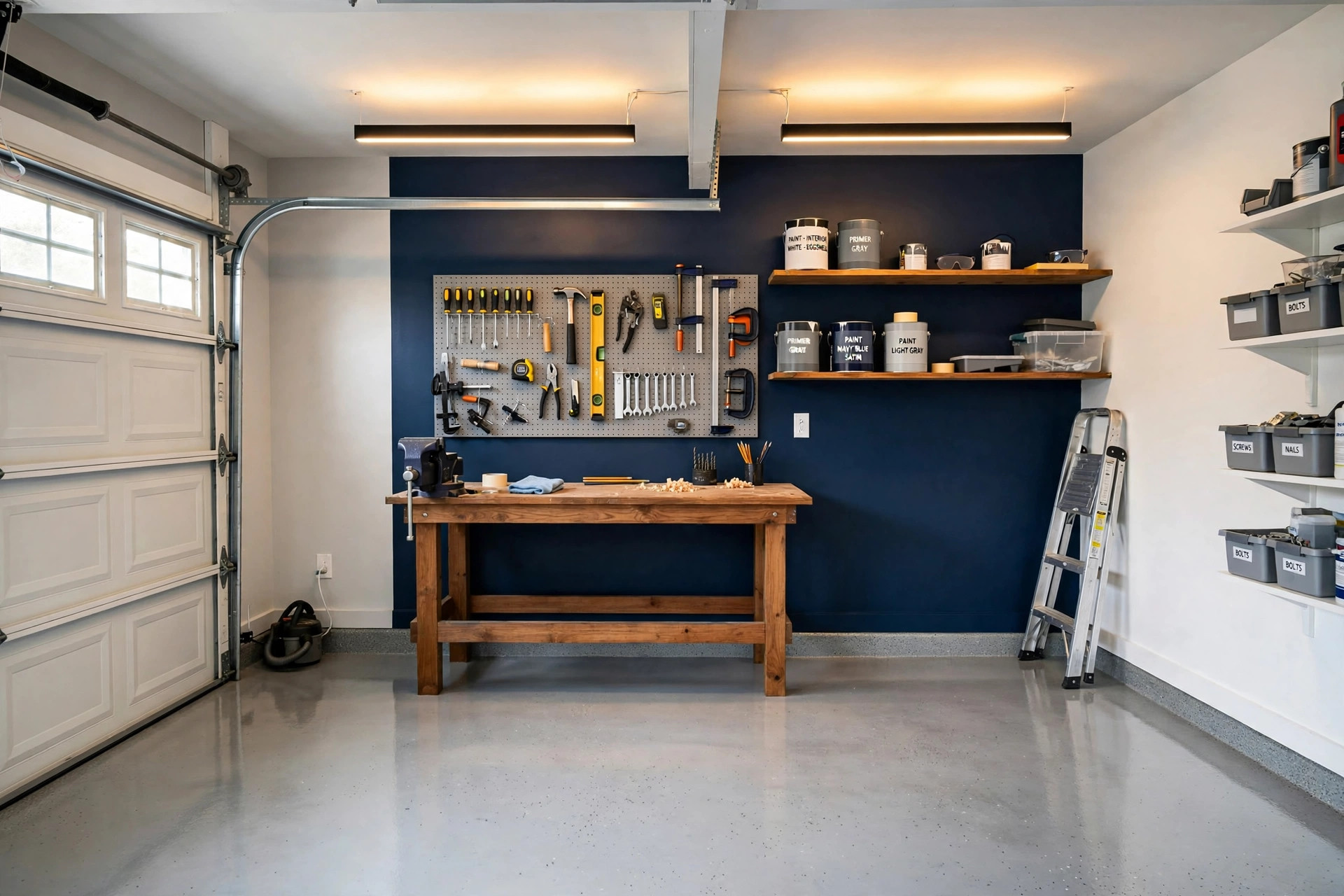
One bold wall can wake up a dull garage. Pick the wall behind the workbench. Paint it a deep color, like navy, forest green, or brick red. Keep the other three walls light. The dark wall anchors the room. It hides stains near the bench. It looks great behind pegboard and shelves.
Stripes are another simple idea. A wide horizontal stripe in a strong color can run around the room at chair height. It adds style for little money. Vertical stripes make low ceilings feel taller. Use tape and a level for crisp edges. Two gallons of accent paint is often enough. This is a weekend project with a big payoff.
Chalkboard and Marking Walls
Some shops need a wall that works as a tool. Chalkboard paint turns a section of wall into a writing surface. You can sketch plans, list cuts, and note measurements. It wipes clean with a damp cloth. Put it near the bench where you plan projects.
Another idea is a measuring wall. Paint a tall stripe and mark inches up the wall with a marker. You can measure boards against it in seconds. Some owners paint a grid for laying out projects. These functional wall ideas borrow from design trends but serve a working shop. A wall that helps you measure twice and cut once earns its keep.
Paint Types and Options
Standard Latex Paint
Water-based latex paint suits most workshop walls. It dries fast. It cleans up with soap and water. It has low odor, so you can work in the garage soon after painting. Modern latex paints are tough. A quality satin latex stands up to years of shop use.
Use latex on drywall and wood walls. Prime bare drywall first. A good primer seals the surface and helps the topcoat stick. For help with prep, see this guide to the best primer for drywall patches usa. Two topcoats over primer give the best result. One coat may look fine at first. It will not last.
Masonry and Concrete Paint
Many garages have concrete block walls. Standard wall paint does not bond well to block. It peels when moisture pushes through. Masonry paint is made for this job. It sticks to block, brick, and poured concrete. It lets the wall breathe while it blocks water.
For product options and reviews, look at guides for the best paint for concrete block walls usa. Elastomeric coatings are a thicker option. They bridge small cracks. They stretch as the wall moves with heat and cold. They cost more. On older block walls with hairline cracks, they are worth it.
Epoxy and Two-Part Coatings
Epoxy coatings are the toughest wall finish a homeowner can buy. Two parts mix together and harden into a hard shell. Epoxy resists chemicals, oil, and hot tires. It is common on garage floors. It also works on the lower walls, where abuse is worst.
Epoxy is harder to apply than latex. You must mix it right and work fast. The fumes are strong. Ventilate well and wear a respirator. For most home shops, epoxy on the lower four feet of wall is plenty. Paint the rest with latex. This mix gives you armor where you need it and easy painting everywhere else.
Cost and Price
Painting a workshop costs less than most home projects. A gallon of quality interior latex paint runs about twenty-five to fifty dollars. Primer costs about the same. A two-car garage needs about six to ten gallons for two coats on the walls. That puts paint and primer at roughly three hundred to six hundred dollars for a do-it-yourself job.
Special coatings cost more. Masonry paint runs a bit higher than standard latex. A gallon of elastomeric coating can cost forty to sixty dollars. Two-part epoxy kits cost more still. A wall epoxy kit that covers a few hundred square feet may run one hundred to two hundred dollars. Even so, a full shop paint job with tough coatings often stays under one thousand dollars in materials.
Tools add a little more. Rollers, brushes, tape, drop cloths, and a paint tray may cost fifty to one hundred dollars. If you hire a painter, labor often doubles or triples the total. Most garage walls are simple rectangles. A careful homeowner can do the job in a weekend. The savings are real.
Care and Upkeep
Painted workshop walls last longer with light care. Dust them twice a year. A broom or a dry mop takes off cobwebs and sawdust. Wipe greasy spots near the bench with a damp cloth and mild soap. Satin and semi-gloss finishes clean up with little effort. Do not use harsh cleaners. They can dull the finish.
Touch up chips and scuffs as they happen. Keep a small jar of each wall color with a brush. A dab of paint takes a minute. It stops rust on metal walls and rot on wood walls from starting. It keeps the shop looking sharp. Once a year, walk the walls and mark every spot that needs a touch-up. Fix them all in one session.
Watch for moisture. Garages get damp. If paint bubbles or peels, water is getting in. Find the source. It may be a roof leak, a bad gutter, or water wicking up through the slab. Fix the water first. Then scrape, prime, and repaint. For walls that face damp soil, a waterproof paint for basement walls interior can stop seepage through block. Paint cannot fix a leak. It can only cover a dry wall.
Safety
Painting a garage is safe work if you take basic care. Ventilate the room. Open the garage door and any windows. A fan that pulls air out helps. Most latex paints have low odor. But any paint gives off fumes while it dries. Fresh air keeps you clear-headed.
Wear a dust mask when you sand old paint. Wear a respirator when you use oil-based paint, epoxy, or spray equipment. Old garages may have lead paint. Homes built before 1978 often do. Test before you sand or scrape. Lead dust is a real health risk. If the test is positive, follow federal guidance on lead-safe work or hire a certified firm. The Consumer Product Safety Commission publishes clear rules for lead paint safety in homes.
Keep paint away from open flame and pilot lights. Store cans off the floor on a shelf. Let rags from oil-based products dry flat outdoors before you throw them away. Bunched oily rags can catch fire on their own. These steps take minutes. They prevent real harm.
Frequently Asked Questions
What is the best color for garage workshop walls?
Light colors work best in most shops. White, off-white, and light gray reflect the most light. They make the room brighter and feel larger. If you want color, keep it on one accent wall or below a chair rail. Keep the main walls light. Your eyes and your light bill will thank you.
Should I use flat, satin, or semi-gloss paint in a workshop?
Skip flat paint. It stains and will not wash well. Satin is the best all-around pick for workshop walls. It cleans up well and hides small flaws. Use semi-gloss near sinks, doors, and workbenches where grease and water hit the wall. Use high-gloss only on trim.
Can I paint concrete block garage walls?
Yes. Clean the block first. A pressure washer or a stiff brush and TSP cleaner take off dirt and loose paint. Let the wall dry fully. Fill cracks with masonry caulk. Prime with a masonry primer. Then apply two coats of masonry or elastomeric paint. This system sticks and lasts.
How do I make a dark garage feel brighter with paint?
Paint the ceiling bright white. Paint the walls a light color. Add a glossy floor coating to bounce light up. Clean the light fixtures and switch to daylight bulbs. Light paint plus good lamps can make a windowless garage feel twice as bright. These ideas pair well with broader garage lighting and design tips.
Do I need to prime garage walls before painting?
Prime any bare surface. Bare drywall, bare wood, and bare block all need primer. Primer seals the surface. It helps the topcoat bond. It blocks stains from bleeding through. If the old paint is sound and clean, you can often paint over it without primer. Scuff glossy old paint with sandpaper first so the new coat grips.
How long does workshop wall paint last?
A good job lasts five to ten years in a home shop. Heavy-use shops may need touch-ups sooner. Quality paint, good prep, and the right finish stretch that life. Touch up damage early. Repaint when cleaning no longer brings back the color.
A Short Final Word
The right paint turns a garage from a storage box into a real workshop. Pick tough paint. Pick light colors. Prep the walls well. The job takes a weekend. The payoff lasts for years. For color charts and product lines, browse the paint makers like Behr, Sherwin-Williams, and Benjamin Moore. For project guides, check The Spruce, Bob Vila, and HGTV. For tools and supplies in one trip, The Home Depot stocks rollers, tape, primers, and coatings for every wall type. Start with one wall. You will want to finish the rest.
References
Behr. (n.d.). Paints, primers, and stains. https://www.behr.com Benjamin Moore. (n.d.). Paints and stains. https://www.benjaminmoore.com Bob Vila. (n.d.). Home improvement advice. https://www.bobvila.com HGTV. (n.d.). Home and garden ideas. https://www.hgtv.com Sherwin-Williams. (n.d.). Paints and coatings. https://www.sherwin-williams.com The Home Depot. (n.d.). Home improvement products. https://www.homedepot.com The Spruce. (n.d.). Home and garden advice. https://www.thespruce.com This Old House. (n.d.). Home renovation guidance. https://www.thisoldhouse.com U.S. Consumer Product Safety Commission. (n.d.). Product safety information. https://www.cpsc.gov
Was this guide helpful?

About James Carter
The My Garden US editorial team writes practical, in-depth home and garden guides for American homeowners — tested advice, no fluff.