
Introduction
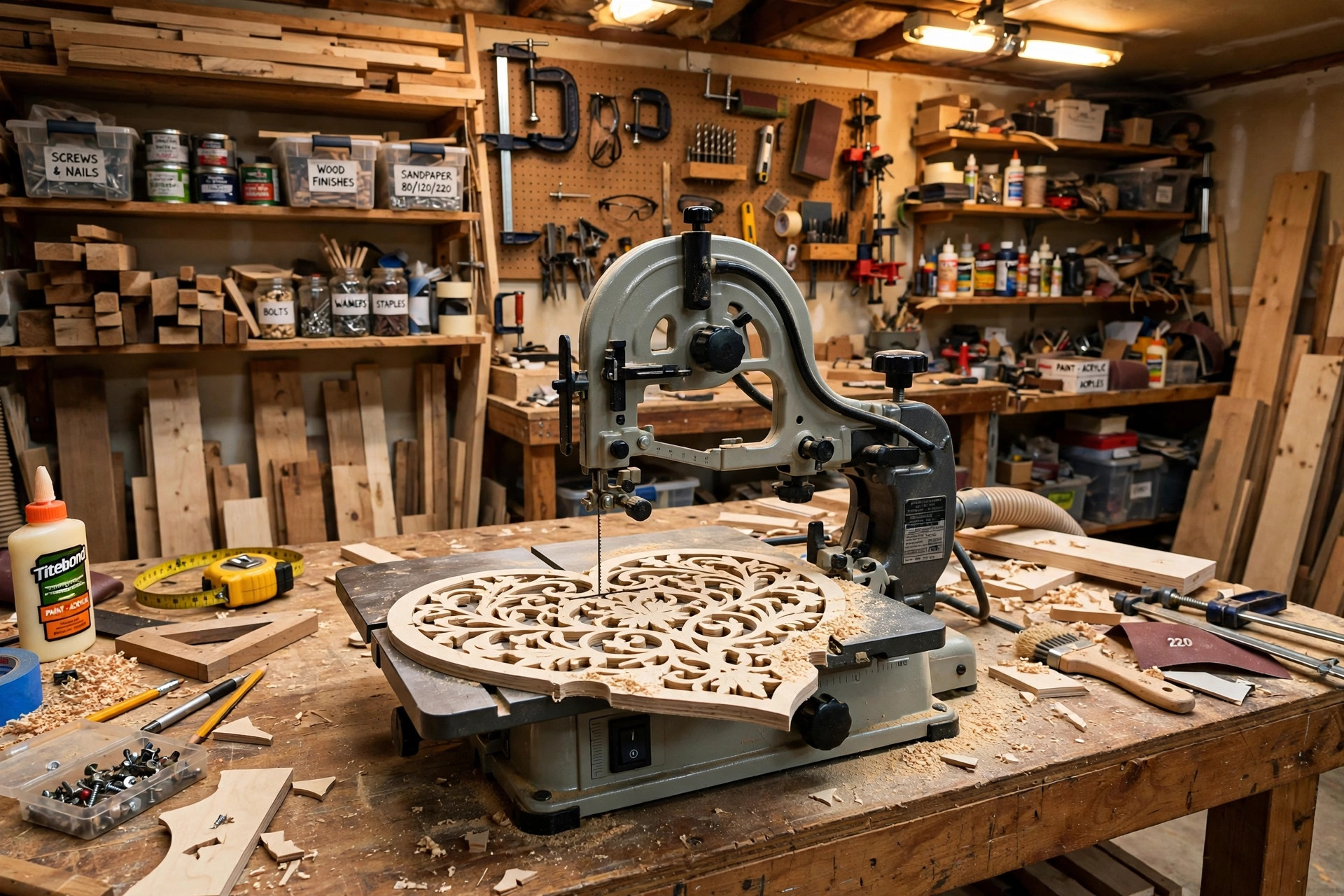
A scroll saw is one of the most useful tools a home craft maker can own. It cuts curves, corners, and fine detail that larger saws cannot handle. If you search for the best scroll saw for woodworking crafts home use, you will find many choices. Some are made for weekend crafters. Others serve serious woodworkers. This guide will help you pick the right one for your home shop.
The scroll saw has a long history. Craftsmen have used fine blade saws for centuries. The modern electric scroll saw arrived in the twentieth century and soon became a favorite of home workshops. Today it is a standard tool for fretwork, puzzles, ornaments, and model parts. It runs quietly, takes little space, and is far safer than a band saw or table saw for small work. For these reasons, it remains a sound first choice for the home woodworker.
Why a Scroll Saw Matters for Home Woodworking Crafts: Best Scroll Saw for Woodworking Crafts Home
A scroll saw does one job better than any other power saw: it cuts tight curves in thin wood with high control. You guide the wood with your hands. The blade moves up and down through a small table. This design lets you stop, back out, and change direction with ease. It is the right tool for puzzles, name plaques, holiday ornaments, and decorative panels.
The tool also suits the home setting well. A scroll saw is small enough for a workbench or a sturdy table. Most models weigh under forty pounds. They can sit in a corner of a garage, a basement, or a spare room. When you are done, you can put the saw away on a shelf. Few power tools fit the home shop this neatly.
Noise is another gain. A scroll saw hums at a low level. It is much quieter than a router or a circular saw. This matters in a home where family members share the space. A well-chosen scroll saw for woodworking crafts can run in the evening without shaking the walls.
What to Look for When Choosing a Scroll Saw
Throat Depth
Throat depth is the distance from the blade to the back frame of the saw. It sets the largest piece you can cut. A sixteen inch saw is the common home size. It handles most craft work with room to spare. Larger throats, near twenty-one inches, suit bigger panels. For small crafts, sixteen inches is enough.
Blade Speed and Stroke
Most scroll saws offer variable speed. This matters more than beginners think. Slow speeds suit plastic and soft wood. Faster speeds suit clean cuts in hardwood. A range near four hundred to one thousand eight hundred strokes per minute covers home craft needs well. A long stroke length clears sawdust from the cut and cools the blade.
Blade Type and Changing
Scroll saws use two blade types. Pinned blades have small pins at each end and are easy to mount. Pinless blades hold by clamping. Pinless blades come in more sizes and finer teeth. They allow tighter curves and cleaner cuts. If you plan to do fine fretwork, choose a saw that accepts pinless blades. Tool-free blade clamps are a comfort you will value after many blade changes. Guidance from craft suppliers like Michaels and Dick Blick often notes that easy blade changes keep beginners working instead of fighting the tool.
Table and Tilt
The table should be flat, smooth, and large enough to support your work. Cast iron tables stay flat for years. Aluminum tables are lighter but can flex under pressure. A table that tilts to the left and right lets you cut bevels. This feature matters for stacked cutting and angled joints. A dust blower or dust port keeps the cut line clear so your work stays accurate.
Vibration and Build Weight
Cheap saws shake at high speed. Shaking makes fine cuts hard and tires your hands. Heavier saws with solid frames vibrate less. Read owner reviews before buying. A steady saw at mid price beats a light saw that rattles. Retailers such as Home Depot and Lowe’s carry several bench models you can compare side by side for weight and feel.
Types of Scroll Saws for Home Craft Use
Entry Level Saws
Entry level saws cost the least and suit first-time buyers. They cut well in soft wood and thin stock. Most have sixteen inch throats and single speed or limited speed control. They are fine for learning. Serious crafters will outgrow them within a year.
Mid Range Saws
Mid range saws are the sweet spot for most home woodworkers. They offer variable speed, pinless blade support, and better tables. Vibration control is clearly better than on cheap models. This class gives the best mix of price and quality for years of craft work.
Premium and Parallel Arm Saws
Top end saws use parallel arms that move the blade straight up and down. This design cuts with less front to back motion. The result is cleaner cuts and longer blade life. These saws cost more, but they are built to last decades. A craft maker who cuts daily will find the price justified. Woodworking specialists like Rockler stock saws in this class and can advise on setup.
A used saw can be a wise buy. Many home crafters sell good saws when they move or upgrade. Check that the table is flat, the arms move free, and the motor runs smooth. A used mid range saw often costs less than a new entry saw and cuts far better.
Cost and Price Range
Prices for home scroll saws fall into clear bands. Entry saws run from about eighty to one hundred sixty dollars. Mid range saws run from about one hundred seventy to four hundred dollars. Premium saws run from four hundred to nine hundred dollars or more.
Blades are the main running cost. A pack of pinless blades costs a few dollars and lasts through many projects. Hardwood and plywood wear blades faster than pine. Buy blades in variety packs so you can match the tooth count to the wood. Thick stock needs coarse teeth. Thin stock needs fine teeth.
Plan for small extras as well. A good work light, a few clamps, and a dust mask add little to the total. A stand or bench keeps the saw at the right height. Most home makers spend well under one hundred dollars on these extras.
Care and Upkeep
A scroll saw asks little of its owner. Keep the table clean and free of rust. Wipe it with a light oil cloth after work in a damp shop. Blow dust from the motor vents now and then. A clogged motor runs hot and wears out early.
Check the blade clamps and tension lever before each session. Loose clamps let the blade twist and break. Change blades as soon as cuts slow down. A dull blade forces you to push, and pushing bends thin blades and breaks fine teeth.
Lubrication needs are small. A drop of oil on the moving joints once a month keeps action smooth. Store extra blades dry so they do not rust. Keep the saw covered when not in use if your shop is dusty. With these simple habits, a good saw serves for many years. Long-term care advice from sources like This Old House and Bob Vila holds true across most home power tools.
Safety in the Home Workshop
Scroll saws are among the safest power saws, but they still deserve care. Keep fingers at least two inches from the blade. Use a hold-down foot where the saw provides one. Wear safety glasses at all times. Sawdust flies up from the table more than many beginners expect.
Good lighting is a safety feature. You must see the cut line clearly to keep your hands clear of the blade. A desk lamp aimed at the table works well. Take breaks when your eyes tire. Tired eyes lead to wandering hands.
Dust matters in a home shop. Fine sawdust from plywood and some hardwoods can harm the lungs. Wear a dust mask for long cutting sessions. A small shop vacuum near the dust port keeps the air cleaner. The Consumer Product Safety Commission offers general guidance on safe use of home power tools and workshop safety for families.
Children should watch, not operate, a scroll saw until they are old enough to be taught fully. Unplug the saw when you leave the room. Store blades and small parts out of reach. These simple rules keep the home shop safe for all.
Pairing Your Scroll Saw With Other Home Craft Tools
A scroll saw rarely works alone. Many craft makers pair it with a wood burning kit for fine detail work. Burned lines and scroll cut shapes go well together on signs and plaques. A hot glue gun for assembly helps join cut pieces quickly. For a tidy shop, a craft storage organizer keeps blades, patterns, and small parts within reach. Fabric and general craft supplies from JOANN round out a home craft corner.
Frequently Asked Questions
What is the best scroll saw for a complete beginner?
A mid priced sixteen inch saw with variable speed is the best start. It is easy to learn on and good enough to keep. Avoid the cheapest single speed models if your budget allows. Variable speed makes learning far easier.
Can a scroll saw cut metal?
A scroll saw can cut very thin soft metal with the right blade. Copper, brass, and thin aluminum are possible. Use slow speed and fine teeth. It is not meant for steel or thick metal. A jeweler’s saw or metal cutting tool serves better for that work.
How thick a wood can a scroll saw cut?
Most home scroll saws cut stock up to two inches thick. Thin stock under one inch is where the tool shines. Thick hardwood needs slow speed, coarse blades, and patience. For heavy ripping, use a band saw instead.
How long do scroll saw blades last?
A blade can last from minutes to hours. It depends on the wood, the speed, and your pressure. Hardwood and knots wear teeth fast. Gentle feeding and correct speed extend blade life. Change the blade when the cut starts to wander or burn the wood.
Is a scroll saw worth it for small home crafts?
Yes, if you cut shapes more than a few times a year. Puzzles, ornaments, signs, and toy parts are all natural scroll saw work. The tool is cheap to run, quiet, and safe compared with larger saws. Many home crafters call it their most used power tool.
What wood works best for scroll saw crafts?
Soft woods like pine, basswood, and Baltic birch plywood cut cleanly and are easy to find. Basswood is a favorite for fine fretwork because it cuts smooth and holds detail. Avoid wet or twisted boards. They bind the blade and spoil cuts.
A Short Final Word
The best scroll saw for woodworking crafts home use is the one that fits your hands, your space, and your budget. Choose variable speed, pinless blades, and a steady frame. Keep the saw clean, the blades sharp, and your fingers clear. With steady practice, this small tool will open a wide world of home craft work. From simple puzzles to fine fretwork, the scroll saw earns its place on the home workbench year after year.
References
Blick Art Materials. (n.d.). Art and craft supplies. https://www.dickblick.com Bob Vila. (n.d.). Home improvement advice. https://www.bobvila.com Family Handyman. (n.d.). DIY home repair and maintenance. https://www.familyhandyman.com JOANN. (n.d.). Fabric and craft supplies. https://www.joann.com Lowe’s. (n.d.). Home improvement products. https://www.lowes.com Michaels. (n.d.). Arts and crafts supplies. https://www.michaels.com Rockler. (n.d.). Woodworking tools and supplies. https://www.rockler.com The Home Depot. (n.d.). Home improvement products. https://www.homedepot.com This Old House. (n.d.). Home renovation guidance. https://www.thisoldhouse.com U.S. Consumer Product Safety Commission. (n.d.). Product safety information. https://www.cpsc.gov
Was this guide helpful?

About Emily Rodriguez
The My Garden US editorial team writes practical, in-depth home and garden guides for American homeowners — tested advice, no fluff.
You May Also Like
DIY Friendship Bracelet Kit for Kids Crafts: A Parent’s Guide
May 30, 2026 0 views
The Best Yarn for Amigurumi Toys Soft USA Makers Trust
March 27, 2026 0 views
Best Jewelry Wire for Wrapping and Beading: A Complete Guide
March 22, 2026 0 views