
A Quiet Craft With a Woolly Heart
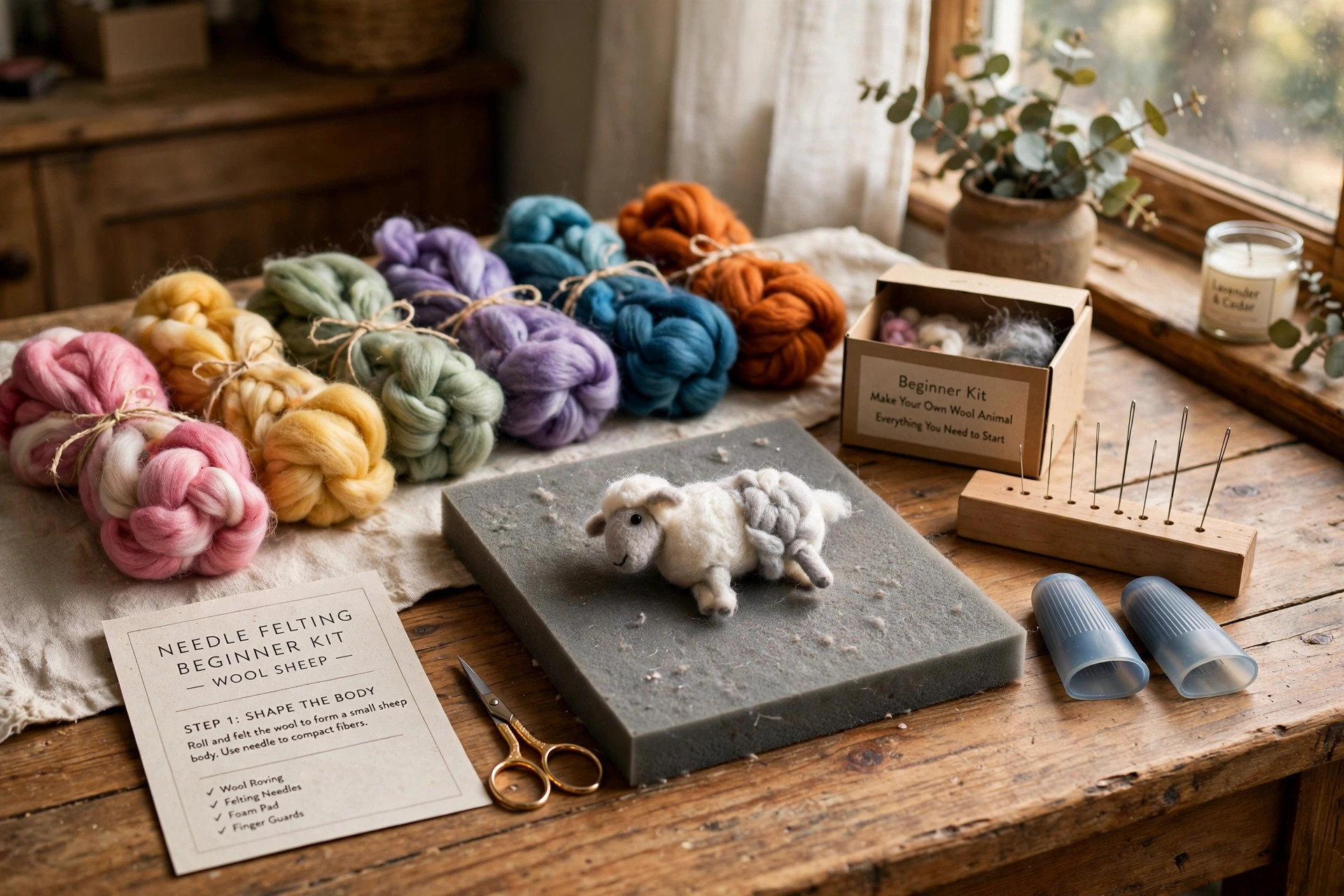
A needle felting kit for beginners animals diy is one of the simplest ways to begin a hand craft at home. You take soft wool, a sharp barbed needle, and a firm pad, and you poke the wool again and again until it holds a shape. Out of loose fluff comes a small cat, a round sheep, a fox with a pointed snout. The work is slow and plain, and that is part of its charm. In an age of screens and noise, many people find that sitting down with wool and a needle steadies the mind. This guide explains what a beginner kit holds, how to choose one, what it costs, and how to care for your tools and your first small animals.
Why It Matters: Needle Felting Kit for Beginners Animals Diy
Needle felting is not only a hobby. It is a way to make gifts that carry a personal mark. A small wool dog made for a child, or a pair of wool birds for a holiday wreath, has more weight than a thing bought off a shelf. People who take up the craft often speak of the calm it brings. The motion is steady and repeated, like knitting or hand stitching, and the small size of the projects means you can finish an animal in an evening or two. That sense of finishing something with your hands is a rare pleasure in modern life.
A good starter kit also lowers the barrier to entry. Without a kit, a new crafter must hunt down wool roving, the right gauge of needles, a foam pad, finger guards, and a guide. A kit puts all of that in one box, often with step by step directions for two or three animals. For a beginner, that single box is the difference between starting this weekend and putting the idea off for months.
What to Look For and How to Choose
Wool Quality
The heart of any kit is the wool. Look for roving made from sheep wool, sometimes sold as core wool for the inner body and colored wool for the outer coat. Core wool is coarse and felts fast, which helps a beginner build a shape quickly. The colored top wool goes on last and gives the animal its finish. A kit that names its wool source, such as merino or corriedale, is usually a better sign than one that says only “fiber.”
Needles
Felting needles come in gauges. A lower number, like 36, is thicker and works fast on the core shape. A higher number, like 40, is finer and smooths the surface. A beginner kit should hold at least two gauges, often three, plus one or two spare needles. Needles snap when bent, so spares are not a luxury. Some kits add a wooden or plastic needle holder that grips two or three needles at once for faster work.
The Pad
You need a firm surface under the wool. Most kits include a foam pad. It works, but foam wears out and sheds crumbs after a while. A few better kits include a brush mat, which lasts longer. If the kit you buy has only foam, know that you can replace it later with a brush mat from a craft supplier such as Dick Blick or JOANN.
Instructions
A beginner kit lives or dies by its guide. Look for one with clear photographs of each step, not just line drawings. The guide should show how to roll the wool, how to hold the needle, and how to build parts of the animal one at a time. Some brands post video lessons on their sites, which can help more than print alone.
Finger Protection
Felting needles are sharp. A finger guard or a pair of leather thimbles is a small thing that saves a lot of pain. Good kits include them. If yours does not, buy them before you start.
Types and Options
All in One Animal Kits
These are the most common. One box holds enough wool and needles to make two or three specific animals, with a printed guide. They are ideal for a first try because the choices are made for you. Retailers like Michaels and Etsy carry many such kits from small makers.
Core Wool and Needle Starter Sets
A second type skips the printed animal patterns and gives you a generous pile of core wool, colored wool, needles, and a pad. This suits a crafter who has seen a few lessons and wants room to try their own designs. It is the more open ended choice.
Refill and Upgrade Kits
Once the first animals are done, you will want more wool in new colors and fresh needles. Refill kits supply wool only, or wool with needles, and keep the cost of each new project low. Some makers sell breed packs with colors chosen for specific animals, like a red fox set or a black cat set.
Kits for Children
A few kits are aimed at younger crafters, often with blunter needles and larger wool shapes to start. Adult help is still wise, since the needle is sharp, but these kits make the craft open to the whole family.
Choosing Your First Animal
Not all animals are equal for a beginner. Round bodies are the easiest shapes to felt, so a sheep, a penguin, or a simple round bird makes a fine first project. These shapes ask only for balls of wool of different sizes joined together, and they forgive a heavy hand. Save the fox with the long snout and the cat with the thin tail for your third or fourth try. Thin parts need a light touch, and they snap off if you felt them too hard too fast. Many kit makers list the skill level on the box. Start with one marked easy, even if a harder animal looks more tempting. A finished easy animal on the shelf builds more joy than a half done hard one in the box.
Cost and Price
Most needle felting kits for beginners sit between ten and forty dollars. A small kit that makes one animal may cost as little as twelve dollars. A larger kit with three animals, two needle gauges, a pad, finger guards, and a printed guide often runs twenty five to thirty five dollars. Premium kits from noted makers can reach fifty dollars, usually because they hold more wool and better tools.
The tools last. Needles break and must be replaced, and the foam pad wears out, but a wooden holder and a good brush mat can serve for years. Wool is the running cost. A pound of core wool is cheap and will fill dozens of small animals. Colored wool costs more per ounce, so buying small mixed color packs is the wise path until you know which colors you use most. Shopping sales at big craft stores like Walmart and Target can bring the price of a first kit down further.
If you want to compare costs across crafts, a resin art kit for beginners jewelry making runs a little higher, while a diy candle making kit for beginners usa often costs about the same as a felting kit. A best wood burning kit for diy crafts sits in the same price band.
Care and Upkeep
Storing Wool
Keep wool in a dry box or a zip bag. Moths like wool, so a cedar block or a lavender sachet in the storage box is a good guard. Keep colored wools apart so the colors do not mix in the box.
Needle Care
Store needles in their case or stuck in a pincushion. Do not poke them into the foam pad for storage, since the pad holds damp and can rust the steel. A needle that bends should be thrown away. A bent needle will snap, and the broken tip can hide in the wool.
The Pad
A foam pad will dent and crumble with use. Turn it over now and then to spread the wear. When it starts to shed crumbs into your wool, replace it. A brush mat can be cleaned with a stiff brush and will last far longer.
Finished Animals
Dust is the main enemy of a finished wool animal. Keep them on a shelf rather than in open sun, since strong light can fade dyed wool over time. A soft brush or a lint roller takes off dust. If an animal gets crushed in a bag, steam from a kettle held at a distance can plump the fibers back up.
Safety
The needle is the whole story of safety in this craft. It is a long steel needle with barbs, and it is sharp enough to draw blood. Always work with the pad under the wool, never on your lap. Poke straight down and lift straight up. Angled pokes snap needles. Wear finger guards until the motion feels natural, and keep the kit out of reach of small children and pets. Wool itself is safe, though people with a wool allergy should wear gloves or choose acrylic fiber instead. Work in good light so you can see where your fingers are. For general craft safety advice, guides from This Old House and Family Handyman cover workshop habits that apply to any hand craft.
Frequently Asked Questions
How long does it take to make one small animal?
A simple animal the size of a lemon takes two to four hours of steady work for a beginner. Your first one will be slower. By the third, your hands will know the motion and the time will drop.
Is needle felting hard to learn?
No. The skill is one motion repeated many times. The guide in the kit shows the shape building, and the wool forgives mistakes. You can always poke more wool on to fix a thin spot.
What age is a felting kit good for?
Most makers suggest twelve and up, because of the sharp needle. Younger children can help with safe parts of the work, like rolling wool into balls, while an adult does the needling.
Can I wash a finished wool animal?
Hand washing in cool water with a mild soap is fine for a sturdy piece. Do not wring it. Press it in a towel and let it dry in the air. Delicate parts like thin ears or glued on eyes should not be soaked.
Why do my needles keep breaking?
The usual cause is poking at an angle or pushing the needle too deep into the pad. Keep the needle straight, work on the surface of the wool, and let the pad take only the tip. Cheap needles also snap more often, which is one reason to buy a kit from a known maker.
Where can I find more wool and supplies?
Once the kit wool runs out, craft stores and online marketplaces are full of wool roving in every color. Sites like Amazon and Craftsy list many sellers, and local yarn shops often stock felting wool as well.
A Short Final Word
A needle felting kit for beginners animals diy asks little and gives much. A box of wool, a few needles, and a quiet hour are enough to start. Your first sheep may be lumpy. Your second will be better. By the fifth, you will have a small flock of your own making, and a craft that can fill many evenings to come. For more home craft ideas, the guides at Bob Vila are a fine place to look next.
References
Amazon. (n.d.). Online shopping. https://www.amazon.com Blick Art Materials. (n.d.). Art and craft supplies. https://www.dickblick.com Bob Vila. (n.d.). Home improvement advice. https://www.bobvila.com Craftsy. (n.d.). Craft classes and supplies. https://www.craftsy.com Etsy. (n.d.). Handmade and craft marketplace. https://www.etsy.com Family Handyman. (n.d.). DIY home repair and maintenance. https://www.familyhandyman.com JOANN. (n.d.). Fabric and craft supplies. https://www.joann.com Michaels. (n.d.). Arts and crafts supplies. https://www.michaels.com Target. (n.d.). Retail store. https://www.target.com This Old House. (n.d.). Home renovation guidance. https://www.thisoldhouse.com Walmart. (n.d.). Everyday low prices. https://www.walmart.com
Was this guide helpful?

About Sarah Mitchell
The My Garden US editorial team writes practical, in-depth home and garden guides for American homeowners — tested advice, no fluff.
You May Also Like

DIY Terrarium Kit for Succulents and Plants: A Complete Beginner Guide
July 21, 2026 0 views
Knitting Loom Kit for Hats and Scarves Beginners: A Complete Guide
March 15, 2026 0 views
Embroidery Machine for Home Business Beginners: A Practical Guide
May 29, 2026 0 views