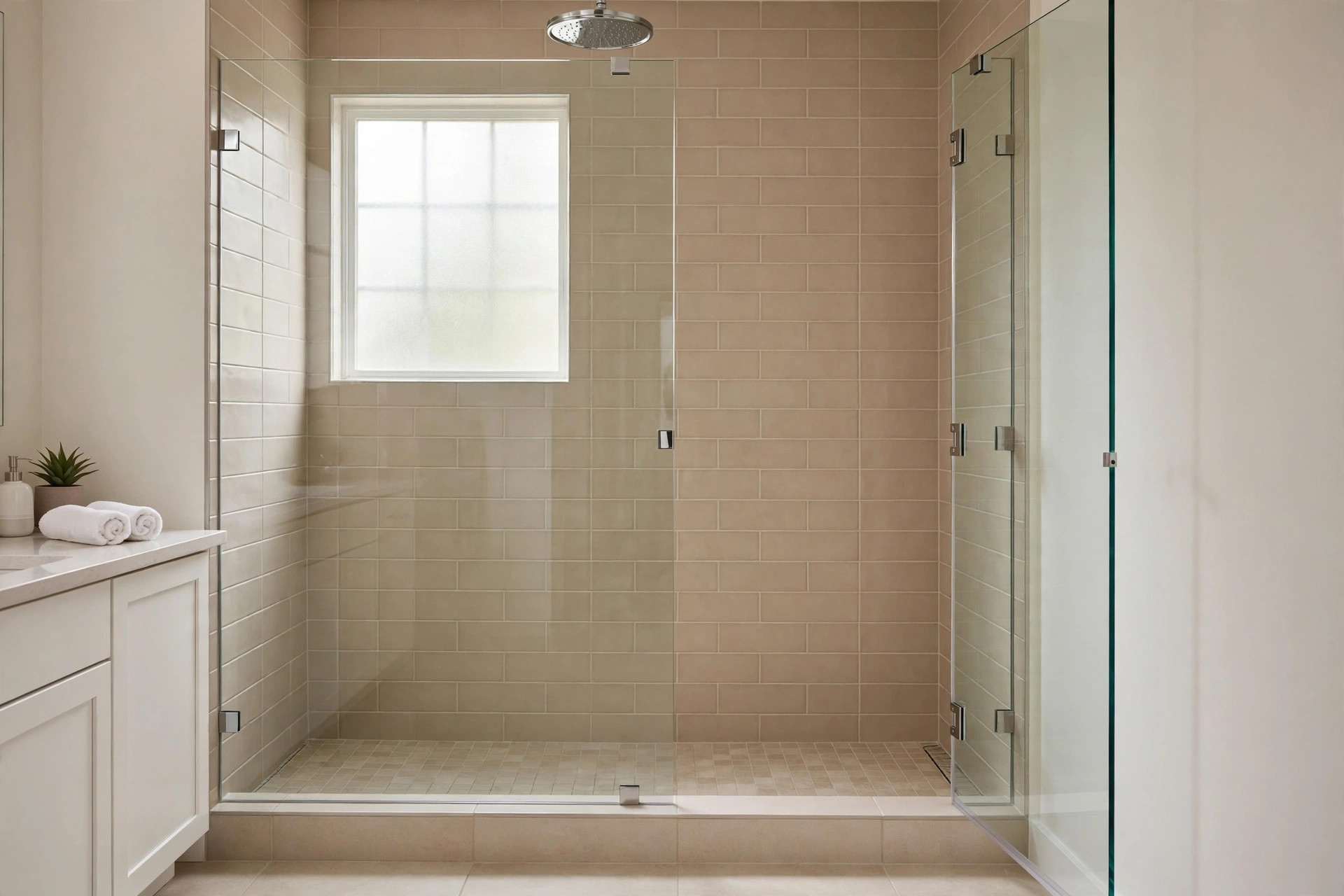

A walk into most bath showrooms today tells the story. The big, heavy curtains are gone. The clunky metal frames are gone. In their place stands glass that seems to float on its own. This frameless shower doors american homes guide explains what these doors are, how they work, what they cost, and how to keep them clean.
A frameless shower door is a shower enclosure made of thick glass with almost no frame around it. Small hinges, a few clips, and a slim handle hold it in place. There is no aluminum frame at the top, bottom, or sides. The glass itself does the work. The result is a shower that looks open and bright, even in a small bath.
Why Frameless Shower Doors Matter
The bathroom sets the tone of a home. A dark, closed shower makes the whole room feel smaller. A glass wall changes that. Light moves through the glass. The tile work shows through. The room feels larger the day the door goes in.
Homeowners give three reasons for the change. The first is looks. Glass suits almost any style, from farmhouse to city loft. The second is cleaning. Frames trap soap scum and rust. With little or no frame, there are fewer places for grime to hide. The third is value. A remodeled bath is one of the surest ways to lift a home’s price. Buyers notice a clean glass shower the moment they step in.
There is also a quiet practical point. Shower curtains blow in, stick to skin, and grow mildew in the folds. A solid glass door stays put. It keeps water where it belongs. For families with busy mornings, that alone is worth the cost.
Frameless doors fit new builds and remodels alike. A standard tub alcove, a corner shower, or a full walk-in can all take glass. The key is good measurement, since glass does not bend and walls are rarely straight.
What to Look for When You Choose: Frameless Shower Doors American Homes Guide
Glass thickness comes first. Frameless doors use tempered safety glass, which is heated and cooled in a factory to make it strong. It comes in three common thicknesses. Quarter-inch glass is light and costs less, but it can feel flimsy on a wide door. Five-sixteenths is the middle ground. Three-eighths inch is the heavy, premium choice. It stands firm and swings with a solid feel. For a wide door, the heavier glass is the better buy.
Next, check the hardware. The hinges carry the full weight of the door, so they must be strong. Solid brass hinges last longest and resist rust. Stainless steel is a good second choice. Cheap zinc hinges corrode in a few years. Ask what the hinges are made of before you pay.
The finish should match the rest of the bath. Polished chrome, brushed nickel, matte black, and oil-rubbed bronze are the common choices. A Delta faucet finish guide can help you match the shower door hardware to faucets you already own. Small details like this make a remodel look planned rather than pieced together.
Glass coatings deserve attention too. Factory coatings make water bead and run off instead of drying into spots. These coatings add cost up front, but they cut cleaning time for years.
Look at the seals. A fully frameless door still needs small clear seals where the glass meets tile. Ask how they can be replaced. Seals wear out faster than glass.
Finally, think about the swing. A hinged door needs clear floor space to open. In a tight bath, a sliding frameless door may work better. Measure twice. A door that hits the toilet or the vanity is a door you will regret.
Types and Options
The single hinged door is the most common style. One panel of glass stands fixed, and one swings open on hinges. It fits a standard alcove or a corner shower. It is simple, sturdy, and easy to clean. Most first-time buyers start here.
A door and panel unit adds a fixed glass panel beside the door. This suits wider openings where one door alone would be too big to swing. The panel stays still. The door swings or slides past it. It gives a walk-in feel at a lower price than full custom glass.
The sliding frameless door rides on a top rail. There is no frame around the glass itself. It works well in small baths where a swinging door would hit a fixture. The glass is usually thinner than hinged doors, since the rail shares the weight. Kohler and Moen both list sliding glass options alongside their bath lines.
The neo-angle door fits a corner shower with three glass sides. Two panels angle back to the wall. It turns a small corner into a roomy shower. This style needs exact measurement, because corner walls are often out of square.
The full walk-in wall is the high end of the market. One or two fixed panels of heavy glass stand without any door at all. You step in around the end of the panel. There is nothing to swing, latch, or seal. It suits large baths and aging-in-place plans. Water control depends on good shower placement and a slight slope in the floor.
Semi-frameless doors deserve a note. They look almost frameless but keep a thin frame on part of the glass. They cost less than true frameless units, and they are a fair middle step for buyers on a tight budget.
Pairing the door with the right shower parts matters. A walk-in shower kit can supply the base and walls that the glass will mount to. If you plan a rain shower head overhead, allow extra glass height to keep spray inside. Small choices like these keep the finished bath watertight.
Cost and Price
Price is the question every homeowner asks first. The honest answer is that it varies widely. A stock frameless door kit from a big-box store can run from five hundred to twelve hundred dollars. These kits fit standard openings and install with basic tools. They use thinner glass and lighter hardware, but they serve many baths well.
A custom frameless door starts around twelve hundred dollars and climbs past three thousand. The glass is thicker. The hardware is solid brass. A glass shop measures your exact opening, cuts the glass to fit, and sends a trained crew to install it. In older homes, where no wall is straight, custom is often the only real choice.
Installation labor adds three hundred to eight hundred dollars for a standard job. Complex jobs cost more. Moving plumbing, fixing rotted subfloors, or rebuilding a curb can push the total far higher. Get the full scope in writing before work starts.
Five factors move the price up or down. Glass thickness is first. Coatings are second. Hardware finish is third. The size of the opening is fourth. And the condition of the walls is fifth. A straight, sound wall keeps labor low. A wall that needs repair before the glass goes up raises the bill.
Ways to save are plain. Choose five-sixteenths glass instead of three-eighths. Pick chrome instead of a designer finish. Keep the existing opening instead of moving walls. Buy a stock kit if your opening matches a standard size.
Ways to spend well are also plain. Do not cheapen the hinges. Do not skip the tempered glass stamp. Do not hire an installer who will not give a written warranty.
For a full bath remodel budget, the shower door is one line among many. This Old House has long advised homeowners to price the whole project, fixtures to tile, before buying any single part. A bathroom remodel cost guide from Bob Vila can help set those numbers in the American market. Planning the budget first keeps the glass purchase calm.
Care and Upkeep
Frameless doors clean easier than framed ones, but they still need care. Hard water is the enemy. Left to dry, it leaves white spots that etch into glass over time. The cure is simple. Squeegee the glass after every shower. It takes thirty seconds. It is the single best habit a glass owner can form.
For weekly cleaning, use a soft cloth and a mild cleaner. Dish soap in warm water works. So does a spray made for glass. Avoid abrasive powders and steel wool. They scratch glass and dull hardware finishes. A Spruce cleaning guide lists gentle methods that suit coated glass.
Vinegar cuts hard-water scale. Mix equal parts white vinegar and water in a spray bottle. Spray, wait ten minutes, and wipe. Rinse well. Do this monthly if your water is hard.
Reapply protective coating as the maker directs. Factory coatings last one to three years. Spray-on boosters stretch that time. Mark the date on a calendar so you do not forget. A fresh coat keeps the daily squeegee job easy.
Check the hardware twice a year. Tighten hinge screws that have worked loose. Look at the clear seals for cracks or curling. Replace worn seals before they leak. A small drip at the seal can rot a curb or stain a floor if ignored.
Watch the caulk lines where glass meets tile. Caulk shrinks and pulls away with time. Scrape out failed caulk and lay a fresh bead of silicone. This is a twenty-minute job. It stops water from getting behind the tile, where damage hides.
Safety
Tempered glass is strong, but it is not unbreakable. It is built to break into small, dull cubes instead of sharp shards. That design protects people if the worst happens. Still, treat the door with respect. Do not slam it.
The tempered stamp matters. Real tempered glass carries a small etched mark in a corner. It shows the maker and the safety standard. If a panel has no mark, ask why. Unmarked glass may not be tempered. It does not belong in a shower.
Edges need care during install. A chip on the edge of tempered glass can weaken the whole panel. Good installers use setting blocks and never force glass against tile. They also leave small gaps for expansion. Glass moves a little with heat. Tight fits cause stress.
Grab bars help everyone, not just older adults. A wet shower floor is slick. A sturdy bar near the door gives a handhold when stepping in and out. If you add one, mount it to studs or solid backing, never to tile alone. Shower grab bars come in finishes that match door hardware, so safety does not have to look clinical.
Steam and heat need an exit. A fully enclosed glass shower traps warm air, so the bath fan must still clear moisture from the room. Run the fan during the shower and twenty minutes after.
Keep the door swing clear. Towels and rugs near the swing path can catch the glass edge. A small gap between door and floor is normal. It lets air move and keeps the door from dragging.
Frequently Asked Questions
Do frameless shower doors leak? A well-built door keeps water in. Small seals at the gaps stop spray. But no door is perfect. A shower aimed straight at the door gap will push some water out. Point the shower head away from the door. Use a bath mat outside. If leaks persist, the seals or the door alignment need attention.
How long do frameless shower doors last? The glass lasts decades. Hardware lasts ten to twenty years with care, and hinges, seals, and caulk can be renewed along the way.
Can I install a frameless door myself? Stock kits suit skilled do-it-yourselfers. You need a level, a drill, and steady hands. Custom glass is a job for pros. The panels are heavy, and the measurements are exact. A wrong cut wastes an expensive panel. Hire a glass shop for anything custom.
Are frameless doors worth the extra cost over framed? It depends on your goals. For resale value and daily ease of cleaning, yes. Buyers pay more for baths that look open and modern. For a rental unit or a tight budget, a good framed door works fine. Weigh the look you want against the money in hand.
Will a frameless door fit my old bathroom? Often yes. Glass shops cut panels to fit openings that are out of square. The installer shims and seals to your walls. Very small baths may suit a sliding door better than a hinged one. A site visit from a glass shop answers the question fast.
Does the glass need a special coating? No, but it helps. A coating makes water sheet off and slows spot buildup. In hard-water areas, it earns its price quickly.
A Short Final Word
A frameless shower door is a simple idea done well. Thick glass, strong hinges, and clean lines. It makes a bath feel larger, cleans with less fuss, and holds its value when the home sells.
Start with your opening and your budget. Compare a stock kit against a custom quote. Read the warranty. Then enjoy the result. There is a quiet pleasure in a shower that looks like clear air and wipes clean in half a minute.
Homeowners planning a wider remodel can study American Standard bath lines and HGTV bathroom ideas for style direction before they buy. And when the door is in, the old question returns: why did we wait so long?
References
American Standard. (n.d.). Bathroom and kitchen products. https://www.americanstandard.com Bob Vila. (n.d.). Home improvement advice. https://www.bobvila.com Delta Faucet. (n.d.). Kitchen and bathroom faucets. https://www.deltafaucet.com HGTV. (n.d.). Home and garden ideas. https://www.hgtv.com Kohler. (n.d.). Bathroom and kitchen fixtures. https://www.kohler.com Moen. (n.d.). Faucets and plumbing fixtures. https://www.moen.com The Spruce. (n.d.). Home and garden advice. https://www.thespruce.com This Old House. (n.d.). Home renovation guidance. https://www.thisoldhouse.com
Was this guide helpful?

About Sarah Mitchell
The My Garden US editorial team writes practical, in-depth home and garden guides for American homeowners — tested advice, no fluff.
You May Also Like

Where to Buy Brushed Nickel Faucets in the USA: A Plain Guide
January 21, 2026 0 views
Double Sink Vanities USA Online Deals: A Plain Buying Guide
April 25, 2026 0 views
Bathtub Refinishing Kits Reviews: A USA Buying Guide
August 1, 2026 0 views