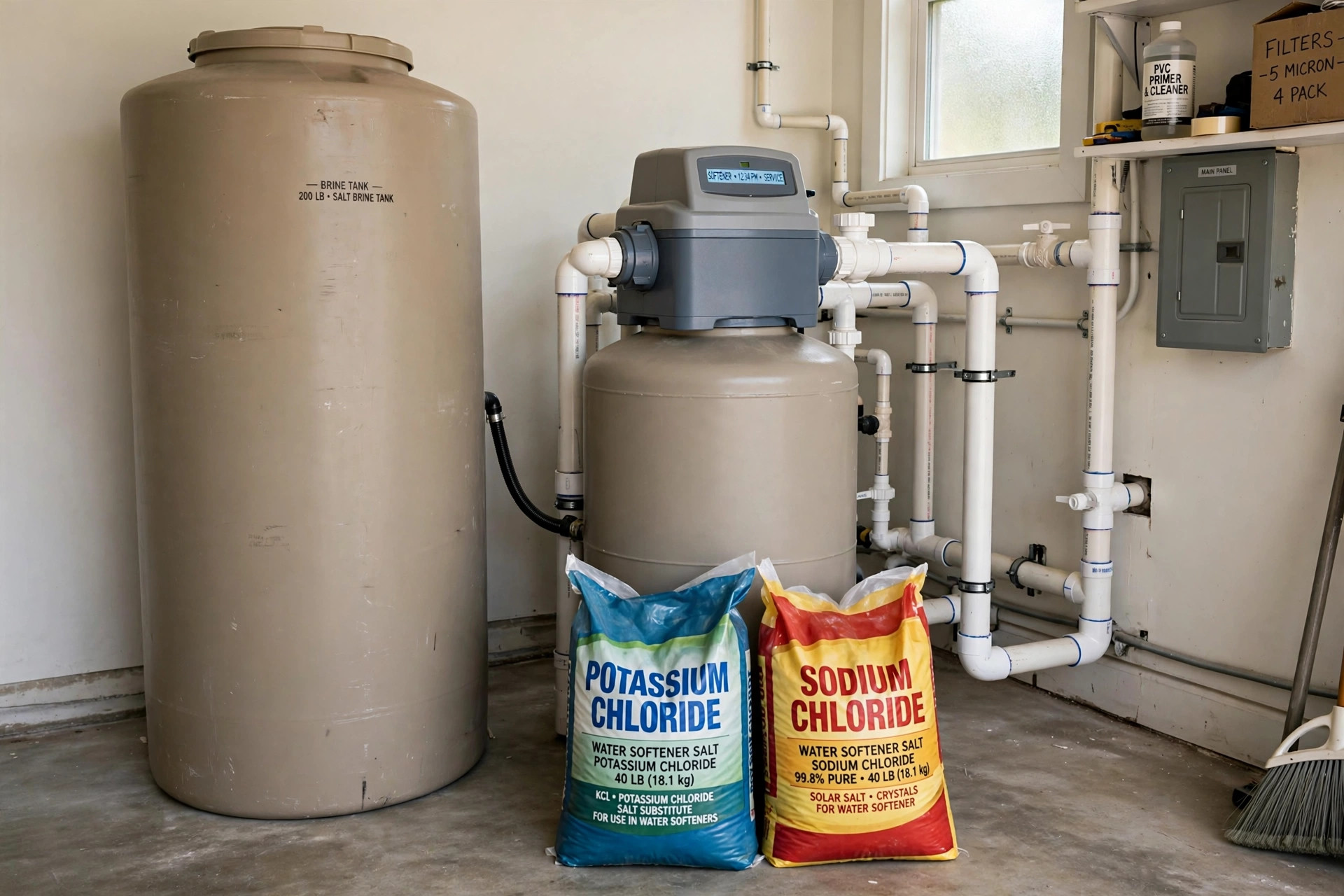

If your home has hard water, you have probably thought about potassium chloride vs sodium softener salt. Both work in the same kind of machine. Both remove the minerals that make water hard. Yet they are not the same product, and the one you pick affects your health, your plants, and your budget. This guide lays out the facts in plain terms so you can decide with confidence.
Why the Choice Matters
Hard water is full of calcium and magnesium. These minerals are not harmful to drink, but they cause real trouble in a home. They leave white scale on faucets and glass. They make soap hard to lather. They shorten the life of water heaters and washing machines. A water softener solves these problems by trading the hard minerals for other minerals, a process called ion exchange.
The trade works like this. Inside the softener sits a tank of resin beads. Hard water flows past the beads. The beads catch calcium and magnesium and give off sodium or potassium in their place. When the beads get full, the softener flushes them with a strong salt solution, called brine. That brine is made from the bag of salt you pour into the brine tank. This is where the potassium chloride vs sodium softener salt question enters the picture.
Most homes use sodium chloride, which is common salt in pellet form. Some homes use potassium chloride instead. The machine runs the same either way. The difference lies in what ends up in your water, what it costs, and what it means for your family and your yard. For many buyers, the deciding factor is diet, since sodium in the drinking water concerns people with blood pressure worries. Others think about plants, septic systems, and the local rules on water discharge.
How Water Softeners Use Salt: Potassium Chloride vs Sodium Softener Salt
A water softener runs a cycle. First it softens water for the house. Then, when the resin is spent, it goes into regeneration. The brine tank mixes water with the salt you added. That brine rinses the resin beads and restores them. Then the system drains the used brine to a drain or septic line and returns to softening.
Because the brine comes from the bag you buy, the chemistry of that bag decides what the rinse contains. With sodium chloride, the beads are recharged with sodium. With potassium chloride, the beads are recharged with potassium. In the next softening cycle, a small amount of sodium or potassium enters the treated water. The hard minerals go out. One of the two new minerals goes in. That is the whole basis of the potassium chloride vs sodium softener salt debate.
One point matters for every buyer. Potassium chloride needs about 20 to 25 percent more product than sodium chloride to do the same job. A bag of potassium chloride will run out faster. That fact shapes the cost math, as we will see below.
Potassium Chloride: The Low-Sodium Option
Potassium chloride is a white crystalline salt that looks much like table salt. It dissolves in the brine tank the same way. The softener treats it the same way. The result is soft water with a small amount of potassium added rather than sodium.
People choose potassium chloride for a few clear reasons. The first is diet. Anyone who must limit sodium may prefer not to add more of it to their water. The second is plants. Potassium is a plant nutrient, so water softened with potassium chloride is kinder to lawns and gardens. The third is the environment. In places with strict rules on salt discharge, potassium is sometimes viewed more kindly than sodium. It is also the pick for homes on private wells where a septic system takes the drain water, since sodium can trouble soil and septic bacteria over time.
There are trade-offs. Potassium chloride costs more per bag. You also use more of it. Some users say it dissolves a bit slower and can form a crust in the tank if the area is damp. A quick stir from time to time fixes that. A few older softeners need a setting change to handle the different dose, so check the manual before you switch.
Sodium Chloride Softener Salt
Sodium chloride is the standard. It comes as pellets, solar crystals, or rock salt. Pellets are the cleanest and most popular. They dissolve well and leave the least residue in the tank. Most softener makers test and rate their machines with sodium chloride, which makes it the safe default.
The case for sodium chloride is simple. It costs less. You use less of it. It is easy to find in every hardware store. It works well in nearly every machine. For homes without a sodium limit, it is the practical pick. Many families who drink the tap water simply accept the small sodium addition. In many cases the added sodium is less than what is found in a slice of bread. Still, people on strict low-sodium diets often ask their doctor about it.
One more thought. If you water plants with softened water, sodium can harm soil and roots over time. Many homes with softeners run an unsoftened tap to the garden for that reason. That trick works no matter which salt you choose, but it matters most with sodium chloride.
Cost and Price Comparison
Price is where most shoppers feel the potassium chloride vs sodium softener salt choice the sharpest. Sodium chloride pellets are cheap. A 40-pound bag often sells for a fraction of the cost of the same size bag of potassium chloride. Potassium chloride commonly costs two to three times as much per bag.
Then add the dose difference. Since potassium chloride needs about 20 to 25 percent more product per regeneration, the real yearly cost gap grows. A household that spends a modest sum each year on sodium pellets might spend two to three times that on potassium chloride. For a family of four with very hard water, the difference can reach several hundred dollars a year.
Weigh that cost against your reasons for switching. If a doctor has told you to cut sodium, the extra cost may be worth it. If your main care is the garden, a separate outdoor tap may solve the problem for far less. Think in yearly terms, not per-bag terms. The per-bag price hides the higher use rate.
Taste, Health, and Environmental Effects
Softened water tastes slightly different from hard water. With sodium chloride, some people notice a faint salty note, mainly when the water is very hard to start with. With potassium chloride, the taste is usually described as smoother or cleaner. Taste is personal. Ask a neighbor with a softener if you can sample theirs.
On health, the facts are calm. The sodium added by softening is small next to what most people get from food. Still, on a strict low-sodium plan, every bit counts, and potassium chloride is the answer. On the other hand, people with kidney trouble or those who take certain medicines must be careful with extra potassium. No one should switch on a guess. Talk with your doctor first.
On the environment, the picture is mixed. Sodium discharge can trouble soil, streams, and treatment plants. Some towns limit it. Potassium is a plant food, so it breaks down into the landscape with less harm. For a fuller picture of water safety standards in the home, the federal water guidance is a sound starting point. Homeowners who want to cut waste can also look at how much water their home uses elsewhere, such as with a greywater system for laundry cost usa plan or a reverse osmosis system under sink reviews usa setup for drinking water.
What to Look for When You Buy
Start with purity. Look for bags labeled for water softeners with high purity, near 99 percent or better. Low-purity rock salt leaves sludge in the tank. Pellets are the cleanest choice for most homes. Solar salt crystals work well too and often cost less than pellets.
Check the bag for additives. You do not want salt mixed with rust removers unless your water test shows iron in the well. Plain salt is best for most city water.
Buy from a steady source. A national home improvement retailer and a major hardware chain both stock both salts year-round, and you can compare brands side by side. Read the label for the mesh size and the purity claim. Store bags in a dry place off the floor. Damp salt cakes and clumps, and clumped salt dissolves poorly in the brine tank.
Keep one more thing in mind. Your softener manual names the salt type the machine was set up for. If you switch from sodium to potassium, check whether the salt dose setting needs a change. Most modern digital heads handle both with a menu change. Older mechanical heads may need the brine float adjusted. A plumbing supply fixture maker and a leading faucet brand both offer soft water guides on their sites, and a bathroom fixture company covers water quality topics too.
Care and Upkeep
A softener needs little care, but small habits keep it running well. Check the brine tank once a month. Keep it at least a quarter full. Do not fill it to the brim, since heavy salt can bridge, which means a hard crust forms above an empty gap. If you see bridging, break the crust gently with a broom handle and let the salt settle.
Once or twice a year, look inside the brine tank. If you see mush or dirt at the bottom, scoop out the old salt and rinse the tank. This is more common with cheap rock salt than with pellets. A home project guide walks through the cleaning steps with clear photos, and a do-it-yourself magazine covers salt bridging fixes in detail.
Test your water once a year. A simple test strip tells you whether the softener is still doing its job. If hardness creeps back up, the cause is often low salt, a stuck float, or worn resin. Resin lasts about ten to fifteen years in most homes. When it wears out, no salt choice will fix the problem. The resin itself needs replacement.
Also watch the drain line. It should run freely to the drain or septic system. A clogged drain line makes regeneration fail and can flood the area. Keep the area around the softener dry and clear.
Safety
Salt bags are heavy. A 40-pound bag can strain your back. Lift with your knees and get help if you need it. Pour slowly so dust does not fill the air. If you breathe in salt dust, step into fresh air.
Keep bags away from children and pets. Stored salt is not food salt, and pets should not chew on it. Clean up spills so they do not cake on the floor or reach the sump pump.
On the water side, test before and after installing a softener. Know your starting hardness and your finished hardness. If anyone in the home has a medical diet, check with a doctor about sodium or potassium in the water. For homes that pair a softener with other fixtures, a shower upgrade such as a handheld shower head with slide bar reviews search can help you pick parts that suit soft water. The water treatment specialists also publish clear notes on how softeners fit into a whole-home plan.
FAQ
Does potassium chloride work as well as sodium chloride? Yes, in most homes. The softener removes hardness the same way. You simply use about 20 to 25 percent more potassium chloride to get the same result. Check your manual for the dose setting.
How much sodium does a softener add to drinking water? It depends on how hard your water was. With moderately hard water, the added sodium is small, often less than what is in common foods. With very hard water, the amount rises. A water test gives you the real number for your home.
Can I switch from sodium to potassium chloride in my current softener? In most cases, yes. Clean out the old salt, add potassium chloride, and adjust the dose setting if your manual calls for it. Run one manual regeneration after the switch.
Is potassium chloride better for my septic system? Many experts say yes. Sodium can harm soil structure and septic bacteria over long years. Potassium is gentler on both. If your drain feeds a septic field, potassium chloride is the safer pick.
Which one is better for watering plants? Potassium chloride, by a clear margin. Sodium builds up in soil and hurts roots. Potassium feeds plants. Even so, many gardeners use an unsoftened outdoor tap for the garden no matter which salt they buy.
Does either salt damage my pipes or appliances? No. Both are made for softeners and work the same way inside the machine. Softened water actually protects water heaters and pipes from scale. That is one of the main reasons people install softeners at all.
A Short Final Word
The potassium chloride vs sodium softener salt question comes down to three things: your health, your plants, and your budget. Sodium chloride wins on price and ease. Potassium chloride wins for low-sodium diets, gardens, and septic systems. Both soften water well. Pick the one that fits your home, test your water, keep the tank clean, and your softener will serve you for years.
References
Aquasana. (n.d.). Water filtration systems. https://www.aquasana.com Delta Faucet. (n.d.). Kitchen and bathroom faucets. https://www.deltafaucet.com Family Handyman. (n.d.). DIY home repair and maintenance. https://www.familyhandyman.com Kohler. (n.d.). Bathroom and kitchen fixtures. https://www.kohler.com Lowe’s. (n.d.). Home improvement products. https://www.lowes.com Moen. (n.d.). Faucets and plumbing fixtures. https://www.moen.com The Home Depot. (n.d.). Home improvement products. https://www.homedepot.com This Old House. (n.d.). Home renovation guidance. https://www.thisoldhouse.com U.S. Environmental Protection Agency. (n.d.). Protecting human health and the environment. https://www.epa.gov
Was this guide helpful?

About Emily Rodriguez
The My Garden US editorial team writes practical, in-depth home and garden guides for American homeowners — tested advice, no fluff.
You May Also Like

Polybutylene Pipe Replacement Cost USA: What Homeowners Should Know
April 14, 2026 0 views
French Drain Installation Cost Per Foot in the USA
April 18, 2026 0 views
Best PEX Fittings for DIYers: Reviews and Buying Guide for USA Homes
August 11, 2026 0 views