
Learning how to prune blueberry bushes fall season is one of the best skills a home gardener can build. Blueberry bushes are long-lived plants. Many bushes stay healthy and bear fruit for forty years or more. But they do not stay in good shape on their own. Without pruning, the branches grow crowded. Old wood takes space that young wood should have. Light cannot reach the center of the bush. Berries grow smaller each year, and fewer of them ripen. Fall is a fine time to fix this. The leaves are gone, so you can see the shape of every branch. The dormant bush heals well over winter. With a sharp tool and a clear plan, one hour of fall work can set up a bigger, sweeter harvest the next summer.
Why Fall Pruning Matters for Blueberry Bushes
A blueberry bush grows from the base. New shoots rise from the roots each year. The best berries grow on wood that is one to three years old. Stems older than that give fewer berries. Stems younger than one year are still growing. Pruning keeps the right mix of ages. It removes old, tired wood and gives young wood room to grow.
Fall pruning also helps bush health. Dead branches give disease a place to hide, and broken branches let pests in. Crowded branches stay damp after rain, and damp air brings fungus. Thinning lets air and sun reach the center, so the bush dries fast and disease risk drops.
There is one more reason fall works well. In fall the bush shows its bare bones. You can see which stems are old and gray. You can see which are young and red or green. You can find crossing branches with ease. Spring pruning works too, but the new buds are soft and easy to knock off. In fall, after leaf drop, you can work with more care and less risk. Garden guides at The Spruce note the same idea: bare branches make good decisions easy.
The Right Tools for the Job: How to Prune Blueberry Bushes Fall
Good cuts start with good tools. Dull tools crush stems instead of cutting them. Crushed cuts heal slow and invite disease. Sharp tools make clean cuts that close fast. Before you start, gather what you need.
You will need bypass hand pruners, which cut like scissors and handle stems up to half an inch thick. Quality bypass pruners from makers like Fiskars hold an edge well and fit small hands. If you want to compare models, read the best pruning shears for rose bushes guide for ideas on blade types and grip comfort. The same ideas apply to blueberry work.
You will also need loppers. Their long handles cut stems up to two inches thick and reach into the center of the bush with ease. For the oldest, thickest canes, a small pruning saw works best. Corona Tools makes hand saws that cut on the pull stroke and fit tight spaces. Compare options in the best pruning saw for thick branches guide before you buy.
Bring a small tarp or a wheelbarrow to catch the cuttings. Bring gloves to guard your hands. Old blueberry wood can be rough and splintery. After the job, clean your tools. Learn how to sharpen garden tools properly so your pruners are ready next time. Tool ratings from Consumer Reports can help you pick models that last.
When in Fall to Prune
Timing matters. Do not prune in early fall while the leaves are still green. The bush is still feeding its roots. Cut too early and you take away food the bush needs for winter. Wait until most leaves have dropped. In most regions this means late fall, often November.
Prune after leaf drop but before the ground freezes hard, while the bush is dormant or close to it. You can prune through late fall and into winter as long as the wood is not frozen solid. Avoid pruning on very cold days, since frozen wood can split when cut.
Young bushes need almost no pruning. Skip the first two or three years except for removing dead or broken wood. Let the bush build its root system. Heavy pruning starts around year four or five. From then on, plan to prune every fall or every other fall.
How to Prune Blueberry Bushes in Fall: Step by Step
Stand back and look at the bush first. Decide which stems to keep and which to cut. Work slow and step back often. You can always cut more, but you cannot put a branch back.
Step 1: Remove Dead, Damaged, and Diseased Wood
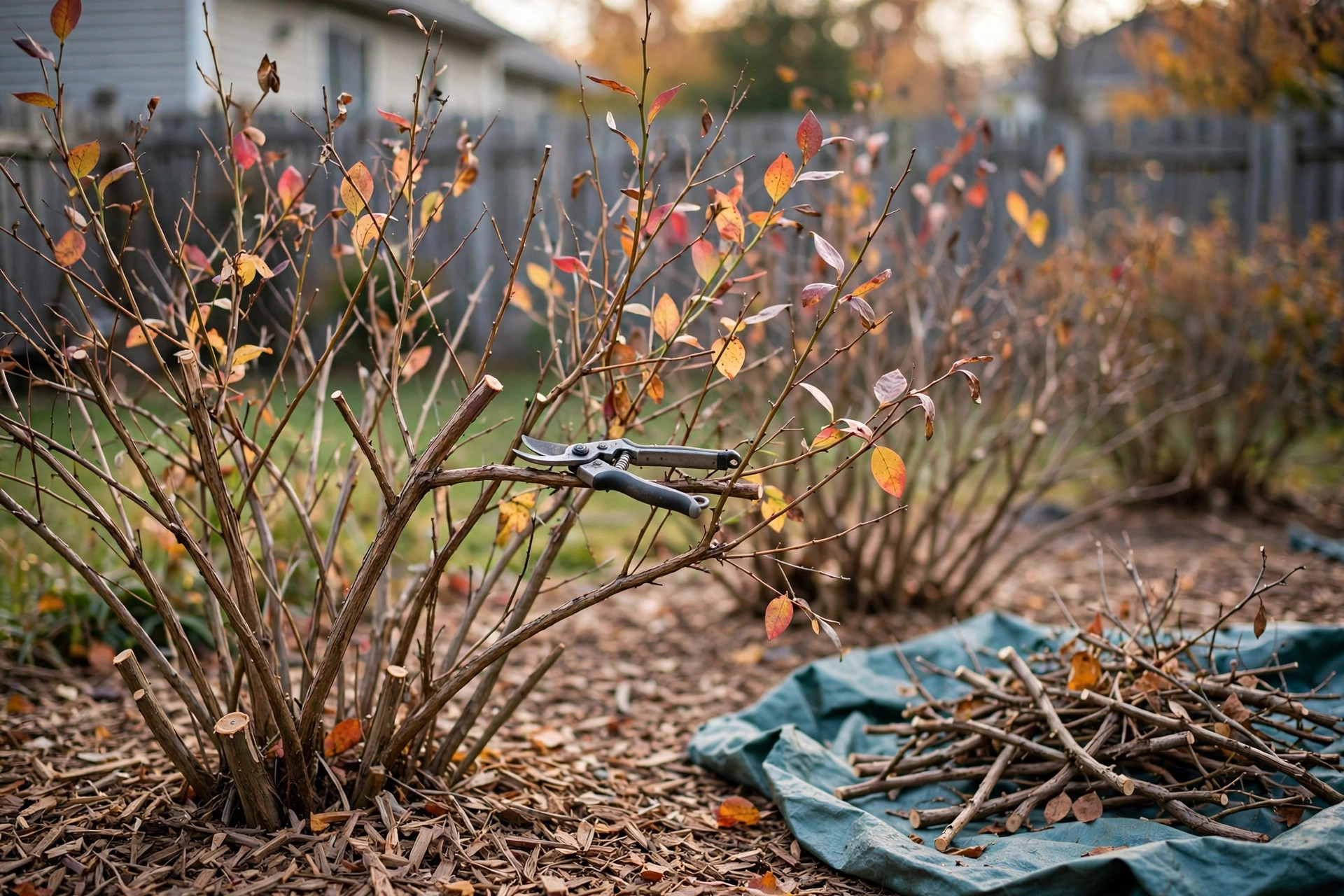
Start with the clear cuts. Dead branches are dry, brittle, and gray, and they snap when bent. Cut them back to live wood or to the base. Look for broken branches from wind or heavy fruit. Cut them back to a healthy side branch. Look for cankers, which are sunken dark spots on the bark. Cut below the canker into clean wood. Put diseased wood in the trash, not the compost. This keeps disease from spreading.
Step 2: Cut Out Low, Weak Growth
At the base you will see small, thin shoots that will never bear much fruit. Cut them off at the ground. Also cut any shoots that grow flat along the soil. Berries that touch the soil rot fast. Raising the skirt of the bush keeps fruit clean and dry. Keep three or four of the strongest new shoots from the base. These are the future of the bush.
Step 3: Thin Out Old Canes
Now thin the old wood. Old canes look gray and barky, while young canes look red, green, or tan and smooth. Each fall, remove one or two of the oldest canes at ground level. A mature bush should have about six to eight strong canes. Never remove more than one third of the wood in one year. Heavy cutting shocks the bush and cuts the next harvest. Slow, steady renewal beats one big hack.
Step 4: Open the Center of the Bush
Cut out branches that cross or rub, since rubbing bark wears away and opens wounds. Keep the straighter branch. Also cut any branch that grows toward the center. The goal is an open, vase-like shape where light and air reach the middle and the best fruit buds form.
Step 5: Shape and Shorten
Last, shape the top. Shorten any canes that grow much taller than the rest, cutting back to a strong outward-pointing side branch. Most home gardeners keep bushes between four and six feet tall for easy picking, and a shaped bush suffers less winter breakage.
When you finish, the bush should look open but full, and you should be able to reach into the center with your hand. Burn or trash the cuttings. Do not leave them under the bush, where they can shelter pests.
Pruning Young Versus Mature Bushes
Bushes under three years old need a light hand. Remove dead wood, broken branches, and low shoots that touch the ground, and leave the rest. The young bush needs every leaf to feed its roots. Some growers pinch off flower buds in the first two years so the plant grows roots and shoots instead of fruit. The wait pays off with a much larger bush later.
Mature bushes, four years and older, need yearly renewal. Follow the five steps above. Aim to replace old canes with young ones over time. Each year, remove the oldest one or two canes and keep the best new shoots. In five or six years the whole bush is renewed. This cycle keeps the bush young at heart even as it ages. Plant experts at Burpee give the same advice for keeping berry bushes in top form.
Common Mistakes to Avoid
The most common mistake is pruning too much. A bush cut back by half will push weak growth and give few berries. Remove no more than one third of the wood each year.
The second mistake is cutting in the wrong spot. Always cut just above a bud or a side branch. Do not leave long stubs, since stubs die back and invite rot. Do not cut flush against a larger branch either. Leave the small collar of bark where the branch meets the stem.
The third mistake is using dull or dirty tools. Dirty tools spread disease from bush to bush. Wipe blades with rubbing alcohol between bushes. Keep blades sharp all through the job. The fourth mistake is pruning too early in fall. Green leaves mean the bush is still working. Wait for leaf drop. Step-by-step pruning advice from Family Handyman stresses the same point: timing and sharp tools do most of the work.
Aftercare: What to Do Once the Cuts Are Made
Pruning is only half the fall job. After you finish cutting, give the bush what it needs for winter. Start by clearing under the bush. Rake up fallen leaves and cuttings, which can carry disease into spring. A clean bed dries faster and stays healthier.
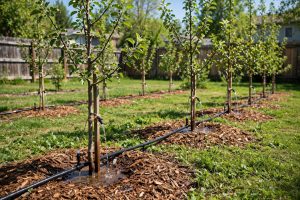
Next, add mulch. Spread two to three inches of pine bark, pine needles, or wood chips around the bush, keeping it a few inches away from the stems. Mulch guards roots from freeze and thaw and holds soil moisture. Pine needles and pine bark suit blueberries well because they break down into acidic soil. Blueberries love acid soil with a pH between 4.5 and 5.5. You can find bags of pine bark mulch at garden centers such as Home Depot or stores like Lowe’s.
Do not fertilize in fall. Fall feeding pushes soft new growth. That growth freezes in winter and dies. Save feeding for early spring, when new buds swell. A slow-release fertilizer made for acid-loving plants works best. Water the bush well if fall rains have been light. Roots need moisture going into winter. A deep soak in late fall helps the bush more than many small sprinkles.
Check the soil pH every year or two. A cheap test kit tells you where you stand. If the pH climbs too high, add sulfur as the label directs. Advice from Bob Vila covers soil care in plain terms for home gardeners.
Cost of Tools and Supplies
Blueberry pruning is a cheap job. A good pair of bypass pruners costs between twenty and fifty dollars. Loppers cost between thirty and sixty dollars. A small pruning saw costs between fifteen and thirty dollars. Buy once and buy well. Good tools last for decades with care.
A two-cubic-foot bag of pine bark mulch costs around four to six dollars and covers two or three bushes. Rubbing alcohol and a rag for cleaning blades cost almost nothing. A soil test kit costs between ten and twenty dollars. All told, a home gardener can set up for under one hundred dollars, and the extra berries pay that back in one or two seasons.
Safety Tips
Pruning is safe work, but small care goes a long way. Wear gloves against splinters and blisters, and wear eye protection when cutting above your head, since dead twigs can snap and fall. Keep your free hand clear of the blades. Cut away from your body when you can.
A sharp blade needs less force, and less force means less chance of slipping. Never catch a falling tool. Let it drop and pick it up. Keep tools off the ground where you step. Put them in a bucket between cuts. If you use a pruning saw, keep both hands on the right grips and work slow. Store tools dry and out of reach of small children.
Frequently Asked Questions
Should I prune blueberry bushes in fall or spring?
Both times work, but fall has clear perks. After leaf drop you can see every branch and judge age and shape with ease. Spring pruning works too, but soft new buds break off with rough handling. If you missed fall, prune in late winter before the buds swell. Never prune in summer while fruit is growing.
How much should I cut off each year?
For a mature bush this means one or two of the oldest canes, plus dead and weak growth. Light yearly pruning beats heavy pruning every few years, and the bush stays in balance.
Will fall pruning cut my next harvest?
It may trim it a little, but it raises the harvest in the long run. Old wood bears less fruit each year while young wood bears more. Swapping old canes for young ones trades a small short-term dip for years of bigger harvests. Most gardeners see the payoff within two seasons.
Can I prune a blueberry bush that has never been pruned?
Yes. Start slow. An old, wild bush may have twenty or more canes. Cut it back over three years, not one. Each fall, remove about one third of the oldest wood. Keep the best young shoots. By year three the bush will have a fresh set of strong canes. Patience here saves the plant.
Do I need to seal the cut ends?
No. Sealing does more harm than good, since sealants trap moisture under the surface and moisture feeds rot. A clean cut on healthy wood heals on its own. Just make sure the cut is smooth and the tool was sharp. Skip the tar, paint, and wax.
What should I do with the cut branches?
Small twigs can go in the compost if they are healthy. Diseased wood should go in the trash or be burned where local rules allow. Thick canes make good kindling once dry. Never leave cuttings piled under the bush. Piles of old wood give pests a warm home for winter.
A Final Word
Knowing how to prune blueberry bushes fall season turns a wild bush into a tidy, fruitful plant. Wait for leaf drop. Bring sharp tools. Remove the dead, the weak, and the old, and keep the young and the strong. Mulch the roots and walk away. The bush does the rest over winter. Come summer, you will pick bigger berries from a healthier plant. Few garden jobs pay back so well for so little effort.
References
Bob Vila. (n.d.). Home improvement advice. https://www.bobvila.com Burpee. (n.d.). Seeds, plants, and gardening supplies. https://www.burpee.com Consumer Reports. (n.d.). Product reviews and ratings. https://www.consumerreports.org Corona Tools. (n.d.). Garden and landscape tools. https://www.corona-tools.com Family Handyman. (n.d.). DIY home repair and maintenance. https://www.familyhandyman.com Fiskars. (n.d.). Garden and cutting tools. https://www.fiskars.com Lowe’s. (n.d.). Home improvement products. https://www.lowes.com The Home Depot. (n.d.). Home improvement products. https://www.homedepot.com The Spruce. (n.d.). Home and garden advice. https://www.thespruce.com
Was this guide helpful?

About Robert Taylor
The My Garden US editorial team writes practical, in-depth home and garden guides for American homeowners — tested advice, no fluff.
You May Also Like
Best Garden Apron for Harvesting Reviews
April 7, 2026 0 views
Best Hand Cultivator for Weeding Reviews: What Real Gardeners Found
March 20, 2026 0 views
Best Garden Gloves for Wet Conditions: A Complete Guide
April 2, 2026 0 views