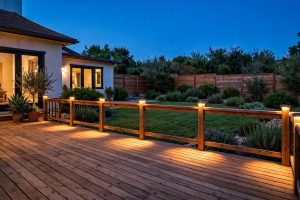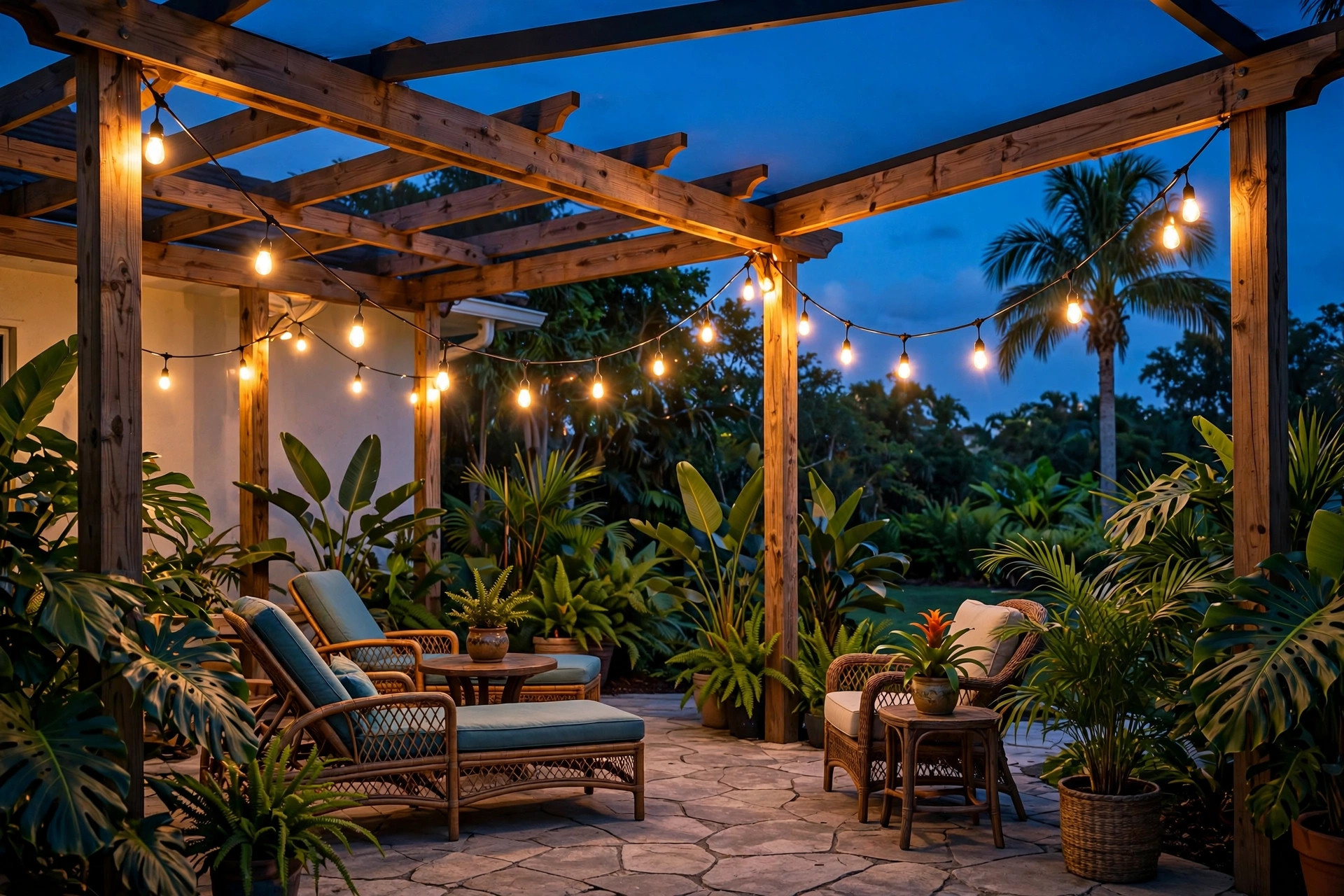

Florida is a state that lives outside. Evenings are warm for much of the year. Neighbors visit. Families grill. Children play in the yard long after dinner. Good light makes those hours better. That is why patio string lights florida homes usa shoppers keep buying are such a common sight from Miami to Jacksonville.
String lights are simple. They are rows of small bulbs on a long wire. You hang the wire across a patio, a lanai, a deck, or a pergola. When night falls, the bulbs glow. The effect is soft and friendly. It is not as harsh as a floodlight. It is not as dim as a candle. For most Florida patios, it is just right.
This guide explains what to buy, how to hang the lights, what they cost, and how to keep them working through Florida heat, rain, and hurricane season. No special tools or skills are needed.
Why Patio String Lights Suit Florida Homes
Florida homes have outdoor space that gets used hard. Many houses have a lanai, which is a screened porch built for the warm climate. Others have open patios, pool decks, or covered porches. These spaces sit empty in the dark unless they are lit well.
Overhead porch lights give a flat, bright wash. String lights do more. They spread small points of warm light across a wide area. Shadows stay soft. Faces look natural. Food looks good. The lights also mark the edges of the space, which helps after dark.
Florida weather adds its own needs. Summer rain comes fast and hard. Humidity is high for months. Salt air near the coast eats cheap metal. Hurricane season runs from June through November. A good set of outdoor string lights is built to take all of this. That is the main point of this guide: choose lights that are rated for real Florida weather, not just for a mild summer evening.
Modern LED string lights use little power, run cool, and last for many seasons. They are the clear choice for Florida homes today.
What to Look for Before You Buy: Patio String Lights Florida Homes Usa
Walk into any hardware store or browse any big retailer and you will see dozens of options. The boxes all promise weatherproof light. The fine print is what matters. Here is what to check.
Weather and Wet Ratings
Look for the letters UL or ETL on the box, and a wet-location rating. A wet rating means the strand can hang in direct rain. A damp rating is weaker. It covers mist and light splash only. For Florida, where summer storms soak everything, buy wet-rated lights. The ENERGY STAR program also lists certified outdoor lighting that meets set quality and efficiency rules.
Bulb Type
LED is the standard now. LED bulbs use a fraction of the power of old bulbs. They also stay cool to the touch, which matters when the wire hangs low over a dining table. Glass bulbs give a classic look. Shatterproof plastic bulbs survive wind and falling branches. In Florida, shatterproof is often the wiser pick, especially during storm season.
Warmth of the Light
Bulbs are sold by color temperature, measured in kelvin. Lower numbers mean warmer, more golden light. For a patio, 2200K to 2700K is the sweet spot. It feels like candlelight. Bulbs rated 5000K or higher look blue and harsh. They suit a garage, not a gathering.
Strand Length and Bulb Spacing
Measure your patio before you shop. A strand that is too short will sag. One that is too long will pool on the ground. Common lengths run 25, 48, and 100 feet. Bulb spacing of two to three feet is typical. Tighter spacing gives a fuller look. Wider spacing feels airy. Most Florida patios need at least two strands to cover a good area.
Plug and Power
Some strands plug into a wall outlet. Some are solar. Some use batteries. Plug-in strands are most reliable. Solar strands depend on strong daylight, which Florida has in plenty, but they fade on cloudy days. Check the plug type. A grounded three-prong plug is safer for outdoor use in a wet climate.
Connectable Strands
Many strands can be joined end to end. The box will say how many strands may connect safely, often three to five. This lets you cover a long lanai with one plug. Do not join more strands than the box allows. Overloading is a real fire risk.
Common Types of Patio String Lights
Shoppers will meet a few basic styles. Each has a place.
Edison-style bulbs. These have the classic teardrop glass shape and a visible filament inside. They look old-fashioned in the best way. LED versions give the same look without the heat. They are the most popular choice for Florida patios.
Globe bulbs. Round and small, usually one or two inches wide. They cast a soft glow. They work well for a cozy, casual feel. Globe strands are light and easy to hang.
Fairy or micro lights. Tiny bulbs on thin wire. They wrap around posts, railings, and plants. They give sparkle rather than real light. They are best as an accent, not the main source.
Rope lights. Bulbs sealed inside a clear tube. They are very weatherproof. They give a steady line of light along a roof edge or deck rail. They are less charming than open bulbs but tougher in a storm.
Smart string lights. These connect to a phone app or a home system. You can dim them, change colors, or set timers. They cost more. They are a good fit for a homeowner who wants control without walking out to a plug. For pure lighting help many buyers start with Lumens or Lamps Plus, two specialty lighting retailers with wide outdoor selections.
If you are still learning the basics of patio lighting, a general patio string lights buying guide usa can help you compare bulb styles side by side before you decide.
How to Hang String Lights on a Patio
Hanging the lights is the part most people worry about. It is not hard. It takes one free afternoon and a few simple tools.
Start with a plan. Decide where the wire will run. Common patterns include a zigzag across the patio, straight lines from the house to a fence, or a border around a pergola. Draw it on paper. Measure the distance between anchor points with a tape measure.
Anchor points matter most. The wire must hold steady in wind. Good anchors include porch beams, fence posts, pergola rafters, and house eaves. For each anchor, use a sturdy hook or eye bolt made for outdoor use. Stainless steel or galvanized hardware resists rust in Florida humidity.
Hang the wire with a gentle sag, called a catenary. A drop of about one foot for every ten feet of wire looks natural and keeps tension low. Pulling the wire drum-tight is a mistake. It strains the anchors and the wire. It also looks stiff.
Keep bulbs at least seven feet above walking areas. Nobody should bump a bulb. Over a dining table, eight feet is comfortable. Run the cord to the outlet along a beam or post. Use outdoor-rated extension cords. Keep plugs off the ground where rain can pool.
If the run is long, use a steel guide wire. Thread the string lights along a thin cable strung between the anchors. The cable takes the load. The lights just hang from it. This is the best method for spans over fifteen feet. Retailers like Home Depot and Lowe’s sell outdoor hooks, guide wire, and extension cords in one trip.
For patios near the coast, check the anchors twice a year. Salt air weakens metal faster than inland air. Replace any rusted hook before storm season.
Cost and Price
String lights are one of the cheapest ways to change a patio. A basic 48-foot LED strand costs about 20 to 40 dollars at most stores. A 100-foot commercial-grade strand with shatterproof bulbs runs 50 to 90 dollars. Smart strands with app control start near 60 dollars and climb past 150 for long lengths.
Most Florida patios need two to three strands. Add hooks, guide wire, and an outdoor extension cord. A full setup for a mid-size lanai usually lands between 80 and 250 dollars, less than most single outdoor fixtures. Running costs are tiny. The U.S. Department of Energy notes that LED bulbs use far less power than older bulbs. Keep the receipt. A good strand should carry at least a one-year warranty.
Care and Upkeep in a Florida Climate
Florida is hard on outdoor gear. Sun, rain, salt, and insects all take a toll. A little care keeps string lights working for years.
Clean the bulbs twice a year. Dust, pollen, and salt film dim the glow. Wipe each bulb with a damp cloth. Unplug the strand first. This small job takes twenty minutes and makes a real difference.
Check the wire after every big storm. Look for frayed spots, cracked sockets, and loose bulbs. Tighten any bulb that rattles. Replace burned-out bulbs right away. Many strands keep working when one bulb fails, but a dead bulb strains the rest of the circuit.
Take the strands down before a hurricane. This is the single most important step for Florida homeowners. High winds turn string lights into flying hazards. They can tear gutters and screens. Store the strands in a dry bin indoors. Hang them again after the storm passes. This habit alone can double the life of a good set.
For more ideas on matching light to the rest of your yard, see our outdoor wall lanterns buying guide usa and our landscape spot lights buying guide usa. Wall lanterns light the house edges. Spot lights lift the plants and trees. String lights fill the middle. Together they make a complete outdoor plan.
Warm white light draws fewer insects than bright blue-white light. For mosquitoes, the light is not the main cause. Standing water is. Empty saucers and buckets nearby, and run a fan to keep the air moving.
Safety
Outdoor electricity deserves respect. The rules are simple and worth following.
Use only lights rated for outdoor wet use. Indoor strands have thin wire and weak plugs. Rain can short them. Never run an indoor strand outside, even under a roof.
Keep all plugs and connections dry. Hang connections under an eave or cover them with a weatherproof box. Do not let plugs sit in puddles. Raise cords off the ground along posts or beams.
Use a GFCI outlet. A ground-fault circuit interrupter cuts power in a fraction of a second if water touches the circuit. Most outdoor outlets in newer Florida homes are GFCI already. Test the outlet monthly with the small test button on its face.
Do not staple or nail through the wire. This is a common shortcut and a common cause of shorts. Use hooks or clips that hold the wire without piercing it.
Unplug the lights during lightning storms. No surge protector is a match for a direct strike. Unplugging is free insurance.
Keep bulbs away from dry leaves, paper lanterns, and fabric shades. LED bulbs run cool, but the rule stands. Give every bulb a few inches of clear air.
Frequently Asked Questions
How long do LED patio string lights last? Most LED strands are rated for 25,000 to 50,000 hours of bulb life. In real Florida use, with sun and storms, expect three to seven years of good service. Taking them down for hurricanes and cleaning them twice a year pushes you toward the high end.
Can string lights stay up all year in Florida? Yes, if they are wet-rated and well hung. Many Florida homeowners leave them up year-round because the patio gets used in every season. Take them down only for hurricanes and tropical storms. Inspect them after each storm before plugging them back in.
Are solar string lights good enough for Florida patios? Florida sun is strong, so solar strands charge well on clear days. They work fine as accent light. But they dim on cloudy stretches and in shaded patios. For your main patio light, plug-in strands are more reliable. Solar is best for spots far from an outlet.
What color temperature is best for a patio? Warm white, between 2200K and 2700K. It flatters skin, food, and wood. It also draws fewer insects than cool white. Avoid anything over 4000K for a gathering space. It looks like a parking lot.
How many strands do I need for a typical lanai? Measure the paths the wire will follow, not the floor. A 12-by-16-foot lanai with a zigzag pattern usually needs 100 to 150 feet of strand, which is two or three 48-foot strands joined end to end. Always check the box for the maximum number of connectable strands.
Will string lights raise my power bill much? Barely. A three-strand LED setup uses less power than one old porch bulb. Expect a few cents a month. The Philips lighting site and similar makers publish wattage on every box, so you can check the exact number before you buy.
A Final Word
Patio string lights are a small change with a large payoff. They cost little. They use little power. They take an afternoon to hang. And they turn a dark Florida patio into a place where people want to stay.
The key lessons are few. Buy wet-rated LED strands. Hang them with a gentle sag on strong anchors. Keep bulbs warm white and well above head height. Clean them twice a year. Take them down before hurricanes. Follow these steps and your lights will glow through many Florida evenings.
Before you buy, it helps to read one solid review source. The Spruce keeps updated buying guides for outdoor lighting, and Consumer Reports tests selected models for durability and weather resistance. Between a trusted review and the checklist above, you can shop with confidence.
References
Consumer Reports. (n.d.). Product reviews and ratings. https://www.consumerreports.org ENERGY STAR. (n.d.). Energy efficient products. https://www.energystar.gov Lamps Plus. (n.d.). Lighting and home decor. https://www.lampsplus.com Lowe’s. (n.d.). Home improvement products. https://www.lowes.com Lumens. (n.d.). Lighting and ceiling fans. https://www.lumens.com Philips. (n.d.). Lighting products. https://www.philips.com The Home Depot. (n.d.). Home improvement products. https://www.homedepot.com The Spruce. (n.d.). Home and garden advice. https://www.thespruce.com U.S. Department of Energy. (n.d.). Energy efficiency and renewable energy. https://www.energy.gov
Was this guide helpful?

About Michael Thompson
The My Garden US editorial team writes practical, in-depth home and garden guides for American homeowners — tested advice, no fluff.
You May Also Like
Kitchen Island Pendants: A Complete Guide for American Homes
March 14, 2026 0 views
Landscape Spot Lights Reviews Buying Guide USA
April 22, 2026 0 views
Vanity Light Bars California Homes USA: A Practical Buying Guide
April 8, 2026 0 views