
A clogged toilet is a problem that waits for no one. It can strike at midnight on a holiday. It can strike an hour before guests arrive. When it does, the tool in your hand decides how fast the day gets back to normal. This toilet auger vs plunger comparison gives USA homeowners a plain look at both tools, how they work, what they cost, and when to reach for each one. No tool wins every case. The right tool depends on the clog.
Why This Comparison Matters
Most American homes keep one tool for toilet trouble, if they keep any. The usual choice is a simple plunger bought in a panic years ago. It works for many clogs. But some clogs refuse to move. Paper bunches up. A toy slips into the bowl. A plunger pushes and pushes, and the water does not go down. At that point a stronger tool is needed, or a plumber must be called.
A plumber visit for a simple clog can cost a hundred dollars or more. The tool that solves the same clog can cost less than ten dollars. Knowing which tool to use, and how to use it, saves real money over the years. This guide explains both tools in simple terms so you can make a calm choice the next time the water rises.
How a Plunger Works: Toilet Auger vs Plunger Comparison Usa
A plunger is a simple tool. It has a handle and a rubber cup. When the cup seals against the drain opening and you push down, the tool forces water into the pipe. When you pull up, it pulls water back. This back-and-forth pressure moves the clog. Most clogs are loose. They are made of paper and waste. Pressure alone is often enough to break them free.
The Flange Plunger
The best plunger for toilets is the flange plunger. It has an extra rubber ring inside the cup. The ring folds out and fits into the toilet drain opening. This gives a tight seal. A plain sink plunger has a flat cup. It does not seal well in a toilet. Many people use the wrong kind and think the plunger failed, when the seal was the problem. If you own only one plunger for your bathroom, make it a flange plunger. You can find guidance on choosing plumbing tools at Home Depot and Lowe’s.
How to Use a Plunger
Place the cup over the drain hole at the bottom of the bowl. Let the cup fill with water before you push. If the cup is full of air, the first pushes do nothing. Press down slowly, then pull up with a sharp motion. Repeat ten or fifteen times. Then check the water level. If the water starts to go down, the clog is moving. Give it a few more strong pushes and finish with a test flush. If the water rises instead, stop. The clog needs a different approach.
How a Toilet Auger Works
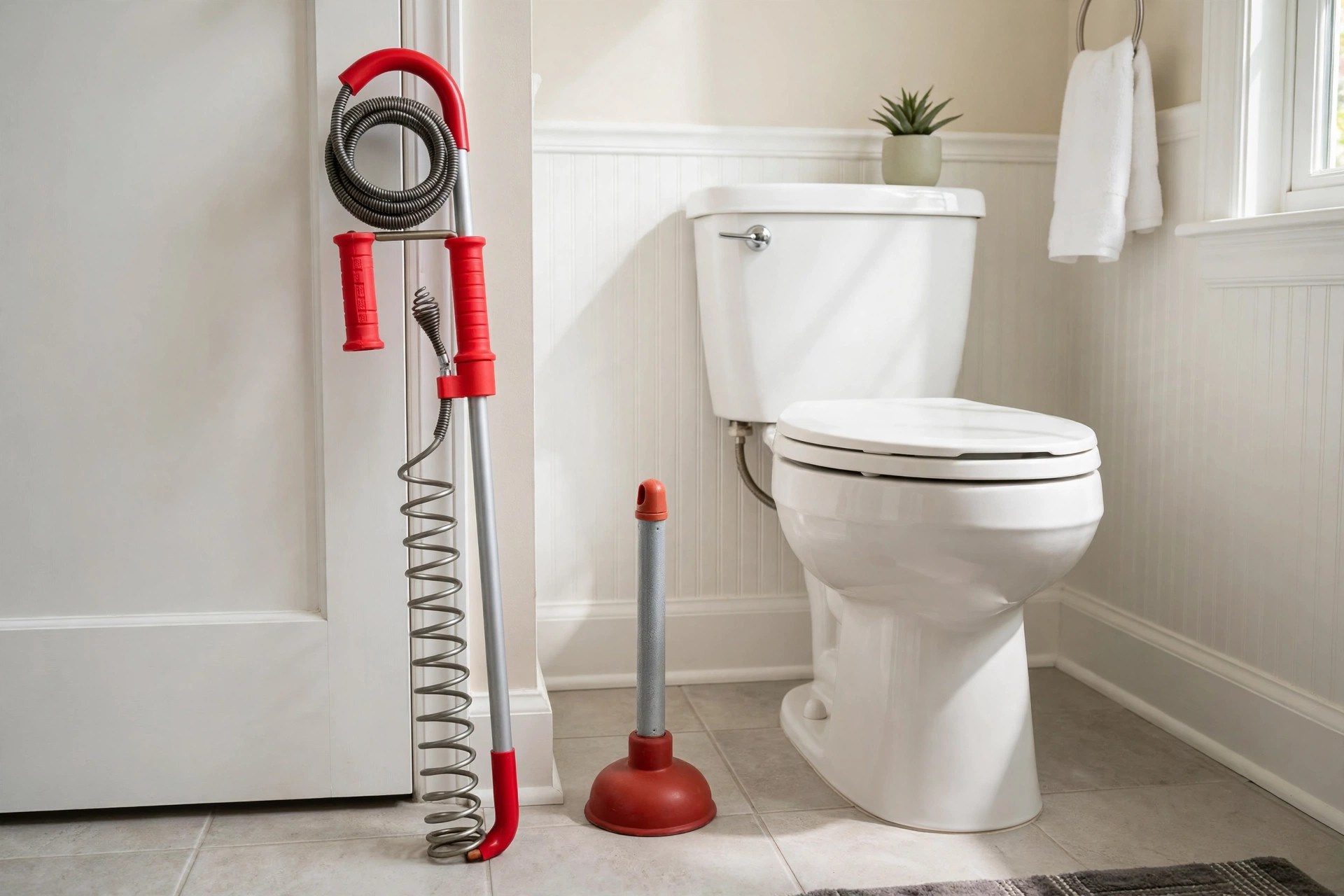
A toilet auger, also called a closet auger, is a hand tool made for toilet drains. It has a long metal cable inside a curved plastic or steel tube. A crank handle sits on one end. You place the curved end into the bowl. The curve protects the porcelain from scratches. You turn the crank, and the cable feeds into the drain. The tip of the cable grabs or breaks apart the clog.
Unlike a plunger, the auger reaches into the pipe. It can travel two to three feet. That is far enough to reach clogs that sit beyond the bowl, in the trap or the first bend of the drain. When the tip meets the clog, you crank harder. The tip breaks the blockage into pieces or winds it up so you can pull it out. Pull back slowly and wipe the cable with a rag as it comes out.
Toilet Auger vs Plunger: Head to Head
Here is the direct toilet auger vs plunger comparison most homeowners need.
A plunger is best for soft, fresh clogs. Paper and waste blockages near the surface respond well to pressure. A plunger is fast, cheap, and simple. Anyone can learn it in two minutes.
An auger is best for stubborn clogs. If the plunger has failed after several tries, the blockage is likely deeper or harder. An auger also handles solid objects. A small toy, a toothbrush, or a bundle of wipes can lodge in the trap. A plunger only pushes such items deeper. An auger grabs them and pulls them out.
Skill level matters. A plunger needs almost no practice. An auger needs a little care. You must feed the cable gently so it does not scratch the bowl or tear the wax ring seal at the base of the toilet. Read the directions that come with the tool. Work slowly. Most people master it on the first try.
Mess is another difference. A plunger stays in the bowl. An auger pulls the cable back out of the pipe, and the cable can be dirty. Keep old towels ready. Wear rubber gloves. Rinse the cable in a bucket before you store the tool.
The smart answer is to own both. The plunger handles eight out of ten clogs. The auger handles the rest. Together they cost less than most plumber visits. Home repair guides at This Old House and Family Handyman walk through both tools step by step.
What to Look For When Choosing
Choosing a Plunger
Look for a flange plunger with a full, flexible cup. The rubber should be thick enough to hold a seal but soft enough to fit the bowl. A longer handle gives better leverage and keeps your hands clear of the water. Wood handles last for years. Some models have a plastic handle that will not rot. Either is fine.
Choosing a Toilet Auger
Look for a cable at least three feet long. Six feet is better for deep clogs. The tube should have a vinyl guard to protect the porcelain. A bulb or coil tip works well for pulling objects out. Some models have a drop head that turns with the cable. Avoid the cheapest models with thin cables that bend and kink. A mid-range auger from a known brand will serve for years.
Types and Options
Plungers come in a few types. The flange plunger is the toilet standard. The accordion plunger is a newer design made of hard plastic. It moves more water per push and can clear clogs that a rubber plunger cannot. It is harder to use at first. The bell plunger is meant for sinks and tubs, not toilets.
Augers come in two main lengths. The three-foot model is standard for toilets. The six-foot model reaches deeper into the line. There are also powered augers that attach to a drill. These are faster but easier to misuse. A hand-crank model is the safest choice for most homeowners. For larger fixture questions, fixture makers like Kohler and Moen publish helpful product guides.
Cost and Price
Plungers are among the cheapest tools in the house. A good flange plunger costs between five and fifteen dollars in the USA. An accordion plunger costs ten to twenty dollars.
Toilet augers cost more but are still cheap. A basic hand auger costs fifteen to thirty dollars. A better model with a longer cable and a guarded tube costs thirty to sixty dollars. Powered models cost more still, but few homeowners need them.
Compare these prices to a plumber visit. A standard service call for a toilet clog often runs from one hundred to two hundred fifty dollars, depending on the area. One auger pays for itself the first time it prevents that call. Keep your receipts. Plumbing supplies are also easy to find at large retailers such as Delta Faucet stockists and home centers.
Care and Upkeep
Both tools need simple care. After use, rinse the plunger in the toilet and flush a few times to clean it. Let it dry. Store it standing up so the cup keeps its shape.
Rinse the auger cable after every use. Wipe it dry with a rag. A light coat of oil on the cable stops rust. Store the auger where it stays dry. A damp garage corner will ruin a good cable in one season.
Replace a plunger when the rubber cracks or the cup loses its shape. A worn cup cannot seal. Replace an auger when the cable kinks or frays. A damaged cable can break inside the pipe and make the problem worse.
Safety
A clogged toilet can carry germs. Wear rubber gloves every time you work on it. Wash your hands with soap when you finish. Keep children and pets out of the bathroom while you work.
Never mix chemical drain cleaners with plunging or augering. Caustic chemicals can splash back onto your skin and eyes. If you already poured a chemical cleaner into the bowl and it did not work, call a professional instead of adding force. The splash risk is too high.
If the toilet has overflowed, shut off the water first. The shutoff valve sits behind the toilet near the floor. Turn it clockwise until it stops. Mop up standing water before you begin.
Water quality matters in the home beyond the toilet. If your household also deals with drinking water concerns, filtration makers such as Aquasana offer plain guides, and the EPA publishes free information on home water systems.
When to Call a Professional
Sometimes no hand tool is enough. Call a plumber if more than one fixture is clogged at the same time. That can mean a blockage in the main sewer line, which no toilet auger can reach. Call if the toilet clogs again within days of being cleared. That points to a deeper problem, such as roots in the line or a broken pipe. Call if you hear gurgling from other drains when you flush. That is a sign of a vent or line problem that needs professional tools.
There is no shame in calling for help. A good homeowner knows the limits of the toolbox. The cost of one visit is small next to the cost of water damage from a bad guess.
FAQ
Can a plunger damage a toilet?
A plunger used with normal force will not damage a toilet. The porcelain is very hard. Do not strike the bowl with the handle. Do not use extreme force for many minutes. If the clog does not move after fifteen good pushes, switch to an auger instead of forcing the issue.
Which tool should I buy first?
Buy a flange plunger first. It is cheap and it solves most clogs. Add a toilet auger next. The pair together covers nearly every clog a home will see. This order matches how most USA households build their tool kit.
How long should a toilet auger cable be?
Three feet is enough for most toilet clogs. The clog usually sits in the bowl trap or the first bend. A six-foot cable helps when the blockage is deeper. Longer is not always better. Extra cable is harder to control for a beginner.
Can an auger scratch the porcelain?
It can if you are careless. Always use the vinyl guard. Feed the cable slowly. Do not jam the tip into the bowl. A quality auger with a protected tube is made to avoid scratches. Cheap tools without guards are the main cause of marks.
Do I need to remove the toilet to use an auger?
No. A toilet auger is designed to work through the bowl. You only remove a toilet for very deep line problems, and that is a job for a professional or a skilled DIYer. For a standard clog, the auger goes in through the front and the toilet stays in place.
How do I clean the tools after use?
Rinse the plunger in clean toilet water and flush several times. Rinse the auger cable in a bucket of water with a little bleach. Wipe dry. Store both tools in a dry spot. Clean tools last longer and stay safe to handle.
A Final Word
The toilet auger vs plunger question has no single winner. It has two winners, for two jobs. The plunger is the quick tool for common clogs. The auger is the strong tool for the rest. Own both. Learn both. Use the plunger first and the auger second. This simple order will keep your bathrooms running and your plumber bill low for years to come.
If your household is already working on bathroom fixtures, related reads on the best plunger for toilets, toilet flapper replacement, and a step-by-step running toilet fix can help with the next project.
References
Aquasana. (n.d.). Water filtration systems. https://www.aquasana.com Delta Faucet. (n.d.). Kitchen and bathroom faucets. https://www.deltafaucet.com Family Handyman. (n.d.). DIY home repair and maintenance. https://www.familyhandyman.com Kohler. (n.d.). Bathroom and kitchen fixtures. https://www.kohler.com Lowe’s. (n.d.). Home improvement products. https://www.lowes.com Moen. (n.d.). Faucets and plumbing fixtures. https://www.moen.com The Home Depot. (n.d.). Home improvement products. https://www.homedepot.com This Old House. (n.d.). Home renovation guidance. https://www.thisoldhouse.com U.S. Environmental Protection Agency. (n.d.). Protecting human health and the environment. https://www.epa.gov
Was this guide helpful?

About Jennifer Lee
The My Garden US editorial team writes practical, in-depth home and garden guides for American homeowners — tested advice, no fluff.
You May Also Like
Whole House Water Filtration Cost Installed: What Homeowners Should Know
March 17, 2026 0 views
Best Water Leak Sensors for Basement USA
September 12, 2026 0 views
Sump Pump Installation Cost Near Me: A Plain Guide for Homeowners
March 9, 2026 0 views