
Introduction
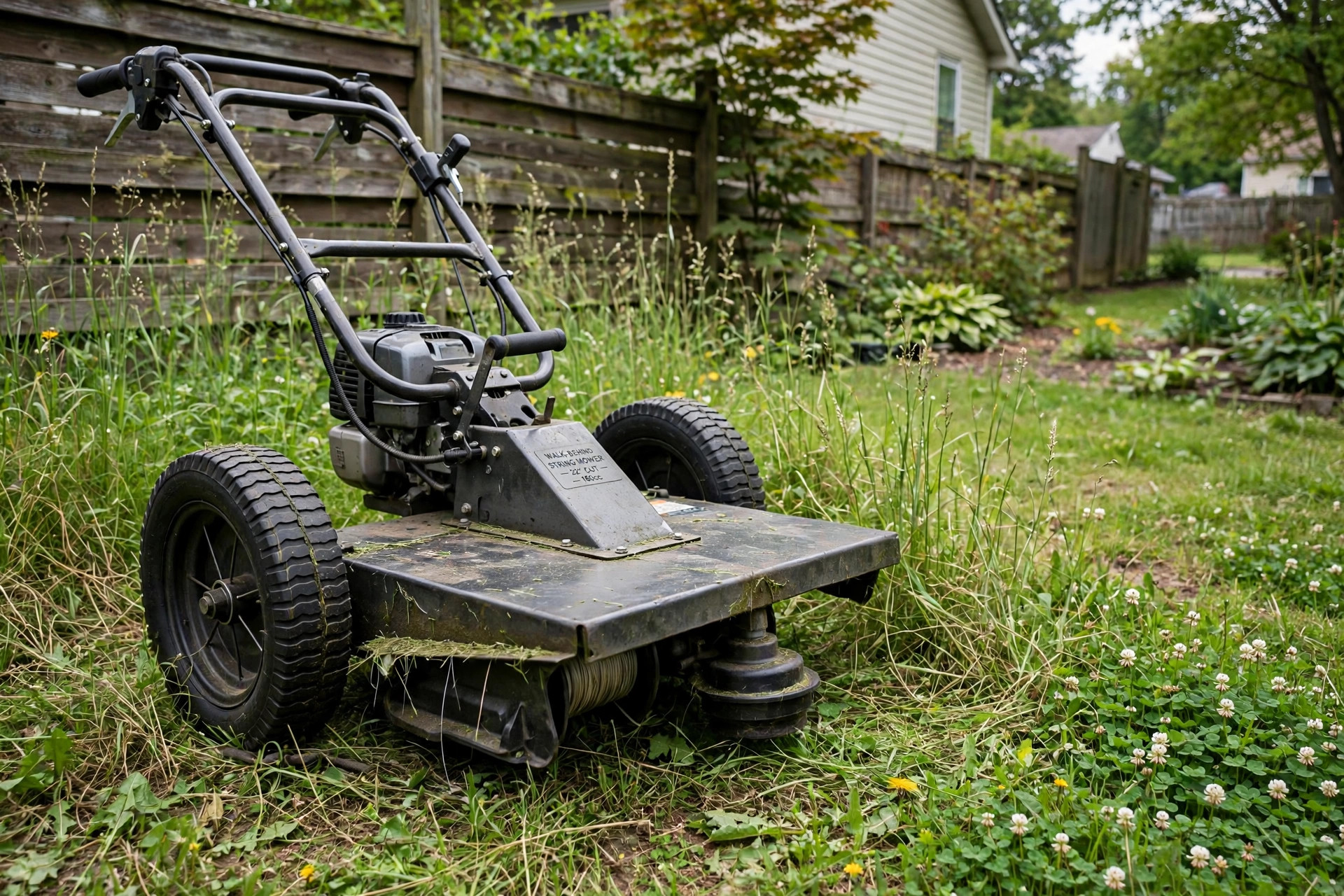
When we began these best walk behind string mower reviews, we had one plain question in mind. Which machine cuts tall grass and thick weeds best without wearing out the person who pushes it? A walk behind string mower, often called a wheeled string trimmer, fills a gap that most lawn tools leave open. It is stronger than a hand held trimmer. It is easier to guide than a brush cutter. It uses heavy cutting line instead of a metal blade. For that reason it can chew through overgrowth near fences, sheds, and ditches with less risk.
Many yards have places where a normal mower cannot go. The grass grows tall along the back fence. Weeds take over the ditch by the road. A riding mower would tip or sink there. A push mower would choke and stall. A walk behind string mower was made for these rough spots. It rides on two large wheels. It spins heavy trimmer line at high speed. The line cuts through brush, tall grass, and weeds close to the ground.
This guide pulls together what reviews show about the best machines on the market. We looked at power, cutting width, build quality, price, and ease of use. We also read owner reports from people who used these mowers season after season. The goal is simple. Help you pick the right machine for your yard the first time.
Why a Walk Behind String Mower Matters: Best Walk Behind String Mower Reviews
A regular lawn mower works well on flat, open grass. It fails when the grass is knee high. It fails on slopes, in ditches, and around posts and stones. The blade can strike hidden objects. The deck can clog with wet grass. Repairs cost money and time.
A walk behind string trimmer mower handles rough ground by design. The cutting head sits high off the ground. The line is flexible, so it bounces off stones and fence posts instead of striking them hard. The large wheels roll over bumps and ruts. This makes the machine useful for field edges, pond banks, and the sides of gravel driveways.
For people who own an acre or more, the tool saves real labor. Clearing a fence line with a hand held trimmer takes hours and leaves your arms numb. The same job takes far less time with a wheeled unit. Older owners and people with back trouble find the machine far kinder than carrying a trimmer on a strap.
What to Look for in the Reviews
Reviews of the best walk behind string mowers point to the same key features again and again. We list them below so you can judge any model with a clear eye.
Engine or Motor Power
Most walk behind string mowers use a small four stroke gasoline engine. The common size range runs from about 140 cubic centimeters to 160 cubic centimeters. Larger engines handle thicker brush with less strain. They also restart more easily on warm days.
A few battery powered models now appear in reviews. They run quietly and need no fuel. Their cutting time is limited by the battery pack. For a small yard with light weeds, a battery model may serve well. For heavy field work, gas power still leads.
Cutting Width and Line Size
Cutting width runs from about 18 inches to 24 inches. A wider cut clears ground faster. It also needs more power to keep the line speed up. Most owners find 22 inches a good middle point.
Line thickness matters more than many buyers expect. Standard line is about 0.155 inches in diameter. Heavier duty machines use line near 0.175 inches. Thicker line lasts longer and cuts woody stems better. It costs more to replace. Check how the line feeds before you buy. Some heads reload by hand. Others accept pre cut lengths that slip in fast.
Line Feed Systems
Reviews pay close attention to how the line loads. Manual feed heads ask you to wind the line by hand. They cost less and break less often. Pre cut systems take short lengths of line that drop in through holes in the head. They reload in seconds in the field. They cost more per season in line. Owners who cut large fields favor pre cut systems for the speed. Owners with small yards do fine with manual winding. Either way, buy line that matches the diameter the maker states. Wrong sizes jam or fly apart.
Wheels and Balance
Large wheels roll over rough ground with less effort. Look for wheels at least 12 inches across, with pneumatic tires if you can find them. The handlebar should adjust to your height. Good balance keeps the cutting head level without you forcing it down.
Build Quality
Steel decks outlast plastic ones. Check that the handlebar mounts are solid and that the throttle control sits within easy reach. Reviews from long term owners praise machines with simple designs and common parts. A machine you can service yourself is worth more than a fancier one that needs a shop for every repair.
Types and Options
The market falls into a few clear types.
Gasoline models form the largest group. They cost the most up front but cut the widest range of brush. They need fuel, oil changes, and winter storage care. Brands with long histories in yard equipment, such as Toro and John Deere, set the standard many others follow.
Battery electric models suit small yards and noise sensitive neighborhoods. They start with a button. They need no oil or fuel mixing. Their run time of 30 to 45 minutes fits small jobs. Buyers should check the cost of spare batteries.
Tow behind models attach to a riding mower or ATV. They suit large fields. This guide focuses on walk behind units, but buyers with many acres may want to look at tow behind types as well. If your main job is a robot lawn mower for half acre yards, you may still want a walk behind string mower for the rough edges the robot cannot reach.
Heavy brush models use the thickest line and the strongest frames. They cost more. They suit rural land with saplings and briars. For a suburban lot, a mid range model is enough.
Cost and Price
Prices for walk behind string mowers run from about 300 dollars to 700 dollars in most American stores. Entry models near 300 dollars handle light weeds and tall grass on flat ground. Mid range machines near 450 dollars add stronger engines and wider cuts. Heavy duty models near 650 dollars or more cut brush and saplings.
Running costs stay low. A tank of fuel covers a long session. Replacement line costs a few dollars per season for most users. Spark plugs and air filters need yearly attention. Over five years, a gas model costs far less than hiring a crew to clear rough ground twice a year.
Watch for sales in early spring and late fall. Many buyers pair a walk behind string mower with a standard push mower. A walk behind mower with grass catcher sale can cover the open lawn while the string mower handles the edges.
Care and Upkeep
Simple care keeps these machines running for many years. Follow these steps each season.
Change the engine oil after the first few hours of use, then once per season. A clean air filter keeps the engine breathing well. Check the spark plug each spring and replace it if the tip looks worn.
Inspect the cutting line before each use. Replace line that is cracked or worn thin. Keep a spare pack on hand. Clean grass and mud from under the deck after each session. Dried buildup traps moisture and rusts steel parts.
Before winter storage, run the fuel tank dry or add a stabilizer. Store the machine in a dry shed or garage. Cover it to keep dust out. In spring, check the wheels for cracks and make sure the handlebar bolts are tight.
Safety
A walk behind string mower is safer than a blade machine, but it still throws debris. Wear eye protection every time you run it. Long pants and closed shoes protect your legs and feet. Gloves help your grip on long jobs.
Clear the work area of wire, rope, and trash before you start. The line can catch such items and throw them. Keep children and pets away from the cutting zone. Never run the machine on steep slopes where you could lose your footing. Let the engine cool before refueling.
The line spins fast and can cut skin. Keep hands and feet clear of the cutting head while the engine runs. Stop the engine before you clear a tangle or adjust the line. Read the owner manual once through before the first use. The manual lists the right line size and the safe way to service the head.
Frequently Asked Questions
Can a walk behind string mower cut saplings?
Light saplings up to about half an inch thick fall to heavy line on strong machines. Thicker wood needs a brush cutter with a blade. Do not force the machine through wood it cannot handle. You will wear out the line and strain the engine.
How does it compare to a hand held trimmer?
A walk behind unit cuts a wider path and needs no lifting. It is better for large areas of tall grass. A hand held trimmer reaches tight spots the wheels cannot enter, such as around flower beds. Many owners keep both. If you fight thick weeds often, read up on a top rated string trimmer for thick weeds as a companion tool.
Is a gas or battery model better?
Gas models cut longer and handle heavier brush. Battery models run quiet and need less care. For a yard under a quarter acre with light weeds, battery power may be enough. For rural land or heavy overgrowth, gas is the safer pick.
How often must the line be replaced?
It depends on the ground. On clean grass, a set of line lasts many hours. On rocky or woody ground, you may replace line each session. Carry spares and learn the reload method at home before you head out to the field.
Can I use it as my only mower?
It cuts rough ground well but leaves an uneven finish on a lawn. It is not a good tool for a neat front yard. Use a standard mower for the lawn and the string mower for edges, ditches, and fields.
What engine size do I need?
About 140 to 150 cubic centimeters suits most suburban jobs. Choose 160 cubic centimeters or more for heavy brush and large fields. Firms that build small engines, such as Briggs and Stratton, publish clear charts that match engine size to job type.
A Final Word
The best walk behind string mower reviews agree on one point. There is no single best machine for every yard. The right choice depends on your ground, your brush, and your budget. A mid range gas model suits most American yards. It clears fence lines, ditches, and field edges with steady power. A battery model suits small, quiet neighborhoods. A heavy duty unit suits rural land with real brush.
Take time to read reviews from owners who used the machine for more than one season. Their notes on line wear, engine starts, and part quality matter more than any sales page. Product testing groups like Consumer Reports add useful test data on power and durability. Measure your rough areas before you shop. Then buy the machine that fits the work, not the biggest one on the shelf.
References
Briggs & Stratton. (n.d.). Engines and outdoor power equipment. https://www.briggsandstratton.com Consumer Reports. (n.d.). Product reviews and buying guides. https://www.consumerreports.org Deere & Company. (n.d.). Lawn care and yard equipment. https://www.deere.com Toro. (n.d.). Lawn mowers and landscape equipment. https://www.toro.com
Was this guide helpful?

About David Wilson
The My Garden US editorial team writes practical, in-depth home and garden guides for American homeowners — tested advice, no fluff.
You May Also Like
Best Lawn Edging for Curved Beds: A Buyer’s Guide
February 17, 2026 0 views
Best Handheld Spreader for Small Lawns: A Practical Buying Guide
April 1, 2026 0 views
Best Crabgrass Preventer for Established Lawns: A Practical 2026 Guide
May 18, 2026 0 views