
Introduction
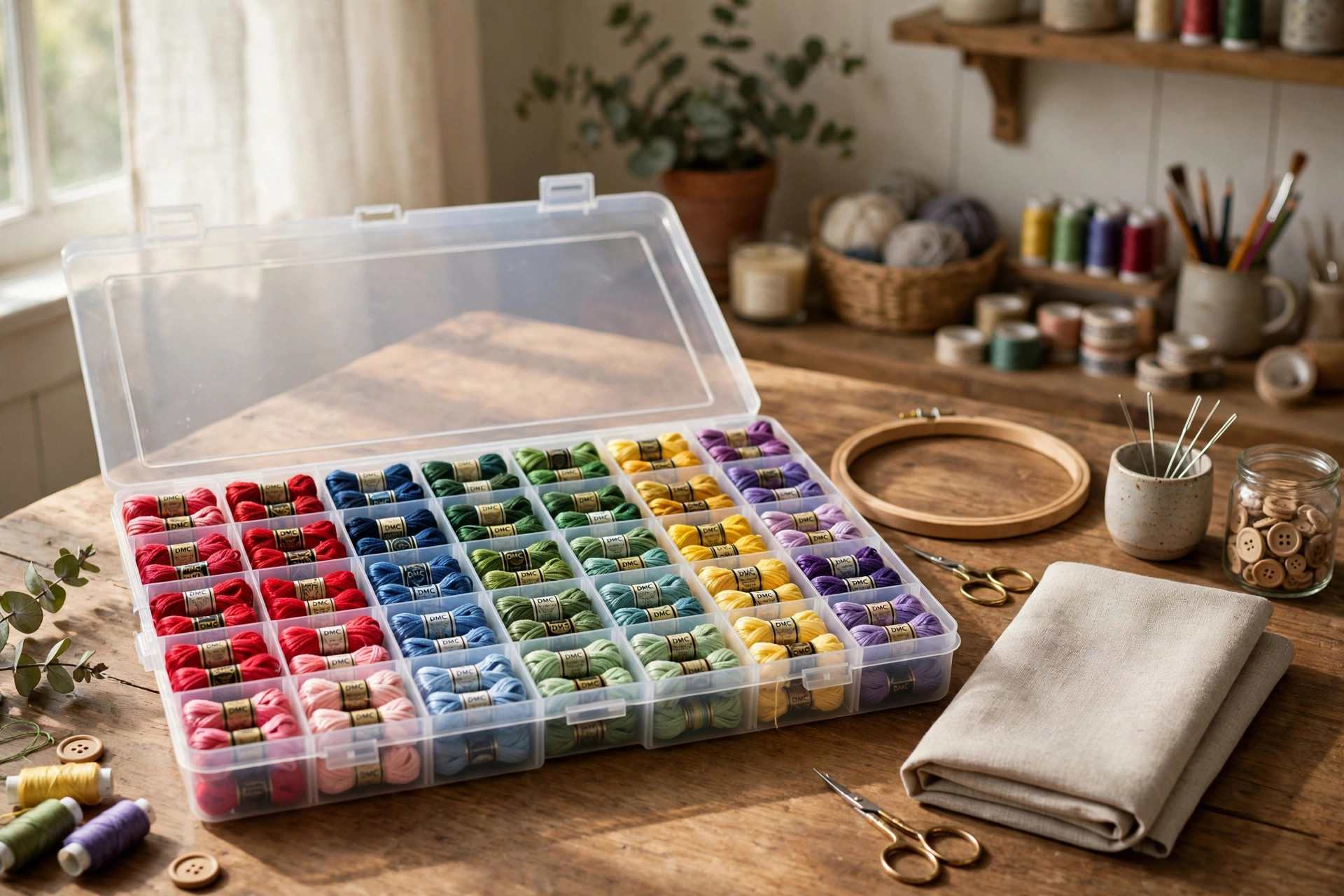
An embroidery thread set for hand stitching crafts is one of the most useful kits a home crafter can own. It is a box or bundle of colored threads made for sewing by hand. Most sets hold between fifty and two hundred skeins in many colors. They sit on a shelf and wait until a project calls for them.
Many people begin hand stitching with only three or four colors. They soon learn that this is not enough. A flower needs greens, reds, and yellows. A sky needs blues of many shades. A single missing color can stop a project for days. A full thread set ends this problem. The right color is always within reach.
This guide explains what an embroidery thread set for hand stitching crafts is, why it matters, and how to choose one. It covers the types of thread, the true cost, and simple care. It also answers the questions buyers ask most. Whether you stitch samplers, mend clothes, or make gifts, this guide will help you pick a set that serves you well for years.
Why a Thread Set Matters: Embroidery Thread Set for Hand Stitching Crafts
Work Goes Faster
Hand stitching is slow work by nature. Each stitch takes time. When the thread you need is already in your box, you keep a steady rhythm. When it is not, you must stop, drive to a store, or wait for a shipment. That break can cool your interest in the whole project. A complete set keeps the work moving from the first stitch to the last.
Colors Stay True to Your Plan
Patterns often call for many shades of one color. A leaf may need a light green, a mid green, and a dark green. If you buy threads one by one, you may settle for what the store has. The result looks flat. A set with graded shades lets you follow the pattern as written. The finished piece has depth and life.
Beginners Learn More
A new stitcher learns color the way a painter learns paint. You must see many colors side by side to know which ones work together. An embroidery thread set for beginners is like a box of crayons. It invites you to try. You can test a red against an orange before you commit. You can learn what pleases your eye without spending money on each test.
A good starter project is a simple sampler cloth. Many crafters pair their first thread set with a needle felting kit for beginners animals diy or a best hot glue gun for craft projects home to build a small craft corner. These basic tools grow together well.
What to Look for in a Set
Thread Count and Color Range
Look first at how many skeins the set holds. Fifty is enough for small projects and repairs. One hundred covers most samplers and wall hangings. Two hundred or more suits large or detailed work. Also look at the range of colors. A set should hold full families: reds, oranges, yellows, greens, blues, purples, pinks, browns, grays, blacks, and whites. Watch out for sets that pad their count with many near-duplicates.
Thread Type
Most hand stitching uses stranded cotton floss. Each skein holds six thin strands twisted together. You pull out two or three strands for normal work. This is the standard for cross stitch and surface embroidery. Some sets add perle cotton, which does not split, or metallic threads for shine. Make sure the label says what is inside. A set that mixes types without labels causes confusion.
Colorfastness
Colorfast thread keeps its color when washed. Cheap thread may bleed red into white cloth on the first wash. Look for the word “colorfast” on the package. If you plan to stitch items that will be washed, like napkins or baby clothes, this point is not optional. It is the heart of the purchase.
Packaging
A set is only as good as its storage. Threads that sit loose in a bag tangle into knots. Good sets come in a box with small compartments or on labeled cards. Some include a ring or bobbin winder. You should be able to see each color without digging. Clear lids help. If the box is flimsy, plan to move the threads into your own organizer from a large craft retailer such as Michaels or JOANN.
Brand and Consistency
Well known thread makers dye their lots with care. A red you buy this year matches the red you bought last year. Off-brand sets can shift shades between batches. If you work on large projects over many months, this matters. Read reviews before you buy. Craft supply sites like Blick and Walmart carry buyer reviews that tell you how a set holds up in real use.
Types of Thread You Will Find
Stranded Cotton Floss
This is the heart of nearly every hand stitching thread kit. Six strands, soft, easy to split. It works on cotton, linen, and most plain cloth. It takes dye well, so colors run deep. Most beginners should start here. One hundred skeins of stranded cotton cover nearly all common projects.
Perle Cotton
Perle cotton is a twisted thread that you use as it comes. It does not split. It has a soft shine and makes bold, even stitches. It is a favorite for wool applique and for outlines that must stand out. Some sets include a few skeins of perle cotton for accent work. If your set has none, you can add it later.
Metallic Thread
Metallic thread adds gold, silver, and copper sparkle. It is lovely for holiday pieces and for small details like stars or trim. It is harder to work with. It kinks and frays if you pull too hard. Short lengths and a loose hand make it behave. Beginners should treat it as a special extra, not a daily thread.
Silk and Wool Threads
Silk thread is smooth and bright. Wool thread is warm and matte. Both cost more than cotton. They suit fine or heirloom work. A few crafters keep small amounts for special gifts. Most starter sets do not include them, and that is fine.
Variegated Thread
Variegated thread shifts color along its length. One skein may run from light blue to dark blue. It creates lovely shaded effects with no thread changes. It works well for skies, water, and flower petals. Many mid-size sets include a handful of variegated skeins.
Cost and Price
A basic embroidery thread set for hand stitching crafts costs little. Small sets of fifty skeins often sell for under ten dollars at stores like Target and Amazon. These are fine for children, for school projects, and for simple repairs.
Mid-range sets of one hundred to one hundred fifty skeins run from fifteen to thirty dollars. This is the sweet spot for most home crafters. The colors are truer, the packaging is better, and the thread tangles less. A set in this range can last a year or more of steady hobby work.
Large or premium sets of two hundred skeins and up cost thirty to sixty dollars. Some branded sets cost more. The extra money buys dye consistency, smooth texture, and sturdy boxes. If you stitch often or sell your work, the premium is worth it.
Do not forget the small extras. You will need needles, a hoop, and small scissors. A full starter kit with all of these may cost a few dollars more than thread alone, and it saves a second trip. Shoppers who buy craft supplies at The Home Depot often add these basics in the same order.
Price per skein is the fairest way to compare. Divide the price by the skein count. A ten-dollar set of fifty skeins costs twenty cents per skein. A thirty-dollar set of two hundred costs fifteen cents per skein. Larger sets are often the better deal, as long as you will use the colors.
Care and Upkeep
Keep Threads Clean and Dry
Cotton thread absorbs moisture and dust. Store your set in a closed box, away from windows and damp basements. A dry closet shelf is ideal. If a skein gets wet, let it dry flat before you wind it back up. Damp thread can spot or weaken.
Keep Them Out of Sunlight
Sun fades dyed thread. A box left on a sunny table for a summer will show pale streaks on the top skeins. Store the box with the lid closed. If you like to display your colors, hang a small sample card on the wall and keep the working skeins in the dark.
Wind and Label
Many skeins come as pull skeins with paper labels. Keep the labels. They carry the color number you will need when you reorder. When a skein starts to tangle, wind it onto a small cardboard bobbin. Write the number on the bobbin. A numbered collection is easy to refill one color at a time.
Mend, Do Not Waste
Short ends are part of hand stitching. Save pieces longer than six inches for small repairs and for tacking. A jar of saved ends also serves for stuffing small pincushions. Crafters who enjoy many kinds of hand work often keep their thread box next to an acrylic paint set for beginners canvas art, since painted and stitched pieces pair well in home decor.
Safety
Hand stitching is a safe craft, but a few habits keep it safer.
Keep needles in a pincushion or a needle case, never loose in a chair or on the floor. A lost needle in carpet is a real hazard for bare feet and pets. Count your needles at the start and end of a session.
Use small, sharp scissors and cut away from your body. Dull scissors slip and cause more cuts than sharp ones. Store them closed or in a sheath.
Take breaks for your eyes and hands. Fine stitching strains both. Look across the room every twenty minutes. Stretch your fingers. Good light matters more than strong light: a steady lamp at your side beats an overhead glare.
Keep thread and small tools away from very young children. Long thread can wrap around small fingers or necks. Toddlers should craft only with direct adult help. For general home safety guidance around craft supplies, the project guides at Family Handyman and This Old House are useful reading, as is the DIY library at Bob Vila.
Frequently Asked Questions
How many skeins does a beginner need?
Fifty skeins are enough to start. You can stitch samplers, simple flowers, and monograms. Move up to one hundred when you begin larger pieces. There is no need to buy two hundred at the start. Learn what you like first.
Can I mix brands in one project?
You can, but with care. Different makers dye colors a little differently. A red from one brand may clash with a red from another. For small projects this rarely shows. For large pieces, try to buy the main colors from one maker so the shades agree.
What is the difference between embroidery floss and sewing thread?
Embroidery floss is thicker, softer, and made to show on the surface of the cloth. Sewing thread is thin and made to hide in seams. Do not use sewing thread for embroidery. It looks weak and breaks under the pull of decorative stitches.
How long does a skein last?
One skein of stranded cotton holds about eight yards. Used two strands at a time, that is a good amount of stitching. A single skein can finish a small motif or a monogram. Large wall hangings may take several skeins of the background color.
Will the colors wash out?
Good colorfast thread will not wash out in normal laundering. Wash stitched items gently in cool water with mild soap. Do not use bleach. Press from the back with a warm iron. Cheap non-colorfast thread may bleed, so test a short piece in water before you stitch with it.
Where should I buy a set?
Buy where you can see reviews and return with ease. Large craft and general stores stock many sets at fair prices. Specialty needlework shops offer expert advice and rare colors. Online marketplaces give the widest choice. Wherever you buy, check that the listing names the thread type and the skein count.
A Short Final Word
An embroidery thread set for hand stitching crafts is a small purchase that pays back for years. It turns color from a problem into a pleasure. Buy a set that fits your work, store it with care, and stitch often. The cloth will keep a record of every hour you gave it, and that record will outlast us all.
References
Amazon. (n.d.). Online shopping. https://www.amazon.com Blick Art Materials. (n.d.). Art and craft supplies. https://www.dickblick.com Bob Vila. (n.d.). Home improvement advice. https://www.bobvila.com Family Handyman. (n.d.). DIY home repair and maintenance. https://www.familyhandyman.com JOANN. (n.d.). Fabric and craft supplies. https://www.joann.com Michaels. (n.d.). Arts and crafts supplies. https://www.michaels.com Target. (n.d.). Retail store. https://www.target.com The Home Depot. (n.d.). Home improvement products. https://www.homedepot.com This Old House. (n.d.). Home renovation guidance. https://www.thisoldhouse.com Walmart. (n.d.). Everyday low prices. https://www.walmart.com
Was this guide helpful?

About Sarah Mitchell
The My Garden US editorial team writes practical, in-depth home and garden guides for American homeowners — tested advice, no fluff.
You May Also Like
Best Fabric Paint for Shoes and Clothes DIY: A Complete Guide
March 28, 2026 0 views
Wooden Bead Kit for Garland and Crafts DIY: A Plain Guide
February 16, 2026 0 views
Best Silicone Molds for Resin Crafts Jewelry: A Plain Guide
June 2, 2026 0 views