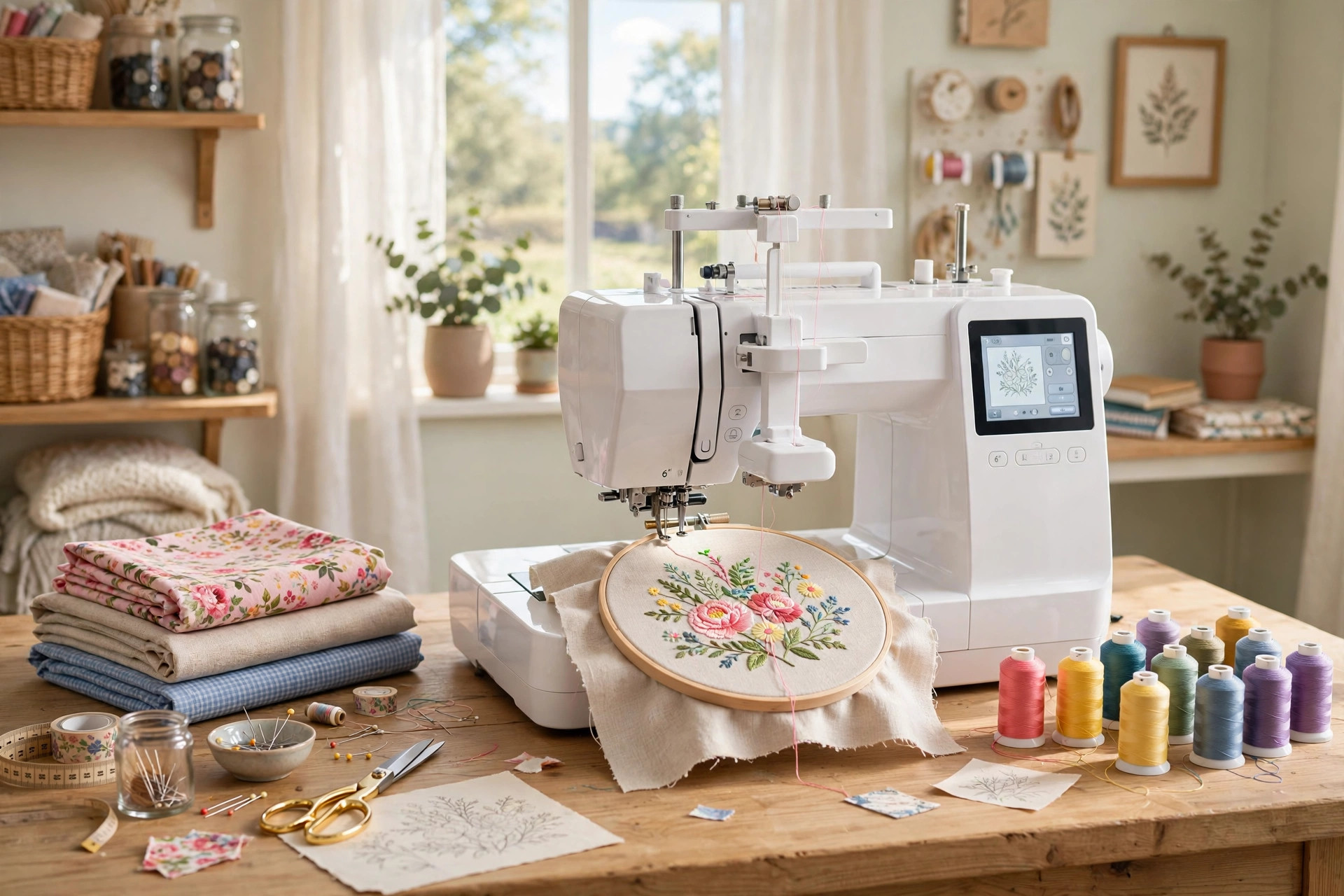
The best embroidery machine for small business USA owners is not always the biggest or the most costly model. It is the machine that fits your orders, your budget, and your skill. A small shop may sell hats, shirts, tote bags, or patches. The machine must run steady, stitch clean, and stay simple to use. This guide explains how to choose one in plain terms. It covers hoop size, speed, types, cost, care, and safety. It also answers common questions. Read it through before you buy.
Why the Right Machine Matters
A small business lives on trust. A customer orders a logo on twelve caps. The stitches must look the same on cap one and cap twelve. A weak machine may skip stitches when it runs hot. The thread may break again and again. Each break wastes time and thread. A good machine holds tension well. It keeps each letter sharp and even.
Time is money in a small shop. A machine that sews slow can still do fine work. But if orders grow, slow speed hurts. A faster machine can finish a jacket back in one sitting instead of two. It lets you take more work without long days.
Quality also decides your price. Clean work lets you charge fair rates. Messy work brings returns and bad word of mouth. A solid small business embroidery machine protects your name. It turns first-time buyers into repeat buyers.
Space matters too. Many owners start at home. The machine may sit in a spare room or a garage corner. A large multi-needle unit may not fit there. The right home embroidery machine for small business use matches your room and your power supply. It should not need special wiring.
Start-up cost is the last reason. Machines range from a few hundred dollars to many thousands. Buy more than you need and money sits idle. Buy too little and you may outgrow it in a year. The best choice sits in the middle: enough power for your planned orders, with room to grow.
What to Look for: How to Choose: Best Embroidery Machine for Small Business Usa
Choosing well means knowing a few key points. Learn them once and the whole market makes sense.
The Hoop Size
The hoop holds the fabric tight while the needle sews. Hoops come in sizes like 4 by 4 inches or 5 by 7 inches. A small hoop is fine for chest logos and baby clothes. A big hoop suits jacket backs and large quilt blocks. If you plan to sew large designs, pick a machine with a large hoop or with hoop options. Changing hoops is simple once you learn it.
Stitches Per Minute
Speed is measured in stitches per minute. Home models often run near 650 stitches per minute. Commercial models may run near 1,000 or more. For a new shop, a mid-range speed is enough. Speed helps most on big orders. On small logos the difference is slight.
The Number of Needles
Single-needle machines use one needle and one thread color at a time. You stop the machine to change thread color. Multi-needle machines hold several colors at once. They switch colors on their own. A single-needle model costs less and suits beginners. A multi-needle model saves time when designs have many colors. Many small shops start single-needle and upgrade later.
Ease of Use
A touch screen with clear menus helps a new owner. A built-in light helps you see small stitches. A thread cutter that trims at the push of a button saves time. USB ports or wireless transfer let you load designs from a computer. These small features add up each day.
Built-in Designs and Fonts
Most machines come with built-in patterns and lettering fonts. A good set lets you start work at once. Check how many designs are built in. Check if you can add more. New owners can find free and paid designs from many craft suppliers such as Michaels and JOANN.
Warranty and Support
Ask about the warranty before you buy. A one-year or longer warranty gives peace of mind. Ask where service is done. Some brands train local dealers to fix machines. Dealer support is worth much to a new shop. Brand sites like Brother, Janome, and Singer list dealers and service points.
Types and Options
Single-Needle Home Models
These are the most common choice for new owners. They are small, quiet, and light. They handle shirts, caps with a cap frame, and tote bags. They sew well on cotton and denim. They cost the least to buy and to run. Their main limit is color changes. Each color needs a manual thread change.
Multi-Needle Home Models
These hold four, six, or ten needles at once. The machine picks the next color by itself. This saves minutes on each item. On a run of fifty shirts, the savings are large. These models cost more and weigh more. They still fit in a home room.
Commercial Multi-Head Models
Some shops run machines with more than one head. Each head sews the same design at once. Two heads can sew two shirts at the same time. Four heads can sew four. These are for high volume shops. They cost much more and need more space. A new small business rarely needs one at first.
Combination Sewing and Embroidery Models
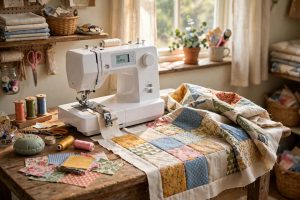
Some machines sew straight stitches and also embroider. If you also alter clothes or make quilts, a combination model may serve two jobs. The embroidery part is the same as a stand-alone model. The price is fair for what it does.
Used and Rebuilt Machines
A used commercial machine can be a good deal. A shop that closed may sell one at half price. Have a trained tech check it first. Test it on real fabric before you pay. New owners often read repair guides on Family Handyman to learn basic upkeep, though a full check still needs a pro.
Cost and Price
Prices run wide. A good single-needle home model may cost from 400 to 1,500 dollars. A multi-needle home model may cost from 3,000 to 8,000 dollars. A commercial unit may cost 10,000 dollars or more. The price tag is not the full cost. Add hoops, extra needles, thread, stabilizer, and bobbins. Add software if you want to make your own designs. Many owners spend 300 to 800 dollars on extras in the first year.
Thread cost is steady but real. A large spool of quality thread costs a few dollars. A busy shop may use many spools each month. Cheap thread breaks more and causes bad stitches. It is false saving.
Stabilizer is the backing that sits under or on top of the fabric. It keeps the fabric from puckering. It comes in cut-away, tear-away, and wash-away types. Keep all three on hand. A new shop may spend 50 to 100 dollars on stabilizer stock.
Think about how you will earn the money back. If you charge 10 dollars to stitch a name on a cap, and the job takes 15 minutes, the machine pays for itself over time. Write down your planned prices before you buy. Big box retailers such as Home Depot sell tables and storage that help set up a clean workroom at fair cost.
Do not forget tax rules. A machine bought for a business may count as a business expense. Keep all receipts. A tax pro can tell you what you may deduct. Rules change, so ask each year.
Care and Upkeep
A clean machine sews a clean design. Lint builds up fast in the bobbin area. Brush it out after each long run. Use the small brush that came with the machine. Do not blow into the machine with your mouth. Moisture harms the parts.
Oil only where the manual says to oil. Many new machines need little oil. Too much oil stains fabric. Read the manual and follow it word for word.
Change needles often. A dull needle breaks thread and makes rough stitches. For a busy shop, change the needle every eight to ten hours of sewing. Keep spare needles in a marked box. Craft stores and art suppliers such as Blick carry organizer cases that keep small parts in order.
Cover the machine when not in use. Dust settles on the thread path and causes breaks. A simple cloth cover does the job.
Keep the machine on a firm table. A shaky table makes the stitches wander. A heavy workbench is best. Many owners pair the machine with other craft tools on the same bench, such as a hot glue gun for craft projects or mini hot glue sticks for mixed craft work.
Update the machine software when the maker offers an update. Updates fix small faults. Check the maker site twice a year.
Safety
An embroidery machine is safer than many shop tools, but it still needs care. Keep fingers clear of the needle bar while it runs. A needle can pierce skin in a flash. Never reach under the presser foot while the machine moves.
Unplug the machine before you change a needle or clean deep inside. This stops a start by accident.
Keep cords off the floor path. Tape them down or run them along the wall. A trip can pull a heavy machine off a table.
Keep small parts away from children. Needles, bobbins, and pins are sharp. Store them high or in locked drawers.
Vent the room well when you use spray adhesive on stabilizer. Open a window. Let the fumes clear before you sit close. Guides on safe shop habits appear on sites such as This Old House and Bob Vila.
Frequently Asked Questions
Can a beginner run an embroidery machine for a small business? Yes. Many new owners learn the basics in a few weeks. Start with simple names and logos. Practice on scrap fabric first. Take one small order at a time. Skill grows fast with daily use.
How much space does a small business embroidery machine need? A single-needle model fits on a table about three feet wide. Leave room on the sides for hoops and thread. A multi-needle model needs a wider table and more depth. Measure your room before you buy.
Do I need special software to make designs? Not at first. Most machines include built-in designs and fonts. You can buy ready designs online. Later, digitizing software lets you turn art into stitches. It costs extra and takes time to learn.
What fabrics can a home embroidery machine sew? Most handle cotton, denim, canvas, and fleece with ease. Stretch knits need the right stabilizer. Thick leather and heavy canvas may strain a light home model. Test each new fabric on a scrap piece.
How long does an embroidery machine last? A well-kept machine can last ten years or more. Clean it often. Service it as the manual says. A busy commercial unit may need shop service each year. A light home unit may need service every two years.
A Short Final Word
The best embroidery machine for small business USA buyers is the one that matches real orders and real space. Start with your planned work. Pick the hoop size and speed that serve it. Count the full cost, not just the price tag. Keep the machine clean and safe. Pair it with a tidy craft bench, where even simple add-ons like chalk paint for furniture DIY projects sit within reach for mixed craft days. Do these things and your small shop will grow on steady, clean work.
References
Blick Art Materials. (n.d.). Art and craft supplies. https://www.dickblick.com Bob Vila. (n.d.). Home improvement advice. https://www.bobvila.com Brother. (n.d.). Sewing and embroidery machines. https://www.brother-usa.com Family Handyman. (n.d.). DIY home repair and maintenance. https://www.familyhandyman.com Janome. (n.d.). Sewing machines for home use. https://www.janome.com JOANN. (n.d.). Fabric and craft supplies. https://www.joann.com Michaels. (n.d.). Arts and crafts supplies. https://www.michaels.com Singer. (n.d.). Sewing machines and accessories. https://www.singer.com The Home Depot. (n.d.). Home improvement products. https://www.homedepot.com This Old House. (n.d.). Home renovation guidance. https://www.thisoldhouse.com
Was this guide helpful?

About Jennifer Lee
The My Garden US editorial team writes practical, in-depth home and garden guides for American homeowners — tested advice, no fluff.