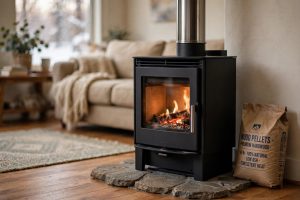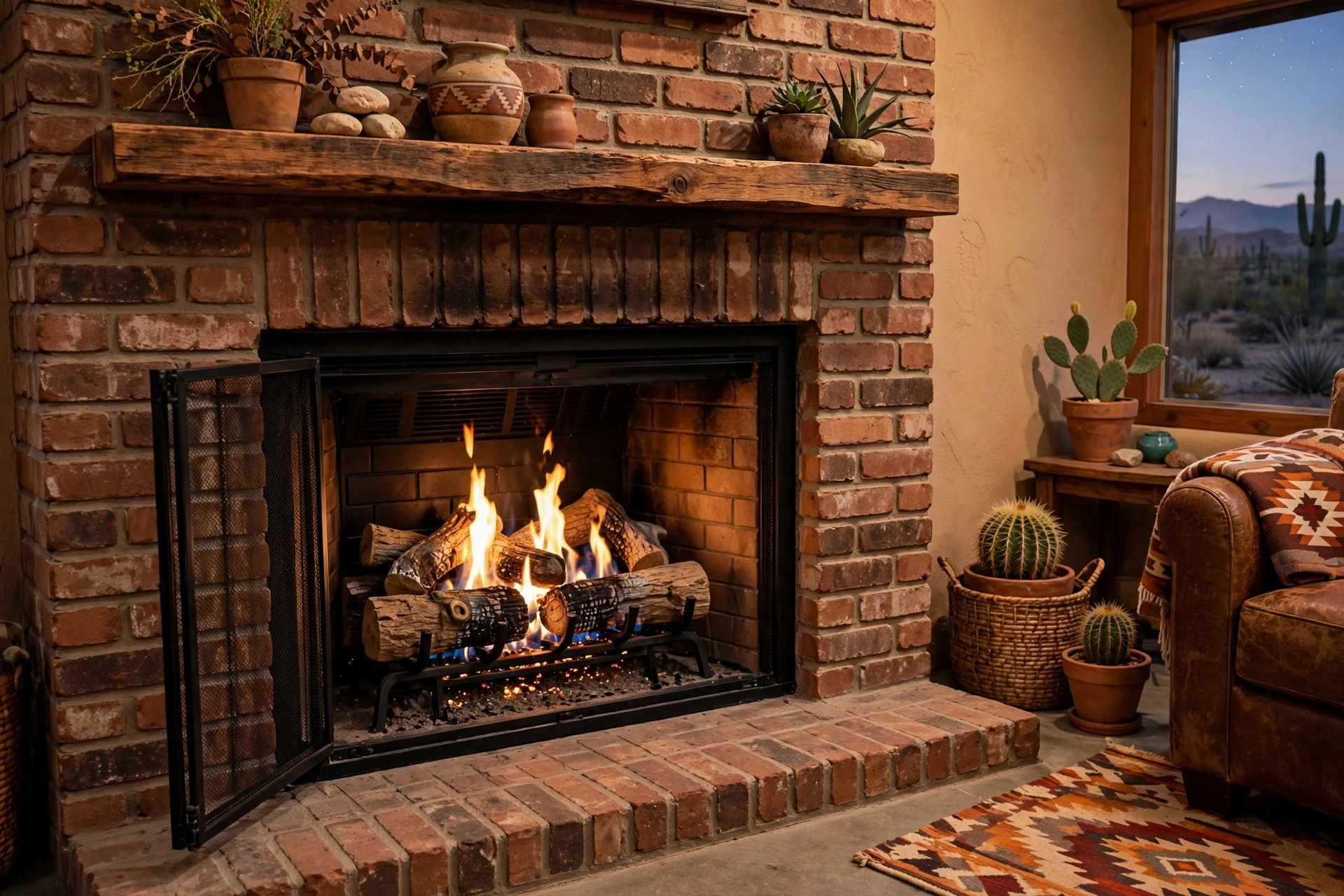

Winter in Arizona is not the cold of the north, but desert nights turn sharp. In Phoenix the temperature can fall to the low forties in January. In Flagstaff it can drop below zero. Many homes in Arizona carry a wood-burning fireplace that sits unused for months. A gas log set changes that. It gives the look and warmth of a real fire without the wood, the ash, and the smoke. But the question stands: where to buy gas log sets in Arizona, and how do you choose the right one?
This guide answers both questions. It walks through the stores, the dealers, and the online options that serve Arizona. It also explains the kinds of gas log sets on the market, what they cost, and how to keep them running safely for years.
Why a Gas Log Set Fits Arizona Homes
Arizona has long, mild shoulder seasons and short, cool winters. A full central furnace may run only a few weeks each year. A gas log set offers zone heat for the living room, the one place where the family gathers on a chilly evening. That means lower gas bills and less wear on the main furnace.
Gas logs also suit the desert. Wood smoke carries in dry desert air, and some Arizona counties, including Maricopa, have no-burn days when wood fires are banned because of air quality rules. Gas burns clean. On a no-burn day, a homeowner with gas logs can still enjoy a fire while the neighbor with a wood pile cannot. The EPA’s fireplace guidance explains how cleaner burning choices help local air, a point that matters in the Phoenix metro area.
A gas log set also fits how people live today. There is no chopping, no hauling, no creosote in the chimney. A flip of a switch or a press of a remote starts the fire. For older homeowners and busy families, that ease of use is the main draw.
Where to Buy Gas Log Sets in Arizona
Arizona buyers have three main paths: local specialty hearth shops, big-box home stores, and online sellers. Each has a place.
Local Hearth and Fireplace Shops
The best first stop in any Arizona city is a specialty hearth dealer. These shops sell gas log sets from brands such as Napoleon, and they handle installation. A shop in Phoenix, Scottsdale, Tucson, Mesa, or Flagstaff can measure your firebox, check your gas line, and suggest a set that fits. Many carry display models that burn, so you can see the flame before you buy. The Napoleon dealer network can point to shops in the state, and Heatilator’s product line shows the range of sets a specialty dealer may stock.
Local shops cost more than a big box, but they include expert advice. That advice matters because gas logs must match the firebox size and the type of burner. A set that is too large for the firebox can crack the refractory panels. A dealer takes that risk off your shoulders.
Big-Box Home Improvement Stores
Home Depot and Lowe’s both have large Arizona footprints. Their fireplace aisles carry gas log sets from brands such as Pleasant Hearth and Duluth Forge. Prices at these stores often run lower than at specialty shops, and stock is ready for same-day pickup. The Home Depot gas log section lets a buyer compare sizes and prices before a store visit, and the Lowe’s fireplace catalog offers the same for its shelves.
The trade-off is service. Big-box staff can answer basic questions, but they do not install gas lines or verify venting. For a simple replacement set of the same size, that is fine. For a first-time gas conversion, a buyer still needs a licensed plumber or gas fitter.
Online Retailers
Online sellers offer the widest choice. Specialty hearth sites ship gas log sets to Arizona addresses and often run lower prices than local shops. The catch is delivery. A gas log set is heavy and fragile, and a returned set costs a lot to ship back. Buyers should read return rules before ordering. Pair online buying with a local installer for the gas hookup.
For homeowners comparing all options, many also look at high efficiency gas log sets for sale to see how heat output differs between models before they shop.
Vented vs. Ventless: The Main Choice
Every Arizona buyer meets this choice. It shapes cost, heat, and where the set can go.
Vented gas logs burn with the damper open. The flame looks tall and yellow, much like a real wood fire. Most of the heat goes up the chimney, so they are mainly for looks. They work in any masonry fireplace with a sound chimney. Many Arizona ranch homes from the 1960s through the 1990s have such fireplaces.
Ventless (vent-free) gas logs burn with the damper closed. They send nearly all their heat into the room, which makes them far cheaper to run for warmth. But they have rules. Ventless sets are not allowed in some bedrooms and bathrooms, and local codes can differ. In parts of Arizona, counties set their own rules on vent-free products. A buyer should ask the local building department or the installer before choosing ventless. The Family Handyman fireplace articles give a plain look at how vent-free units differ from vented ones.
A third option is a gas fireplace insert, a sealed box that slides into the old firebox. Inserts cost more but heat far better than logs. Homeowners weighing inserts can read a gas fireplace inserts reviews and buying guide to compare them against simple log sets.
For most Arizona buyers, the decision comes down to purpose. If the goal is a pretty flame on a dozen cool nights, vented logs are the classic pick. If the goal is steady room heat with low running cost, ventless logs or an insert win. Those who want heat without a gas line at all may compare ventless gas fireplaces online in arizona for self-contained options.
How to Choose the Right Size
Gas log sets are sized by the width of the firebox opening, usually in 18, 24, or 30 inches. Measure the front opening of the fireplace, then the depth from the front to the back wall. The log set must fit with room to spare. A 24-inch set fits most standard Arizona fireboxes, but tract homes built after 2000 often have smaller builder boxes that need 18-inch sets.
Also check the gas line. Many Arizona wood fireplaces have no gas stub at all. Adding one means opening the wall or the hearth and running pipe from the house gas supply or from a propane tank. That job needs a licensed gas fitter. Expect it to add a few hundred dollars to the project. Homes on propane should tell the dealer at once, because propane sets use different burners and orifices than natural gas sets.
Cost and Price in Arizona
Prices for gas log sets in Arizona fall in clear bands:
– Basic vented sets: $200 to $500 at big-box stores. These are simple burner-and-log kits with a manual valve. – Mid-range vented sets: $500 to $1,000. Better log detail, remote-ready burners, and more natural flame patterns. – Premium vented sets: $1,000 to $2,500. High-detail logs cast from real wood, glowing ember beds, and full remote or thermostat control. – Ventless sets: $300 to $1,200, with remote and thermostat models at the top end. – Installation: $300 to $800 extra if a new gas line is needed. A simple swap of an old set for a new one may cost $150 to $300 in labor.
Running cost is modest. Natural gas in Arizona is cheap, and a 30,000-BTU set used a few hours a week adds only a small amount to the winter gas bill. Ventless sets, which keep the heat in the room, can even trim the furnace bill. Shoppers can check price trends and product tests at This Old House and The Spruce before they buy.
Care and Upkeep
Gas log sets need little care, but they are not care-free. Once a year, before the first cold snap, a homeowner should:
1. Brush dust off the logs and the burner. Never use water or cleaners on ceramic logs. 2. Check the pilot light and thermocouple. A weak pilot often means a dirty pilot orifice. 3. Look at the ember material and lava rock. Replace pieces that have crumbled. 4. Test the remote batteries and the wall switch. 5. For vented sets, have the chimney swept if soot has built up on the damper and flue.
A licensed technician should service the set every two to three years. In Arizona, where sets sit idle through the long summer, spiders can nest in pilot tubes during the off months. A fall check clears that before the first use.
Safety in the Desert
Gas is safe when handled right, but it demands respect. Keep these rules:
– Install a carbon monoxide detector in any room with a ventless set, and test it twice a year. The EPA’s indoor air resources stress how important detectors are with any fuel-burning appliance. – Never close the damper on a vented set. Vented logs must exhaust up the chimney. A closed damper sends carbon monoxide into the room. – Keep the area clear. Curtains, rugs, and furniture should stay at least three feet from the fireplace opening. – Do not let children or pets play near the glass or the logs. Log surfaces get very hot during use and stay hot after the flame goes out. – Watch for monsoon humidity. Arizona summers bring dust and moisture that can rust burners in outdoor or garage fireplaces. Cover unused sets in the off season.
If you ever smell gas, do not light the set. Leave the house and call the gas company. That rule holds in every state and every home.
FAQ
Can I install a gas log set myself in Arizona? You can set the logs in the firebox yourself, but any gas line work must be done by a licensed professional. Most Arizona cities require a permit for new gas piping.
Are ventless gas logs legal in Arizona? They are legal in many Arizona cities, but local codes differ. Some counties limit where vent-free appliances may go. Check with your city building office or ask your installer before buying ventless.
How long do gas log sets last? Ceramic logs can last 10 to 15 years or more with gentle handling. Burners and valves often last as long, though pilots and thermocouples may need replacement after 5 to 8 years.
Do gas log sets work during a power outage? Most vented sets with a standing pilot or a millivolt valve work without power. Sets with electronic ignition need household current. In outage-prone rural areas, a standing-pilot model is the safer pick.
What is the best size for a typical Arizona tract home fireplace? Most tract-home fireboxes take a 24-inch set, but newer builder boxes can be smaller. Measure the front opening and the depth before you shop, and bring those numbers to the store.
Can I convert my wood fireplace to gas logs? Yes, and it is the most common project of this kind. A gas fitter adds a gas stub to the firebox, and the log set drops in. The chimney still needs to be sound for vented sets.
A Short Final Word
The search for where to buy gas log sets in Arizona ends in three places: the local hearth shop for expert help, the big-box store for low prices and fast pickup, and online sellers for the widest choice. Pick vented logs for the classic look or ventless logs for real room heat. Measure the firebox, hire a licensed fitter for the gas line, and service the set each fall. Do that, and the fireplace will be ready the first night the desert air turns cold.
References
Family Handyman. (n.d.). DIY home repair and maintenance. https://www.familyhandyman.com Heatilator. (n.d.). Fireplaces and fireplace products. https://www.heatilator.com Lowe’s. (n.d.). Home improvement products. https://www.lowes.com Napoleon. (n.d.). Fireplaces, grills, and heating products. https://www.napoleon.com The Home Depot. (n.d.). Home improvement products. https://www.homedepot.com The Spruce. (n.d.). Home and garden advice. https://www.thespruce.com This Old House. (n.d.). Home renovation guidance. https://www.thisoldhouse.com U.S. Environmental Protection Agency. (n.d.). Protecting human health and the environment. https://www.epa.gov
Was this guide helpful?

About Sarah Mitchell
The My Garden US editorial team writes practical, in-depth home and garden guides for American homeowners — tested advice, no fluff.
You May Also Like
Best Fireplace Installation Services Near Me: A Homeowner’s Guide
February 25, 2026 0 views
The Best Electric Patio Heaters Buying Guide
September 11, 2026 0 views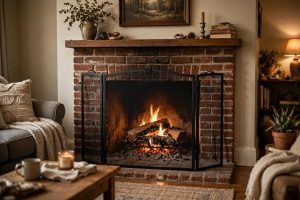
Top Rated Childproof Fireplace Screens for Humid Climates
July 29, 2026 0 views