
Introduction
Every summer in Texas brings weeks of strong heat. Many plants wilt by July. If you want green, flowing texture in your yard without heavy watering, ornamental grasses for Texas heat reviews are the best place to start. These reviews look at grasses that stand up to high heat, low rain, and hard soil.
Ornamental grasses are plants grown for their leaves, seed heads, and shape. They do not need mowing like lawn grass. They add movement to a garden. A good ornamental grass can live for many years in Texas with little care.
This guide reviews ten grasses that do well in Texas heat. It also explains how to choose, what they cost, how to plant them, and how to keep them healthy. All the advice fits a normal homeowner with basic tools.
Why Ornamental Grasses Matter in Texas: Ornamental Grasses for Texas Heat Reviews
Texas summers are long and hot. High temperatures often reach above 100 degrees in July and August. Rain can be rare for months. Many pretty shrubs and flowers from cooler states fail here.
Ornamental grasses fit this climate well. Most come from plains and dry lands. Their roots grow deep. They hold water in their stems. They stand up to wind and sun.
Homeowners also like them for cost. Grass plugs are cheap. A small plant grows fast. After one season, it fills a wide bed. Water bills stay low because most types need little water after they settle in.
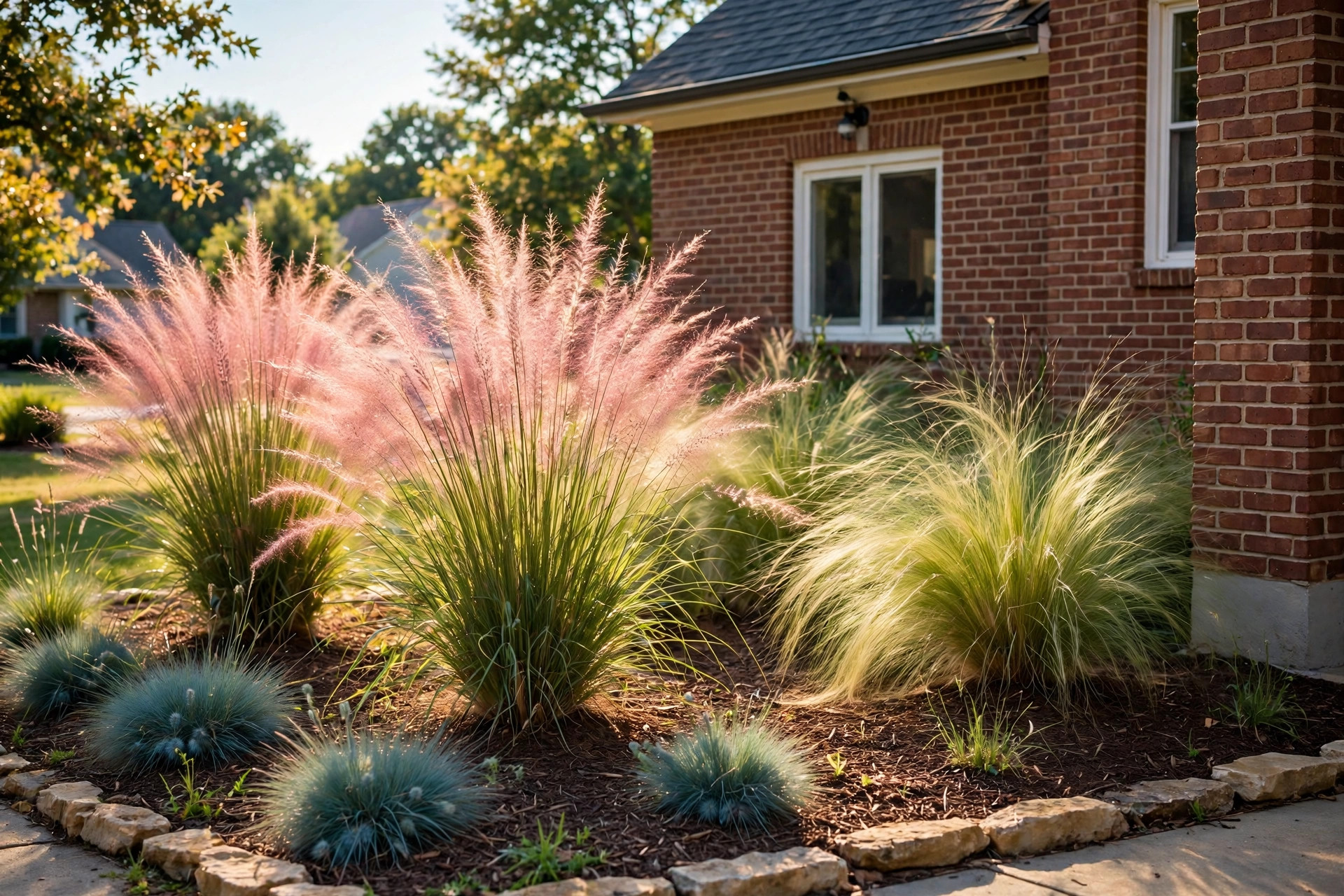
Grasses also give year-round shape. Many keep their seed heads through winter. They look good against brick homes, stone paths, and fences. They fit both modern and ranch-style homes.
Birds use grasses for shelter and nesting. Butterflies rest on the tall seed heads. A yard with grasses holds more life than a yard with only rock and concrete. For homeowners who care about local wildlife, native grasses are a simple way to help.
Grasses also cut down on lawn care work. A bed of muhly never needs mowing. It needs no bagging and no weekly trimming. Homeowners who want a smaller lawn can replace part of it with grass beds and save time every week.
What to Look For When You Choose
Read the ornamental grasses for Texas heat reviews below, but first learn what traits matter. Heat tolerance is the first. Look for plants rated for USDA zones 8 to 10, which cover most of Texas.
Drought tolerance is next. Some grasses need water every week. Others need water only in the driest months. Pick based on how much you want to water.
Check the mature size. A pampas grass can grow eight feet tall and six feet wide. A small blue fescue stays under a foot. Measure your bed before you buy.
Ask about self-seeding. Some grasses drop seeds that sprout everywhere. Mexican feather grass can spread into wild areas. Plant it where you can watch it.
Look for evergreen or semi-evergreen types if you want winter color. Some grasses go brown in winter. Others keep green leaves all year in south Texas.
Ten Varieties Reviewed
1. Gulf Muhly (Muhlenbergia capillaris)
Gulf muhly is a top pick in nearly every review of ornamental grasses for Texas heat. It grows in clumps two to three feet tall. In fall, it sends up pink clouds of fine flowers. It takes heat, drought, and poor soil. Plant it in full sun. Cut it back in late winter.
2. Mexican Feather Grass (Nassella tenuissima)
This grass has fine, hair-like leaves that wave in the wind. It grows about two feet tall. It loves sun and heat. It needs almost no water once planted. Note that it self-seeds. Plant it in a bed you can clean in spring.
3. Big Muhly (Muhlenbergia lindheimeri)
Big muhly is a Texas native. It grows three to five feet tall. Its blue-green leaves form a fountain shape. It needs little water and takes full sun. It looks good in groups of three or five.
4. Lindheimer Muhly (Muhlenbergia lindheimeri “Autumn Glow”)
A close cousin of big muhly with warm fall color. It stays upright through wind. It grows well in clay soil, which is common in Texas yards. Water it deeply but not often.
5. Pampas Grass (Cortaderia selloana)
Pampas grass is the giant of this list. It can reach eight feet. Its tall white plumes appear in late summer. It needs space. Wear gloves when you cut it back. The leaves have sharp edges. It suits large yards, not small beds.
6. Purple Fountain Grass (Pennisetum setaceum “Rubrum”)
This grass has deep red-purple leaves and soft seed heads. It grows three to four feet tall. It is a warm-season annual in north Texas and a perennial in the south. It needs more water than muhly, but it gives fast color.
7. Blue Fescue (Festuca glauca)
Blue fescue is a small grass with steel-blue leaves. It stays under one foot tall. Use it along paths and bed edges. It takes heat but likes some afternoon shade in the hottest parts of Texas. Do not overwater it.
8. Maiden Grass (Miscanthus sinensis “Gracillimus”)
Maiden grass grows five to six feet tall with fine arching leaves. It forms a graceful vase shape. It takes full sun and heat. Cut it to the ground in late winter before new growth starts.
9. Inland Sea Oats (Chasmanthium latifolium)
This Texas native has flat, oat-like seed heads that hang from the stems. It grows three to five feet tall. It takes more shade than other grasses on this list. It likes a little extra water. It spreads by seed, so plant it with care.
10. Bamboo Muhly (Muhlenbergia dumosa)
Bamboo muhly has fine, bamboo-like stems. It grows three to six feet tall. It stays green in mild winters. It takes heat and sun. It works well as a soft screen along a fence.
For yards that also need a healthy lawn under the same hot sun, see our guide to the best fertilizer for St. Augustine grass in Texas. If you want heat-proof options for the whole yard, read our notes on drought tolerant grass seed and native plant landscaping ideas for front yards.
Cost and Price
Prices vary by size and store. A one-gallon pot usually costs between eight and twenty dollars. This size is the best value for most buyers. The plant is big enough to live through a hot summer.
A three-gallon pot costs twenty to forty dollars. It gives faster results. A full bed may need only five to eight of these plants.
Buy in spring or fall for the best prices. Local nurseries often hold sales in March and September. Big box stores stock the common types at lower prices. Specialty nurseries carry the harder-to-find native types.
Plan your budget by bed size. A ten-foot bed needs about seven one-gallon grasses spaced eighteen inches apart. That costs roughly seventy to one hundred dollars. Add mulch and soil for another thirty dollars.
How to Plant
Plant in spring or fall. Fall is best in most of Texas. The roots grow through the mild winter. The plant faces its first summer with strong roots.
Dig a hole twice as wide as the pot and just as deep. Do not plant deeper than the soil level in the pot. Loosen the roots if they are wrapped tight.
Fill the hole with native soil. Do not add rich potting mix. Grasses grow better in lean soil. Too much fertilizer makes weak, floppy growth.
Water well right after planting. For the first month, water two times per week. After that, water once a week through the first summer. In the second year, most types need water only during long dry spells.
Spread two to three inches of mulch around the plant. Keep the mulch a few inches away from the stems. Mulch holds soil moisture and cools the roots.
Care and Upkeep
Ornamental grasses need less care than most garden plants. The main job is the yearly cut. In late winter, cut the dead leaves down to four to six inches. Do this before new green growth starts in spring.
Do not fertilize often. A light feeding in spring is enough. Use a slow-release fertilizer made for landscape plants. You can find advice on yard equipment care from maker guides such as Toro and John Deere, which also publish seasonal lawn tips.
Watch for weeds around young plants. Pull them by hand. Weeds steal water from new roots. Once the grass fills in, weeds have little room to grow.
Divide large clumps every three to four years. Dig up the plant in late winter. Cut it into pieces with a sharp spade. Replant the pieces. This keeps the grass healthy and gives you free plants.
For engine-powered yard tools you may use in the same garden, the Briggs & Stratton site has maintenance guides. Product test results at Consumer Reports can help you compare trimmers and mowers before you buy.
Safety
Most ornamental grasses are safe. A few need care. Pampas grass and maiden grass have sharp leaf edges. Wear long sleeves and gloves when you cut them back.
Some grasses can spread by seed. Mexican feather grass and inland sea oats seed freely. Cut off the seed heads in fall if you want to stop the spread. Check with your county extension office about plants of concern in your area.
Keep grasses away from dry wood piles and fire-prone spots. Dry grass burns fast. Your county extension office lists general home safety advice that is worth reading for any yard project.
Grasses can hold insects and small animals. Wear gloves when you reach into a thick clump. Snakes may rest in tall grass in warm states. Keep grass clumps trimmed at the base so you can see around them.
FAQ
Which ornamental grass is the most heat tolerant?
Gulf muhly and big muhly rank at the top. Both are Texas natives. They grow well with little water and full sun. Lindheimer muhly is another strong choice for clay soil.
When should I plant ornamental grasses in Texas?
Fall is the best time in most of Texas. Plant from September through November. The mild winter lets roots grow. Spring planting from March to May also works. Avoid planting in July and August.
How much water do these grasses need?
In the first year, water once a week during dry spells. After the first year, most need water only in long dry periods. Purple fountain grass and maiden grass need a bit more than muhly types.
Will ornamental grasses survive a Texas freeze?
Most will. Gulf muhly, big muhly, and maiden grass come back from the roots after hard freezes. Purple fountain grass may die in a hard freeze in north Texas. Treat it as an annual there.
Can I grow ornamental grasses in pots?
Yes. Use a large pot with drainage holes. Blue fescue and purple fountain grass do well in pots. Water pots more often than garden beds. Pots dry out fast in Texas heat.
How do I stop grass from spreading too much?
Cut off seed heads before they ripen. Dig out unwanted seedlings in spring. Plant spreading types in beds with borders. Divide clumps every few years to keep them in bounds.
A Short Final Word
Ornamental grasses are a sound choice for Texas yards. They take heat, need little water, and look good with little work. Start with two or three of the reviewed types. Plant them in fall. Cut them back once a year. They will reward you with years of easy color and movement.
Shop at a local nursery when you can. Staff there know which grasses do well in your part of the state. Read reviews, compare prices, and pick plants that fit your space. A good grass is a plant you can enjoy for a decade or more.
References
Toro. (n.d.). Lawn mowers and yard equipment. https://www.toro.com Deere & Company. (n.d.). Lawn and garden equipment. https://www.deere.com Briggs & Stratton. (n.d.). Small engines and outdoor power equipment. https://www.briggsandstratton.com Consumer Reports. (n.d.). Product reviews and ratings. https://www.consumerreports.org
Was this guide helpful?

About Jennifer Lee
The My Garden US editorial team writes practical, in-depth home and garden guides for American homeowners — tested advice, no fluff.
You May Also Like
Best Lawn Edger Blade Replacement Guide
October 4, 2026 0 views
Finding the Best Overseeding Machine Rental Near Me
February 3, 2026 0 views
How to Grow Grass in Shady Areas: A Simple Guide for Homeowners
April 6, 2026 0 views