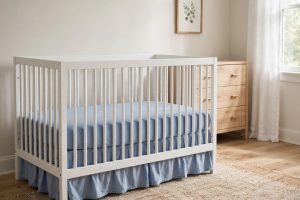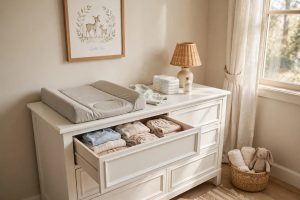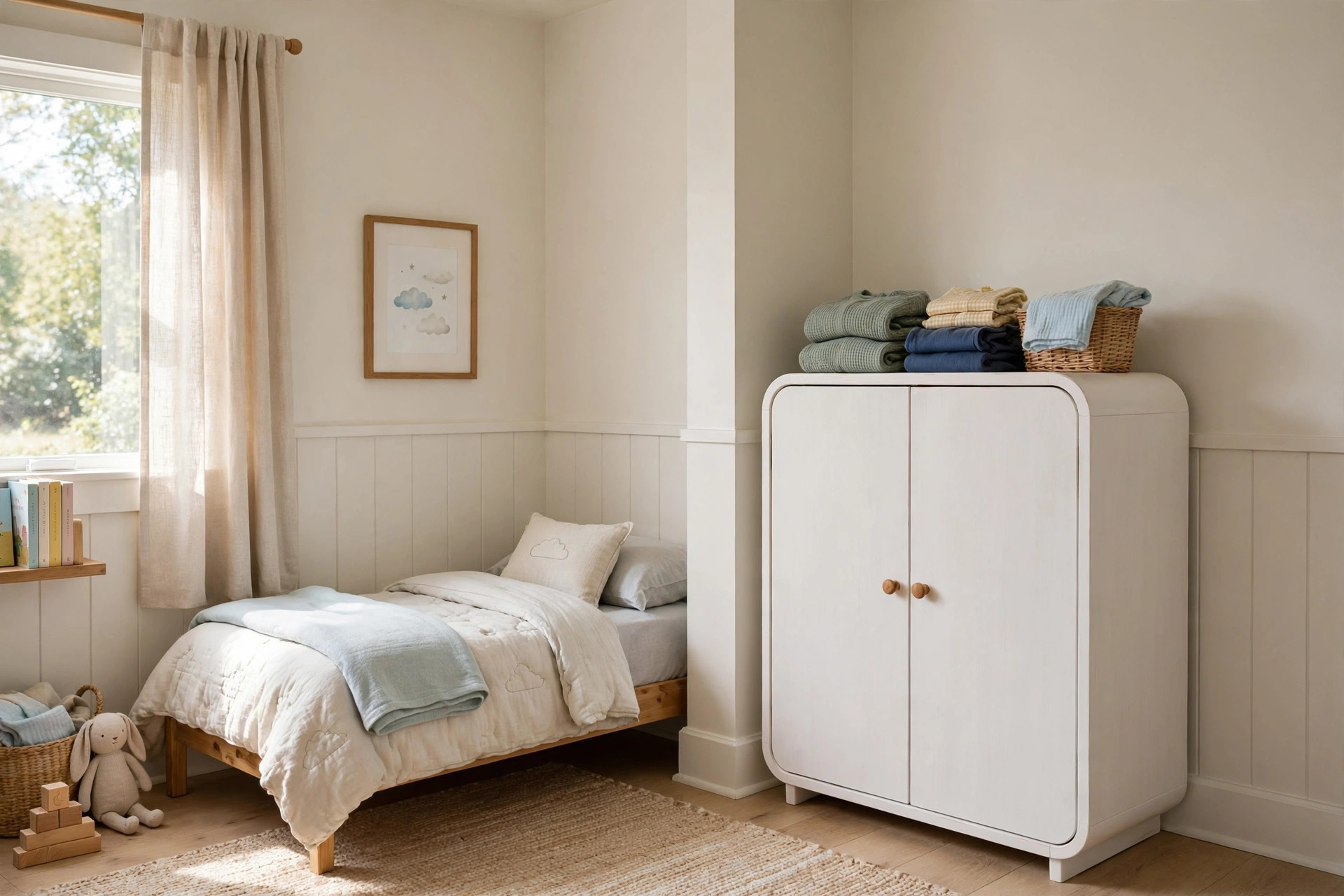
A toddler wardrobe armoire for small bedroom use is one of the smartest buys a family can make when the nursery turns into a big-kid room. The crib leaves, a small bed arrives, and suddenly there are clothes, shoes, blankets, and toy overflow with nowhere to live. A full-size adult dresser would eat the floor space and look out of place. A small, child-scaled armoire solves the problem. It holds a surprising amount of clothes, fits against a short wall or in a corner, and keeps the room tidy without making it feel cramped.
When my own sister moved her two-year-old into a ten-by-ten bedroom, the armoire she chose changed the whole room. Before it arrived, clothes sat in laundry baskets stacked two high. Within an afternoon, everything had a shelf, the baskets were gone, and the floor was clear enough for a play mat. That is the promise of this piece: order in a very small space, at a size a toddler can start to use on his own.
Why It Matters in a Small Bedroom
Small bedrooms leave no room for error. Every inch of wall counts. A toddler wardrobe armoire for small bedroom use is made with this in mind. It stands narrower and shallower than a regular wardrobe, often no wider than thirty inches and no deeper than eighteen. Yet because it uses vertical space, it can hold folded stacks, hanging shirts, and small bins at the same time.
A tidy room matters more for toddlers than for adults. Children under four play on the floor. A clear floor means fewer trips and bumps. It also means the child can see and reach her own things, which is how young children learn to dress themselves. When the clothes live at her level, she can pick a shirt without dragging a chair across the room or climbing. That small piece of independence is worth more than any fancy finish.
There is also the question of the room growing with the child. A well-chosen armoire serves from age two through the early school years. The top shelves hold out-of-season clothes now and school supplies later. The low bar that holds toddler shirts today will hold jackets tomorrow. Parents who buy cheap and flimsy often replace the piece in two years. Parents who buy solid and simple keep it for ten.
What to Look for When You Choose One: Toddler Wardrobe Armoire for Small Bedroom
Size and Fit
Measure before you shop. Measure the wall where the armoire will stand, and measure the doorways it must pass through. Many parents find a piece they love only to learn it will not fit up the stairs. A toddler wardrobe armoire for small bedroom use should leave at least two feet of clear space in front of its doors so they can swing open fully.
Watch the depth most of all. Anything deeper than twenty inches starts to steal walking room in a small bedroom. Shallow armoires work because toddler clothes are small. A shirt that hangs eight inches wide on a baby hanger needs only a narrow rod.
Sturdy Build
Toddlers lean, pull, and climb. The armoire must stand up to that. Solid wood or high-grade engineered wood with a thick back panel is the safe choice. Press on the sides when you see a piece in a store. If it wobbles, walk away. Check that shelves sit on metal pins and can be moved to new heights as the child grows.
Child-Safe Hardware
Look for soft-close hinges that will not slam on small fingers. Look for handles that a small hand can grip but that do not stick out far enough to catch a pocket or a sleeve. Some armoires come with a tip-over strap or wall anchor in the box. If yours does not, buy one. Anchoring a tall piece to the wall is the single most important safety step, and guidance from the Consumer Product Safety Commission explains why tip-over protection matters for every room a child uses.
Storage That Fits Toddler Life
The best armoires mix three zones: a short hanging rod for jackets and dresses, two or three shelves for folded stacks, and a bottom space wide enough for pull-out bins. Bins are the secret weapon. A toddler can pull a bin out, find socks, and push it back without folding a thing. Parents who plan for bins get more use from the same piece. Families also do well to pair the armoire with under-crib storage or low storage drawers elsewhere in the room, so the armoire never has to hold toys as well as clothes.
Types and Options
Freestanding Armoire
The classic choice. Two doors, a rod, and shelves behind them. It stands on its own feet and can move from room to room. In a small bedroom, pick a model with flat or gently rounded feet that sit close to the floor, because a raised base with tall legs gives a climber a foothold.
Armoire With Drawers Built In
Some models put two small drawers in the lower half and a cabinet above. Drawers are wonderful for socks, underwear, and pajamas, the small things that get lost on shelves. The trade is less hanging space, so this style suits families who fold more than they hang.
Corner Armoire
A corner unit uses the dead space where two walls meet. It can feel bigger inside than it looks, but corner doors swing wide, so measure the swing carefully. Corner models work best in square rooms where the corners are truly unused.
Convertible and Combo Units
A few makers sell an armoire that later converts, with a kit, into a bookshelf or a desk hutch. If the budget allows, this is a clever buy. The piece that holds onesies at age two can hold schoolbooks at age eight. As the child grows, a matching kids desk with drawers can join the room without clashing in style.
Cost and Price
Prices run wide. A simple flat-pack armoire from a big-box store may cost between eighty and two hundred dollars. A solid wood model from a children’s furniture maker may run between three hundred and eight hundred dollars. Custom or heirloom pieces can pass a thousand.
What drives the price up? Real wood instead of particle board, dovetail drawer joints, soft-close hardware, and non-toxic low-VOC finishes. What drives it down? Thin back panels, plastic handles, and finishes that chip in a year. A middle path serves most families well: a mid-priced piece with real wood veneer, metal hardware, and a good anchor kit. Shop the children’s rooms at Pottery Barn Kids and the family-friendly ranges at IKEA to feel the difference between price tiers, and compare with the wide selection at Wayfair before you decide.
Do not forget the hidden costs. You may need a wall anchor kit, felt pads for the feet, and shelf liner. Together these add twenty to forty dollars. Worth every cent.
Care and Upkeep
A toddler wardrobe armoire for small bedroom duty takes real wear, so small habits keep it looking new. Wipe spills at once, because milk and juice stain fast. Tighten the hinge and handle screws twice a year; they loosen with daily pulling. If the finish chips, touch it up with a matching paint pen before the chip spreads.
Move the shelves as the child grows. Lower the rod so the toddler can reach it at age two and three. Raise it at age five when longer clothes arrive. This ten-minute job, done once a year, keeps the piece working at every stage. A soft rug under the doors also protects hardwood floors from scuffs when the doors swing.
Air the inside now and then. Close a damp cabinet for months and clothes pick up a musty smell. Leave the doors open for an afternoon every season, and wipe the shelves with a dry cloth.
Safety First
Safety deserves its own section, because a small bedroom puts furniture close to a small child.
Anchor it. Every tall storage piece must be fixed to the wall. Tip-over accidents send thousands of children to emergency rooms each year. A strap or L-bracket costs a few dollars and takes fifteen minutes to fit.
Keep cords and small parts away. Do not store medicine, coins, or cleaning products in a child’s armoire. Toddlers open everything. Move those items to a locked cabinet out of reach, as child safety experts at HealthyChildren.org advise for every room a young child enters.
Check for recalls. Before you buy secondhand, look up the model on the Consumer Product Safety Commission recall list. Older armoires may have drop-side style doors or lead paint. A quick check takes five minutes and can prevent a bad buy.
Watch the top. Never place a television, a heavy lamp, or a fish tank on top of a child’s armoire. The top of a toddler’s wardrobe is not a shelf. Keep it clear or use it only for light, soft things such as folded blankets.
Ventilate finishes. New furniture can smell of glue and finish. Let a new armoire air out in a garage or near an open window for a day or two before the child sleeps beside it. Low-VOC finishes help, and independent testers at Consumer Reports regularly rate children’s furniture for chemical safety.
Frequently Asked Questions
How tall should a toddler wardrobe armoire be for a small bedroom?
Look for a height between forty and fifty-five inches. That is tall enough to hold a hanging rod and two shelves, but low enough that the top stays within a parent’s easy reach and the piece does not loom over a small room. Anything taller needs a very secure anchor and may make the room feel tight.
Can a two-year-old use the armoire on her own?
Yes, with the right setup. Put the hanging rod at its lowest setting, keep daily clothes on the lowest shelf, and use bins she can pull. She will need help at first, but within weeks most toddlers learn to fetch a shirt or a pair of pants. Expect the shelves to look messy. That is fine. Order comes later.
Is a wardrobe armoire better than a dresser for a small room?
For most small rooms, yes. An armoire uses vertical space, so it takes less floor area than a wide dresser with the same storage. Dressers also tempt climbers, since each open drawer becomes a step. A tall piece with anchored doors is harder to climb. That said, a low, wide dresser suits rooms with sloped ceilings where a tall piece will not fit.
What materials are safest for toddler furniture?
Solid hardwood with a water-based, low-VOC finish is the gold standard. Good engineered wood with a sealed veneer is a fine second choice. Avoid pieces with a strong chemical smell, flaking paint, or exposed particle board edges. Parenting guides at What to Expect and nursery design ideas from The Spruce both stress non-toxic finishes for children’s rooms.
How much hanging space does a toddler really need?
Less than you think. Ten to fifteen inches of rod width holds a week’s worth of toddler outfits, because the clothes are tiny. Give the rest of the space to shelves and bins. As the child grows into bigger sizes, you can remove a shelf and widen the hanging zone.
Where should the armoire stand in the room?
Against the longest clear wall, away from the window and the crib or bed. Keep it out of the path between the door and the bed so the child does not bump it in the dark. Leave the doors room to open fully, and keep the wall behind it free for the anchor strap. In very tight rooms, the wall beside the door often works, since that strip of wall is hard to use for anything else.
A Short Final Word
A toddler wardrobe armoire for small bedroom life is a quiet workhorse. It does not need to be grand. It needs to fit the wall, stand steady, open softly, and hold the small mountain of clothes that comes with a small person. Measure twice, anchor it well, and choose simple over fancy. Do that, and the piece will serve from the first day of toddlerhood to the first day of school, keeping one small room calm through all of it.
References
American Academy of Pediatrics. (n.d.). HealthyChildren.org. https://www.healthychildren.org Consumer Reports. (n.d.). Product reviews and ratings. https://www.consumerreports.org IKEA. (n.d.). Home furnishings. https://www.ikea.com Pottery Barn Kids. (n.d.). Kids furniture and decor. https://www.potterybarnkids.com The Spruce. (n.d.). Home and garden advice. https://www.thespruce.com U.S. Consumer Product Safety Commission. (n.d.). Product safety information. https://www.cpsc.gov Wayfair. (n.d.). Furniture and home goods. https://www.wayfair.com What to Expect. (n.d.). Pregnancy and parenting guidance. https://www.whattoexpect.com
Was this guide helpful?

About Robert Taylor
The My Garden US editorial team writes practical, in-depth home and garden guides for American homeowners — tested advice, no fluff.